Dubai Loop Operational by 2026: Musk’s Underground Transit System
UAE minister confirms Dubai Loop will be operational by 2026. Elon Musk’s 17km underground transit system features 11 stations and 20,000 passengers/hour.
By Vadim Kouznetsov, published

Dubai’s revolutionary underground transit system, Dubai Loop, will become operational by 2026, according to US-based Bloomberg quoting a senior UAE minister. The announcement marks significant progress for the ambitious project unveiled by Elon Musk in February 2025.
Omar Sultan Al Olama, UAE’s Minister of State for Artificial Intelligence, Digital Economy, and Remote Work Applications, confirmed the timeline to Bloomberg on Monday, October 13. Motorists will be able to use the system “as soon as next year,” the report stated.
What is Dubai Loop
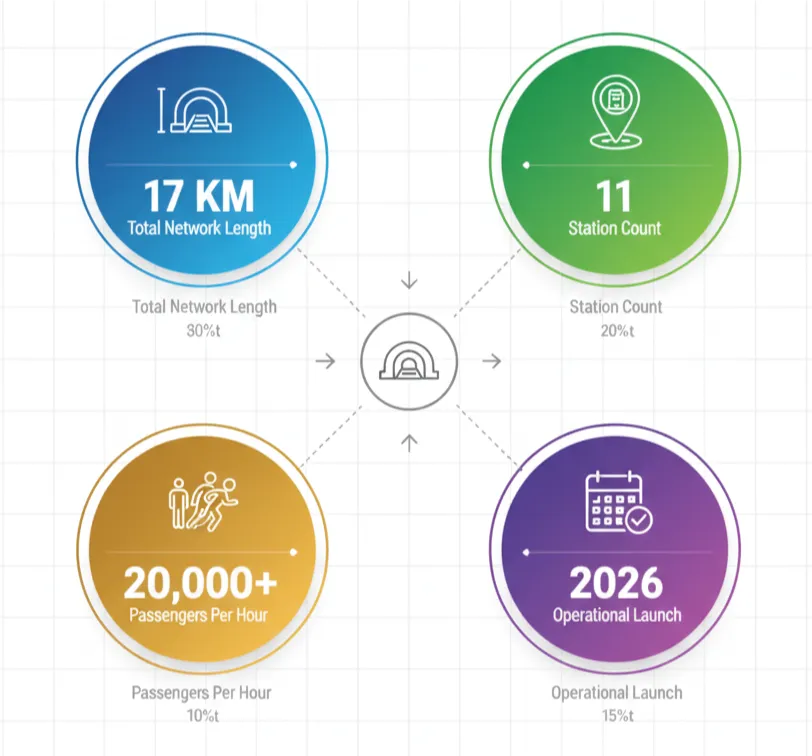
Dubai Loop represents a collaboration between Dubai’s Roads and Transport Authority and The Boring Company, Elon Musk’s tunnel construction firm. The 17km underground transit system will feature 11 stations with capacity to transport more than 20,000 passengers per hour.
The system was announced during the World Governments Summit in February 2025, when Musk joined Al Olama for a virtual session discussing the project. The American billionaire described it as creating a “wormhole” effect: “You just wormhole from one part of the city and boom you’re out in another part of the city.”
Agreement and Partnership
The RTA and The Boring Company formalised their partnership in February 2025 at the World Governments Summit. The agreement strengthens collaboration in tunnel excavation and construction, bringing Musk’s proven tunnel technology to Dubai’s transport infrastructure.
During the announcement, Musk promised “to transform the transportation sector by constructing safe, fast, and cost-efficient tunnels for passenger transit, utilities, and freight.”
How Dubai Loop Will Work
The system allows travellers to go directly to their destination without stops between points. This point-to-point approach differs from traditional metro systems where passengers may need to change lines or stop at multiple stations.
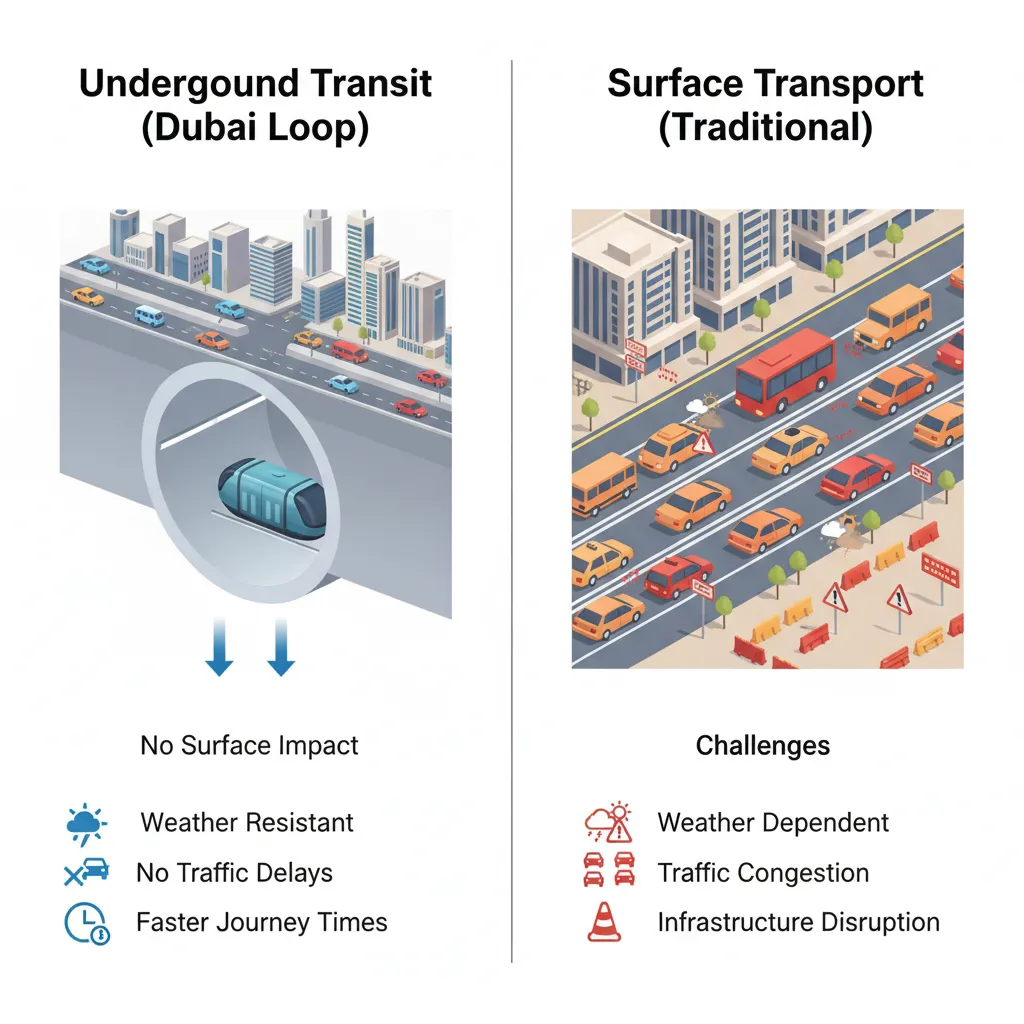
The technology creates underground pathways that operate independently of surface-level traffic, weather conditions, and existing infrastructure. Passengers will access the system through 11 strategically placed stations across the emirate.
Technical Advantages
Weather Resilience
Dubai Loop operates entirely underground, making it immune to sandstorms, extreme heat, and adverse weather conditions that can affect surface transport. This reliability addresses a significant challenge for Dubai’s transport network during summer months and occasional dust storms.
Construction Efficiency
The Boring Company’s tunnelling technology executes projects more rapidly than conventional methods whilst minimising costs. The approach also reduces disruption to existing infrastructure and road networks during construction.
RTA noted in earlier statements that this methodology would have “minimal impact on existing infrastructure and road networks.”
Traffic Congestion Solution
The underground system aims to significantly reduce road congestion by shifting commuters from private vehicles to the transit network. Dr Ahmed Al Mulla, co-founder of UAE-based urban planning firm Arkat, explained to Khaleej Times: “By shifting commuters from private vehicles to a reliable underground system, congestion on surface roads can be significantly reduced.”
Strategic Station Placement
Success depends heavily on station locations. Al Mulla emphasised that “Dubai Loop must serve high-demand areas; be easily accessible, and connect seamlessly with existing and upcoming transit networks such as Dubai Metro, Etihad Rail, and bus systems.”
The 11 stations will need to integrate with Dubai’s comprehensive public transport network, which already includes:
- Red and Green Metro lines
- Blue Line Metro (operational 2029)
- Bus networks and metro link services
- Tram system
- Etihad Rail connections
- Taxi services
Integration with Dubai’s Transport Vision
Dubai Loop forms part of a long-term strategy to develop tunnel infrastructure across the emirate. The project aligns with Dubai’s Transport Plan 2030, which aims to reduce peak traffic congestion by up to 30% through innovative transport solutions.
The RTA has been implementing multiple initiatives to improve mobility, including:
- Suspended transit systems
- Priority bus lanes
- Intelligent traffic management systems
- Remote work policies to reduce peak-hour traffic
The Boring Company’s Track Record
The Boring Company has successfully implemented similar systems in the United States. In Las Vegas, the company operates an underground transit network connecting major hotels, the convention centre, and the airport.
The Las Vegas system demonstrates the technology’s viability for high-traffic areas where surface transport faces capacity constraints. Musk highlighted the advantages over alternative solutions: “The challenge with flying taxis or helicopters is that they tend to be very noisy and generate significant wind force. Flying vehicles face crash risks and weather limitations. Underground travel eliminates these concerns.”
Impact on Dubai’s Economy
The project’s 2026 timeline suggests rapid implementation, potentially creating employment opportunities in construction, operations, maintenance, and related sectors. Dubai’s position as a global business hub makes efficient transport infrastructure crucial for economic competitiveness.
The emirate has been attracting significant international talent, with 6,500 tech millionaires now based in Dubai according to 2024 statistics. Improved transport connectivity supports this growth by making the city more liveable and accessible.
Comparison with Other Dubai Transport Projects
Dubai Loop complements rather than replaces existing transport initiatives:
Dubai Metro Blue Line: A Dh20.5 billion project spanning 30km with 14 stations, operational September 2029
Rail Bus System: Solar-powered transit system unveiled at World Government Summit 2025, featuring 40-passenger capacity
Etihad Rail: National railway network with integrated Dubai connections launching 2026
Suspended Transit: 65km smart mobility network connecting Umm Suqeim Street, Al Khor, and Zabeel
Each project addresses different aspects of Dubai’s transport needs, creating a comprehensive mobility ecosystem.
Timeline and Next Steps
With 2026 confirmed as the operational target, construction and development activities should be visible throughout 2025. The RTA has not yet released detailed information about:
- Specific station locations
- Ticketing integration with existing nol card systems
- Fare structures
- Construction schedule
- Traffic management during building phases
Khaleej Times reached out to authorities for official statements following Bloomberg’s report.
What This Means for Commuters
Once operational, Dubai Loop will offer commuters a new high-speed option for crossing the city. The system’s point-to-point design could significantly reduce journey times for specific routes, particularly during peak hours when surface roads experience heavy congestion.
The 20,000 passengers per hour capacity indicates substantial throughput, though this represents total system capacity rather than per-station figures. For comparison, Dubai Metro transported 133 million passengers in the first half of 2024, averaging approximately 37% of all public transport usage.
Environmental Considerations
Underground transit systems typically offer environmental advantages over surface transport:
- Reduced carbon emissions compared to private vehicle usage
- No visual impact on city skyline
- Minimal noise pollution
- Energy-efficient operations possible through regenerative braking
The system aligns with Dubai’s broader sustainability goals and commitment to reducing the emirate’s carbon footprint.
International Significance
Dubai Loop represents one of the first major Boring Company projects outside the United States. Success in Dubai could lead to similar implementations in other global cities facing transport capacity challenges.
The project demonstrates Dubai’s willingness to adopt emerging technologies and partner with innovative companies to solve infrastructure challenges. This approach has characterised the emirate’s development strategy across multiple sectors.
Future Expansion Potential
While the initial 17km network with 11 stations addresses immediate needs, the system’s design allows for future expansion. The RTA’s statement about “long-term plans to develop tunnel infrastructure across the emirate” suggests Dubai Loop could eventually grow beyond the initial scope.
Additional stations, extended routes, and connections to neighbouring emirates remain possibilities as the technology proves itself and demand patterns emerge.
Key Takeaway
Dubai Loop will become operational by 2026, offering a 17km underground transit system with 11 stations capable of transporting 20,000 passengers per hour. Developed through partnership between Dubai’s RTA and Elon Musk’s The Boring Company, the system promises point-to-point travel without intermediate stops, weather-resistant operations, and minimal construction impact on existing infrastructure. The project forms part of Dubai’s comprehensive transport strategy to reduce congestion by 30% through innovative mobility solutions.
Frequently Asked Questions
When will Dubai Loop be operational?
According to Bloomberg’s report citing UAE Minister Omar Al Olama, Dubai Loop will be operational by 2026, with motorists able to use it “as soon as next year.”
How long is Dubai Loop?
The system spans 17km with 11 stations distributed across key areas of Dubai.
How many passengers can Dubai Loop transport?
The system has an optimal capacity to transport more than 20,000 passengers per hour across its entire network.
Who is building Dubai Loop?
Dubai Loop is being built through a partnership between Dubai’s Roads and Transport Authority (RTA) and The Boring Company, Elon Musk’s tunnel construction firm.
When was Dubai Loop announced?
Elon Musk announced Dubai Loop in February 2025 during the World Governments Summit, where he appeared virtually with UAE Minister Omar Al Olama.
How does Dubai Loop differ from Dubai Metro?
Dubai Loop offers point-to-point travel without stops between origin and destination, whilst Dubai Metro follows fixed routes with multiple stations. Dubai Loop operates entirely underground using tunnel technology.
Will Dubai Loop connect to existing transport?
The system is designed to integrate seamlessly with existing transport networks including Dubai Metro, Etihad Rail, and bus systems, though specific integration details await announcement.
How much will Dubai Loop cost to use?
Fare structures have not been announced. The RTA will likely integrate Dubai Loop into the existing nol card system used across Dubai’s public transport network.
Where will the stations be located?
Specific station locations have not been publicly announced. Success depends on stations serving high-demand areas with easy accessibility and connections to existing transit networks.
Has The Boring Company built similar systems elsewhere?
Yes, The Boring Company operates an underground transit system in Las Vegas connecting hotels, the convention centre, and the airport, demonstrating the technology’s viability.
Further Reading
- Dubai Loop: Musk’s Underground Transit System to Transform City Travel
- Dubai Metro Blue Line: New Dh20.5bn Transport Network Coming in 2029
- Dubai Transport Plan 2030: Suspended Transit & Remote Work to Cut Traffic by 30%
- Etihad Rail Dubai Transport Integration: 2026 Commute Guide & Connections
- Dubai Metro Ridership Soars: 2024 Public Transport Analysis
- Dubai Introduces Revolutionary Rail Bus: A Solar-Powered Transit Solution
- RTA Dubai Unveils New Metro Link Bus Routes and Service Upgrades for 2024
The UAE week, every Monday
The week's stories on jobs, visas, money and daily life in one short email. Unsubscribe in one click.