Etihad Rail Dubai Transport Integration: 2026 Commute Guide & Connections
Etihad Rail stations connect seamlessly with Dubai Metro, buses & taxis in 2026. Unified nol card system, feeder buses, direct transfers for easy UAE travel.
By Vadim Kouznetsov, published

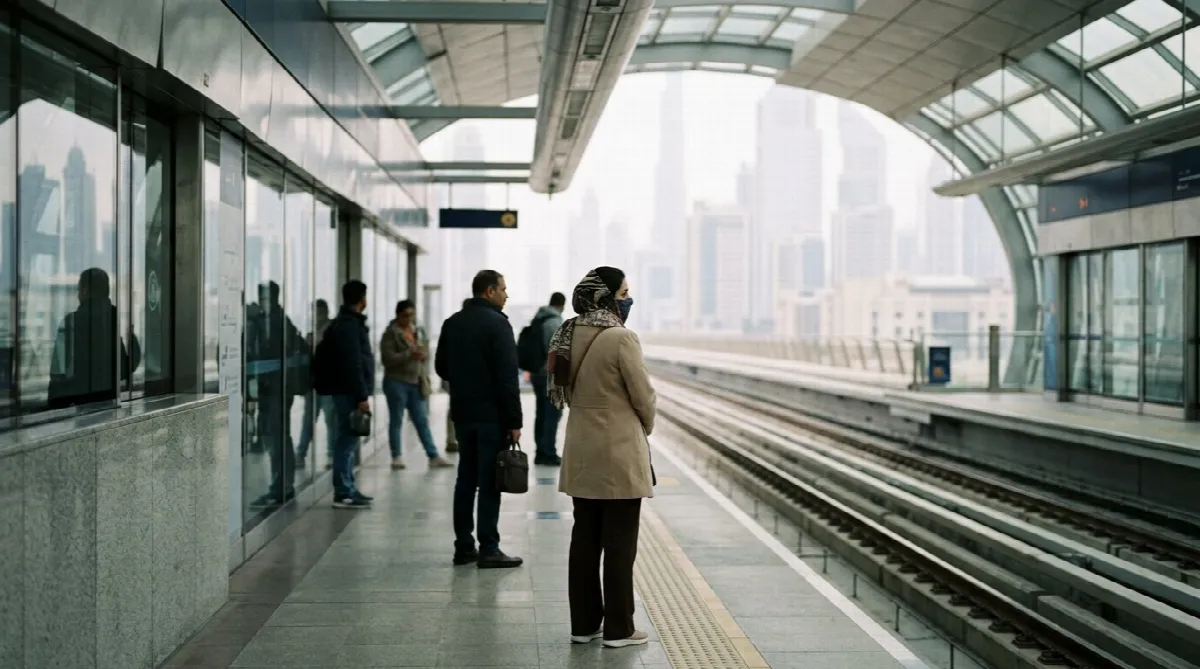
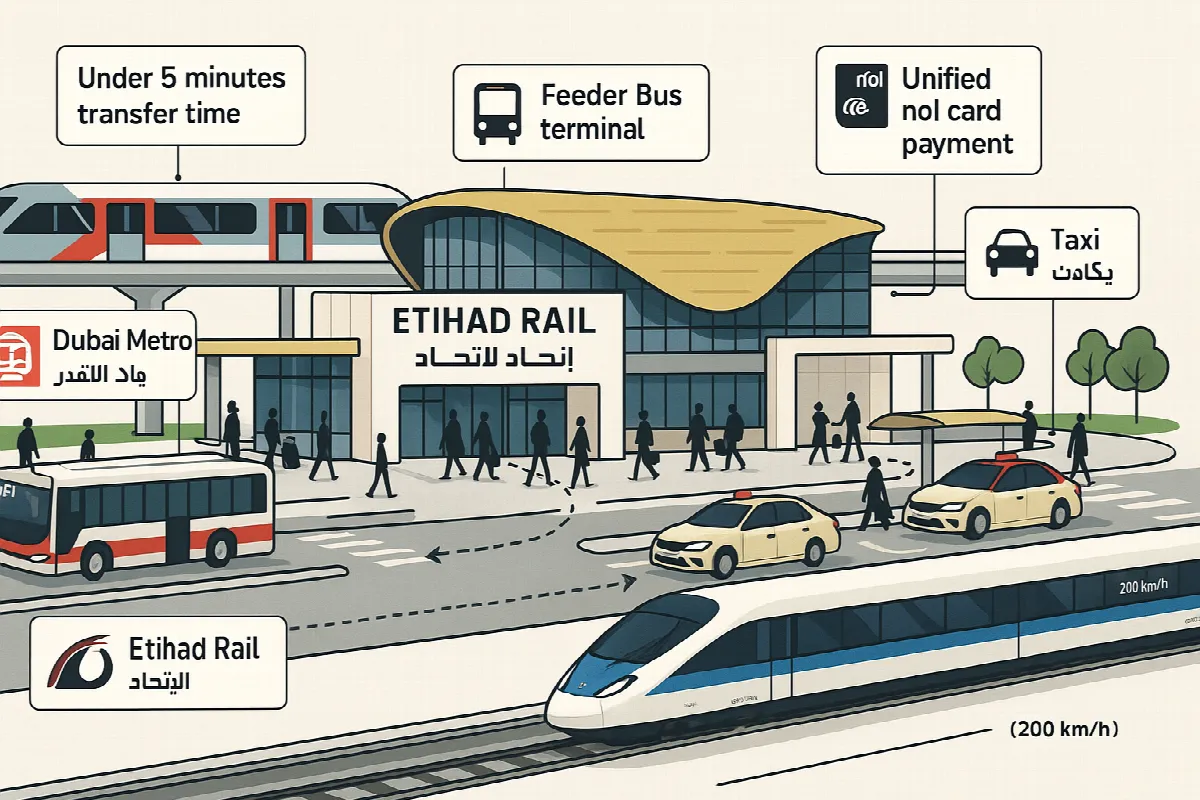
Etihad Rail stations will integrate seamlessly with Dubai’s existing public transport network through direct connections to feeder buses, Metro lines, and taxi services at every station. This comprehensive connectivity aims to provide passengers with hassle-free transfers between trains, metros, buses, and taxis whilst reducing travel times and costs across the UAE’s 900km passenger network.
The Dubai Roads and Transport Authority (RTA) is implementing the same successful integration model used for Dubai Metro stations, including feeder bus networks that enhance rail connectivity to local communities and Metro stations alike.
What Transport Integration Features Will Etihad Rail Offer in Dubai?
Dubai’s integration strategy for Etihad Rail follows proven public transport connectivity principles that have made the Dubai Metro system highly successful. The RTA’s Public Transport Agency is implementing comprehensive last-mile solutions for each new rail station.
Ahmed Hashim Bahrozyan, CEO of the RTA’s Public Transport Agency, confirmed that every Etihad Rail station will feature direct links to feeder buses and taxi services. This approach replicates the successful model used for Dubai Metro, including the Expo Link and upcoming Blue Line, where feeder buses significantly enhance rail connectivity.
Key Integration Elements:
- Direct Metro Connections: Dubai Station will link directly with Dubai Metro lines
- Feeder Bus Networks: Dedicated bus routes connecting stations to local communities
- Taxi Access Points: Designated taxi pickup and drop-off zones at each station
- Unified Ticketing: nol card compatibility across all transport modes
The integration strategy focuses on creating smooth transfers between multiple transport modes, facilitating easy movement from residential areas to rail stations and onwards to final destinations.
Which Dubai Stations Will Feature Complete Transport Integration?
The strategic placement of Etihad Rail stations in Dubai maximises connectivity with existing transport infrastructure whilst serving high-demand travel corridors.
Dubai Station Integration: Dubai’s primary Etihad Rail station will connect directly with Dubai Metro lines, RTA bus networks, and taxi services. This central hub approach ensures passengers can easily transfer between the national rail system and local public transport options.
Secondary Connection Points: Additional integration points will connect Etihad Rail with key Dubai Metro stations, creating multiple access routes for passengers throughout the emirate. These connections support the RTA’s comprehensive transport strategy for reducing traffic congestion and promoting sustainable transport.
Al Maktoum International Airport Integration: The rail connection to Al Maktoum International Airport will feature dedicated transport links, supporting Dubai’s aviation growth and providing seamless air-rail connections for international travellers.
How Will Unified Ticketing Work Across Etihad Rail and Dubai Transport?
Etihad Rail and the RTA have partnered to create a unified ticketing system that simplifies fare payments across the entire integrated transport network. This collaboration allows passengers to use existing nol cards for seamless travel across all transport modes.
nol Card Integration Benefits:
- Single payment method for trains, metros, buses, and trams
- Reduced waiting times at transport hubs
- Simplified transfer processes between different transport modes
- Encouragement of public transport usage through convenience
The unified ticketing solution eliminates the need for multiple payment systems, creating a truly integrated transport experience. This approach supports Dubai’s sustainability goals by making public transport more attractive and accessible to residents and visitors.
Digital Payment Enhancement: The system will integrate with Dubai’s expanding digital payment infrastructure, allowing smartphone-based payments alongside traditional nol cards. This dual approach ensures accessibility for both regular commuters and occasional travellers.
What Speed and Capacity Will Transform UAE Inter-City Travel?
Etihad Rail’s high-speed passenger service will revolutionise travel between UAE emirates with trains operating at speeds up to 200km/hr. This represents a significant improvement over current road-based transport options, particularly during peak traffic hours.
Travel Time Improvements:
- Abu Dhabi to Dubai: Under 60 minutes by rail versus 90-120 minutes by car during peak hours
- Dubai to Sharjah: Direct rail connection eliminating current commute challenges
- Cross-Emirates Connectivity: 900km network connecting all seven emirates
Passenger Capacity: Each train will accommodate up to 400 passengers across first, business, and economy classes. The service projects annual ridership of 36.5 million passengers by 2030, indicating significant demand for inter-emirate rail travel.
Premium Travel Features:
- Complimentary high-speed WiFi throughout journeys
- Family-friendly amenities for passengers travelling with children
- Climate-controlled comfort suitable for UAE weather conditions
- Door-to-door service integration with local transport networks
How Will Etihad Rail Integration Support Dubai’s Transport Vision?
The Etihad Rail integration aligns with Dubai’s comprehensive transport modernisation strategy, which includes multiple innovative transport modes launching by 2026. This coordinated approach positions Dubai as a global leader in integrated urban mobility.
Multi-Modal Transport Ecosystem: Dubai’s 2026 transport landscape will feature unprecedented connectivity options:
- High-speed rail connections linking all emirates
- Air taxi services providing rapid point-to-point travel
- Autonomous taxi fleets serving last-mile connectivity
- Expanded Metro network with the Blue Line adding 30km of coverage
Economic Impact: The integrated rail system is projected to contribute Dh145 billion to the UAE’s GDP over five decades. This economic benefit stems from reduced transportation costs, improved productivity, and enhanced connectivity between business centres.
Environmental Benefits: Etihad Rail will reduce CO2 emissions by 21% annually by 2050 compared to equivalent road transport. A single passenger train can replace up to 300 cars on inter-emirate routes, significantly reducing traffic congestion and environmental impact.
Which Other Emirates Will Feature Integrated Transport Hubs?
Etihad Rail’s network extends beyond Dubai to create integrated transport solutions across all UAE emirates. Each major station will feature connectivity with local public transport systems.
Abu Dhabi Integration: Abu Dhabi stations will connect with the capital’s comprehensive bus network and future Metro system. The integration supports Abu Dhabi’s position as a major business and government centre whilst facilitating tourism access.
Sharjah Connectivity: Sharjah stations will integrate with local bus networks and provide improved connectivity to Dubai, reducing the notorious traffic congestion on the Dubai-Sharjah corridor.
Fujairah Access: Fujairah’s position as the eastern terminus will feature connections to local public transport terminals, supporting the emirate’s industrial and tourism development whilst providing enhanced connectivity to the rest of the UAE.
Northern Emirates Integration: The rail network will provide the northern emirates with unprecedented connectivity to major economic centres, supporting regional development and reducing travel times for residents commuting to Dubai and Abu Dhabi.
When Will Passengers Experience These Integrated Services?
Etihad Rail passenger services are scheduled to commence in 2026, with integrated transport connections operational from the service launch date. The phased rollout will prioritise high-demand routes whilst gradually expanding network coverage.
Phase 1 Launch (2026): Initial operations will connect four strategic stations in Abu Dhabi, Dubai, Sharjah, and Fujairah. These locations represent the highest passenger demand corridors and will demonstrate the integrated transport model’s effectiveness.
Full Network Operations: The complete 900km network connecting 11 cities across all seven emirates will provide comprehensive inter-emirate connectivity. This network density ensures most UAE residents live within reasonable distance of rail access points.
Integration Timeline: Transport integration will be implemented concurrently with rail operations, ensuring passengers can immediately benefit from seamless connectivity. This approach avoids the common problem of transport infrastructure launching without supporting services.
Frequently Asked Questions About Etihad Rail Transport Integration
Will existing nol cards work on Etihad Rail trains?
Yes, Etihad Rail has partnered with Dubai’s RTA to enable nol card usage across the entire integrated transport network, including trains, metros, buses, and taxis.
How long will transfers between Etihad Rail and Dubai Metro take?
Direct connections at Dubai Station will enable transfers in under 5 minutes. Feeder bus connections to other Metro stations will add 10-15 minutes depending on the destination.
Will Etihad Rail stations have parking facilities?
Yes, major stations will feature parking facilities similar to existing Dubai Metro park-and-ride options to support passengers driving to rail stations.
Can families with children easily use the integrated transport system?
Etihad Rail trains include family-friendly amenities, and the integration with Dubai’s public transport maintains the same accessibility standards for children currently used on Metro and bus systems.
Will the integrated system operate during peak hours?
Yes, the system is specifically designed to handle peak-hour demand with frequent train services and coordinated feeder bus schedules to minimise waiting times.
How will the integration affect current Dubai Metro services?
The integration will enhance rather than disrupt existing Metro services, with new connections potentially increasing Metro ridership as passengers use rail-to-Metro transfers for final destinations.
Key Takeaway
Etihad Rail’s 2026 launch will transform UAE travel through seamless integration with Dubai’s public transport network, offering direct connections between high-speed trains, Metro lines, buses, and taxis. Using unified nol card ticketing and strategic station placement, passengers will experience hassle-free transfers whilst reducing travel times between emirates from hours to minutes. This integrated approach represents a cornerstone of Dubai’s vision to become a global leader in sustainable urban mobility.
Further Reading
The UAE week, every Monday
The week's stories on jobs, visas, money and daily life in one short email. Unsubscribe in one click.