UAE workers say AI saves time, but workloads still keep rising
AI is helping many UAE staff work faster, but a new report says the time saved often is not leading to lighter days. Here is what workers and HR teams should watch.
By Vadim Kouznetsov, published
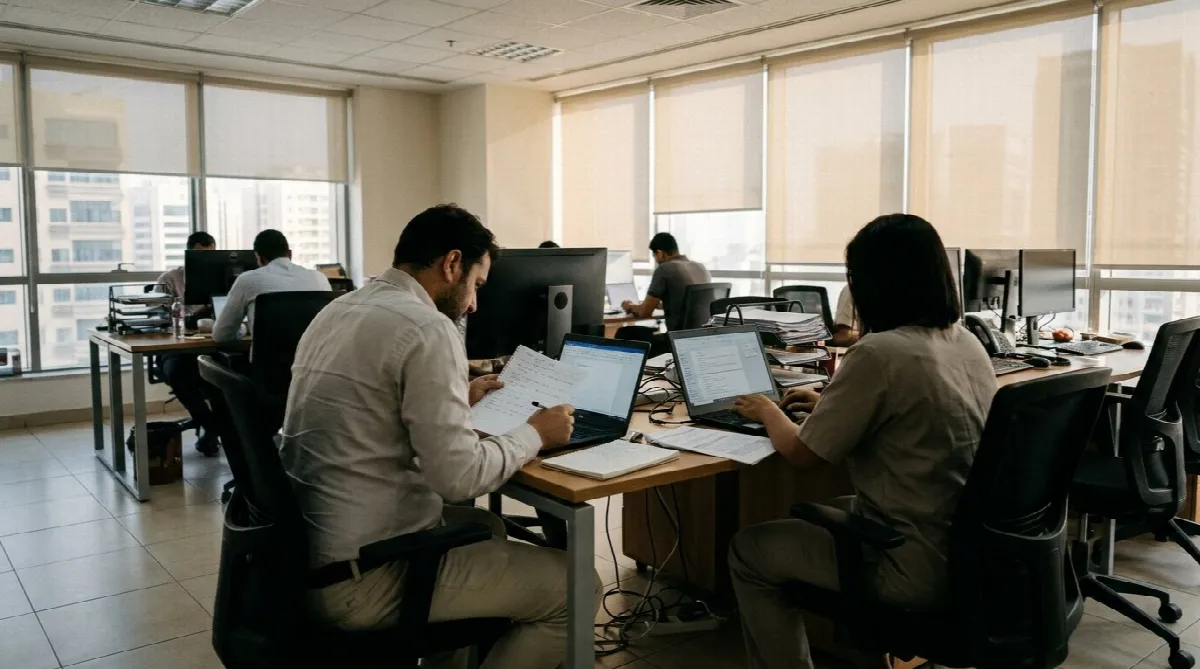
AI workload in UAE workplaces is becoming a bigger issue, even as employees grow more positive about the technology. According to the Korn Ferry UAE Workforce Report 2026, cited by Khaleej Times on 2 November, many staff say AI helps them work faster, but the time saved is often not turning into a lighter workload.
For employees, that matters because quicker tools do not automatically mean less pressure. In many offices, the debate is shifting from whether AI works to whether companies are using it to improve jobs or simply ask for more output.
AI workload in UAE: what the new report found
The Korn Ferry UAE Workforce Report 2026 was based on the views of 500 professionals in the country.
Its findings show a mixed picture:
| Finding | What it shows |
|---|---|
| 76% | Employees in the UAE who are excited about how AI will change their work |
| 72% | Employees who say they have more chances to innovate than a year ago |
| 70% | Employees who say their workload has grown significantly over the past 2 years |
| 65% | Global share of employees excited about how AI will change work |
That means enthusiasm for AI is strong in the UAE, and it is higher than the global figure in the report. But it is happening alongside rising pressure at work.
This lines up with an earlier JobXDubai report showing UAE Employees Embrace AI and Generative Technology with Open Arms, while separate reporting has also highlighted UAE Work Hours Survey: 50% of Employees Face Overtime Pressure in 2024.
Why faster work is not always leading to less pressure
Nageeba Suleman Aboobacker, senior manager, People and Culture at Hotpack, told Khaleej Times that companies should not treat AI efficiency as a reason to pile on new responsibilities.
Her point was simple: if AI removes repetitive, time-consuming work, employees should be able to focus on better decisions, problem-solving and meaningful tasks. That does not help staff if the saved time is immediately replaced with a fresh list of extra duties.
She said HR teams should work closely with business leaders to:
- review workloads
- set realistic expectations
- focus on work quality, not just output
- check through regular feedback whether AI is reducing pressure or increasing it
She also said managers need training so they can assign work fairly as job roles change. Employees, meanwhile, need to know how to use AI responsibly, especially where confidential data or sensitive information is involved.
Aws Ismail, co-founder of Onyx AI Solutions, said the real issue is often management rather than the technology itself. He said if someone saves 2 hours and then gets 2 hours of new tasks, nothing has actually improved.
What this means for UAE employees and HR teams
The message for workers is that AI should change the type of work they do, not simply the amount.
Ismail said companies should use AI first on the tasks that wear teams down, especially repetitive jobs, and then let employees spend more time on work needing judgement and human interaction. He also argued that performance measures need to change. If staff are judged mainly on volume, AI can quickly become a tool for raising targets.
That is why HR matters here. The experts quoted by Khaleej Times said HR should lead the discussion on how saved time is used, whether that means better quality work, skill development or a more sustainable pace.
Shabeel Ummer, head of HR at V Group International, said his company has used AI for drafting, analysis and report preparation across retail, wholesale, e-commerce and support functions. He said first-level customer queries that used to take hours can now be done in minutes.
According to Ummer, the benefit comes when that saved time is redirected into customers, teamwork and business problems that need human judgement. He also said AI can help managers share project work more fairly, based on employee capacity.
For workers worried about pressure, that links closely to wider wellbeing concerns, including UAE: Are Employees Entitled to Sick Leave for Depression and Mental Health Issues?.
What employees can do if AI is adding more work
If AI tools are speeding up your tasks but your day still feels heavier, these are the practical points raised by the experts in the report:
- Ask how the time saved will be used. Will it improve quality, support learning or just add more tasks?
- Raise workload in regular check-ins with your manager or HR team.
- Suggest repetitive tasks that AI could take first, instead of adding AI on top of existing work.
- Ask how performance will be measured as your role changes.
- Be careful with confidential data and sensitive information when using AI tools.
If you are looking for roles in HR, operations or AI-enabled teams, you can also browse current openings on JobXDubai Jobs.
Key takeaway
AI is clearly making many jobs faster in the UAE, but speed alone is not reducing pressure for a lot of employees. The big question now is whether employers use AI to improve work quality and wellbeing, or simply to stretch output further.
FAQ
Is AI making work easier for UAE employees?
In many cases, yes. The report says AI is helping with repetitive work and creating more room for innovation, with 76% of UAE employees saying they are excited about how AI will change their work.
How many UAE employees say their workload has increased?
According to the Korn Ferry UAE Workforce Report 2026, 70% of employees in the UAE said their workload has grown significantly over the past 2 years. The report was based on 500 professionals in the country.
Why do employees still feel more pressure if AI saves time?
Experts told Khaleej Times that some companies are filling the saved time with extra tasks. That means efficiency improves, but the employee may not feel any real relief in their day.
What should HR teams do when AI changes workloads?
The experts said HR should review workloads with business leaders, set realistic expectations and measure quality rather than just volume. They also said regular feedback is needed to check whether AI is easing pressure or adding to it.
Can employees use AI freely with work documents and data?
The report says employees need to understand how to use AI responsibly, especially with confidential data and sensitive information. Companies also need to train managers and staff as AI changes job responsibilities.
Further reading
The UAE week, every Monday
The week's stories on jobs, visas, money and daily life in one short email. Unsubscribe in one click.