Why UAE Airfares Are So Expensive Right Now — and When They Might Drop
Dubai–Mumbai up 480%, London up 260%. Jet fuel costs doubled, airlines cut capacity, and demand stays strong. When UAE airfares might finally drop.
By Vadim Kouznetsov, published
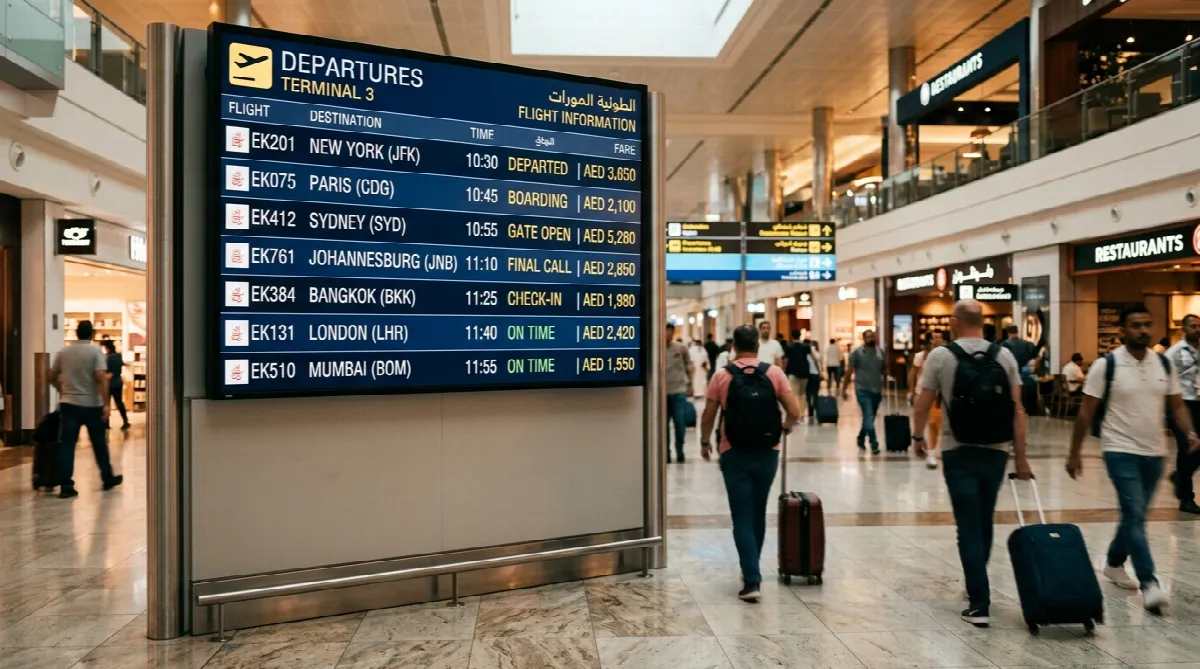
If you’ve checked flight prices out of Dubai or Abu Dhabi recently, you already know: airfares have surged to levels that make a weekend trip feel like a luxury purchase.
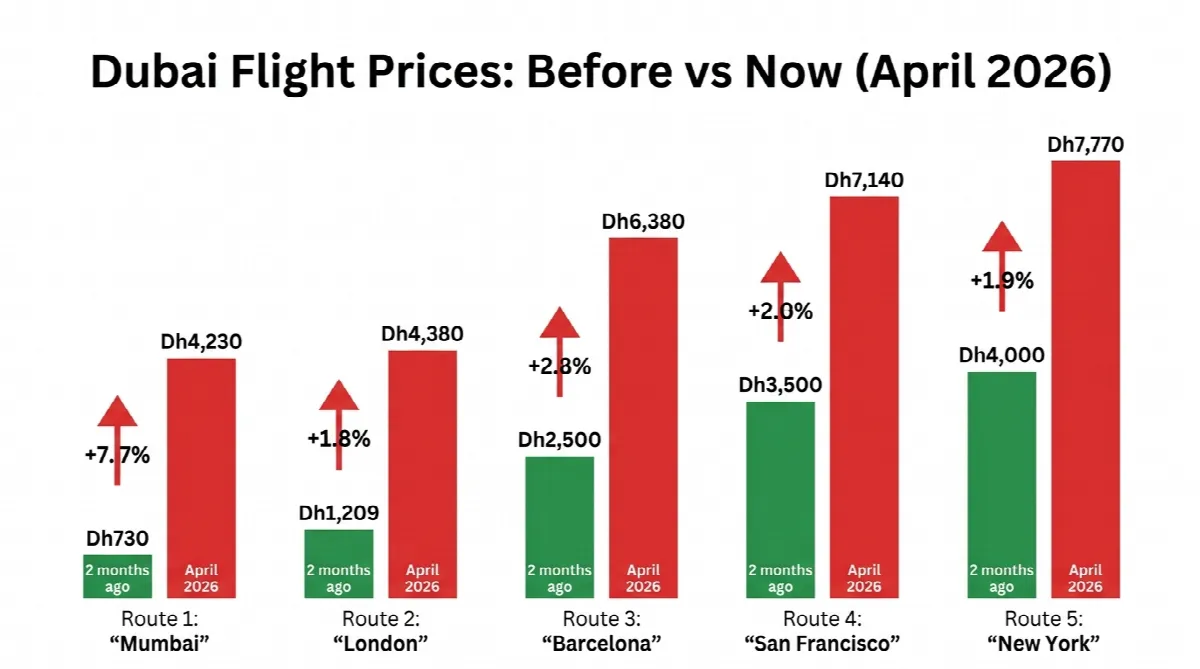
A return ticket from Dubai to Mumbai — normally around Dh730 — is now Dh4,230 for immediate travel. London has jumped from Dh1,209 to Dh4,380. New York? Dh7,770.
Three factors are driving this, and none of them are going away quickly.
Key Takeaway: UAE airfares have surged due to a combination of soaring jet fuel prices (up over 100% from pre-war levels), reduced flight capacity as airlines operate limited schedules through safe corridors, and strong travel demand fuelled by summer planning and school holidays. Aviation experts warn that prices are likely to remain historically elevated for months, even after the recent ceasefire announcement.
How Much Have UAE Airfares Increased?
The numbers speak for themselves. Here’s what return flights from Dubai cost right now compared to two months ago:
| Route | Price 2 Months Ago | Current Price |
|---|---|---|
| Dubai–Mumbai | Dh730 | Dh4,230 |
| Dubai–London | Dh1,209 | Dh4,380 |
| Dubai–Barcelona | — | Dh6,380 |
| Dubai–San Francisco | — | Dh7,140 |
| Dubai–New York | — | Dh7,770 |
Booking a week ahead brings some relief — Dubai–Mumbai drops to around Dh1,560, Dubai–London to Dh3,400 — but fares remain far above pre-conflict levels.
Abu Dhabi routes show similar patterns: New Delhi at Dh2,460, Mumbai at Dh1,600, London at Dh4,750, Barcelona at Dh5,570, and New York at Dh5,740.
What’s Driving the Price Surge?
1. Jet Fuel Costs Have Doubled
This is the biggest factor. Jet fuel prices have jumped from around $830 per tonne before the conflict to over $1,800 in early April — an increase of more than 100%.
Fuel typically accounts for up to 30% of airline operating costs. It now makes up as much as 45%, according to industry figures. Pascal de Izaguirre, president of the French aviation federation, called the increase “absolutely colossal.”
The Gulf region supplies roughly half of Europe’s jet fuel via the Strait of Hormuz. Ongoing disruptions in this critical shipping lane have pushed up costs globally, with European jet fuel prices doubling from pre-war levels according to S&P Global Platts.
IATA Director General Willie Walsh was blunt: “There’s no way airlines can absorb it.”
2. Airlines Are Flying Fewer Routes
UAE carriers — Emirates, Etihad, flydubai, and Air Arabia — are all operating reduced schedules through special safe air corridors. Emirates recently confirmed it’s now flying to 100+ destinations, but that’s still well below its peacetime network of 140.
Fewer flights means fewer available seats. Basic economics: when supply drops and demand stays constant (or increases), prices rise.
Routes that previously had multiple daily frequencies now operate with reduced service. Re-routing flights through safe corridors also means longer flight paths, which burns more fuel — compounding the cost problem.
3. Demand Remains Strong
Despite the prices, people are still booking. Two major demand drivers are active right now:
Summer travel planning — Schengen visa slots have opened, and UAE residents are booking European holidays. TP Sudheesh, General Manager at Deira Travels, confirmed that travellers have “begun preparing for the upcoming summer break.”
School holidays and diaspora travel — Subcontinent routes (India, Pakistan, Bangladesh) are running at full capacity as families travel during school breaks. These routes consistently see the strongest demand from the UAE.
The recent two-week ceasefire announcement has also restored some confidence, with international airlines evaluating operations resumption. But this additional demand hasn’t been matched by additional capacity — pushing prices higher.
Will Airfares Come Down After the Ceasefire?
Not immediately. Here’s why.
While oil prices fell more than 10% after President Trump announced a ceasefire between the US and Iran on 8 April, jet fuel prices operate on a different timeline.
Refinery constraints — Converting crude oil into jet fuel takes time. Even with lower crude prices, refining capacity hasn’t increased.
Supply bottlenecks — Disruptions in the Strait of Hormuz have created logistical problems that don’t resolve overnight.
Re-routing costs persist — Airlines flying longer corridors burn more fuel per flight, regardless of what happens at the crude oil level.
Saj Ahmad of Strategic Aero Research warned: “Even if the conflict ends, elevated costs and supply constraints could persist.”
Aviation experts say fares will remain “historically elevated for months, not weeks.”
What Can UAE Travellers Do?
You can’t control fuel prices, but you can make smarter booking decisions:
- Book as early as possible. Last-minute fares are consistently 3-5x higher than advance bookings right now.
- Be flexible on dates. Even shifting travel by a few days can save hundreds of dirhams.
- Compare across airlines. Check Emirates, Etihad, flydubai, and Air Arabia — pricing varies significantly across carriers on the same routes.
- Consider indirect routing. Connecting flights through less affected hubs may offer lower fares than direct services.
- Use Emirates’ travel waiver. Passengers with existing bookings can make up to nine free changes under the current waiver valid until 31 May.
- Monitor the ceasefire. If it holds, fuel costs should gradually decrease — though the lag between crude prices and ticket prices can be several weeks.
How Does This Affect UAE Residents’ Budgets?
For expats who regularly fly home to visit family, the fare increases are a serious financial hit. A family of four flying Dubai–Mumbai return now faces a bill of Dh6,000+ even with advance booking, compared to under Dh3,000 before the conflict.
This compounds other rising living costs in the UAE, including higher fuel prices and inflationary pressures on household budgets.
For businesses reliant on frequent travel, the impact on operational budgets is substantial. Dubai’s economy depends heavily on connectivity — sustained high airfares could dampen business travel, tourism arrivals, and the broader economic momentum.
FAQ
Why are flights from Dubai so expensive right now?
Three factors: jet fuel prices have more than doubled, airlines are operating reduced schedules through safe air corridors, and travel demand remains strong due to summer planning and school holidays.
How much have jet fuel prices increased?
Fuel costs jumped from around $830 per tonne before the conflict to over $1,800 in early April — an increase of more than 100%. Fuel now accounts for up to 45% of airline operating costs, up from the typical 30%.
Will the ceasefire bring airfares down?
Not immediately. While crude oil prices have fallen, refinery constraints, supply bottlenecks, and re-routing costs will keep jet fuel expensive for weeks to months. Experts say fares will remain historically elevated.
How much does a Dubai to London flight cost now?
Current return fares are around Dh4,380 for immediate travel, compared to Dh1,209 two months ago. Booking a week ahead brings the price to approximately Dh3,400.
Are Abu Dhabi flights cheaper than Dubai?
Abu Dhabi fares are comparable. Abu Dhabi–London is around Dh4,750, Abu Dhabi–New York at Dh5,740, and Abu Dhabi–Mumbai at Dh1,600.
Which airlines are operating from the UAE?
Emirates, Etihad, flydubai, and Air Arabia are all operating limited schedules through safe air corridors. Emirates is now flying to 100+ destinations.
When will normal flight prices return?
Aviation experts warn that prices are likely to stay elevated for months, not weeks. Full normalisation depends on the conflict resolution, jet fuel supply recovery, and airlines restoring full capacity.
How can I find cheaper flights from the UAE?
Book well in advance, be flexible on travel dates, compare across all UAE carriers, consider indirect routing through less affected hubs, and use Emirates’ travel waiver for free changes on existing bookings.
Why are India flights from Dubai so expensive?
Strong diaspora demand, school holiday travel, and reduced flight frequencies have created a supply-demand imbalance on subcontinent routes. Dubai–Mumbai fares jumped from Dh730 to Dh4,230 for last-minute bookings.
How long will jet fuel prices stay high?
Even with the ceasefire, refinery constraints and Strait of Hormuz supply disruptions are expected to keep jet fuel prices elevated through summer 2026 at minimum.
Further Reading
The UAE week, every Monday
The week's stories on jobs, visas, money and daily life in one short email. Unsubscribe in one click.