Dubai Economy Grows 4.4% to Dh241bn in H1 2025: Jobs & Growth
Dubai GDP hits Dh241 billion in H1 2025, growing 4.4% YoY with Q2 reaching 4.7%. Discover sector performance, D33 agenda progress, and career opportunities.
By Vadim Kouznetsov, published
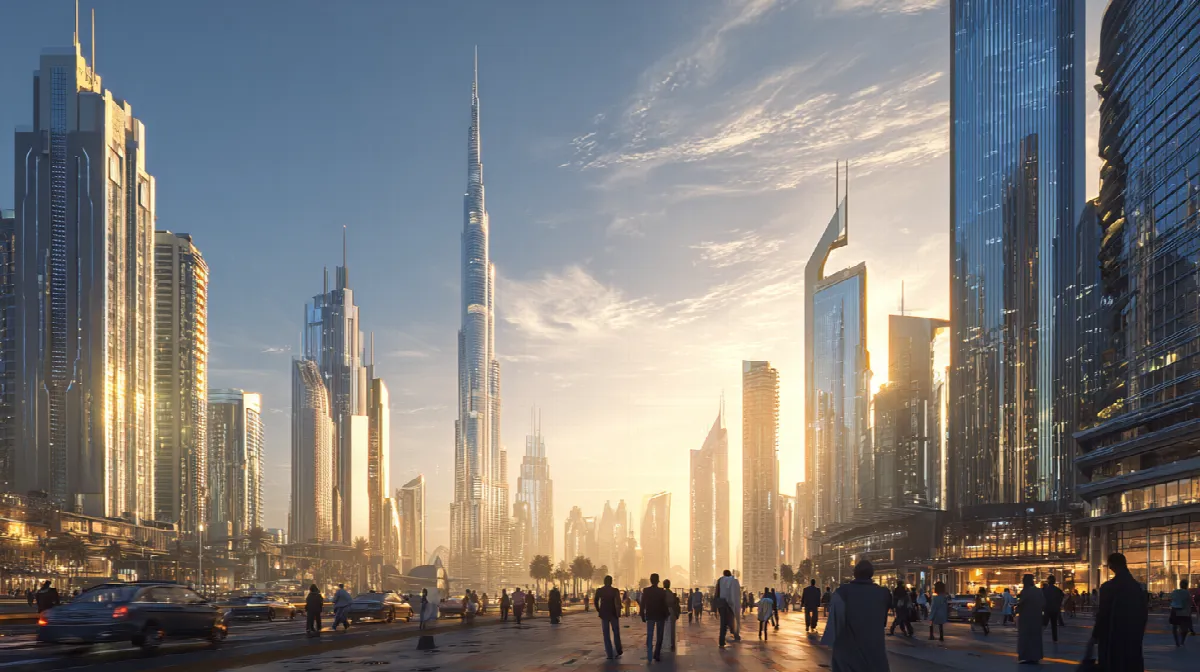
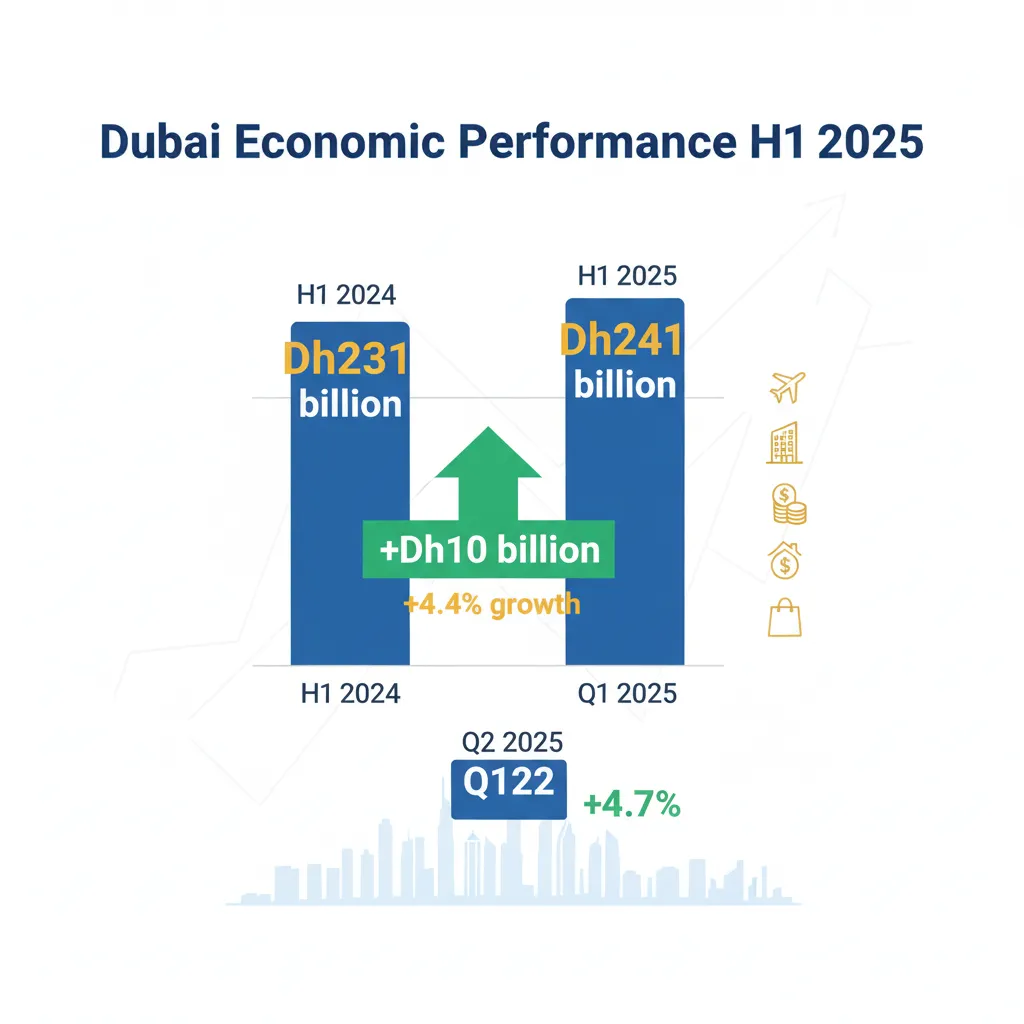
Dubai’s economy continues its upward trajectory with impressive first-half results for 2025. The emirate recorded 4.4% year-on-year GDP growth, reaching Dh241 billion compared to Dh231 billion in the same period of 2024. Second-quarter performance proved particularly strong, with GDP expanding 4.7% to hit Dh122 billion.
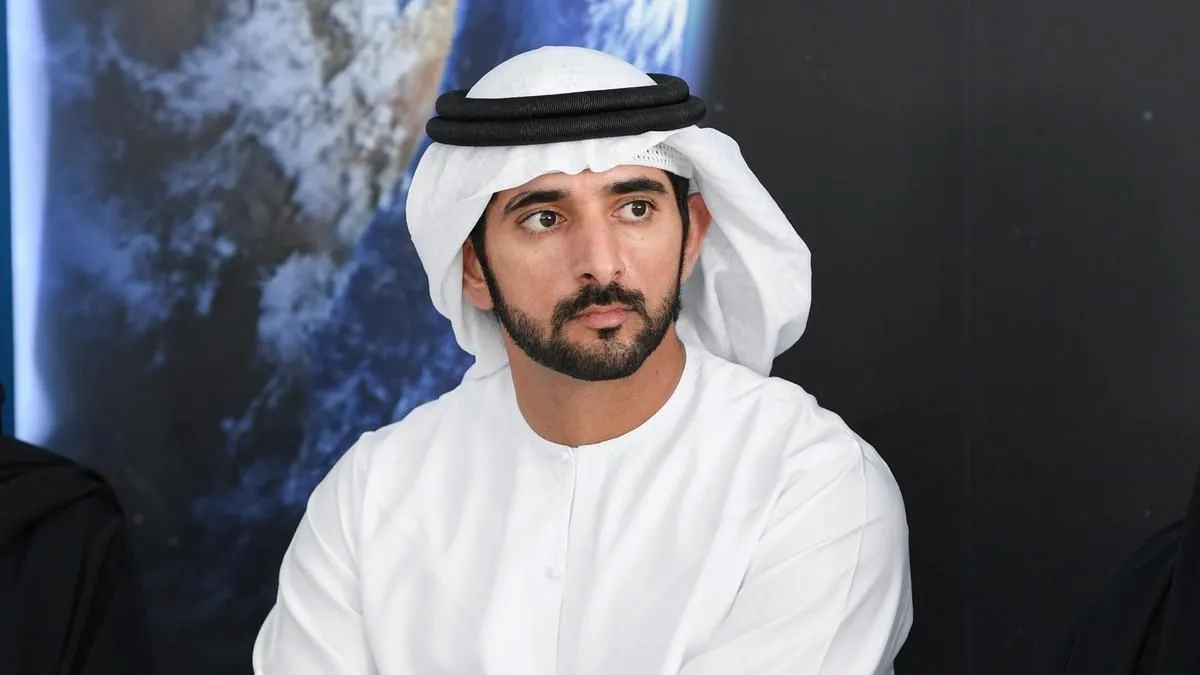
Sheikh Hamdan bin Mohammed bin Rashid Al Maktoum, Crown Prince of Dubai, Deputy Prime Minister, Minister of Defence, and Chairman of The Executive Council of Dubai, described the results as evidence of ongoing economic strength and successful efforts to foster innovation and diversification.
The momentum was driven by strong performance across key sectors including trade, transport, tourism, and financial services. This growth reflects the combined efforts of public and private sectors working towards the ambitious goals set out in the Dubai Economic Agenda D33.
What Is Dubai’s Economic Performance in 2025?
The numbers tell a compelling story of sustained expansion.
Dubai’s H1 2025 GDP of Dh241 billion represents solid year-on-year growth from the Dh231 billion recorded in H1 2024. This 4.4% increase demonstrates resilience amid changing global economic conditions.
Quarter-by-quarter analysis reveals accelerating momentum. Q2 2025 achieved 4.7% growth, reaching Dh122 billion. This stronger second-quarter performance suggests economic activity is building rather than plateauing, a positive indicator for the remainder of 2025.
Sheikh Hamdan emphasised that results reflect Dubai’s future-focused model of innovation, diversification, and global competitiveness. The performance aligns with His Highness Sheikh Mohammed bin Rashid Al Maktoum’s vision for the emirate’s economic transformation.
These figures place Dubai’s growth trajectory ahead of many global financial centres, demonstrating the effectiveness of strategic initiatives implemented over recent years. The UAE economy is forecast to grow 5.1% in 2025, with Dubai’s performance contributing significantly to this national outlook.
Which Sectors Are Driving Dubai’s Economic Growth?
Dubai’s economic expansion reflects its diversified structure, with multiple sectors contributing to overall performance.
Trade remains a cornerstone of Dubai’s economy. The emirate’s strategic location connecting Asia, Europe, and Africa continues attracting international commerce. Port facilities and free zones facilitate billions of dirhams in annual trade flows, creating employment across logistics, warehousing, and commercial services.
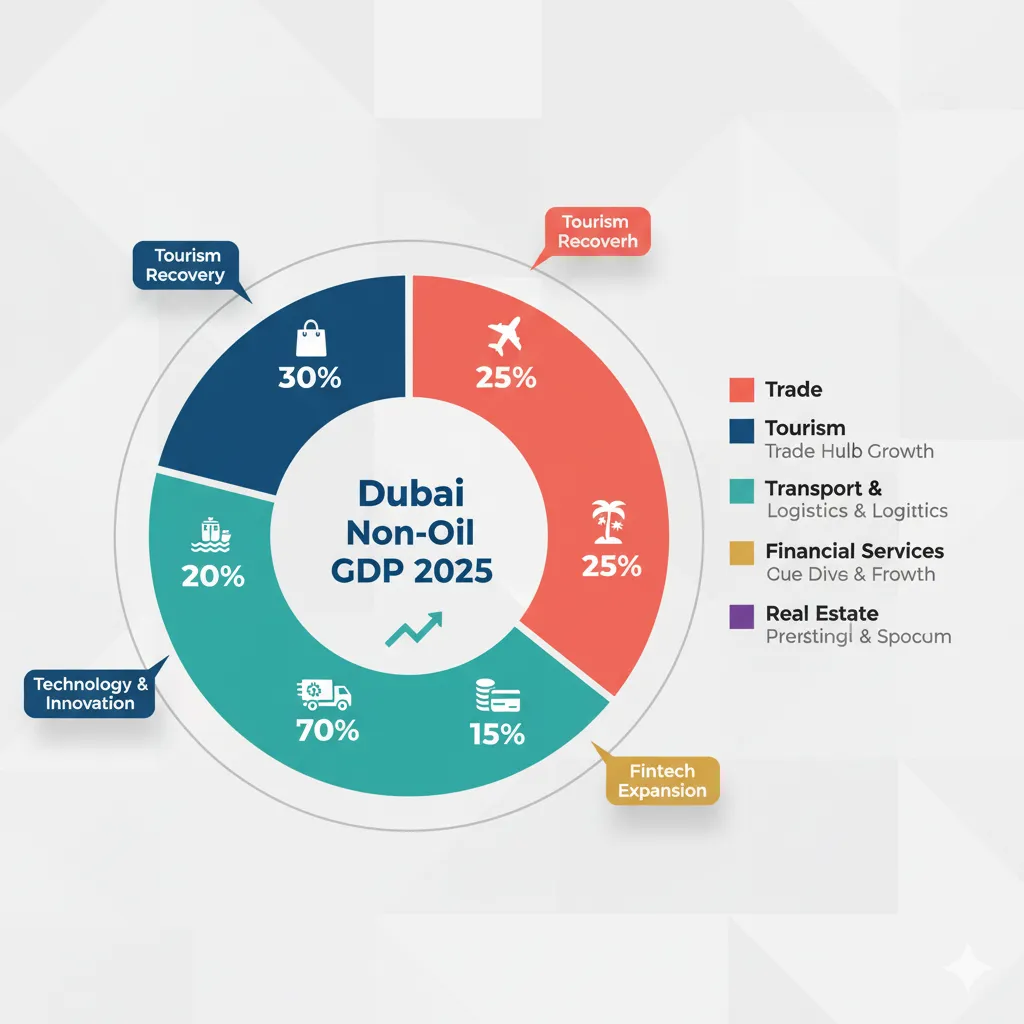
Transport and logistics sustained strong gains. Dubai International Airport and the expanding Al Maktoum International Airport handle millions of passengers and substantial cargo volumes. Ground transportation infrastructure supports this activity, whilst maritime transport through Jebel Ali Port reinforces Dubai’s position as a global logistics hub.
Tourism demonstrated steady recovery and growth. Visitor arrivals have remained consistently strong, with hotels reporting high occupancy rates. The sector generates substantial employment in hospitality, retail, entertainment, and related services. Major attractions and events continue drawing international visitors throughout the year.
Financial services recorded steady expansion amid continued global demand and investment flows. Dubai’s status as a regional financial centre attracts banking institutions, investment firms, and fintech companies. The Dubai International Financial Centre and other free zones provide infrastructure supporting financial services growth.
Real estate maintained strong activity levels. Property transactions, development projects, and rental market performance all contributed to sector growth. Dubai’s real estate market has been breaking records, reflecting sustained investor confidence and population expansion.
Technology and innovation sectors showed accelerating growth. Digital transformation initiatives, smart city investments, and renewable energy projects attracted new business and investment. These high-growth areas position Dubai competitively in emerging industries.
How Does This Growth Align With Dubai Economic Agenda D33?
The H1 2025 performance demonstrates tangible progress towards D33 objectives.
The Dubai Economic Agenda D33, launched in January 2023, aims to double the size of Dubai’s economy within the next decade and position it among the world’s top three urban economies. Current growth rates suggest the emirate is on track to achieve these ambitious targets.
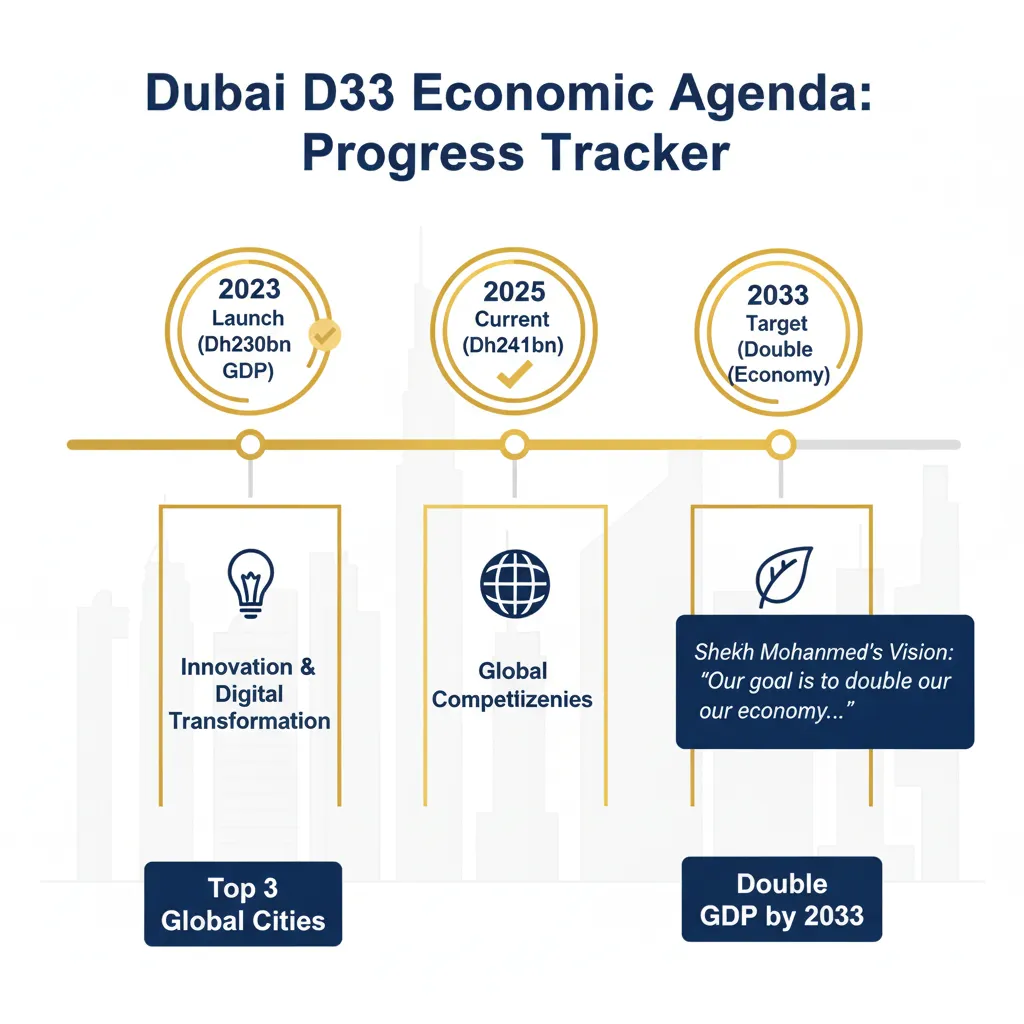
Sheikh Hamdan stated: “Guided by the vision of His Highness Sheikh Mohammed bin Rashid Al Maktoum, Dubai continues to advance a future-focused model of innovation, diversification, and global competitiveness. These results reflect the combined efforts of the public and private sectors and the dedication of Dubai’s wider team.”
Maintaining 4-5% annual growth rates through 2033 requires sustained momentum across all economic sectors. The consistent performance through H1 2025, particularly the accelerating Q2 growth, indicates this momentum is building rather than diminishing.
Authorities continue advancing initiatives to boost productivity, expand trade, and attract global talent. Infrastructure investments, regulatory improvements, and business-friendly policies all support the D33 agenda’s objectives.
Economic analysts note that Dubai’s sustained growth reflects effective long-term policies promoting innovation, investment, and private-sector participation. The emirate’s ability to adapt to changing global conditions whilst maintaining growth demonstrates strategic planning effectiveness.
What Employment Opportunities Does This Growth Create?
Economic expansion translates directly into job creation across multiple sectors.
Non-oil sector growth typically generates more diverse employment opportunities than oil-dependent economic activity. The sectors driving Dubai’s expansion—trade, tourism, finance, and technology—all require substantial human capital across various skill levels.
Trade expansion creates positions in logistics coordination, supply chain management, customs clearance, warehouse operations, and commercial sales. Jobs in Dubai for foreigners span from entry-level warehouse staff to senior logistics executives.
Tourism growth generates hospitality roles including hotel management, guest services, food and beverage operations, event coordination, and tour guiding. The sector’s recovery has created thousands of positions for professionals seeking opportunities in Dubai’s thriving tourism industry.
Financial services expansion requires banking professionals, financial analysts, investment advisers, compliance specialists, and fintech developers. The UAE’s fintech sector has been experiencing record growth, creating premium employment opportunities.
Construction supporting all this economic activity requires civil engineers, project managers, architects, site supervisors, and skilled tradespeople. UAE construction sector is experiencing unprecedented expansion, with output expected to surge 22% to reach $130.8 billion by 2029.
Technology and innovation sectors need software developers, data scientists, AI specialists, cybersecurity professionals, and digital marketing experts. Dubai’s future careers focus increasingly on technology-driven industries.
How Does Dubai Compare to Other Emirates?
Dubai’s performance sits within the broader UAE economic context.
Abu Dhabi’s economy grew 3.8% in Q2 2025, with the non-oil sector achieving a record 56.2% share of GDP. Both major emirates are successfully implementing economic diversification strategies, though Dubai’s 4.7% Q2 growth rate slightly exceeds Abu Dhabi’s performance.
The UAE overall benefits from this multi-emirate approach to economic development. Dubai focuses heavily on trade, tourism, and services, whilst Abu Dhabi balances these sectors with energy, manufacturing, and technology investments. This complementary strategy strengthens national economic resilience.
Population growth continues across both emirates. Dubai’s population is projected to hit 4 million by 2026, driven by professional expatriates and business investment. This demographic expansion supports retail consumption, housing demand, and service sector growth.
Regional coordination on infrastructure projects, trade policies, and investment attraction creates synergies benefiting the entire UAE economy. Federal initiatives complement emirate-level strategies, creating a comprehensive approach to economic development.
What Are the Future Economic Prospects?
Multiple indicators suggest sustained expansion through the remainder of 2025 and beyond.
Ongoing infrastructure projects will continue supporting economic activity. Major developments including metro expansions, airport improvements, and commercial construction all require sustained investment and employment.
Tourism demand shows no signs of weakening. International visitor numbers remain strong, with new attractions and events maintaining Dubai’s appeal as a global destination. The sector’s contribution to GDP is expected to increase further.
Regional trade growth benefits Dubai’s position as a commercial hub. Geographic location and world-class logistics infrastructure position the emirate to capture increasing shares of international trade flows.
Investment activity continues accelerating. Foreign direct investment flows into diverse sectors, creating employment opportunities whilst strengthening economic foundations. The UAE ranks 7th globally as a top destination for travel and migration, attracting skilled professionals worldwide.
Technology adoption and digital transformation initiatives support productivity improvements across all sectors. Smart city investments and innovation ecosystem development position Dubai competitively in emerging industries.
The D33 agenda provides a clear roadmap for the next eight years. Specific targets for foreign investment, digital transformation contributions, and financial centre rankings guide policy implementation and resource allocation.
Frequently Asked Questions
What does Dubai’s 4.4% GDP growth mean for job seekers?
Economic growth translates directly into employment opportunities. The 4.4% GDP expansion indicates businesses are hiring across trade, tourism, hospitality, finance, technology, construction, and professional services sectors. Higher growth rates typically create more job openings than periods of economic stagnation. Job seekers should focus on industries driving this growth—particularly trade and logistics, hospitality and tourism, financial services, and technology sectors where demand for skilled professionals remains strong.
How does Dubai’s economy compare to other global cities?
Dubai’s 4.4% H1 growth outpaces most major global financial centres. London, New York, and Singapore typically achieve 2-3% annual growth in mature economies. Dubai’s higher growth rates reflect its emerging market status and ongoing infrastructure development. The D33 agenda specifically targets ranking Dubai among the world’s top three urban economies by 2033, requiring sustained performance above traditional financial centres.
Which sectors offer the best career opportunities in Dubai right now?
Trade and logistics remain dominant employment sectors given Dubai’s role as a regional commercial hub. Financial services are expanding rapidly, particularly fintech and digital banking. Tourism and hospitality continue recovering with strong visitor numbers. Technology and innovation sectors show accelerating growth as Dubai invests in smart city initiatives and digital transformation. Construction maintains high activity levels supporting all other economic sectors. Healthcare and education also present opportunities given population growth.
Will Dubai’s economic growth continue through 2026?
Multiple indicators suggest sustained expansion. Infrastructure projects committed through 2030 provide ongoing economic activity. The D33 agenda requires maintaining 4-5% annual growth to achieve doubling targets, incentivising continued policy support. Regional trade growth, tourism demand, and foreign investment flows all show positive trajectories. However, global economic conditions, geopolitical events, and commodity prices can influence growth rates. Current forecasts from IMF and regional banks predict continued UAE economic expansion through 2026.
How does the non-oil economy contribute to Dubai’s growth?
Non-oil sectors drive the vast majority of Dubai’s economic activity. Trade, tourism, real estate, financial services, and manufacturing account for most GDP contribution. This diversification reduces vulnerability to oil price fluctuations affecting other Gulf economies. The focus on services and technology creates more diverse employment opportunities than oil-dependent sectors. Dubai’s economic model deliberately prioritises non-oil industries, differentiating it from other regional economies.
What is the Dubai Economic Agenda D33’s main objective?
D33 aims to double Dubai’s economy by 2033, reaching AED32 trillion ($8.7 trillion) GDP. The agenda targets positioning Dubai among the world’s top three urban economies. Specific goals include increasing foreign direct investment to over AED650 billion over the decade and generating AED100 billion annual contribution from digital transformation. The agenda emphasises innovation, sustainability, and global competitiveness whilst improving quality of life for residents.
How does population growth impact Dubai’s economy?
Population expansion drives housing demand, retail consumption, and service sector growth. More residents require more schools, hospitals, restaurants, retail outlets, and entertainment options. This creates employment across multiple sectors. The professional expatriate population brings skills and investment, strengthening business capabilities. However, rapid population growth also challenges infrastructure and requires sustained investment in transport, utilities, and public services. Overall, demographic expansion supports economic growth when managed effectively.
What skills are most valuable in Dubai’s job market in 2025?
Digital literacy and technology skills remain highly valued across all sectors. Financial analysis and business development capabilities support the expanding financial services sector. Multilingual abilities enhance competitiveness given Dubai’s international business environment. Project management expertise is valuable in construction and infrastructure development. Customer service excellence matters in tourism and hospitality. Industry-specific certifications and qualifications improve employment prospects. Adaptability and cultural awareness help professionals succeed in Dubai’s diverse business environment.
How do I find employment opportunities in Dubai’s growing economy?
Start by researching high-demand sectors and roles in Dubai’s job market. Register with specialised job boards like JobXDubai.com that focus on UAE opportunities. Optimise your CV for the Dubai market, including a professional photo and emphasising international experience. Network through LinkedIn and industry events. Consider working with recruitment agencies specialising in your sector. Research visa requirements and ensure qualifications meet UAE standards. Target companies actively expanding during this growth phase.
What challenges does Dubai’s economic growth present?
Rapid expansion can strain infrastructure despite ongoing investments. Competition for skilled positions has intensified as more professionals move to Dubai. Housing costs have risen with population growth, affecting affordability for some salary brackets. Balancing economic development with environmental sustainability requires careful planning. Maintaining service quality whilst scaling rapidly challenges businesses and government services. However, authorities actively address these challenges through strategic planning and infrastructure investment.
Further Reading
Explore these related articles for comprehensive information about Dubai’s economy and career opportunities:
The UAE week, every Monday
The week's stories on jobs, visas, money and daily life in one short email. Unsubscribe in one click.