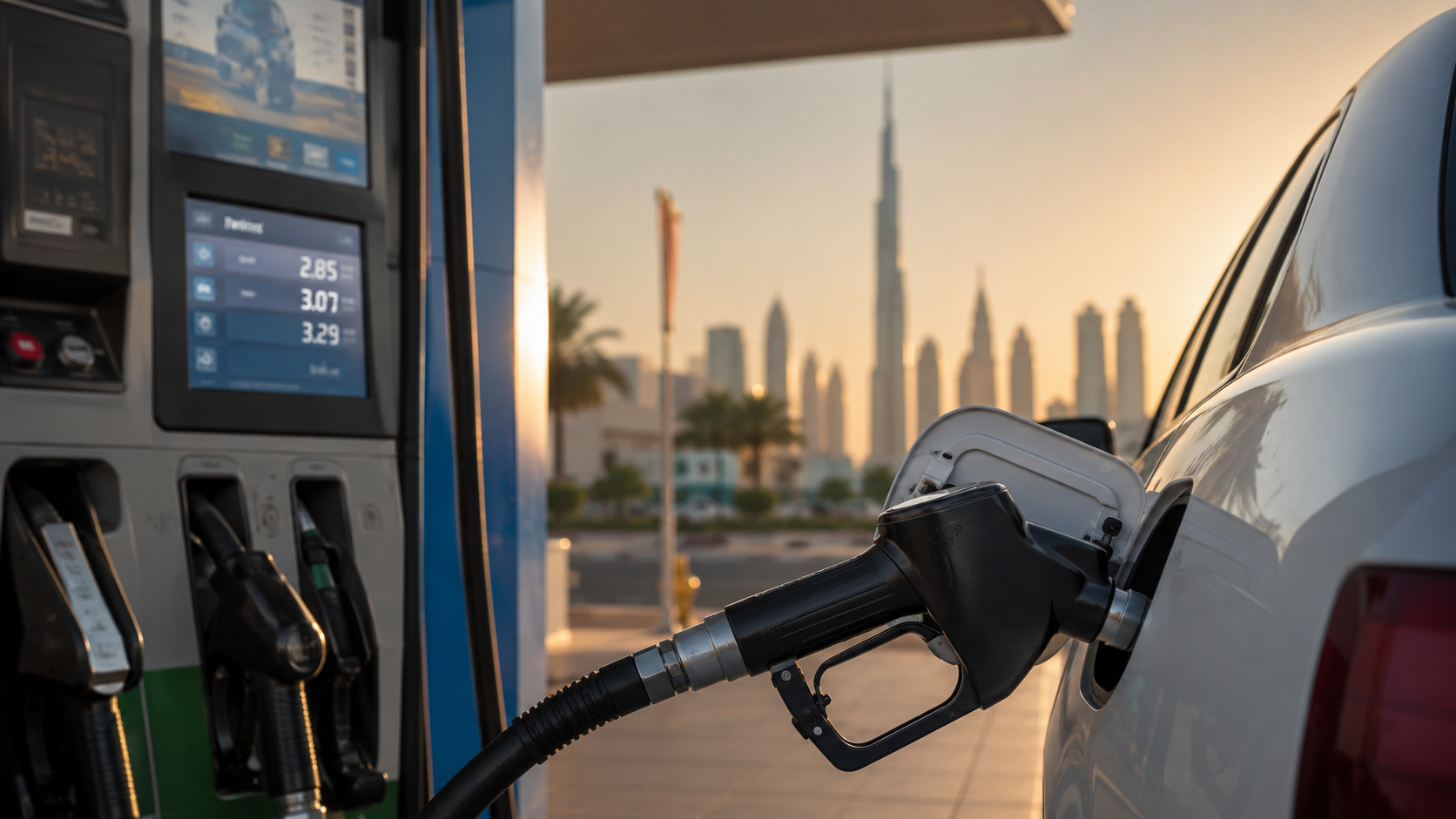
UAE Fuel Prices July 2025: Full Tank Costs Rise Across All Grades
UAE petrol prices increase in July 2025 due to global oil surge. Compare full tank costs for compact cars, sedans, and SUVs across all fuel grades.
By Vadim Kouznetsov, published

The UAE has implemented fuel price adjustments for July 2025, marking an increase across all petrol grades as global oil markets respond to heightened geopolitical tensions. The Ministry of Energy’s Fuel Prices Monitoring Committee announced the revised rates, effective from July 1st, reflecting the impact of international conflicts on local pump prices.
July 2025 Fuel Price Breakdown
The latest pricing structure shows notable increases compared to June, driven by volatile international markets following the Israel-Iran conflict and subsequent US military actions targeting Iranian nuclear facilities.
The increases range from AED 0.11 to AED 0.12 per litre, representing approximately 4.5% growth across all fuel categories. This marks the first significant price adjustment after several months of relative stability in the Emirates’ fuel market.
Full Tank Costs by Vehicle Type
Understanding the practical impact of these price changes requires examining costs across different vehicle categories. Here’s how the July increases affect your refuelling expenses:
Compact Cars (51-litre tank capacity)
Sedan Vehicles (62-litre tank capacity)
SUVs and Larger Vehicles (74-litre tank capacity)
Global Market Factors Driving Price Changes
The July 2025 price adjustments reflect several interconnected global factors affecting international oil markets. The Israel-Iran conflict that erupted in June created immediate supply concerns, whilst subsequent US military strikes on Iranian nuclear facilities further intensified market volatility.
Oil market analysts point to the ripple effects of these geopolitical events, which have pushed benchmark Brent crude prices higher throughout June. The UAE’s monthly pricing mechanism, which calculates local rates based on average global oil prices plus distribution costs, directly translates these international market movements into local pump prices.
Economic Impact on UAE Residents
The fuel price increases carry broader economic implications for UAE residents and businesses. Transportation costs represent a significant portion of household budgets, particularly for families dependent on private vehicles for daily commuting.
Commercial sectors including logistics, delivery services, and transportation companies face heightened operational expenses. These cost pressures often translate into adjusted service charges, potentially affecting consumer prices across various sectors.
However, the UAE’s diversified economy and strategic fuel subsidies help mitigate extreme price volatility, maintaining relative affordability compared to many global markets.
Budget Planning Tips for Motorists
Given the current price trajectory, UAE motorists can adopt several strategies to manage fuel expenses effectively:
Fuel-Efficient Driving: Maintaining steady speeds, avoiding rapid acceleration, and regular vehicle maintenance can improve fuel economy by 10-15%.
Route Optimisation: Planning efficient routes and combining errands into single trips reduces total fuel consumption.
Alternative Transportation: Consider public transport, carpooling, or cycling for shorter distances to reduce petrol dependency.
Price Monitoring: Track monthly price announcements to time non-urgent refuelling activities when prices are more favourable.
Looking Ahead: August 2025 Price Outlook
Industry experts suggest that August fuel prices will depend largely on the resolution of current geopolitical tensions and OPEC production decisions. Market stability requires reduced conflict intensity and restored supply chain confidence.
The UAE’s pricing committee continues monitoring international markets closely, with the next monthly announcement scheduled for July 31st. Residents should expect continued price sensitivity to global events, particularly developments in Middle Eastern geopolitics and US energy policy.
Economic forecasts indicate that fuel price volatility may persist through the third quarter of 2025, with stabilisation dependent on broader international diplomatic progress.
Key Takeaway
UAE motorists face higher fuel costs in July 2025, with petrol prices increasing by AED 0.11-0.12 per litre across all grades due to global oil market volatility following Middle Eastern conflicts. A full tank now costs AED 6-9 more depending on vehicle size, prompting the need for careful budget planning and fuel-efficient driving practices.
Further Reading
The UAE week, every Monday
The week's stories on jobs, visas, money and daily life in one short email. Unsubscribe in one click.