UAE Court Fines Woman Dh30,000 for WhatsApp Voice Note
An Abu Dhabi court fined a woman Dh30,000 for an insulting WhatsApp voice note. Here’s what UAE cybercrime law says about private messages.
By Vadim Kouznetsov, published
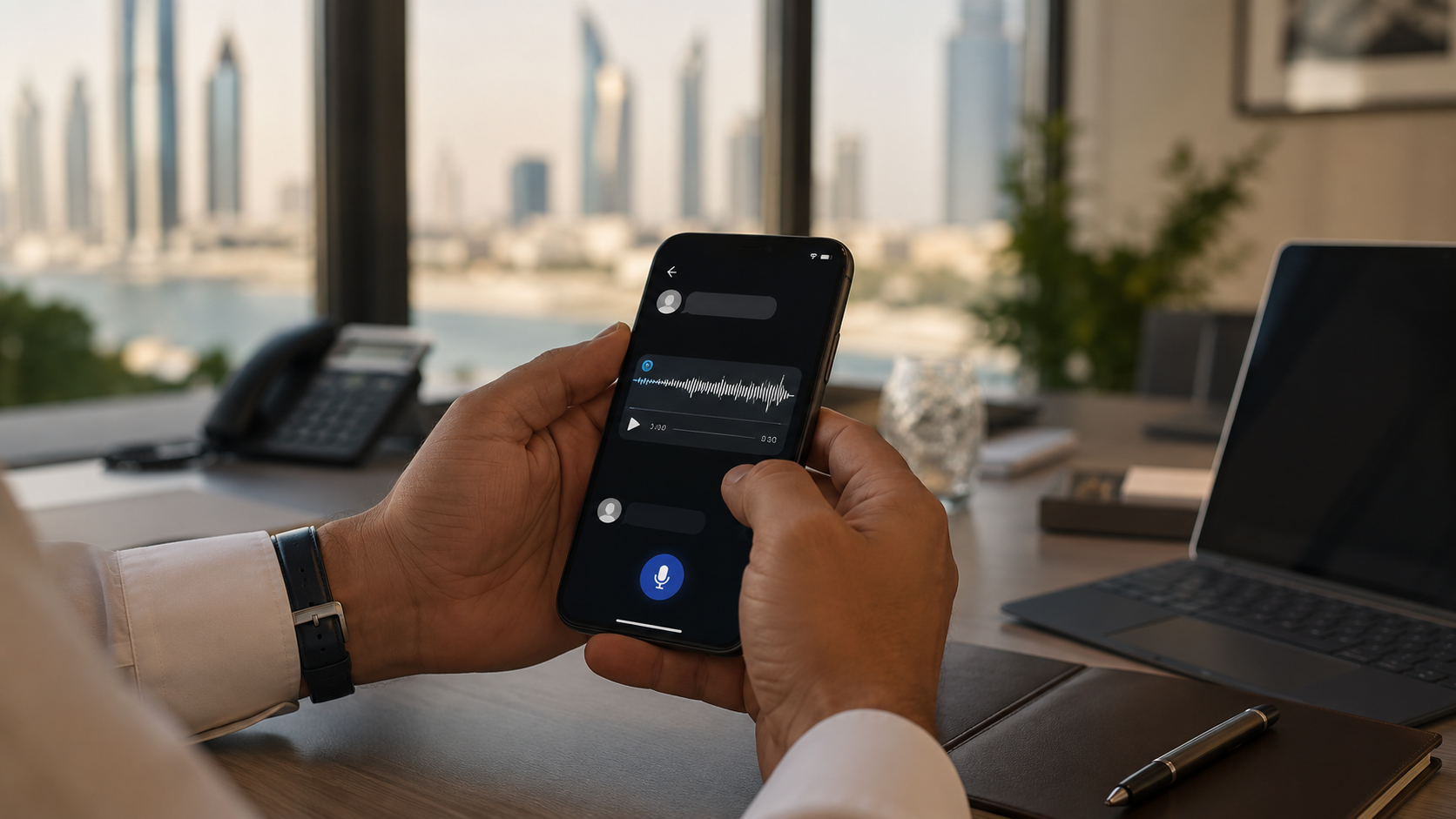
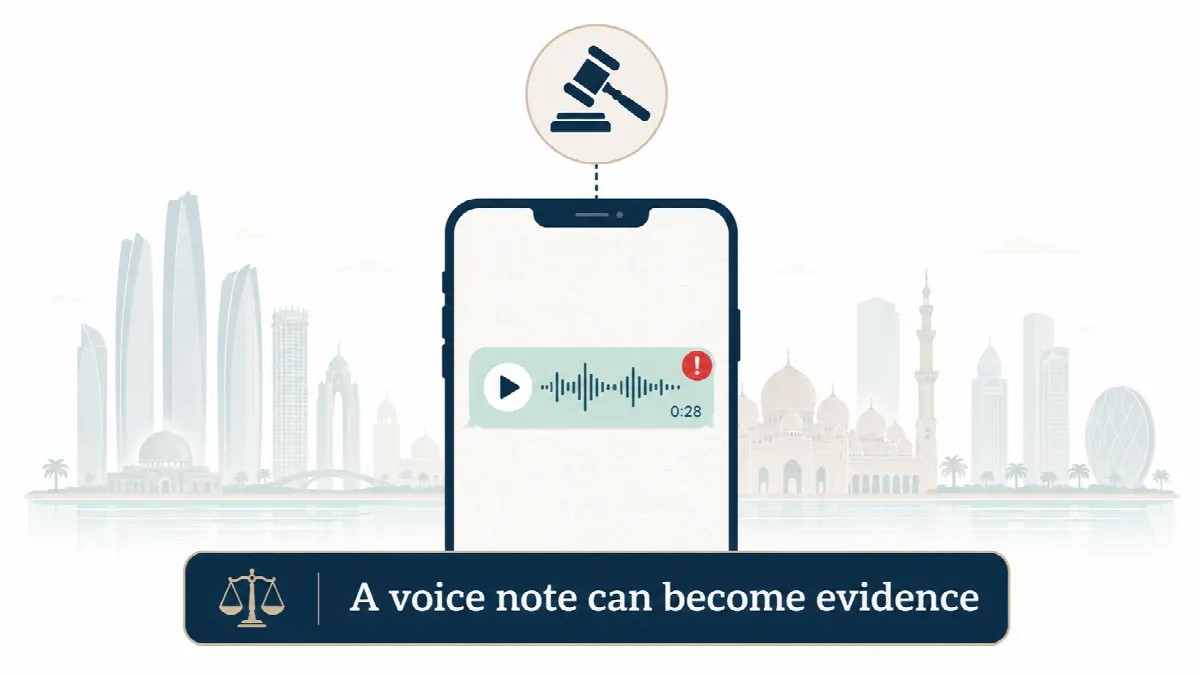
Key takeaway: An Abu Dhabi court fined a woman Dh30,000 and ordered her to pay Dh21,000 in temporary compensation for sending an insulting WhatsApp voice note to a former colleague. Under UAE cybercrime law, a private message counts as evidence, and a personal friendship is no defence. A few seconds of audio sent in anger became the proof that convicted her.
A short voice note, sent in a moment of frustration, has cost a woman in Abu Dhabi Dh30,000. The Criminal Court convicted her of insulting a former colleague over WhatsApp, ordering the fine plus Dh21,000 in temporary compensation. It’s a sharp reminder that in the UAE, what you say in a private chat carries the same legal weight as anything posted in public.
What happened
According to the case files, it started with an unanswered phone call. The complainant couldn’t pick up her friend’s repeated calls. Shortly after, she received a WhatsApp voice message filled with harsh insults and profanity.
Those few seconds of audio, meant as a quick emotional vent, became the material evidence against the sender. During the investigation, the defendant appeared stunned that a personal falling-out had turned into a criminal case. She admitted sending the note out of frustration at being ignored and argued there was no intent to harm, pointing to their long friendship.
The court didn’t accept that. It weighed the explicit language and the harm caused, setting aside the motive and the personal history. The ruling was clear: the law does not exempt anyone based on a personal relationship when insults are documented through technology.
Why a private message counts
Many residents assume a one-to-one chat is a private space with no legal consequences. UAE law treats it differently. Abusive or defamatory content in a private message or group chat falls under the same cybercrime rules as a public post, as we set out in our guide to how comments and messages can trigger fines under UAE cybercrime law.
The framework here is Federal Decree Law No. 34 of 2021 on countering rumours and cybercrime, later amended by Law No. 5 of 2024. It criminalises insulting another person or attributing something that harms their dignity through digital means — regardless of who can see it.
Digital records are hard evidence
The reason a voice note is so damaging in court is simple: it’s a permanent record. A recording, a screenshot or a forwarded chat can be produced as proof, and even deleted content can often be recovered through platform data. UAE courts increasingly treat this material as reliable evidence, a trend we’ve covered in the context of WhatsApp voice notes being accepted in family courts.
That permanence is exactly why an impulsive message is riskier than a spoken argument. The words don’t fade — they sit on a server, ready to be replayed.
Where the line sits
There’s a difference between disagreement and an insult. Expressing that you’re upset, or raising a genuine complaint, is not a crime. Profanity aimed at a person, or language that attacks their dignity, is. The same distinction runs through UAE rules on posting online reviews and feedback, where honest criticism is protected but personal attacks are not.
The safest habit is to pause before sending anything written in anger. If a message contains a personal insult, assume it could end up in front of a judge.
How to protect yourself
- Cool off before replying. If you’re angry, draft nothing. A delay of a few minutes avoids most of these situations.
- Keep it about the issue, not the person. State the problem without personal attacks or profanity.
- Don’t forward abusive content either. Passing on someone else’s insulting message can also carry risk.
- Save evidence if you’re the target. If someone abuses you online, keep the record and report it through official police channels rather than retaliating.
Frequently asked questions
Can you be fined for insulting someone on WhatsApp in the UAE? Yes. Insulting or defaming someone through a WhatsApp message, including a voice note, can be prosecuted under UAE cybercrime law, with fines and compensation orders.
Does it matter that the message was private? No. UAE cybercrime law applies to private messages and group chats, not just public posts. A one-to-one voice note can still be used as evidence.
Is a personal friendship a defence? No. In this case the court ruled that a personal relationship does not exempt someone when explicit insults are documented digitally.
What law covers this? Federal Decree Law No. 34 of 2021 on rumours and cybercrime, amended by Law No. 5 of 2024, which criminalises online insults and content that harms another person’s dignity.
Can deleted messages still be used against me? Often yes. Digital records, including deleted content, can be recovered through platform data and presented as evidence.
What should I do if someone insults me online? Keep the evidence and report it through official UAE police channels, such as the eCrime or Aman platforms, rather than responding in kind.
Further reading
- UAE Social Media Laws: How Comments Can Lead to Fines
- WhatsApp Divorce in the UAE: Digital Evidence in Family Courts
- UAE’s 6 Banned Online Content Types: Fines and Jail Risk
- UAE Hate Speech Law: Fines and Prison Terms Explained
- UAE Online Review Laws: Posting Feedback Without Legal Trouble
Disclaimer: This article provides general information about UAE law and is not legal advice. For guidance on a specific situation, consult a qualified legal professional.
The UAE week, every Monday
The week's stories on jobs, visas, money and daily life in one short email. Unsubscribe in one click.