Emirates Expects Full Flight Network to Resume in Days as Airspace Reopens
Emirates to restore full 140-destination network in days. Currently at 83 destinations with 106 daily flights. UK, India, US routes boosted.
By Vadim Kouznetsov, published
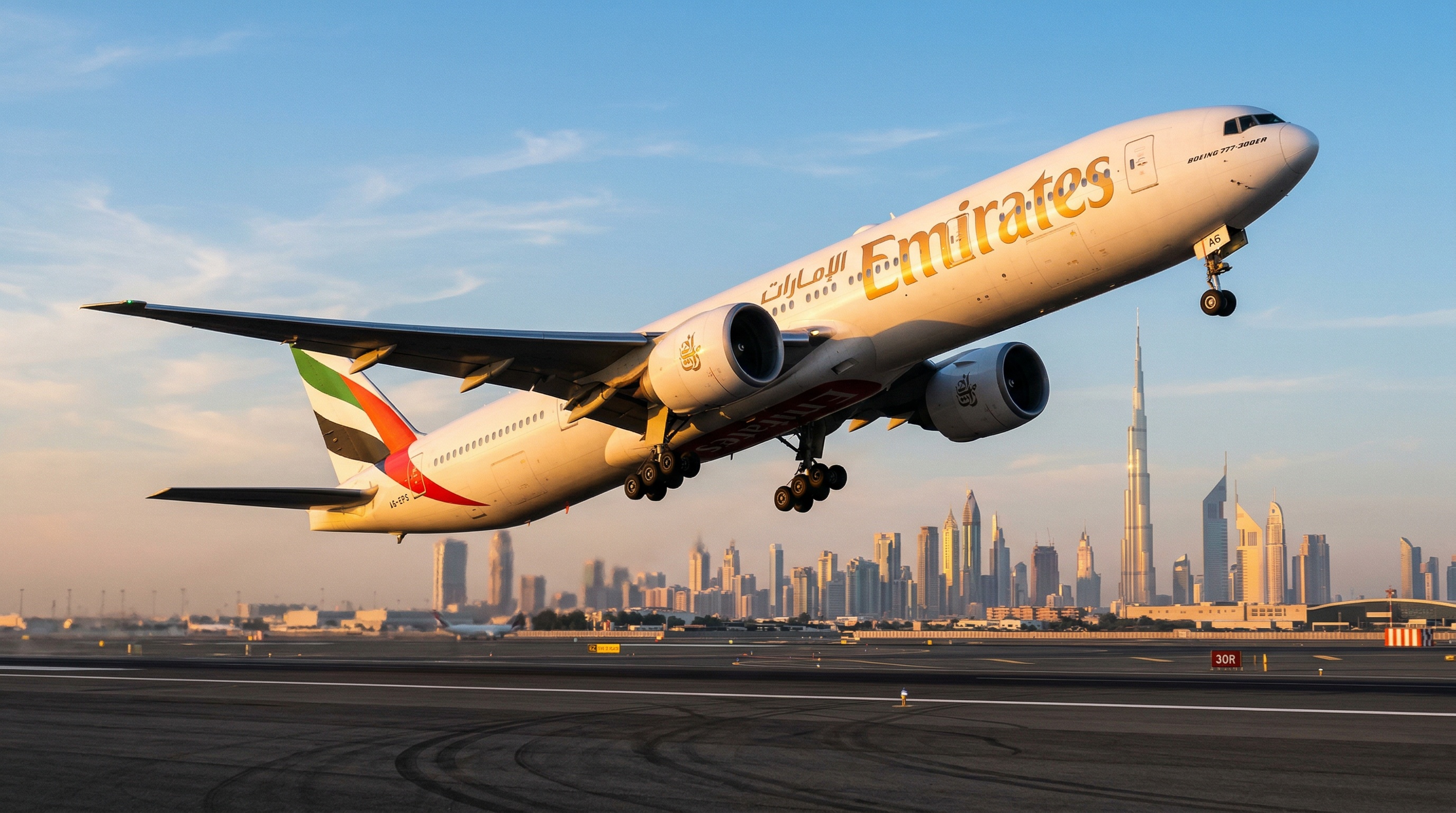
Emirates expects to restore 100 per cent of its global network within the coming days, as regional airspace gradually reopens following the US-Israel war on Iran.
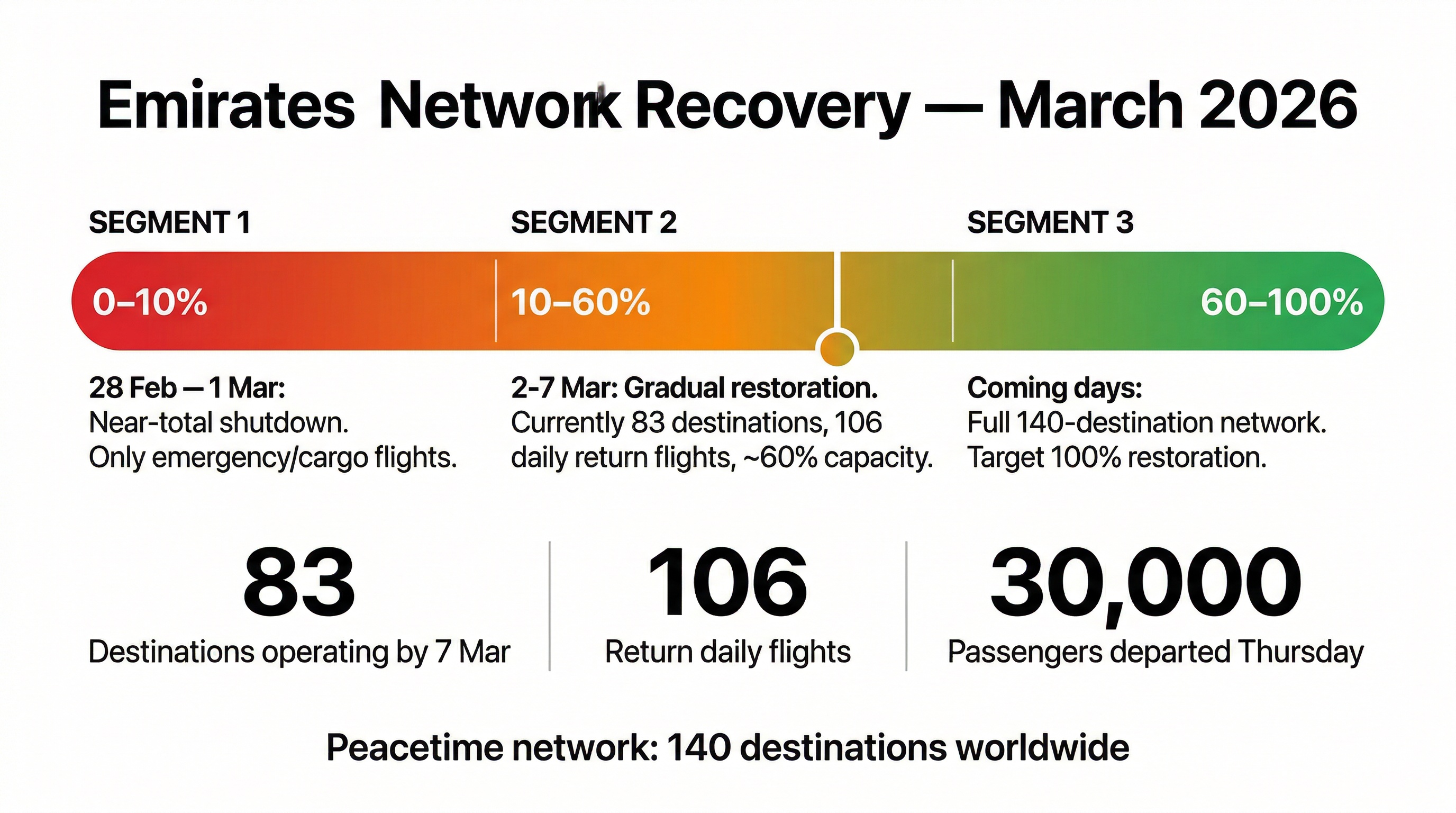
By 7 March 2026, the Dubai-based carrier will operate 106 return daily flights to 83 destinations — representing almost 60 per cent of its 140-destination peacetime network. On Thursday alone, Emirates transported around 30,000 passengers out of Dubai as airlines worked to clear travel backlogs from the week-long disruption.
For the tens of thousands of travellers stranded or waiting for flights, this is the clearest signal yet that normal aviation is returning.
What Is the Current Emirates Schedule?
Emirates is operating a reduced but rapidly expanding flight schedule. Here’s what’s confirmed:
As of 7 March 2026: 106 return daily flights to 83 destinations worldwide — roughly 60% of the full network.
Full network target: Emirates anticipates restoring 100% of operations within the coming days, subject to airspace availability and operational requirements.
Passengers moved: Approximately 30,000 passengers departed Dubai on Thursday, 6 March.
Peacetime comparison: Emirates normally flies to 140 destinations. The current 83 destinations represent significant recovery from the near-total shutdown at the conflict’s peak.
The airline confirmed that safety remains the top priority and it will adjust operations as necessary based on regional developments.
Which Routes Have Increased Capacity?
Emirates has boosted capacity on several high-demand corridors where travel backlogs are most severe:
United Kingdom — 11 Daily Flights
Emirates will operate 11 daily flights across five UK airports by 7 March. This reflects the strong travel demand between the UAE and Britain — one of Emirates’ busiest markets.
The UK is home to a large UAE-connected diaspora and a major business travel corridor. The rapid restoration of 11 daily services suggests that airspace over Saudi Arabia and the Red Sea — the alternative routing when Iranian airspace is restricted — is functioning effectively for European routes.
India — 22 Daily Flights
Emirates will operate 22 daily services across nine Indian gateways — one of the highest-capacity restorations in the network.
India is the UAE’s largest source of expatriate population, and flight demand between the two countries has been especially acute during the disruptions. Thousands of Indian passengers were stranded in the UAE during the conflict’s first days, with alternative routes coordinated through Etihad Rail and land border crossings.
United States — 7 Destinations
Emirates continues to operate flights to seven American destinations, maintaining connectivity between the US and UAE. Given the long-haul nature of these routes and the need to avoid Iranian airspace, these flights likely operate via extended southern corridors.
What Should Passengers Do?
Emirates has issued specific guidance for travellers:
Existing bookings are being prioritised. If you had a flight cancelled during the conflict, Emirates is working through the backlog. Customers with confirmed bookings are being allocated seats as capacity returns.
Only travel to the airport with a confirmed booking. Airport access at DXB and DWC remains restricted. Do not go to the airport without a confirmed ticket — you may be turned away.
Check the Emirates website and social media channels before travelling. The schedule is changing rapidly as more destinations are added, and flight times may differ from original bookings.
Rebooking and refund policies remain relaxed. If you need to change your travel dates, Emirates’ flexible policies from the conflict period are still in place.
For a detailed breakdown of your rights when flights are disrupted during conflicts, our guide on UAE flight cancellation rights and rebooking covers what airlines owe you.
How Does This Compare to Other UAE Airlines?
Emirates is the first major UAE carrier to signal near-full restoration. Here’s where the other airlines stand based on the latest available information:
Etihad Airways: Was suspended until 2 PM on 5 March. Has been gradually resuming limited flights from Abu Dhabi. Check the Etihad website directly for current schedules.
Air Arabia: Was suspended until 3 PM on 4 March. Has resumed limited operations from Sharjah. Budget carrier schedules tend to recover quickly once airspace is confirmed safe.
flydubai: Has been operating limited services. As a Boeing 737 operator focused on shorter regional routes, flydubai’s recovery depends heavily on the status of airspace over Iraq and Iran.
SalamAir: Operating from Fujairah, including Muscat routes — one of the few alternatives that remained active throughout the disruptions.
The GCAA has been managing emergency corridor operations at 48 flights per hour, with a target of 80 daily flights. Emirates’ announcement of 106 daily return flights suggests capacity is now exceeding the emergency corridor phase.
Schools and Early Spring Breaks
Alongside the flight recovery, schools and universities across the UAE have announced early spring breaks, with some exams cancelled due to the disruption. Distance learning was in place nationwide until at least 6 March.
For parents planning travel now that flights are resuming, the Dubai school calendar 2025-2026 and the UAE 2025-2026 academic calendar provide the full term dates to plan around.
The Bigger Picture: UAE Aviation Recovery
Emirates’ rapid restoration underscores the resilience of Dubai’s aviation infrastructure. The airline creates 185,000 jobs for Dubai and accounts for 28% of the emirate’s GDP — making a fast recovery not just an operational priority but an economic imperative.
Dubai International Airport handled 60.2 million passengers in 2024, making it the world’s busiest airport for international traffic. Every day of disruption represents massive economic losses for the airline, the airport, tourism, and the thousands of businesses that depend on connectivity.
The fact that Emirates is projecting full network recovery “within days” — less than a week after the strikes began on 28 February — suggests that:
- Regional airspace is reopening faster than during the June 2025 conflict (when disruptions lasted over 10 days)
- Alternative routing through Saudi Arabia and the Red Sea has proven effective
- The military situation, while ongoing, has stabilised enough for civilian aviation to resume
- UAE air defences have provided sufficient confidence for airspace reopening
For those who were affected by flight disruptions during the June 2025 conflict, the safety guide for Dubai visitors remains a useful resource for understanding how the Emirates manages regional tensions.
Key Takeaway
Emirates expects to restore its full 140-destination global network within days as regional airspace reopens. By 7 March, the airline will operate 106 return daily flights to 83 destinations — 60% of its peacetime capacity. Approximately 30,000 passengers departed Dubai on Thursday. High-demand markets including the UK (11 daily flights), India (22 daily flights), and the US (7 destinations) have received boosted capacity. Passengers should only travel to the airport with confirmed bookings and check the Emirates website for the latest schedule updates.
Frequently Asked Questions
When will all Emirates flights resume?
Emirates expects to restore 100% of its global network “within the coming days,” subject to airspace availability and operational requirements. By 7 March 2026, the airline will operate 106 return daily flights to 83 of its 140 peacetime destinations.
How many flights is Emirates operating now?
As of 7 March 2026, Emirates is operating 106 return daily flights to 83 destinations — approximately 60% of its full network. On Thursday 6 March, the airline transported around 30,000 passengers from Dubai.
Are Emirates flights to the UK operating?
Yes. Emirates will operate 11 daily flights across five UK airports by 7 March. This is one of the carrier’s highest-priority market restorations.
Are Emirates flights to India running?
Yes. Emirates is operating 22 daily services across nine Indian gateways — the largest regional capacity increase in the current schedule. This reflects the high demand from India’s large expat population in the UAE.
Should I go to the airport without a confirmed booking?
No. Airport access at DXB and DWC remains restricted to confirmed passengers only. Do not travel to the airport without a confirmed booking — you may be turned away. Check the Emirates website or app for the latest updates on your flight.
What are my rights if my Emirates flight was cancelled?
Emirates has relaxed rebooking and refund policies during the conflict. If your flight was cancelled, you are entitled to free rebooking, a full refund, or a travel voucher. Existing bookings are being prioritised as capacity returns. Do not cancel before the airline offers alternatives — this preserves your rights.
Further Reading
- Iran-Israel Conflict: UAE Flight Cancellation Rights & Rebooking Guide
- Emirates Creates 185,000 Jobs for Dubai as World’s Most Profitable Airline
- Is Dubai Safe to Visit Now? Travel Advisory & Safety Guide
- Everything You Need to Know About Etihad Airways
- Dubai School Calendar 2025–2026: Key Dates for Private Schools
- Emirates Careers 2025: Complete Application Guide
The UAE week, every Monday
The week's stories on jobs, visas, money and daily life in one short email. Unsubscribe in one click.