Dubai Metro Blue Line 2025: Routes, Stations & World Record Guide
Dubai Metro Blue Line launches 2029 with world’s highest station at 74m, AED 56bn investment, 30km track, and first Dubai Creek metro bridge.
By Vadim Kouznetsov, published
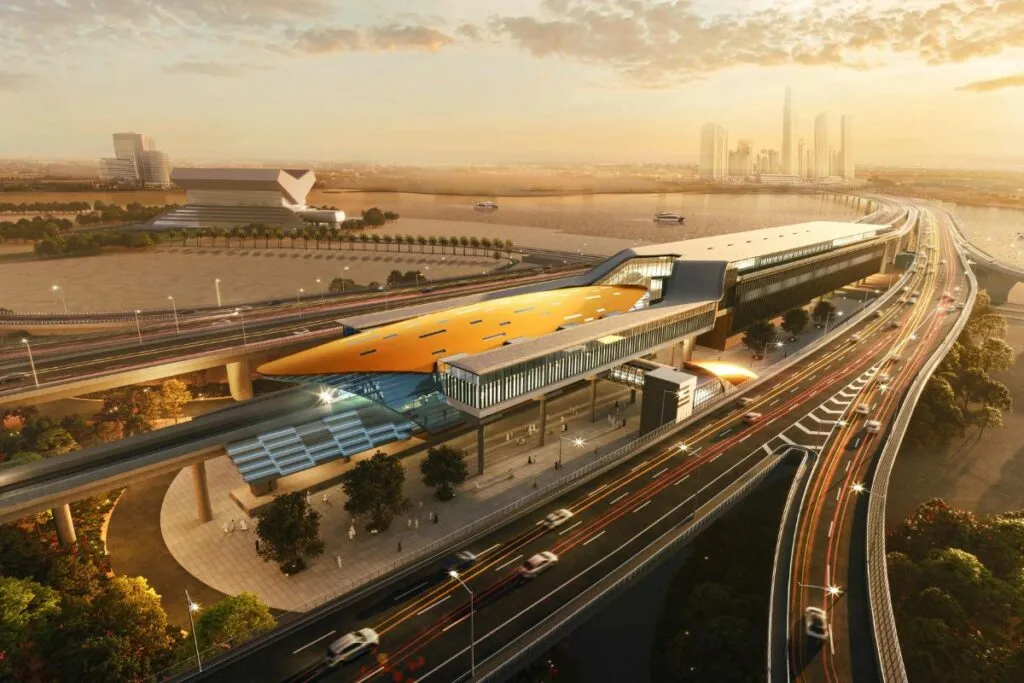
Key Takeaway: Dubai’s AED 56 billion Metro Blue Line will launch in 2029 with 30 kilometres of track, 14 stations including the world’s highest metro station at 74 metres, and Dubai’s first metro bridge over Dubai Creek, connecting major areas like Academic City, Silicon Oasis, and Dubai Festival City.
His Highness Sheikh Mohammed bin Rashid Al Maktoum officially laid the foundation stone for Dubai Metro’s Blue Line on 9 June 2025, marking a historic milestone in the emirate’s transport expansion. This ambitious project will transform urban mobility whilst setting new world records in metro infrastructure.
AED 56 Billion Investment: Dubai’s Transport Revolution
The Blue Line represents Dubai’s largest single transport infrastructure investment, expanding the metro network by 30 kilometres to reach a total of 131 kilometres with 78 stations across the emirate. This massive expansion demonstrates Dubai’s commitment to smart, sustainable urban development and greater connectivity across neighbourhoods.
The project forms a cornerstone of Dubai’s long-term strategy to reduce traffic congestion and promote public transport usage across the emirate.
World’s Highest Metro Station: Breaking Global Records
Emaar Properties Station: 74 Metres High
The upcoming Emaar Properties Station will become the tallest metro station globally, standing at an impressive 74 metres high. Designed by Skidmore, Owings & Merrill (SOM) – the renowned architects behind Burj Khalifa – this station reflects Dubai’s futuristic vision.
Station Specifications:
- Total area: 11,000 square metres
- Daily capacity: Up to 160,000 passengers
- Projected daily usage: Over 70,000 passengers by 2040
- Design inspiration: “Crossing gateway” concept blending with surroundings
The station will feature premium materials, natural lighting, and integrated urban development, establishing a new architectural landmark for Dubai.
Dubai Creek Metro Bridge: A First for the Emirates
One of the Blue Line’s most significant features includes a 1.3-kilometre bridge over Dubai Creek – the first metro bridge of its kind in Dubai’s transport system. This engineering marvel will provide seamless connectivity whilst preserving the historic waterway’s character.
The bridge design incorporates advanced engineering solutions to manage both maritime traffic below and metro operations above, creating a harmonious integration with Dubai’s urban landscape.
Two Strategic Routes: Maximum Connectivity
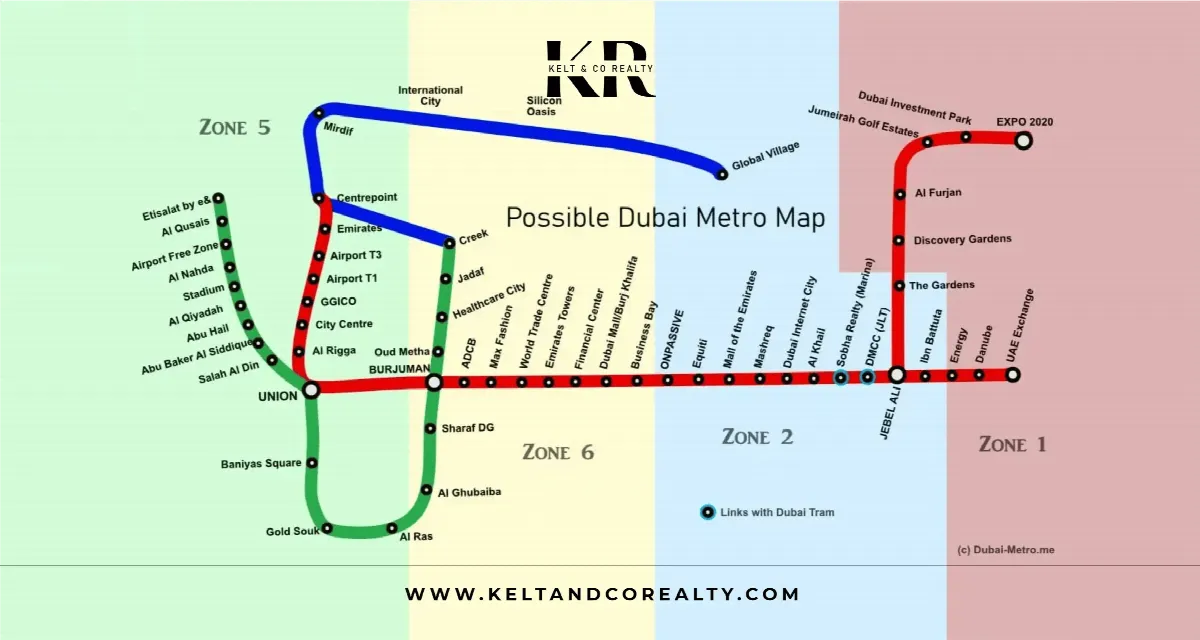
Route 1: Green Line Connection (21 km, 10 stations)
Starting Point: Al Khor Interchange Station (Green Line) in Al Jaddaf
Route Progression:
- Dubai Festival City
- Dubai Creek Harbour
- Ras Al Khor
- International City 1, 2 & 3
- Dubai Silicon Oasis
- Dubai Academic City
- Terminus: Al Ruwaiyah 3 Depot
Route 2: Red Line Connection (9 km, 4 stations)
Starting Point: Centrepoint Interchange Station (Red Line) in Al Rashidiya
Route Progression:
- Mirdif
- Al Warqa
- International City 1
- Connection: Links with Route 1 at International City
Three Major Interchange Stations
The Blue Line will feature three critical interchange stations providing seamless connections:
Al Jaddaf Interchange (Green Line)
- Connects Blue Line with existing Green Line services
- Serves Dubai Festival City and surrounding areas
- Features enhanced capacity for increased passenger flow
Al Rashidiya Interchange (Red Line)
- Links Blue Line with Red Line operations
- Provides access to Dubai International Airport vicinity
- Supports Mirdif and Al Warqa connectivity
International City 1 Interchange
- Largest underground interchange in the network
- Coverage area: 44,000 square metres
- Daily capacity: 350,000 passengers
- Serves as central hub connecting both Blue Line routes
Nine Strategic Areas Connected
The Blue Line will enhance direct access to major Dubai destinations:
Transport & Infrastructure:
- Dubai International Airport – Enhanced airport connectivity
- Mirdif – Residential and commercial hub access
Residential & Commercial Zones:
- Al Warqa – Growing residential community
- International City 1 & 2 – Dense residential areas
- Dubai Festival City – Shopping and entertainment destination
Business & Education:
- Dubai Silicon Oasis – Technology and business hub
- Academic City – Educational institutions cluster
- Ras Al Khor Industrial Area – Manufacturing and logistics
Development Areas:
- Dubai Creek Harbour – Premium waterfront development
Modern Station Features and Accessibility
Blue Line stations will incorporate cutting-edge facilities:
Transport Integration:
- Dedicated bus bays for seamless transfers
- Taxi ranks for convenient onward travel
- Bike and e-scooter zones supporting sustainable transport
Accessibility Features:
- Barrier-free accessibility throughout all stations
- Premium materials and natural lighting
- Integrated urban development approach
These features align with Dubai’s vision of creating an inclusive, accessible transport network for all residents and visitors.
2029 Launch Date: Celebrating 20 Years of Dubai Metro
The Blue Line’s scheduled opening date of September 2029 holds special significance, coinciding with the Dubai Metro’s 20th anniversary. This maintains the symbolic connection to the number nine – a tradition beginning with the original metro launch in 2009.
The timing reflects Dubai’s strategic planning approach, allowing sufficient construction time whilst meeting the emirate’s transport expansion goals.
Integration with Dubai’s Transport Network
The Blue Line enhances Dubai’s comprehensive public transport system, building upon recent developments including expanded bus routes and improved transport policies.
Recent ridership growth demonstrates increasing public transport adoption, whilst innovative solutions like e-scooter integration show Dubai’s commitment to multimodal transport.
Construction Timeline and Development Phases
Phase 1: Foundation and Infrastructure
- Foundation stone laid June 2025
- Underground sections development priority
- Bridge construction over Dubai Creek
Phase 2: Station Construction
- World record Emaar Properties Station development
- Interchange station construction at key points
- Integration with existing Red and Green Lines
Phase 3: Systems Integration
- Train procurement and testing
- Signalling and safety systems installation
- Staff training and operational preparation
Technical Specifications Overview
Blue Line Key Statistics:
- Total length: 30 kilometres
- Underground track: 15.5 kilometres
- Above-ground track: 14.5 kilometres
- Total stations: 14
- Interchange stations: 3 major hubs
- Daily passenger capacity: Designed for Dubai’s growing population
- Integration: Seamless connection with Red and Green Lines
Supporting Dubai’s 20-Minute City Vision
The Blue Line plays a crucial role in Dubai’s vision of a “20-minute city,” where residents can access 80% of essential services within a 20-minute journey. This integration demonstrates Dubai’s commitment to sustainable urban development and efficient public transport.
The project supports reduced car dependency whilst improving quality of life for residents across the emirate.
Economic Impact and Employment Opportunities
The AED 56 billion investment will generate substantial economic benefits:
Construction Phase Benefits:
- Thousands of direct construction jobs
- Supporting industries and suppliers engagement
- Local business opportunities in affected areas
Operational Phase Benefits:
- Permanent employment in transport operations
- Increased property values along the route
- Enhanced business accessibility and growth
Long-term Economic Growth:
- Improved connectivity supporting business expansion
- Reduced transport costs for residents and businesses
- Enhanced Dubai’s position as a global transport hub
Environmental Sustainability Features
The Blue Line incorporates sustainable design principles:
Energy Efficiency:
- Modern trains with reduced energy consumption
- Solar panels and renewable energy integration where possible
- LED lighting throughout stations and infrastructure
Environmental Protection:
- Reduced carbon emissions through increased public transport usage
- Integration with Dubai’s broader sustainability goals
- Green building standards for station construction
Future Integration with Regional Transport
The Blue Line forms part of Dubai’s broader transport strategy, potentially connecting with:
Etihad Rail Integration:
- Future connections with UAE-wide rail network
- Enhanced inter-emirate connectivity
- Seamless travel across the UAE
Airport Connectivity:
- Improved access to Dubai International Airport
- Support for Dubai’s aviation hub status
- Enhanced tourist and business traveller experience
Preparing for the Blue Line Launch
For Residents:
- Monitor construction updates and traffic diversions
- Plan future commuting strategies considering new connections
- Explore areas served by the Blue Line for residential or business opportunities
For Businesses:
- Consider relocating or expanding to Blue Line catchment areas
- Prepare for improved employee accessibility
- Explore opportunities in construction and operational phases
For Investors:
- Research property investment opportunities along the route
- Consider long-term value appreciation potential
- Monitor commercial development plans in served areas
Looking Ahead: Dubai’s Transport Future
The Blue Line represents just one element of Dubai’s comprehensive transport development, including traffic solutions and innovative mobility options.
As Dubai continues expanding its transport infrastructure, the Blue Line will serve as a model for future developments, demonstrating the emirate’s commitment to world-class urban mobility solutions.
The project exemplifies Dubai’s vision of becoming a global leader in smart city development, sustainable transport, and urban planning excellence.
Further Reading
The UAE week, every Monday
The week's stories on jobs, visas, money and daily life in one short email. Unsubscribe in one click.