AI Could Cost India Millions of Outsourcing Jobs, Says Dubai Billionaire
Damac’s Hussain Sajwani warns AI will replace 80% of outsourced jobs. India, Europe at risk while UAE, China, US lead AI adoption. WEF 2026 insights.
By Vadim Kouznetsov, published
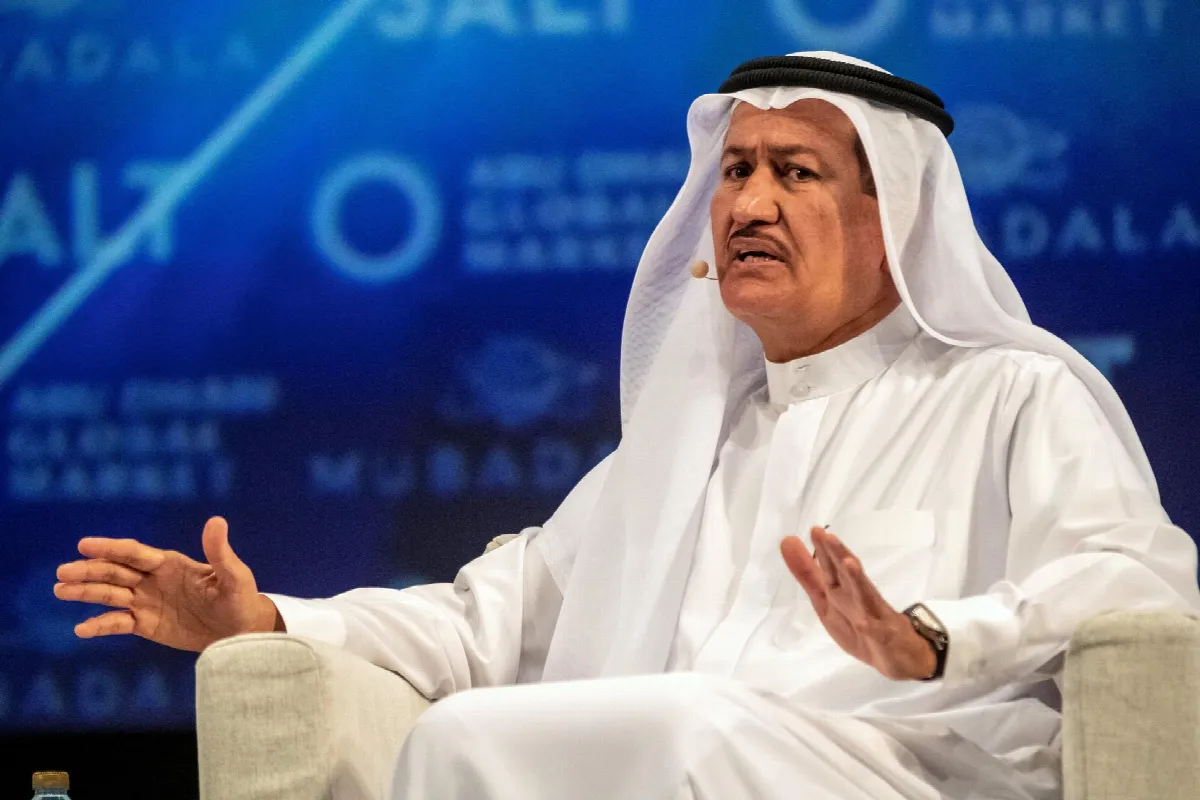
Artificial intelligence will hit countries that benefit from outsourcing and exporting their workforce, Dubai billionaire Hussain Sajwani warned at the World Economic Forum 2026 in Davos.
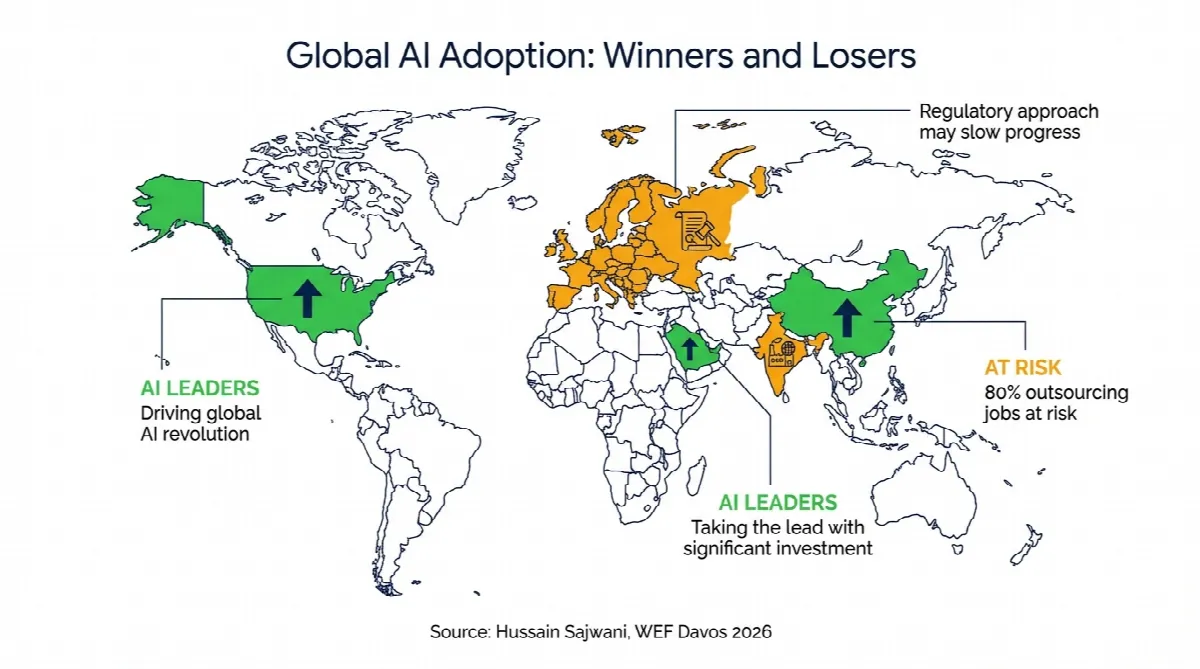
The Damac founder said India could lose significant outsourcing business as AI replaces roles previously handled by human workers. Countries that fail to embrace AI risk falling behind, similar to historical examples where technological adoption determined economic success.
What Did Sajwani Say About AI’s Impact on Outsourcing?
Speaking during a panel discussion on prosperity in the Middle East, Sajwani drew parallels between AI adoption today and past technological revolutions.
“AI is going to change the world. How the Internet revolutionised the world, AI is going to do it 10 or even 100 times more,” he said.
He cited historical examples: the Ottoman Empire’s refusal to adopt the typewriter left it behind, while Europe’s embrace of the Industrial Revolution reversed its position relative to the Middle East and Arabs who were “much more advanced” in the 11th-12th centuries.
“One of the countries going to suffer is India, because a lot of outsourcing was happening from companies like us, America and others. They’re not required to employ Indians because AI is going to take 80 per cent of accountant jobs, nurses and so on and so forth,” Sajwani added.
The Damac chairman recently announced a $20 billion investment in data centres in the United States, signalling his commitment to AI infrastructure development.
Which Countries Are Leading in AI?
According to Sajwani, a clear divide is emerging between countries embracing AI and those hesitating:
| Leading Countries | Position |
|---|---|
| China | Major investment in AI development |
| United States | Driving global AI revolution |
| UAE | Taking the lead with significant investment |
| Saudi Arabia | Putting substantial effort and money into AI |
“Countries that go with AI will move forward. China, America, the UAE, and Saudi Arabia are taking the lead and moving forward quickly as they’re putting a lot of time, effort, and money into it,” Sajwani said.
He acknowledged that while the UAE and Saudi Arabia are “small economies” that won’t “make a dent globally,” America and China are driving the major transformation.
Why Does Sajwani Think Europe Will Fall Behind?
The Dubai billionaire expressed concern that Europe is “not moving forward in AI” and predicted regulatory responses could make the situation worse.
“I have a feeling that when the AI hits the European job market, they will regulate it, and that will make it even worse, because countries are going to protect the jobs and don’t embrace AI.”
He suggested the gap between countries that embrace AI and those that don’t could mirror the current gap between Europe and Africa.
How Is the UAE Responding to AI and Labour Changes?
Dr Thani Al Zeyoudi, UAE Minister of Foreign Trade, reinforced these themes during a separate panel discussion at Davos.
He confirmed the UAE is increasingly deploying robotics and AI across construction and manufacturing sectors due to difficulty attracting young, non-skilled workers.
“As a nation, we welcome everyone, and we are attracting talent. One of the challenges we face is that we’re heavily dependent on non-skilled labour for construction. It’s becoming aging. It’s too difficult to attract new young people to start working in construction. Robotics is the main solution,” Al Zeyoudi said.
This reflects broader trends in the UAE construction sector, where automation addresses labour shortages while maintaining growth.
What Does This Mean for Job Seekers?
For professionals in outsourcing-dependent economies, Sajwani’s comments highlight the urgency of developing AI skills. Roles most at risk include:
- Accountants and financial processing
- Administrative support functions
- Basic analytical work
- Transcription and data entry
- Customer service automation
However, the UAE AI job market shows strong demand for professionals who can work with AI technology rather than against it. Mid-level AI roles in the UAE command AED 250,000 to AED 400,000 annually, with salaries expected to rise.
Research from Cooper Fitch suggests 55% of GCC firms are merging roles rather than eliminating positions entirely—indicating that AI adoption focuses on task automation rather than complete job replacement.
What About Gaza Reconstruction?
During the same forum, Sajwani commented on US President Trump’s recently launched Board of Peace plan for Gaza.
“The region has suffered a lot of wars, so anything for peace is music to everybody’s ear, and we love to see this initiative succeed. The region needs that. The people in Gaza need that,” he said.
On reconstruction, the UAE’s largest private developer said governments rather than private sector would need to fund rebuilding efforts.
“The private sector will be able to build, but they have to be paid because those will be mostly contractors, who are not the wealthiest people in the world. The governments will have to pitch in the amount, which will be huge. You’re talking about homes for about two million people.”
Middle East powers including Turkey, Egypt, Saudi Arabia, UAE and Qatar have joined Trump’s Board of Peace initiative.
Frequently Asked Questions
Will AI replace outsourcing jobs in India?
According to Damac founder Hussain Sajwani, AI could eliminate up to 80% of certain outsourced roles including accountants and administrative functions. Companies that previously outsourced to India may find AI solutions more cost-effective.
Which countries are leading in AI development?
China and the United States are driving global AI advancement, followed by UAE and Saudi Arabia. These nations are investing significant resources in AI infrastructure and development.
Why does Sajwani think Europe will struggle with AI?
He predicts Europe will regulate AI to protect existing jobs, which could slow adoption and leave European economies behind nations that embrace the technology fully.
How is the UAE addressing construction labour shortages?
The UAE Minister of Foreign Trade confirmed the country is deploying robotics and AI across construction and manufacturing to address difficulties attracting young workers to non-skilled construction roles.
What skills should workers develop to stay relevant?
Professionals should focus on AI-related skills, data analysis, and roles requiring emotional intelligence, creativity and complex problem-solving that AI cannot replicate.
How is the UAE job market responding to AI?
Research shows 55% of GCC companies are merging roles rather than eliminating positions. AI specialists in the UAE command salaries between AED 250,000 and AED 400,000 annually.
Further Reading
The UAE week, every Monday
The week's stories on jobs, visas, money and daily life in one short email. Unsubscribe in one click.