UAE Construction Boom: $130B Growth Creates Massive Job Opportunities
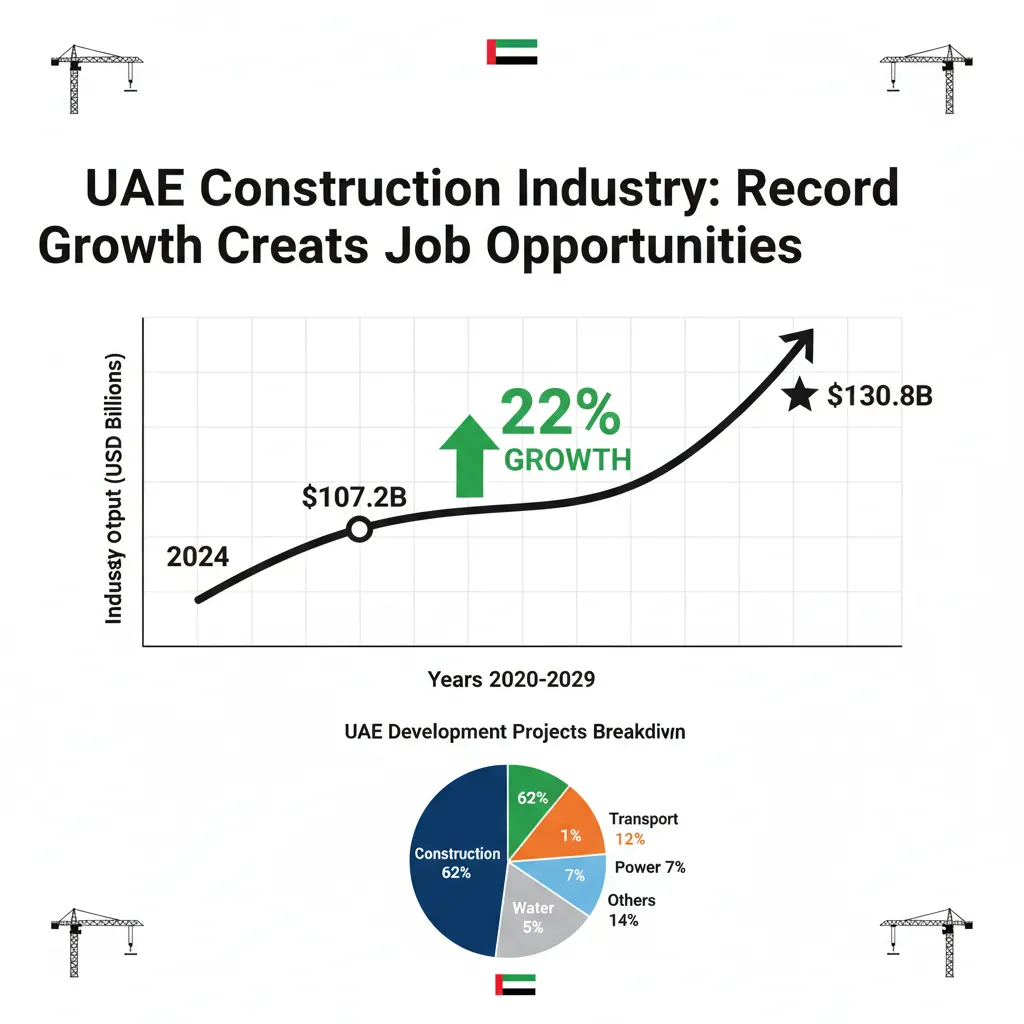
UAE construction industry surges 22% to $130.8 billion by 2029. Discover thousands of job opportunities in Dubai, Abu Dhabi across all skill levels.
By Vadim Kouznetsov, published
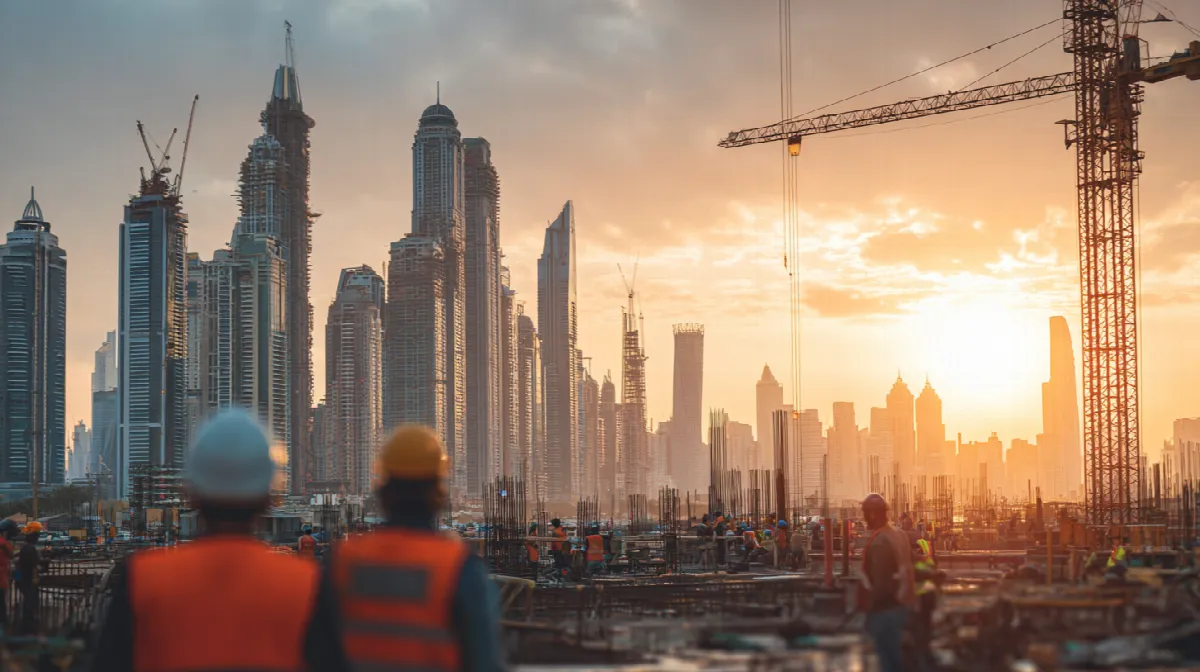
The UAE construction sector is experiencing unprecedented expansion, with industry output expected to surge 22% to reach $130.8 billion by 2029. This remarkable growth creates thousands of employment opportunities across Dubai, Abu Dhabi, and the broader Emirates, positioning the region as a global construction powerhouse.
Record-Breaking Construction Output Drives Employment
The construction industry has maintained steady upward momentum since 2020, achieving a record $107.2 billion in output during 2024. Knight Frank’s latest Construction Landscape Review forecasts continued annual growth of 4% through 2029, driven by strategic government initiatives and an extensive project pipeline.
Construction projects now account for 62% of all planned developments across the UAE, significantly outpacing transport (12%), power (7%), and water (5%) sectors. This dominance translates into sustained employment demand across multiple specialisations.
Mixed-Use Developments Lead Project Pipeline
The construction boom centres around diverse project types that require varied skill sets:
Mixed-use developments comprise 42% of the construction pipeline, creating opportunities for:
- Urban planners and architects
- Retail space designers
- Residential construction specialists
- Commercial building experts
Residential real estate represents 28% of projects, demanding:
- Civil engineers and site supervisors
- Interior designers and finishing specialists
- Property development managers
- Construction safety coordinators
Data centres account for 9% of developments, requiring:
- Electrical and mechanical engineers
- HVAC installation specialists
- Technology infrastructure experts
- Project managers with tech experience
Hospitality projects make up 4% of the pipeline, needing:
- Hotel construction specialists
- Leisure facility designers
- Tourism infrastructure experts
Construction Costs Signal Strong Market Demand
Current construction costs reflect robust market activity across residential and commercial segments:
Residential Construction Costs (Q2 2025):
- Standard villas: Dh4,200 per square metre
- High-end villas: Dh11,000 per square metre
- Standard apartments: Dh4,300 per square metre
- Luxury apartments: Dh9,500 per square metre
Commercial Construction Costs:
- Office buildings: Dh5,500-Dh7,300 per square metre
These premium costs indicate strong demand for skilled construction professionals who can deliver quality projects on schedule and within budget.
Government Vision Drives Construction Growth
The sector’s expansion aligns with major strategic initiatives, including the UAE’s 2031 vision, Dubai’s D33 Economic Agenda, the 2040 Urban Masterplan, and Abu Dhabi’s Vision 2030. Faisal Durrani, Partner and Head of Research at Knight Frank MENA, emphasises that economic diversification, tourism growth, and smart city investments fuel this development.
These government-backed initiatives create job security and long-term career prospects for construction professionals, as projects span multiple decades of planned development.
Dubai and Abu Dhabi Lead Construction Activity
The two major emirates dominate the construction landscape, accounting for 85% of total contract awards between 2020 and August 2025:
Dubai: $129.9 billion in contracts awarded
- Construction represents 75% of all project activity
- Major projects include Palm Jebel Ali, The Oasis by Emaar, and Marsa Al Arab
- Metro system expansion adds 15km with the new Blue Line
- Population projected to grow from 3.4 million (2020) to 5.8 million (2040)
Abu Dhabi: $151 billion in contracts awarded
- Oil and gas projects lead with 40% of contract awards
- New 150km high-speed rail link with Dubai planned by 2030
- Planned 131km Abu Dhabi Metro system
- 890 residential units delivered in H1 2025, with 33,000+ under construction
Massive Infrastructure Projects Create Specialized Roles
Several mega-projects are generating substantial employment across various construction disciplines:
Dubai Projects:
- Therme Dubai: Requires hospitality construction experts and leisure facility specialists
- Naia Island: Demands marine construction engineers and waterfront development professionals
- Venice at DAMAC Lagoons: Needs themed construction specialists and luxury residential experts
- Dubai Hills Estate expansion: Creates opportunities for master-planned community developers
Abu Dhabi Projects:
- High-speed rail infrastructure: Requires railway construction specialists and transportation engineers
- Abu Dhabi Metro: Demands underground construction experts and urban transit professionals
- 33,000+ residential units under construction: Creates sustained demand for residential construction teams
Office Space Construction Boom
Dubai’s office construction sector is experiencing remarkable growth, with 8.2 million square feet currently under construction for delivery by 2028. However, demand is expected to exceed supply, creating premium opportunities for:
- Commercial construction project managers
- Office fit-out specialists
- Building services engineers
- Sustainable construction experts
Abu Dhabi anticipates a significant office stock surge in 2027, with nearly 175,000 square metres of new space planned for delivery.
Construction Industry Career Opportunities
The 22% industry growth creates diverse employment paths across skill levels:
Entry-Level Positions:
- Construction assistants and apprentices
- Site safety officers
- Quality control inspectors
- Junior project coordinators
Mid-Level Roles:
- Project managers and site supervisors
- Quantity surveyors and cost estimators
- Civil and structural engineers
- Architectural technicians
Senior Positions:
- Construction directors and general managers
- Principal engineers and architects
- Business development managers
- Regional construction heads
Skills in High Demand
The construction boom demands professionals with specific competencies:
Technical Skills:
- Building Information Modelling (BIM)
- Sustainable construction practices
- Smart building technologies
- Advanced project management software
Regulatory Knowledge:
- UAE building codes and standards
- Environmental compliance requirements
- Health and safety regulations
- Quality assurance protocols
Project Management:
- Multi-phase project coordination
- Cross-cultural team leadership
- Budget management and cost control
- Timeline optimization techniques
International Investment Drives Growth
Dubai maintains its position as the world’s top recipient of foreign direct investment into greenfield projects for three consecutive years. The UAE as a whole leads FDI receipt relative to economic size, demonstrating international confidence in the construction sector’s stability and growth potential.
This international investment creates opportunities for professionals with global experience and multi-cultural project management capabilities.
Economic Impact and Job Security
The construction sector serves as a key pillar supporting the UAE’s economic diversification strategy. With tourism growth, strategic infrastructure investments, and smart city initiatives driving demand, construction professionals can expect:
- Long-term project commitments spanning multiple years
- Career advancement opportunities within growing companies
- Competitive compensation packages reflecting skill demand
- Professional development support from employers
- International experience and exposure
Preparing for Construction Career Success
Professionals seeking construction industry opportunities should focus on:
Skill Development:
- Obtaining relevant certifications and qualifications
- Learning UAE-specific building codes and practices
- Developing proficiency in construction management software
- Building cross-cultural communication abilities
Career Positioning:
- Highlighting experience with large-scale projects
- Demonstrating knowledge of sustainable construction
- Showing adaptability to rapid technological changes
- Building networks within the UAE construction community
Key Takeaway
The UAE construction industry’s 22% growth to $130.8 billion by 2029 creates unprecedented career opportunities across all skill levels. With 62% of all planned developments being construction projects, and Dubai and Abu Dhabi leading with $280 billion in combined contracts, professionals entering this sector can expect sustained demand, competitive compensation, and long-term career stability supported by government vision initiatives and international investment confidence.
Frequently Asked Questions
Q: What types of construction jobs are most in demand in the UAE? A: Project managers, civil engineers, quantity surveyors, and BIM specialists are particularly sought after, with mixed-use developments and residential projects driving the highest demand.
Q: Which emirates offer the best construction job opportunities? A: Dubai and Abu Dhabi dominate, accounting for 85% of all contract awards. Dubai focuses more on construction (75% of projects), while Abu Dhabi balances construction with oil and gas projects.
Q: What salary ranges can construction professionals expect in the UAE? A: Salaries vary by role and experience, but the sector’s 22% growth and high construction costs (Dh4,200-Dh11,000 per sqm for residential) indicate strong compensation potential.
Q: How long will this construction boom last? A: The sector is forecast to maintain 4% annual growth through 2029, supported by government strategic initiatives extending to 2031 and beyond.
Q: What skills are most valuable for UAE construction careers? A: BIM proficiency, sustainable construction knowledge, UAE building code familiarity, and project management expertise are highly valued by employers.
Further Reading:
The UAE week, every Monday
The week's stories on jobs, visas, money and daily life in one short email. Unsubscribe in one click.