Dubai Future Jobs 2025: 27 Careers AI Will Create, Change or Kill
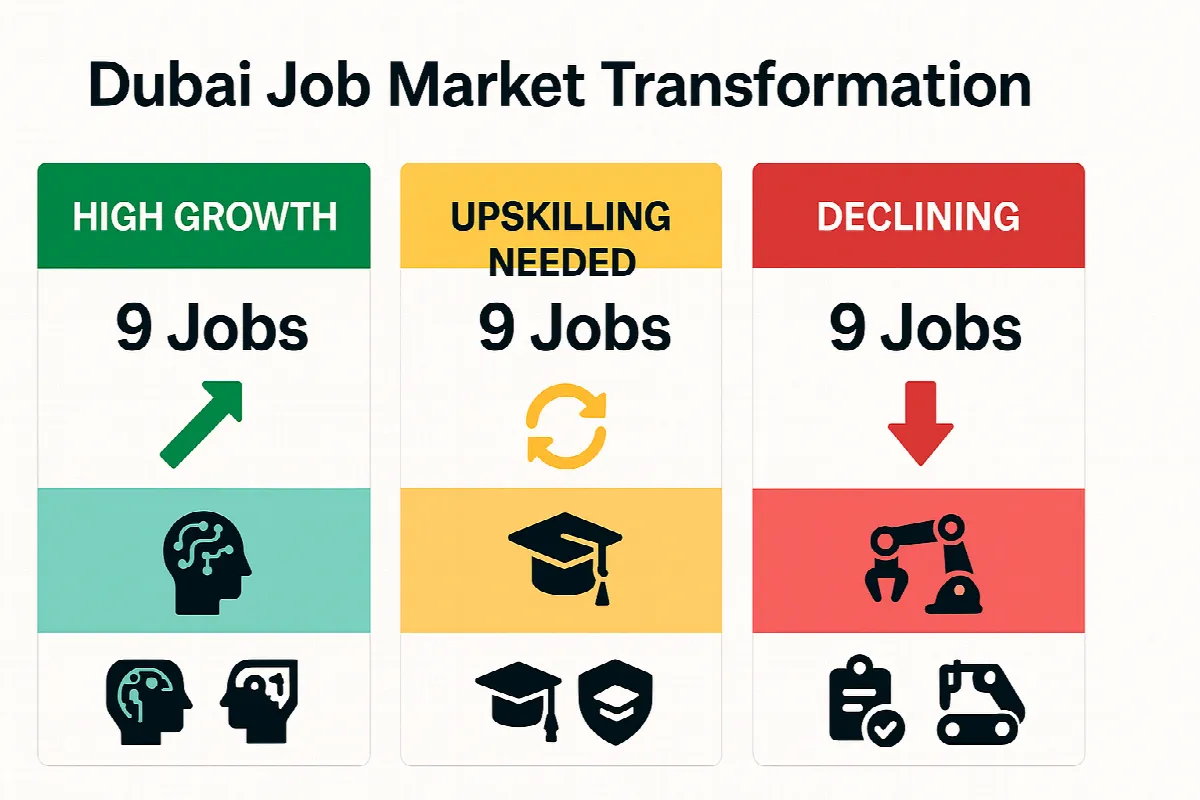
Dubai’s official report reveals which jobs AI will create (9 high-growth roles), transform (traditional jobs needing upskilling), and eliminate by 2025-2033.
By Vadim Kouznetsov, published

Artificial intelligence and automation are transforming Dubai’s job market at unprecedented speed. The Dubai Department of Economy and Tourism (DET), partnering with the Knowledge and Human Development Authority (KHDA), released the comprehensive ‘Jobs of the Future’ report in April 2025, providing crucial insights for workers and students navigating this career revolution.
Nine High-Demand Careers for Dubai’s Future
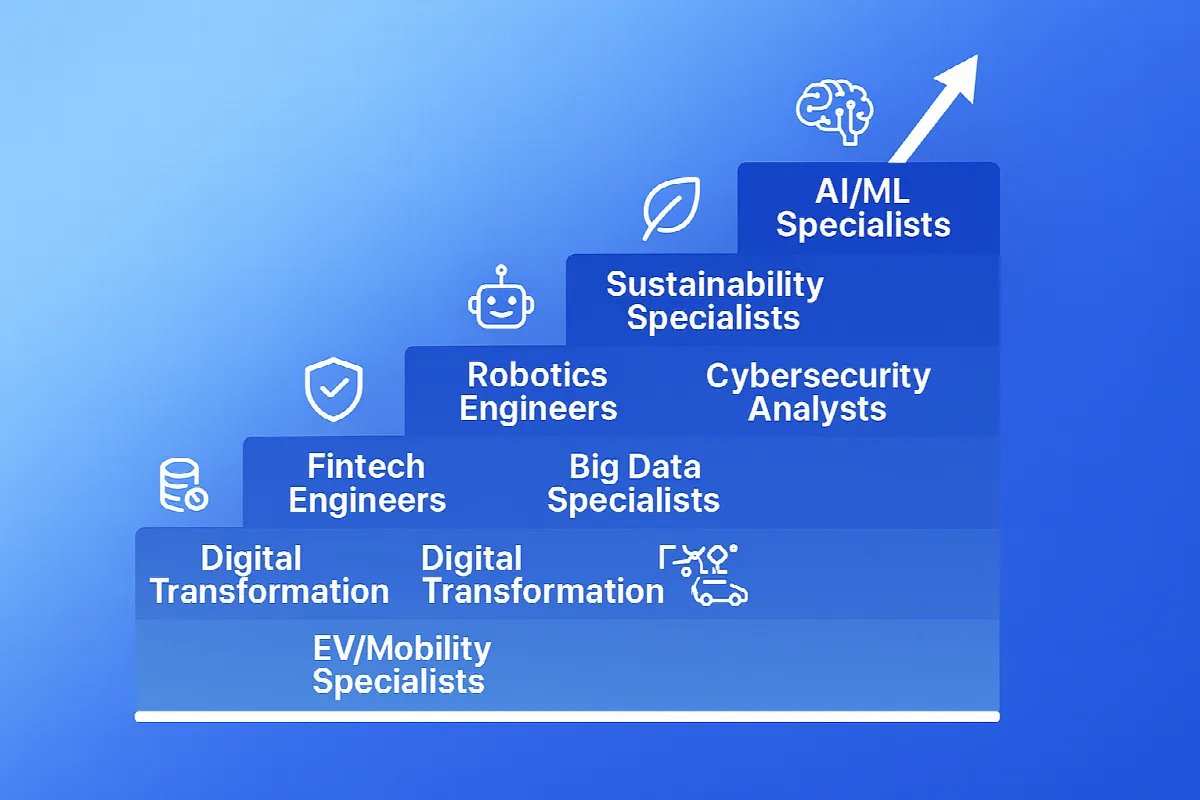
These roles are experiencing explosive growth due to technological advances, digitalisation, and sustainability priorities:
Technology and AI Specialists
AI and Machine Learning Specialists lead the transformation, developing algorithms that power everything from smart city infrastructure to business automation. Data Analysts and Data Scientists extract valuable insights from massive datasets, driving decision-making across industries.
Information Security Analysts protect Dubai’s digital infrastructure as cyber threats evolve. Big Data Specialists manage and interpret complex information systems supporting the emirate’s smart city initiatives.
Engineering and Innovation Roles
Robotics Engineers design automated systems for manufacturing, healthcare, and service industries. Fintech Engineers develop financial technology solutions supporting Dubai’s position as a global financial hub.
Digital Transformation Specialists guide organizations through technology adoption, whilst Autonomous Vehicle and Mobility Specialists support Dubai’s autonomous transport goals.
Sustainability Experts
Sustainability Specialists drive environmental initiatives aligned with UAE Net Zero 2050 commitments, creating green jobs across multiple sectors.
Core Jobs Requiring Strategic Upskilling
These traditional roles remain vital but demand continuous skill development:
Healthcare Professionals (doctors, nurses, mental health professionals) must integrate AI diagnostics and telemedicine into their practice. Teachers need digital literacy and AI-assisted learning methodologies.
Lawyers require understanding of digital contracts, AI ethics, and technology regulations. Traditional Engineers must incorporate AI tools and sustainable practices.
Skilled Technicians, Pharmacists, and Security Personnel benefit from technology integration whilst maintaining human expertise elements.
Nine Jobs Facing Decline
Automation threatens routine administrative and clerical positions:
Financial Roles: Bank tellers, accounting clerks, and bookkeeping positions face replacement by automated systems and digital banking solutions.
Administrative Positions: Executive secretaries, data entry clerks, and postal service clerks encounter reduced demand as digital workflows streamline operations.
Customer Service Roles: Cashiers, ticket clerks, and telemarketers compete with AI chatbots and automated service systems.
Support Functions: Material-recording clerks, stock-keeping clerks, and legal officials experience automation of routine tasks.
Dubai’s Workforce Preparation Strategy
The emirate has launched proactive initiatives to address these changes:
Education Reform: AI curriculum integration starting from kindergarten, teaching seven core concepts including algorithmic thinking and machine learning basics.
Skills Development: Partnership between government departments and educational authorities to align training with market demands.
Lifelong Learning: Continuous upskilling programmes helping existing workers transition to future-ready roles.
Industry-Specific Impacts
Financial Services
Dubai’s fintech sector creates opportunities for specialists whilst traditional banking roles decline. Blockchain developers, cryptocurrency analysts, and digital payment engineers gain prominence.
Healthcare
Medical AI specialists and telemedicine coordinators emerge as growth areas, whilst traditional administrative healthcare roles face automation.
Tourism and Hospitality
Experience designers and cultural technology integrators support Dubai’s tourism vision, whilst basic customer service roles become automated.
Government Services
Smart city analysts and digital governance specialists drive public sector transformation, replacing traditional administrative processing roles.
Skills for Career Future-Proofing
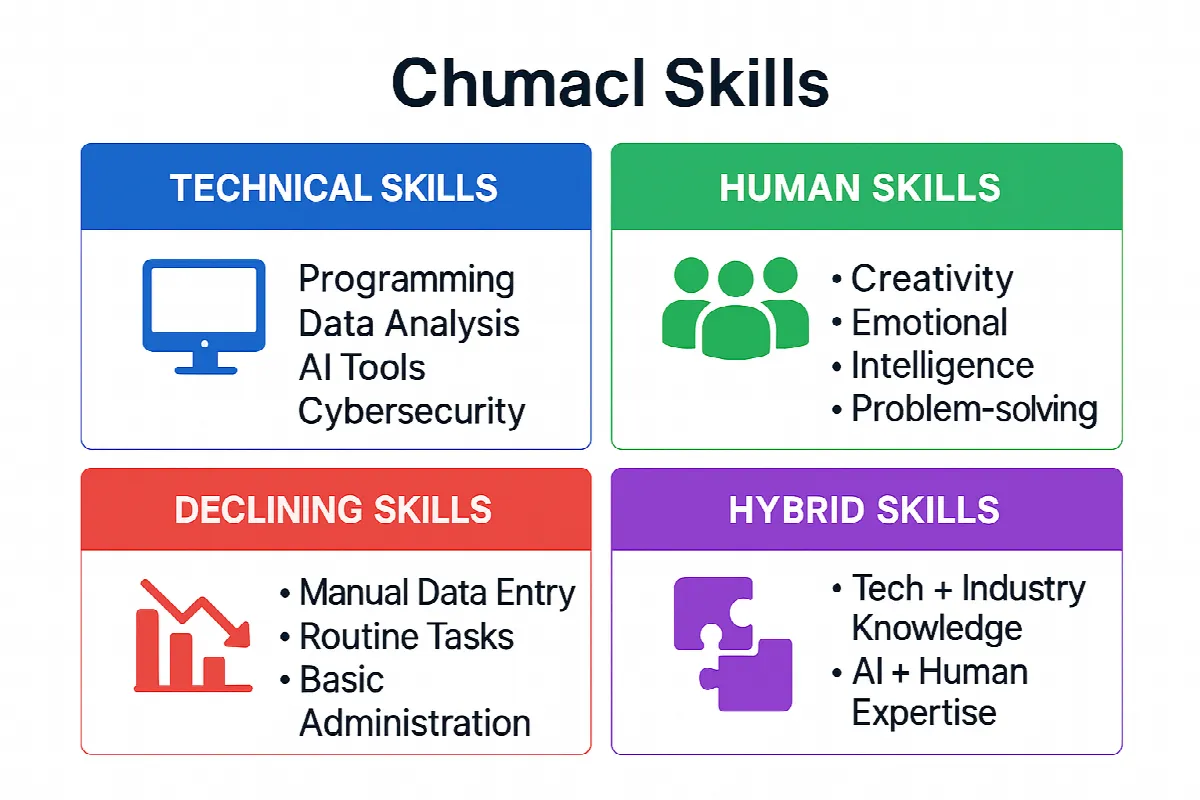
Technical Competencies: Programming languages, data analysis, cybersecurity fundamentals, and AI tool proficiency become essential across industries.
Human Skills: Creativity, emotional intelligence, complex problem-solving, and cultural sensitivity remain irreplaceable by technology.
Hybrid Capabilities: Combining technical knowledge with industry expertise creates competitive advantages in evolving job markets.
Global Context and Local Adaptation
The report aligns with World Economic Forum findings and Dubai Future Foundation research, ensuring local strategies reflect global trends whilst addressing regional priorities.
Dubai’s approach balances international competitiveness with cultural preservation, creating opportunities that leverage both technological advancement and Emirati heritage.
Recommendations for Students and Workers
Current Students: Focus on STEM education combined with creative and interpersonal skills. Consider emerging fields like AI ethics, sustainable technology, and human-AI collaboration.
Working Professionals: Identify upskilling opportunities within current roles. Pursue certifications in digital tools, data analysis, or sustainability practices relevant to your industry.
Career Changers: Target growth areas aligned with personal interests and market demand. Consider transitional roles that combine existing expertise with new technology skills.
Economic Implications
The job market transformation supports Dubai’s broader economic diversification goals. Technology sector growth reduces oil dependency whilst creating high-value employment opportunities.
Investment in human capital development strengthens Dubai’s position as a global business hub, attracting international companies seeking skilled workforces.
Implementation Timeline
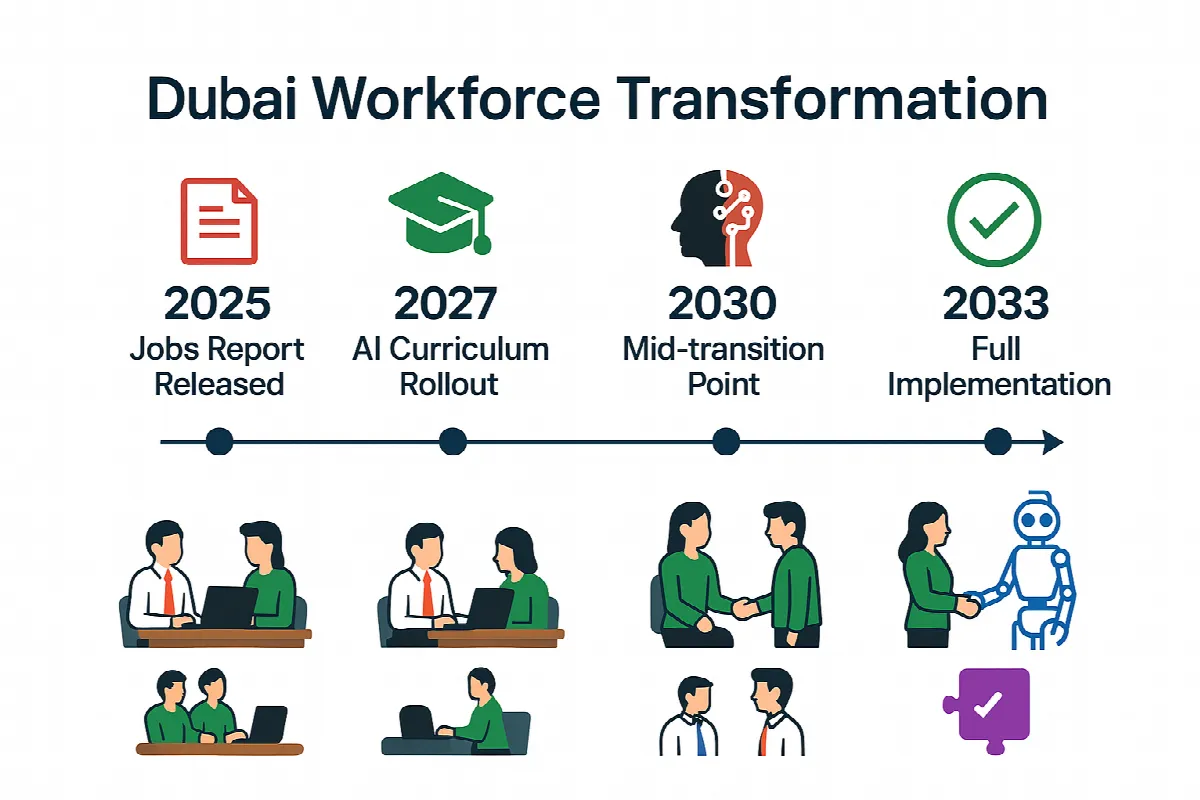
The transition occurs gradually over the next decade, allowing time for education system adjustments and workforce retraining. Early adopters gain competitive advantages in emerging fields.
Dubai’s proactive approach positions the emirate ahead of cities that react to change rather than anticipating it.
Key Takeaway: Dubai’s job market is splitting into three categories: nine high-growth tech roles (AI specialists, data scientists, robotics engineers), traditional jobs requiring upskilling (teachers, healthcare workers, lawyers), and nine declining administrative positions facing automation. The emirate’s proactive ‘Jobs of the Future’ report provides a roadmap for students and workers to navigate this AI-driven transformation.
Further Reading
The UAE week, every Monday
The week's stories on jobs, visas, money and daily life in one short email. Unsubscribe in one click.