AI Transforms UAE Jobs 2025: Role Mergers Over Layoffs
UAE companies merge AI-impacted roles instead of cutting jobs. 55% of GCC firms restructure teams while 60% report minimal job losses in 2025.
By Vadim Kouznetsov, published

The landscape of employment across the United Arab Emirates and Gulf Cooperation Council is experiencing a fundamental shift as artificial intelligence adoption accelerates. However, contrary to widespread fears about mass unemployment, a groundbreaking study reveals that organisations are choosing integration over elimination.
The Reality of AI Integration in GCC Workplaces
Cooper Fitch’s comprehensive research, ‘Redefining Work: AI & the Future of Talent‘, surveyed 350 organisations representing over 200,000 employees across the region. The findings paint a picture of adaptation rather than destruction.
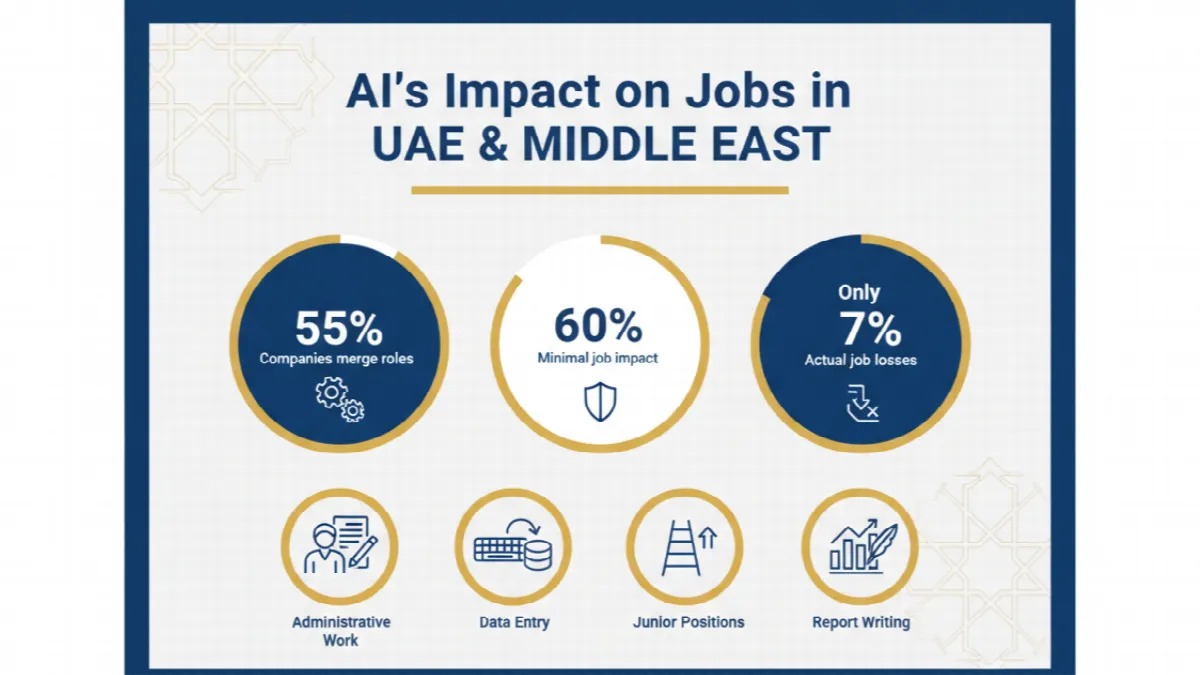
55% of GCC firms are merging roles rather than eliminating positions entirely. This strategic approach represents a significant departure from the apocalyptic job displacement scenarios often discussed in mainstream media.
Dr Trefor Murphy, founder and CEO of Cooper Fitch, explains: “It’s more like a merger of roles and responsibilities than job cut questions, as 60% of those surveyed said that there will be very minimal job impacts.”
Which Positions Face AI Disruption?
The study identifies specific categories experiencing the most significant changes:
- Junior and graduate positions
- Administrative functions
- Data entry roles
- Report writing positions
- Process automation tasks
These changes focus on task elimination rather than complete role removal. AI technology streamlines operations by handling repetitive activities, allowing human workers to concentrate on higher-value contributions requiring judgement and creativity.
The Gap Between Expectations and Reality
A concerning disconnect emerges between employer expectations and technological capabilities. While boards pressure executives to demonstrate immediate AI-driven efficiency gains, employees report that current technology often requires significant human oversight.
“Employees are cautiously optimistic about AI, but there’s pressure from boards onto the C-level executives that they’ve got AI, so make things more efficient,” Dr Murphy observes. “However, employees say that they are required to use this AI tool, then review and make the necessary changes. And in some cases, it’s not more efficient for certain jobs.”
This mismatch creates workplace tension. Performance expectations rise faster than technological delivery, potentially leading to employee burnout and frustration.
Investment Patterns Reveal Strategic Gaps
The research exposes significant disparities in AI investment approaches:
- Multinational companies: 42% implement AI at enterprise level
- GCC-owned businesses: Only 7% achieve similar scaling
Financial commitment varies dramatically across organisations:
- 41% spend less than $500,000 annually on AI initiatives
- 19% invest between $500,000-$5 million
- 8% allocate more than $5 million
The Expertise Shortage Challenge
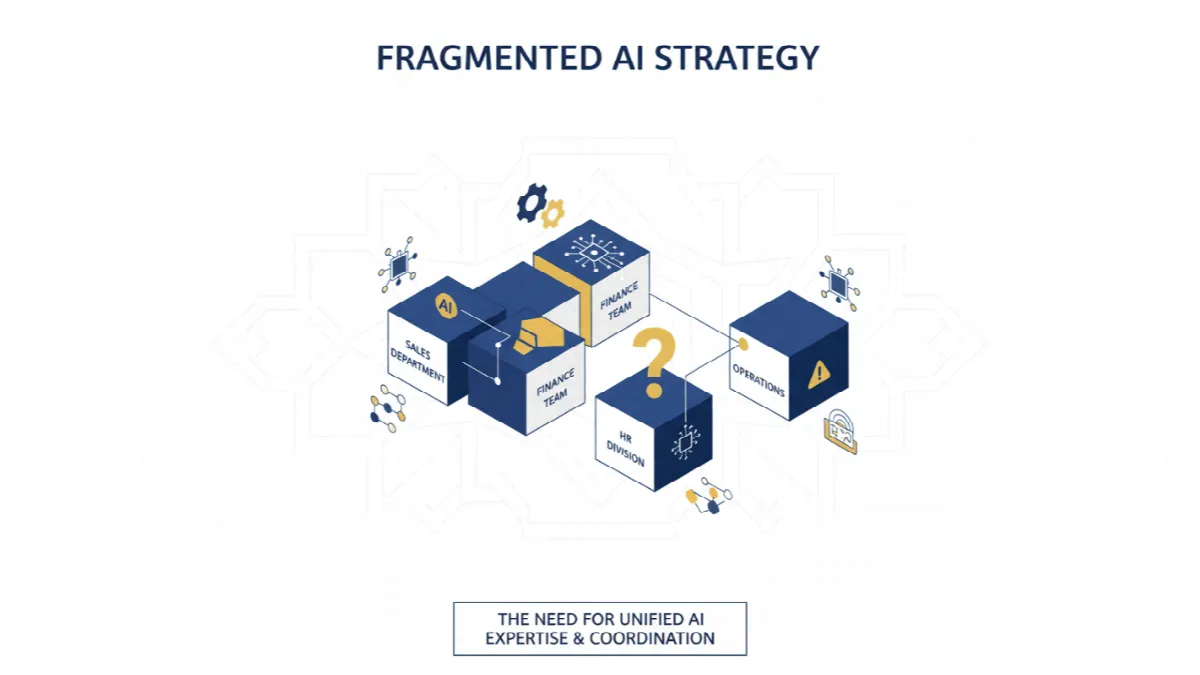
Regional organisations face a critical shortage of AI specialists. The fragmented approach to implementation creates inefficiencies, with individual departments pursuing isolated AI initiatives without comprehensive organisational strategy.
“Everything is very fragmented. Someone in sales is doing this, someone in finance is doing that, someone in HR is doing something else,” Dr Murphy explains. “No one is looking at AI and understanding how it can benefit the organisation, and scale it up properly.”
Looking Ahead: Strategic Workforce Planning
While 31% of respondents anticipate some role elimination within 12-24 months, these changes will primarily affect repetitive functions rather than entire departments. Only 7% report actual job losses, concentrated in narrow specialisations like transcription and basic analytical work.
The key lies in strategic planning and proper investment in both technology and skills development. Organisations succeeding with AI integration focus on enhancing human capabilities rather than replacing them entirely.
Key Takeaway: UAE and GCC companies are successfully navigating AI adoption by merging roles and responsibilities rather than eliminating jobs wholesale. Success depends on strategic implementation, proper investment, and bridging the gap between executive expectations and technological reality.
Frequently Asked Questions
Q: Will AI eliminate jobs in the UAE? A: Research shows 60% of UAE companies report minimal job impacts from AI. Most organisations merge roles rather than eliminate positions entirely.
Q: Which jobs are most at risk from AI in the GCC? A: Junior positions, administrative roles, data entry, and basic report writing face the greatest changes, though often through task modification rather than job elimination.
Q: How much are UAE companies investing in AI? A: 41% spend less than $500,000 annually, while 19% invest $500,000-$5 million. Only 8% allocate more than $5 million for AI initiatives.
Q: What’s the biggest challenge for AI adoption in GCC companies? A: The shortage of AI expertise and fragmented implementation approaches create the most significant obstacles for regional organisations.
Further Reading
The UAE week, every Monday
The week's stories on jobs, visas, money and daily life in one short email. Unsubscribe in one click.