UAE AI Strategy 2031: 20% GDP Target Creates New Career Opportunities
UAE’s ambitious AI strategy aims for 20% GDP contribution by 2031. Discover what this means for job seekers and career growth in the Emirates.
By Vadim Kouznetsov, published

Key Takeaway
The UAE’s aggressive AI implementation across all sectors by 2031 will create unprecedented career opportunities, requiring professionals to upskill in AI-related fields to capitalise on the projected Dh170 billion market expansion.
The UAE continues to solidify its position as a global artificial intelligence powerhouse, with recent developments showing how serious the country is about making AI central to its economic future. For job seekers and professionals in the region, these changes signal massive opportunities ahead.
The Numbers Tell the Story
Since launching its National Artificial Intelligence Strategy in 2017, the UAE has been methodically building towards an AI-powered economy. The government’s target is clear: AI should contribute 20% of non-oil GDP by 2031. This isn’t just an aspiration—it’s a concrete plan with substantial investment behind it.
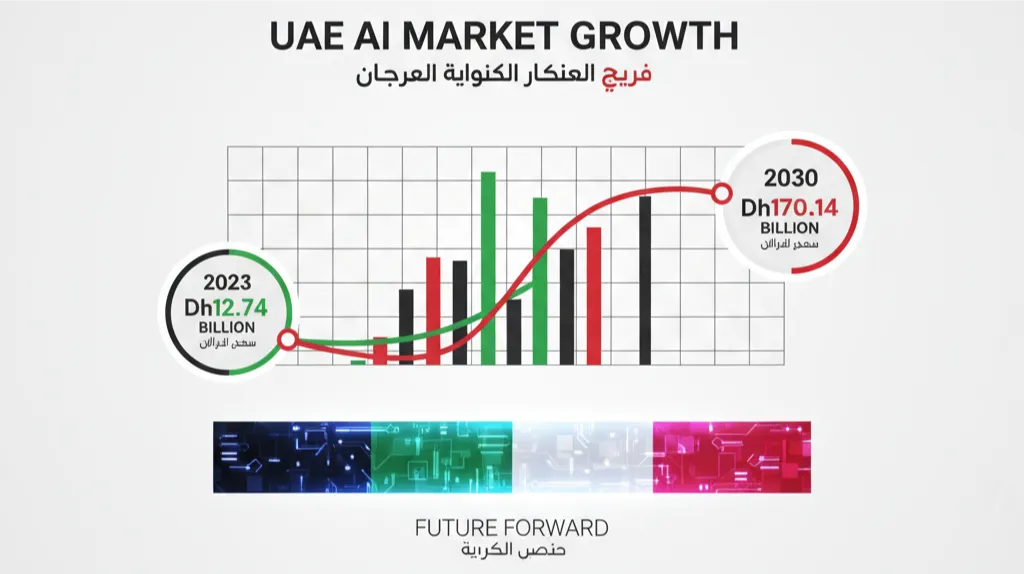
The market data supports this ambitious vision. From a base of Dh12.74 billion in 2023, AI in the UAE is projected to grow at an impressive 44% compound annual growth rate. By 2030, this translates to a Dh170.14 billion market, according to Trends Research & Advisory.
Where the Growth is Happening
The UAE’s approach to AI integration spans multiple sectors, each presenting distinct career opportunities:
Healthcare: AI-powered diagnostics and patient care systems are transforming medical services, creating demand for health informatics specialists and AI healthcare consultants.
Transport: Smart transportation systems and autonomous vehicles require engineers, data analysts, and AI integration specialists.
Education: Digital learning platforms and AI tutoring systems need educational technologists and learning analytics experts.
Energy: Smart grid systems and predictive maintenance programmes require energy AI specialists and data scientists.
Logistics: Supply chain optimisation and automated warehousing systems create opportunities for logistics AI engineers and automation specialists.
Government Leading by Example
The UAE government isn’t just setting policies—it’s actively participating in the AI transformation. The recent appointment of 50 Chief AI Officers across federal entities demonstrates this commitment. These officials are currently on a 10-day tour of major US tech companies, including Google, Meta, OpenAI, Palantir, NVIDIA, IBM, Amazon, and Microsoft.
This knowledge exchange programme, led by Mohammed Bin Taliah, Head of Government Services, aims to bring cutting-edge AI practices back to the UAE. For professionals, this means government sectors will soon implement advanced AI systems, creating new roles and skill requirements.
What This Means for Your Career
Omar Sultan Al Olama, Minister of State for AI, emphasises that this initiative reflects the UAE’s vision to integrate AI across government operations. This integration will create several career paths:
Direct AI Roles: Machine learning engineers, AI researchers, and data scientists will see increased demand across all sectors.
AI-Adjacent Positions: Project managers specialising in AI implementation, AI ethics consultants, and change management specialists will become crucial.
Traditional Roles with AI Components: Marketing professionals using AI analytics, HR specialists implementing AI recruitment tools, and finance experts working with AI-powered forecasting systems.
Preparing for the AI Economy
The “We the UAE 2031” vision, championed by His Highness Sheikh Mohammed bin Rashid Al Maktoum, prioritises AI and digital leadership. This national focus creates a supportive environment for professional development in AI-related fields.
Startups, research institutions, and training initiatives are already fuelling this growth. The robust policy framework provides stability for long-term career planning in AI sectors.
For professionals looking to capitalise on this opportunity, developing skills in machine learning, data analysis, and AI project management will be crucial. The government’s commitment to global partnerships also suggests that international experience and cross-cultural AI expertise will be highly valued.
The Bigger Picture
This AI strategy isn’t just about technology—it’s about economic diversification and global competitiveness. The UAE’s approach of combining advanced infrastructure with bold government policies creates an environment where AI careers can flourish.
The 44% growth rate projected for the AI market represents one of the fastest-expanding sectors in the regional economy. For job seekers, this translates to sustained demand for AI skills over the next decade.
FAQs
What skills are most in demand for AI careers in the UAE? Machine learning, data science, Python programming, AI project management, and cross-cultural communication skills are currently most sought after.
Which sectors offer the best AI career opportunities? Healthcare, transport, education, energy, and logistics are seeing the highest demand for AI professionals, though government roles are also expanding rapidly.
How can I prepare for an AI career in the UAE? Focus on technical skills like programming and data analysis, but also develop soft skills in project management and change leadership. Consider certifications from major tech companies.
What salary ranges can AI professionals expect in the UAE? Entry-level AI roles typically start at Dh120,000-180,000 annually, while senior positions can reach Dh400,000+ depending on specialisation and experience.
Are there opportunities for non-technical professionals in the AI sector? Yes, roles in AI ethics, project management, business analysis, and change management don’t require deep technical skills but benefit from AI literacy.
Further Reading
The UAE week, every Monday
The week's stories on jobs, visas, money and daily life in one short email. Unsubscribe in one click.