UAE Credit Score Revolution: Real-Time Tracking Now Available in 2025
Etihad Credit Bureau launches real-time credit tracking in 2025. Monitor your UAE credit score instantly, run simulations, and understand what affects your rating.
By Vadim Kouznetsov, published

Can UAE residents finally understand what affects their credit score? The answer is yes, and it’s happening right now through Etihad Credit Bureau’s groundbreaking transformation.
The way UAE residents manage their credit is undergoing a fundamental shift in 2025. Etihad Credit Bureau (ECB) has launched a redesigned mobile app and web portal that puts credit information directly into consumers’ hands. What was previously a technical process hidden behind lending decisions now becomes accessible through real-time tracking, interactive simulations, and personalised insights.
This transformation represents the most customer-focused change in the bureau’s decade-long history. For the first time, every UAE resident can see exactly what lenders see—and more importantly, understand how to improve their financial standing through informed decisions rather than guesswork.
“This is about empowerment,” said Marwan Ahmad Lutfi, director general of Etihad Credit Bureau. “We want people to make decisions from a place of knowledge, not uncertainty.”
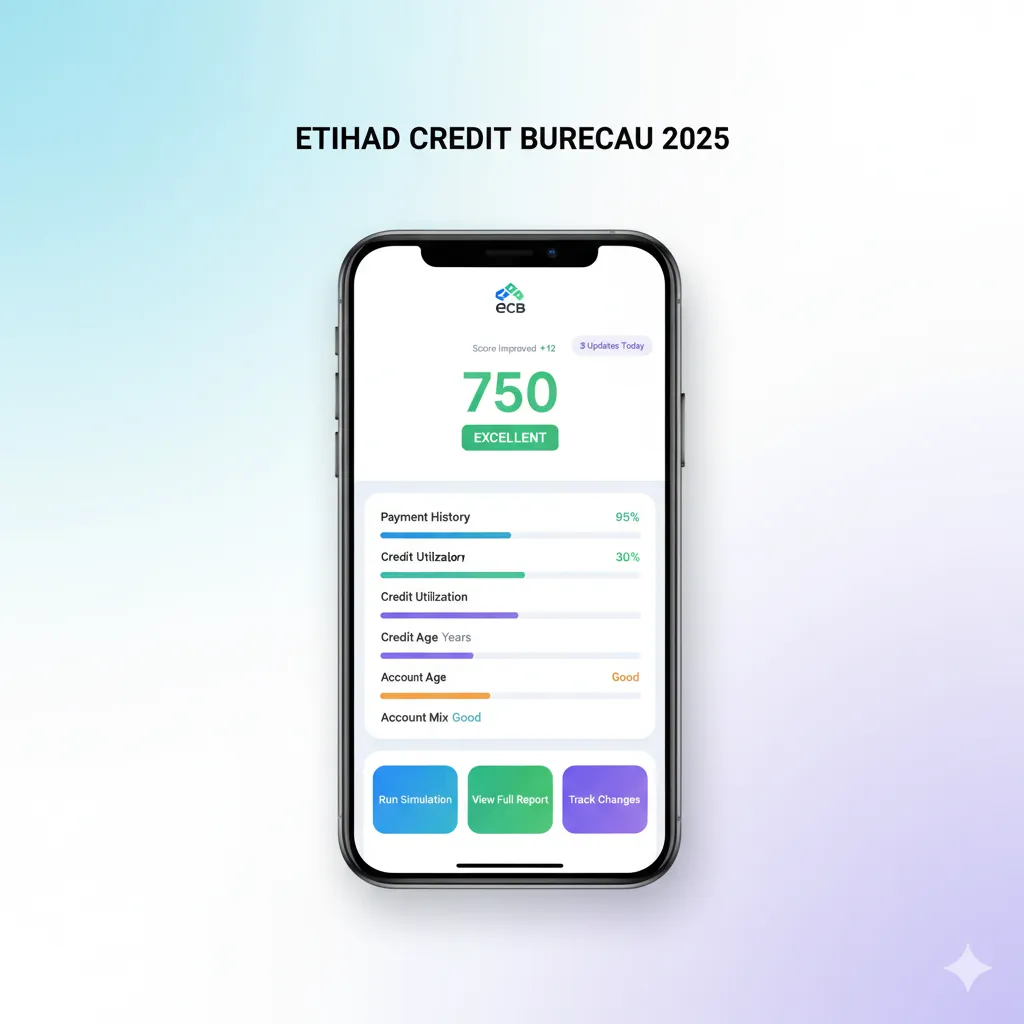
UAE’s New Credit Tracking Platform
The upgraded platforms offer intuitive, interactive features designed to make complex financial data accessible to everyone. Through the new mobile app and web portal, users can explore their credit score in real time, understand which factors affect it, and run simulations to see how future payments or borrowing might change their rating.
The bureau’s transformation extends beyond displaying numbers. The new app integrates cheque clearance services and offers personalised insights on maintaining or improving scores. “Our goal is to turn what used to be a technical report into a financial companion,” Lutfi explained.
For UAE residents who previously had to check their credit score through limited channels, this development provides unprecedented access and control. The platform shows immediate benefits from responsible financial behaviour—pay bills on time and manage credit cards properly, and you’ll see that reflected instantly in your score.
What Now Counts Towards Your UAE Credit Score
ECB is expanding what factors into credit scores, moving beyond traditional bank data to include multiple aspects of financial life. This broader approach recognises how people actually manage money in 2025.
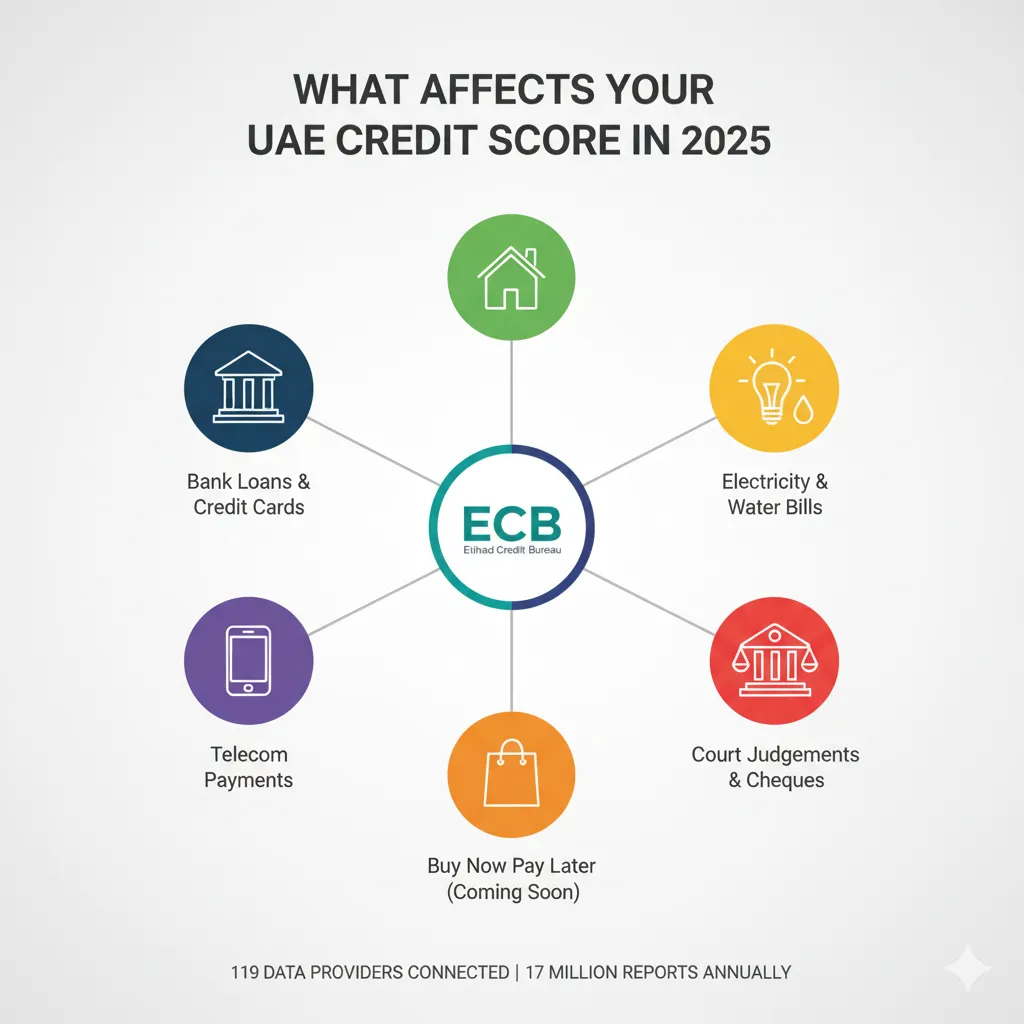
The expanded data sources now include:
Real estate obligations: Rental payments and property-related financial commitments now factor into credit assessments. Responsible tenants who consistently meet their lease obligations will see this reliability recognised in their credit profile.
Utility bills: Electricity and water bill payment history contributes to credit scores. Regular, on-time utility payments demonstrate financial discipline.
Telecom payments: Mobile phone and internet service payments affect credit ratings. Late or missed payments to providers like Etisalat and du can impact your score.
Buy Now, Pay Later (BNPL) transactions: Coming soon to the credit reporting system, BNPL payment behaviour will be tracked. This addition reflects the growing popularity of instalment payment services across the UAE.
“People’s financial lives are more diverse than ever,” Lutfi noted. “A responsible tenant or someone who consistently pays their phone and electricity bills deserves that reliability to be recognised. This inclusion makes the system fairer and more reflective of how people actually live and spend today.”
This change holds particular significance for young professionals, freelancers, and new residents who may not have extensive banking history but still demonstrate financial discipline in other areas. The expanded criteria helps more people become visible to the financial system, potentially opening doors to credit, housing, entrepreneurship, and long-term financial confidence.
Etihad Credit Bureau’s Decade of Growth
Since issuing its first credit report in 2014, Etihad Credit Bureau has become one of the UAE’s most important financial institutions. The statistics illustrate its dramatic growth:
- 2014: Processed over 1 million credit reports in its inaugural year
- 2025: Exceeds 17 million reports annually
- Current connectivity: 119 data providers including banks, telecom companies, government entities, utilities, and courts
The bureau has played a critical role in improving lending transparency, reducing defaults, and promoting responsible borrowing across the Emirates. “Our data infrastructure has strengthened the financial system from the ground up,” said Lutfi. “It has made lending more transparent, improved risk management for banks, and helped customers understand the value of a good credit record.”
The Central Bank of the UAE issued a commemorative ten-dirham silver coin marking ECB’s tenth anniversary. The coin’s design reflects the bureau’s rebranding and evolution from a data provider into a digital enabler of financial empowerment.
How Real-Time Credit Tracking Benefits UAE Residents
The new platform creates opportunities for proactive financial management rather than reactive damage control. UAE residents gain several practical advantages through real-time credit access:
Immediate feedback: See how payments affect your score within hours rather than weeks or months. This instant connection between actions and results reinforces positive financial behaviours.
Planning tools: Run simulations before making financial decisions. Considering a car loan? The platform shows how it might affect your credit profile before you apply.
Error correction: Spot and dispute inaccuracies quickly. Incorrect information can’t damage your credit for months before discovery.
Loan readiness: Know your credit standing before applying for financing, avoiding unnecessary hard inquiries that temporarily reduce scores.
Educational insights: Learn which behaviours help or harm your credit through personalised explanations rather than generic advice.
For professionals managing their finances whilst working in Dubai, understanding credit scores becomes increasingly important when making major financial decisions around housing, vehicle purchases, or business ventures.
What This Means for Your Financial Future
Lutfi believes these reforms will create a more financially aware and resilient society. “When people understand their credit, they make better financial choices. And when that happens at scale, it benefits the entire economy,” he said.
The message for customers is clear: your credit story is now yours to manage. Every payment, every decision, every transaction feeds into a transparent score that you can monitor and influence. “Credit shouldn’t be a mystery,” Lutfi said. “It should be a mirror—one that helps you see where you stand and how to move forward.”
Sajith Kumar P.K, group CEO and MD of IBMC Financial Professionals Group, emphasises the broader implications: “By widening the data pool and making credit reporting fully interactive, Etihad Credit Bureau is effectively democratising financial knowledge. It’s a shift from credit assessment to credit education—and, ultimately, credit empowerment.”
Building Strong Credit in UAE’s New System
With expanded data sources and real-time tracking, UAE residents have more opportunities than ever to build and maintain strong credit profiles. These practical steps help maximise your credit score under the new system:
Pay all bills on time: Not just credit cards and loans, but utilities, telecom, and rent. Every payment now matters.
Monitor regularly: Check your credit score through the new ECB app at least monthly. Regular monitoring helps catch issues early and reinforces positive progress.
Use credit responsibly: Keep credit card balances below 30% of limits. High utilisation ratios signal financial stress to lenders.
Avoid missed payments: Set up automatic payments for recurring bills. A single missed utility payment can now impact your credit score.
Dispute errors promptly: Use the new platform to identify and challenge incorrect information quickly.
Build diverse credit history: Having multiple types of accounts (credit cards, loans, utilities in your name) demonstrates broader financial management capabilities.
For residents concerned about existing financial issues, understanding your rights around credit card defaults and travel restrictions becomes crucial for protecting your financial standing.
Why Credit Scores Matter More Than Ever
Strong credit scores deliver tangible benefits across multiple aspects of life in the UAE:
Loan approvals: Banks process applications faster when you demonstrate solid credit history. Good scores indicate lower risk, leading to expedited approval processes.
Interest rates: Higher credit scores qualify you for reduced interest rates on loans and credit cards. This translates to significant savings over time, particularly for large obligations like mortgages or vehicle financing.
Credit limits: Financial institutions offer larger credit amounts to borrowers with proven reliability. Good scores expand your access to credit when needed.
Rental applications: Landlords increasingly check credit scores when evaluating potential tenants. Strong credit can help secure better properties and terms.
Employment opportunities: Some employers in financial services and sensitive industries review credit reports during hiring processes.
For those earning competitive salaries in Dubai, maintaining excellent credit helps maximise the financial advantages of UAE’s tax-free income through access to better financing terms.
Navigating UAE’s Evolving Financial Landscape
The credit bureau reforms arrive as UAE residents face various financial planning challenges. Understanding credit becomes particularly important when managing:
Debt obligations: Whether dealing with bank loans or exploring balloon loan options, your credit score affects available options and terms.
Savings strategies: Building credit complements retirement planning and alternative income sources by providing access to favourable financing when opportunities arise.
Career transitions: For professionals considering freelancing opportunities or career changes, strong credit provides a financial safety net during transitions.
Permanent relocation: Those eventually leaving the UAE should maintain good credit standings to avoid complications with final financial settlements.
The bureau’s expansion to include diverse payment types particularly benefits residents establishing their financial presence in the UAE for the first time.
Common Questions About UAE Credit Tracking
How often should I check my credit score?
Check your score at least monthly through the new ECB app. Regular monitoring helps track progress, catch errors early, and understand how your financial decisions impact your rating.
Will checking my own credit score lower it?
No. Checking your own credit score through the ECB platform counts as a “soft inquiry” and doesn’t affect your rating. Only “hard inquiries” from lenders reviewing your application can temporarily impact scores.
How long do negative marks stay on my credit report?
Payment defaults and negative information typically remain on UAE credit reports for five years from the date of occurrence. However, demonstrating improved financial behaviour during this period can help offset historical issues.
Can I improve my credit score quickly?
Significant improvements usually require 3-6 months of consistent positive behaviour. However, the new real-time platform means you’ll see incremental improvements faster than before, providing motivation to maintain good financial habits.
What happens if I find errors on my credit report?
Use the ECB platform to file disputes with supporting documentation. The bureau investigates errors and corrects them if verified. The new system makes this process faster and more transparent than previously possible.
Does applying for multiple loans hurt my credit score?
Yes. Each loan application generates a hard inquiry that slightly reduces your score temporarily. Multiple applications within a short period can signal financial distress to lenders. Use the platform’s simulation tools to assess options before applying.
Taking Control of Your Financial Future
The democratisation of credit information marks a significant step forward for UAE residents. With real-time access, expanded data sources, and interactive tools, managing credit becomes proactive rather than reactive.
For residents serious about financial empowerment, the new ECB platform provides the visibility and insights needed to build strong credit profiles. Combined with smart financial planning and income management, strong credit opens doors to opportunities throughout your UAE journey.
The transformation from hidden technical reports to transparent financial companions represents more than technological advancement—it signals a cultural shift where financial responsibility becomes understood and rewarded rather than remaining mysterious and intimidating.
Further Reading
The UAE week, every Monday
The week's stories on jobs, visas, money and daily life in one short email. Unsubscribe in one click.