6 Major UAE Changes from June 1, 2026: Legal Age, Salik VAT, Parking and More
6 UAE changes from June 1, 2026 — legal age drops to 18, 5% VAT on Salik and Parkin, new WPS salary rule, cashless meters and Alhind consular services.
By Vadim Kouznetsov, published
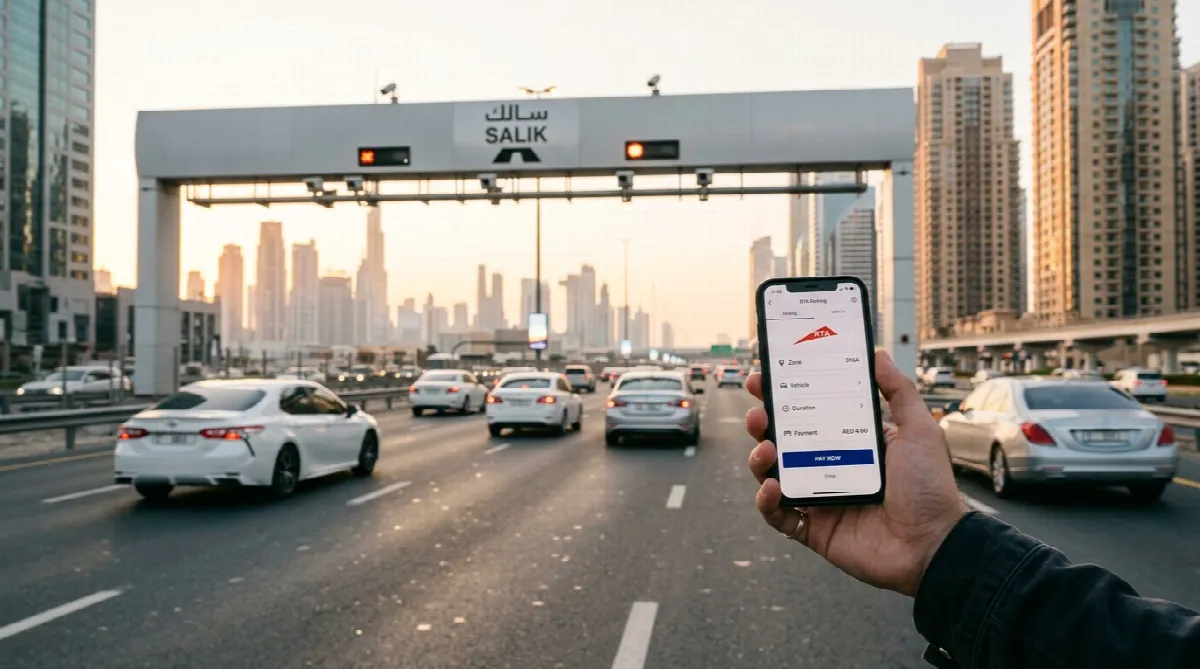
The first day of June 2026 brings a wave of policy shifts that will touch nearly every UAE resident — from the legal age you become an adult, to how much you pay for parking, when your salary lands in your account, and how Indian nationals access consular services.
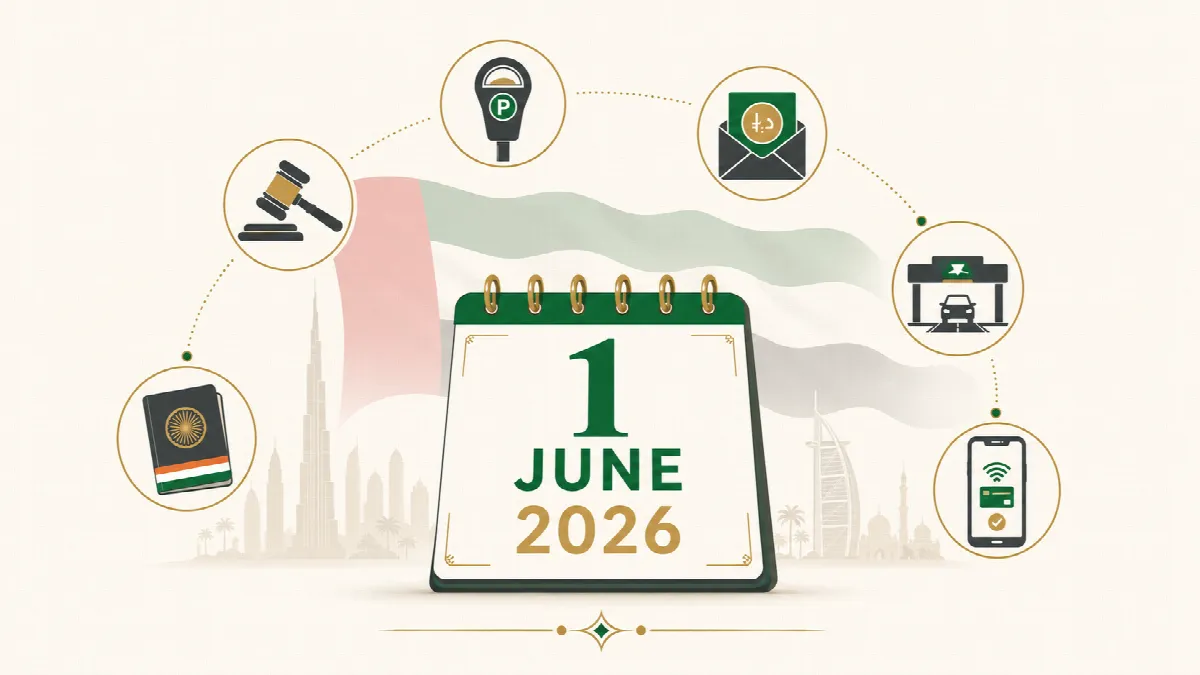
Here is what changes from Sunday, 1 June 2026, and how it affects your daily life.
Key Takeaway: From 1 June 2026, the UAE’s legal age of majority drops to 18 Gregorian years, 5% VAT applies to Salik tolls and Parkin parking services, salaries must be paid on the first day of each Gregorian month under updated WPS rules, cash at Dubai parking meters is being phased out, and Alhind Group will begin rolling out 16 Indian consular service offices across the Emirates.
1. Legal Age Lowered from 21 to 18
The UAE’s age of majority is being reduced from 21 lunar years to 18 Gregorian years. This is one of the most significant civil law changes in recent memory.
At 18, an individual now has full legal capacity to:
- Enter binding contracts
- Manage and dispose of their own assets
- Litigate or be sued in their own name
- Make independent financial and legal decisions
This places the UAE in line with the international standard. Using the Gregorian calendar also aligns the rule with passports, birth certificates and global contracts, making cross-border legal matters far clearer.
The shift places greater responsibility on 18-year-olds, so families should start educating their children on property, banking and finance well before they reach majority. Courts retain the authority to step in where the new freedom is misused, so safeguards remain in place. This builds on earlier reforms covered in the UAE Family Law 2025 guide and the wider UAE Personal Status Law reforms.
2. Dubai Parking Fees Rise as 5% VAT Kicks In
From 1 June, Dubai’s parking operator Parkin will apply 5% VAT across all parking services. The new charge covers:
- On-street parking
- Off-street parking
- Seasonal cards
- Permits
- Reservations
For motorists, this means a larger share of the monthly budget goes to transport costs. Parkin submitted the VAT request to Dubai’s Roads & Transport Authority (RTA) earlier this year, and approval was granted ahead of the June rollout.
Drivers already adjusting to the variable parking pricing introduced in April 2025 will feel the impact on top of premium-zone surcharges. Those who park regularly may want to review the Parkin subscription packages to see if a seasonal card still works out cheaper after VAT.
3. New Wage Protection System Rule for the Private Sector
A revised Wage Protection System (WPS) rule takes effect on 1 June, changing how and when salaries must be paid.
Key points:
- Salaries must be paid on the first day of each Gregorian month for the previous month’s work
- Any payment made after the 1st is considered a delayed payment
- All ministry-registered companies must pay through the approved WPS or other ministry-authorised channels
- Employers must confirm payments via document and data submission
- A company is considered compliant if it pays at least 85% of total wages due by the deadline
This refinement strengthens existing protections under the UAE labour law framework for private sector employees and complements the salary deduction rules already in force. If your employer breaches the new timeline, you can report unpaid salaries to MOHRE anonymously through the My Salary Complaint service.
4. 5% VAT Added to Salik Toll Fees
From 1 June, Salik PJSC will apply 5% VAT to both toll tariffs and tag activation fees.
The underlying toll prices themselves remain unchanged — VAT is a pass-through charge collected on behalf of the Federal Tax Authority. The standard peak rate of Dh6 and off-peak Dh4 stay the same, but the total amount deducted per trip increases slightly.
For commuters who pass through multiple gates daily, this adds up over a month. Reviewing the Salik toll structure and gate locations and the hours when Salik gates are free can help cut costs. Keep your account topped up using the nine recharge methods to avoid penalty charges.
5. Alhind Group Launches 16 Indian Consular Service Offices
Alhind Group has signed an agreement with Indian Missions in the UAE to provide Consular, Passport and Visa (CPV) services for Indian nationals across the Emirates.
Although the services officially go live on 1 July, the group’s leadership has confirmed that all offices should be fully operational by 15 June.
The 16 centres will handle:
- Passport and visa processing
- OCI card services
- Police Clearance Certificates (PCC)
- Surrender Certificates (SC)
- Global Entry Program (GEP) verification
- Apostille and certificate attestation
- Other consular support
For the UAE’s large Indian community, this should significantly cut waiting times and travel distances. It complements the rollout of new Indian passport rules for UAE expats introduced earlier.
6. Cash Payment Phased Out at Dubai Parking Meters
Dubai’s parking meters are going fully cashless from 1 June. Coins will no longer be accepted at the meter, though drivers can still pay parking tickets using Nol cards.
The change pushes residents toward digital payment options:
- Parkin app — recommended to avoid SMS charges that apply to text-based payments
- Dubai Now app
- RTA app
- Nol card at meters
The shift forms part of Dubai’s broader push toward a 90% cashless economy by 2026. Tourists and visitors should download the relevant apps in advance — the same approach used for Dubai’s smart parking and mall parking systems, where cash is already obsolete.
What This Means for UAE Residents
Three of the six changes — Salik VAT, Parkin VAT and cashless meters — directly increase or restructure transport costs. The WPS update tightens payment timelines for employers, while the legal age change reshapes when young adults gain financial and legal independence. The Alhind office rollout is the only purely additive change, expanding access without raising costs.
Plan ahead by reviewing your monthly transport budget, checking that your employer is set up for the new WPS schedule, and downloading any payment apps you don’t already use. For a wider view of regulatory shifts this year, see our breakdown of 8 New UAE rules starting January 2026.
Frequently Asked Questions
Why is the UAE lowering the legal age of majority from 21 to 18?
The change aligns the UAE with international standards and with Gregorian-based documents like passports, birth certificates and global contracts, simplifying cross-border legal matters.
Does the 5% VAT on Salik tolls increase the actual toll price?
The underlying toll prices remain unchanged at Dh6 peak and Dh4 off-peak. The 5% VAT is added as a pass-through charge collected on behalf of the Federal Tax Authority.
What happens if my employer pays my salary after the 1st of the month under the new WPS rule?
Any payment after the 1st is officially considered a delayed payment. Companies must pay at least 85% of total wages by the deadline to remain compliant. Employees can file a complaint with MOHRE if salaries are persistently late.
Can I still pay cash at Dubai parking meters after 1 June 2026?
No, cash payments at parking meters are phased out. You can still pay using a Nol card at the meter, or use the Parkin, Dubai Now or RTA apps.
When will Alhind’s 16 Indian consular service offices open?
Services officially launch on 1 July 2026, but Alhind has stated all 16 offices should be operational by 15 June 2026.
Does the 5% VAT on Parkin apply to seasonal parking cards I already hold?
The 5% VAT applies to all parking services from 1 June, including seasonal cards, permits and reservations purchased or renewed from that date.
Does the new legal age of 18 also lower the driving age?
No. The minimum driving age in the UAE is governed by separate traffic law and currently stands at 17. The age of majority change affects civil and contractual capacity, not driving licences.
How does the new WPS rule affect free-zone companies?
All companies registered with the ministry must use the approved WPS or authorised payment channels. Free-zone employers should verify their payment channel is on the approved list to remain compliant.
Further Reading
- UAE Family Law 2025: Complete Guide to New Custody and Rights Changes
- Dubai Variable Parking Fees: Complete April 2025 Guide
- Dubai Parkin Parking Subscriptions: Complete 2025 Guide
- Dubai’s New Salik Toll Rates 2025: Complete Peak Hours & Locations Guide
- UAE Labour Laws: Essential Guide to Private Sector Employment Rights 2025
- How to Report Unpaid Salaries Anonymously in the UAE (MOHRE 2025 Guide)
- 8 New UAE Rules Starting January 2026: What Residents Must Know
- New Indian Passport Rules for UAE Expats: Birth Certificate Requirements 2025
The UAE week, every Monday
The week's stories on jobs, visas, money and daily life in one short email. Unsubscribe in one click.