Dubai’s Dh1 Billion Stimulus: What It Means for Jobs and Businesses
Dubai announces Dh1 billion stimulus with fee deferrals, tourism relief, and faster residency permits. What it means for businesses, SMEs, and expat workers.
By Vadim Kouznetsov, published
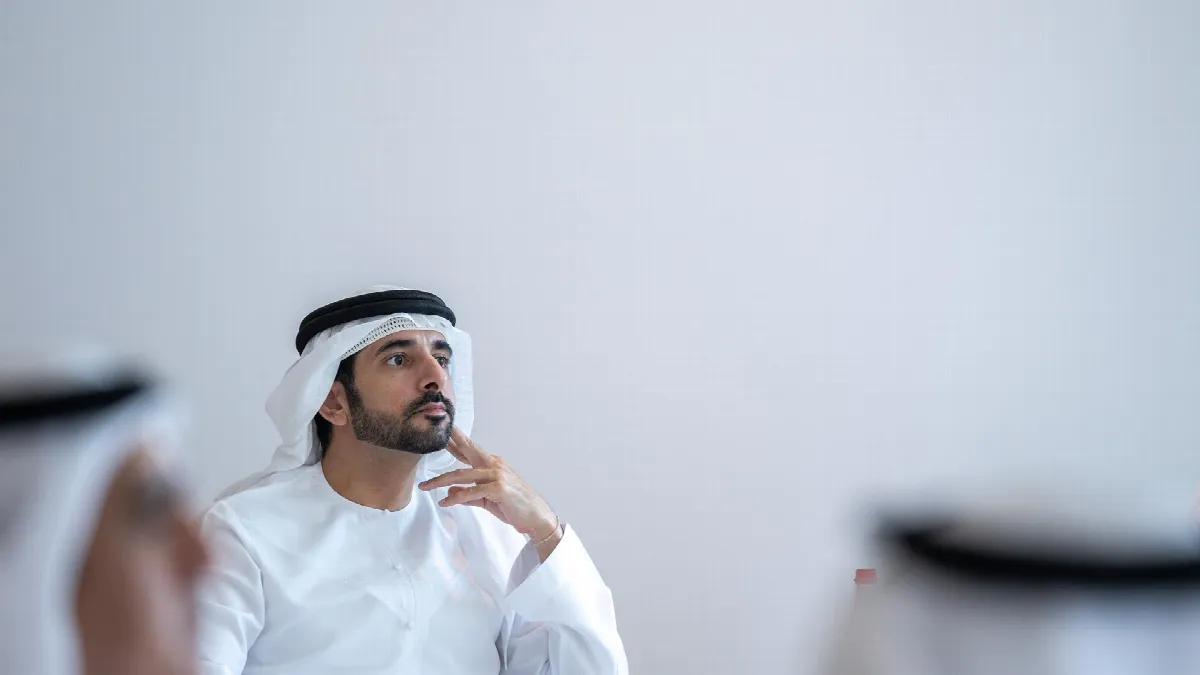
Dubai has announced a Dh1 billion economic support package aimed squarely at keeping companies stable, employees in their jobs, and growth on track during a period of rising costs and regional uncertainty.
Announced by Sheikh Hamdan bin Mohammed bin Rashid Al Maktoum, the package arrives after Dubai’s economy expanded 5.4% in 2025, with GDP crossing Dh937 billion. Business leaders and economists are reading this less as a rescue — and more as a calculated move to prevent problems before they start.
So what does this actually mean if you work or run a business in Dubai?
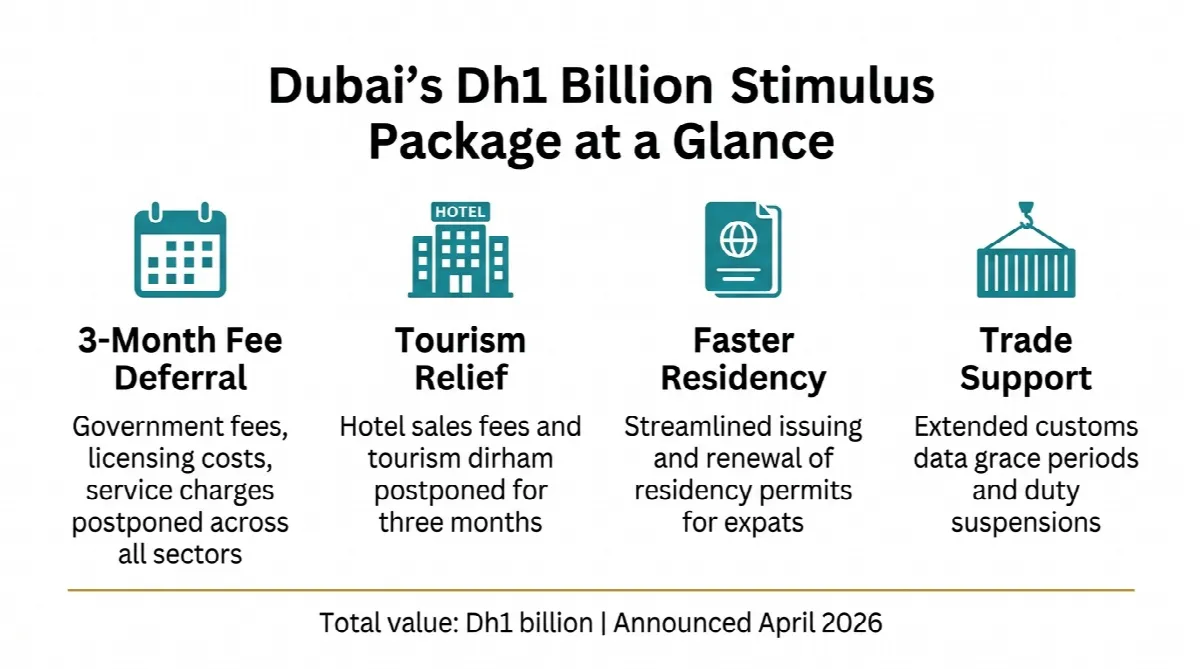
Key Takeaway: Dubai’s Dh1 billion stimulus defers government fees, postpones tourism charges for three months, extends customs grace periods, and streamlines residency permits. The package is designed to protect business liquidity, sustain jobs — particularly in hospitality — and signal stability to international investors and skilled professionals during regional disruption.
Why Is Dubai Launching a Stimulus Now?
Dubai’s economy is performing well. But strong GDP numbers don’t tell the full story.
Operating costs have risen sharply. Diesel prices surged more than 70% in April, squeezing transport, logistics, and retail margins. The regional conflict between the US, Israel, and Iran has introduced uncertainty that affects investor confidence, travel demand, and supply chains.
Dr Nasser Saidi, President of Nasser Saidi & Associates and a former member of the IMF’s Regional Advisory Group for MENA, described the stimulus as “a strong message and signal of public support for the Dubai economy.”
He stressed that the package complements the UAE Central Bank’s Resilience Package. While the Central Bank focuses on monetary stability and credit flow, Dubai’s stimulus provides fiscal policy support — absorbing shocks from the regional conflict.
This is proactive. The government isn’t waiting for distress signals. It’s acting early.
Which Sectors Benefit First?
Hospitality and Tourism
Hospitality is first in line. Hotel sales fees and the tourism dirham have been postponed for three months.
Tourism contributes roughly 12% of Dubai’s GDP, according to Dr Florian Meier, Associate Professor at Heriot-Watt University Dubai. The fee deferral gives hotels, tour operators, and restaurants immediate breathing room at a time when revenues face pressure from softer travel demand in some markets.
Issam Kazim, CEO of the Dubai Corporation for Tourism and Commerce Marketing, confirmed the incentives reflect direct feedback from hospitality leaders across the city.
For anyone working in Dubai’s hospitality sector or considering a career in tourism, this matters. Hotels retaining cash means they are better positioned to maintain staffing levels rather than cut costs through layoffs.
All Business Sectors
The support extends well beyond tourism. Companies across every sector will benefit from a three-month deferral on a range of government fees tied to:
- Premium business names
- Licence amendments and renewals
- Newspaper announcements
- Local service charges
- Accommodation and waste management fees
- Service improvement costs
Katy Keenan, CEO of the British Chamber of Commerce Dubai, noted that while exact distribution details are still emerging, the hospitality sector’s relief “will of course have a positive ripple effect in that supply chain.”
How Does This Help SMEs?
Small and medium enterprises are among the most vulnerable to demand shocks and cash flow crunches. Dr Saidi highlighted that the package is “particularly vital for SMEs” operating in Dubai.
Specific measures that directly support smaller businesses include:
- Extended customs data grace periods
- Suspended duties on virtual warehouses for the arts
- Fee deferrals on licences — applying to both new applications and renewals
For entrepreneurs considering setting up a business in a Dubai free zone or starting fresh under the UAE’s startup initiatives, these measures lower the cost of entry during a volatile period.
Ahmed Bin Sulayem, Executive Chairman and CEO of DMCC, confirmed that the package “underscores Dubai’s continued commitment to providing a stable, enabling environment for businesses.”
What Does This Mean for Expat Workers and Residents?
The stimulus includes measures to speed up the issuing and renewal of residency permits. This is significant for several reasons.
Dr Meier said streamlining residency processes “sends a clear signal that Dubai remains open for business and committed to attracting and retaining talent.”
If you’re an expat in Dubai, this means:
- Faster processing for new and renewed residency permits
- Reduced operational bottlenecks for companies sponsoring employees
- Greater certainty during a period of regional instability
For professionals considering a move to the UAE, this reinforces Dubai’s reputation as a stable destination. Whether you’re exploring visa options for skilled workers or looking at different types of Dubai visas, the streamlined process removes friction at a time when other markets are tightening.
How Does Dubai’s Stimulus Compare to Other Government Responses?
Dubai’s approach is distinct. Rather than broad subsidies or consumer handouts, the package targets business operating costs — the fees, charges, and administrative friction that eat into liquidity.
Ahmad Khalifa AlQaizi AlFalasi, CEO of the Dubai Business Registration and Licensing Corporation, stressed that the flexibility on payments lets companies “prioritise operational stability while planning for longer-term growth.”
This complements the UAE Central Bank’s Resilience Package, which handles monetary stability, credit availability, and exchange rate protection. Together, the fiscal and monetary responses form a coordinated defence.
Will This Protect Jobs in Dubai?
No government can guarantee individual jobs. But the stimulus is structured to give companies the cash flow they need to keep operating at full capacity.
By deferring fees, simplifying processes, and reducing operating friction, the package reduces the pressure on businesses to cut staff as a cost-saving measure. This matters most for:
- Hotel and restaurant workers
- Retail and logistics staff affected by rising fuel costs
- SME employees where cash flow constraints hit hardest
- Professionals in trade-dependent sectors relying on customs and cross-border operations
The UAE’s cost of living remains a factor for workers at every level. If businesses stay stable, that stability extends to the people they employ.
What Happens After Three Months?
Authorities will review the position once the initial three-month deferral window expires. This leaves open the possibility of extensions or additional measures depending on how conditions develop.
The review approach gives both the government and the private sector flexibility. If the regional situation improves and oil markets stabilise, businesses may not need further support. If pressures persist, there’s a framework already in place for escalation.
FAQ
What is Dubai’s Dh1 billion stimulus package?
A government economic support package announced by Sheikh Hamdan bin Mohammed bin Rashid Al Maktoum. It defers government fees, postpones tourism charges, extends customs grace periods, and streamlines residency permits for businesses and professionals in Dubai.
Which sectors benefit from the Dubai stimulus?
Hospitality and tourism receive immediate support through postponed hotel sales fees and the tourism dirham. All business sectors benefit from three-month deferrals on licensing fees, service charges, and operational costs.
How does this affect jobs in Dubai?
The package is designed to maintain business liquidity, reducing the likelihood of layoffs. Companies that retain cash through fee deferrals are better positioned to keep their workforce intact.
Are SMEs included in the stimulus measures?
Yes. Dr Nasser Saidi specifically highlighted SMEs as particularly vital beneficiaries. Extended customs grace periods, suspended duties on virtual warehouses, and licence fee deferrals all directly benefit smaller businesses.
Will residency permits be processed faster?
Yes. The stimulus includes measures to speed up the issuing and renewal of residency permits, easing bottlenecks for companies relying on international talent and cross-border operations.
How long do the fee deferrals last?
The initial period is three months, after which authorities will review the situation and decide on any extensions or additional measures.
Does this affect new business registrations in Dubai?
Yes. Fee deferrals apply to both new licences and renewals, making it cheaper to start or maintain a business during the deferral period.
Why did Dubai announce this stimulus now?
Despite strong 5.4% GDP growth in 2025, rising operating costs from higher fuel prices and regional conflict created immediate pressure on business liquidity. The package is pre-emptive rather than reactive.
How does this complement the UAE Central Bank’s actions?
Dubai’s fiscal stimulus works alongside the Central Bank’s Resilience Package. The Central Bank handles monetary stability and credit flow. Dubai’s package provides the fiscal relief — fee waivers, operational support, and process improvements.
Is this a sign that Dubai’s economy is struggling?
Economists say the opposite. The package is being read as a confidence-building measure from a position of strength, designed to keep momentum going rather than reverse a decline.
Further Reading
- Dubai Economy Grows 4.4% to Dh241bn in H1 2025: Jobs & Growth
- Dubai Hospitality Jobs: Hidden Hiring Channels 89% Miss
- UAE Free Zone Business Setup: 6 Easy Steps to Success
- UAE Visa Rules 2025: 11 Major Changes for Expats, Visitors & Residents
- Cost of Living in Dubai: Current Prices & Required Salary
The UAE week, every Monday
The week's stories on jobs, visas, money and daily life in one short email. Unsubscribe in one click.