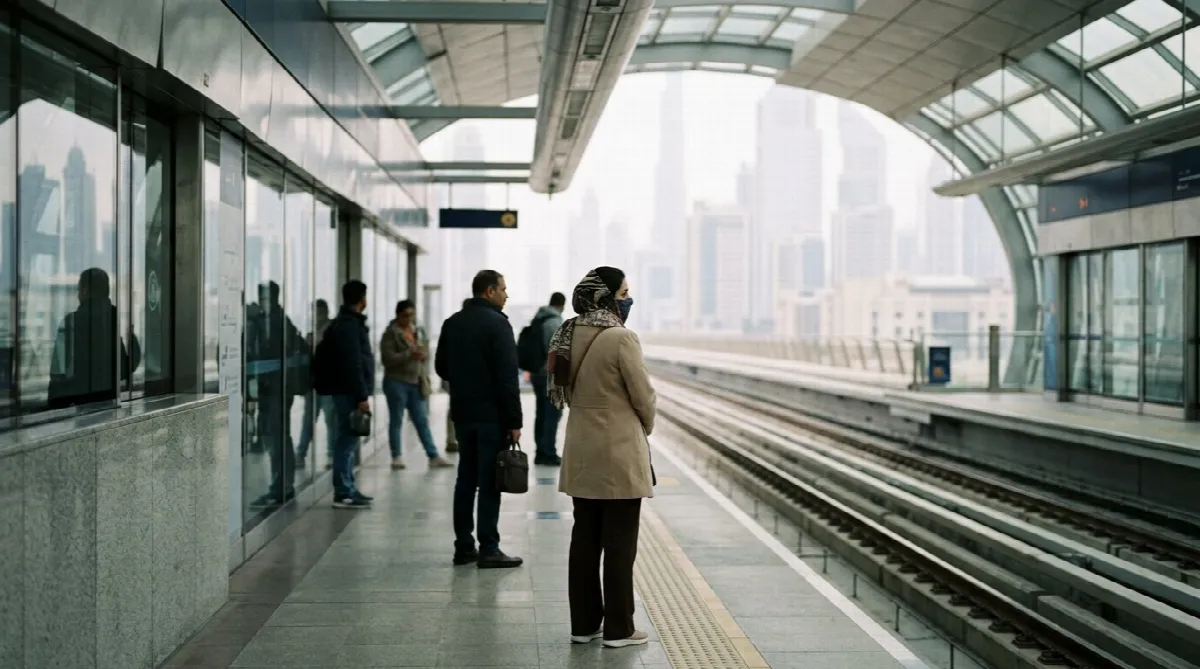
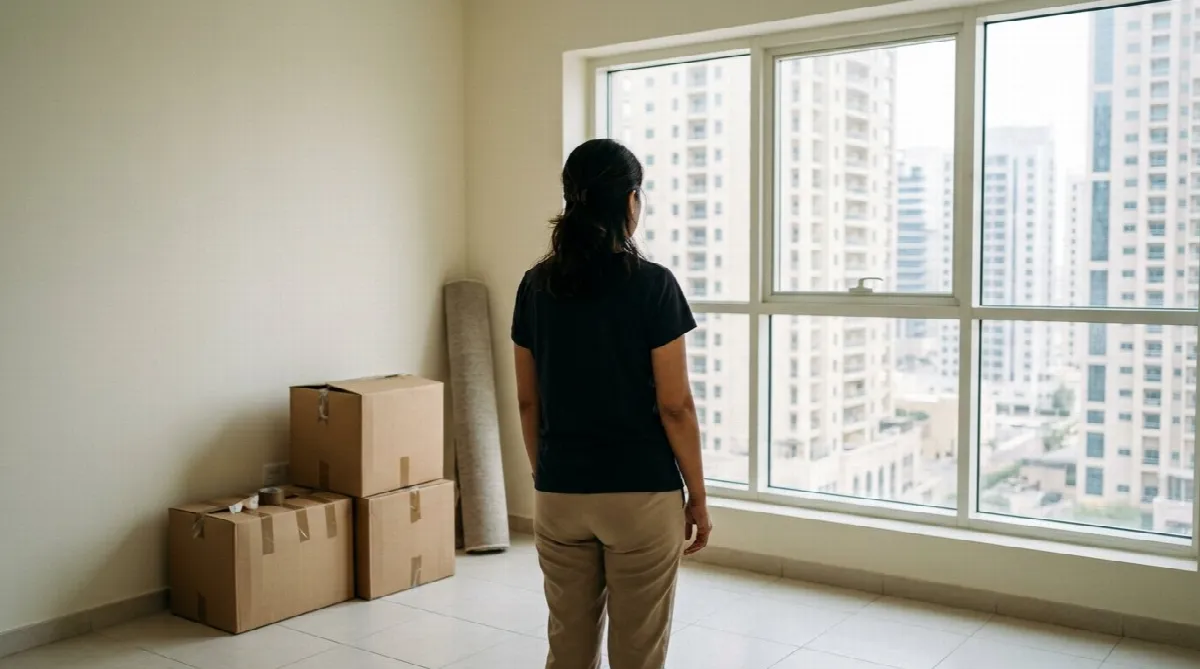
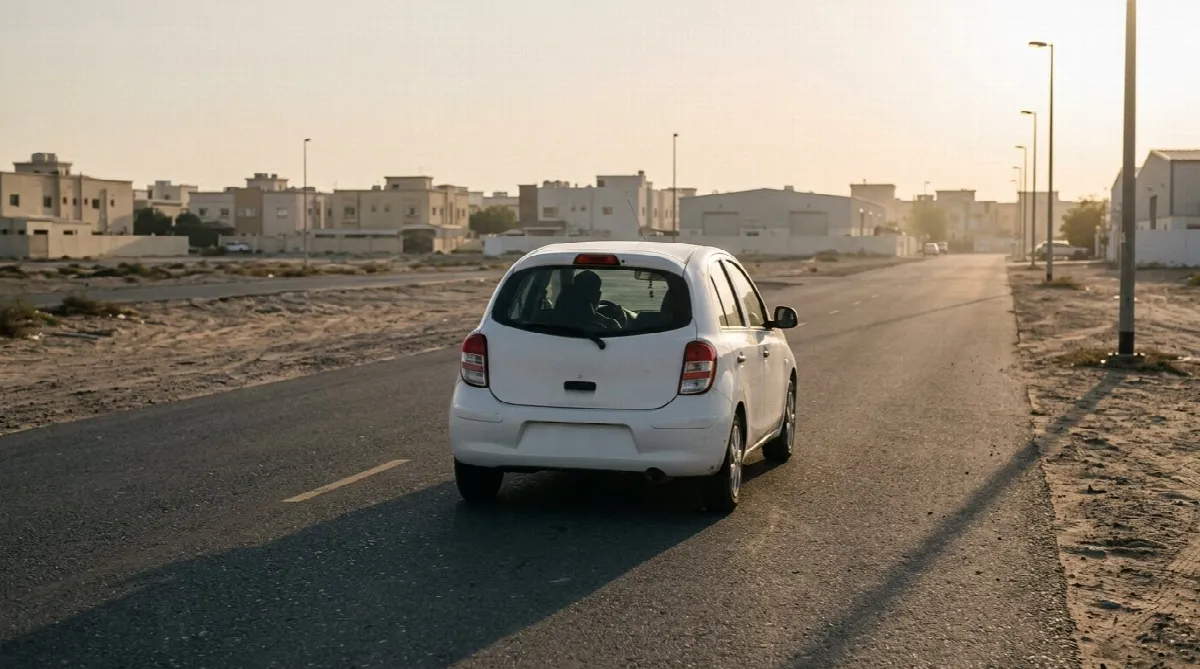
Why UAE Residents Are Buying and Renting Homes Closer to Their Workplaces
Dubai’s 10km drive now takes 19 minutes. Residents are paying more to live closer to work as traffic worsens. Here’s what the data shows and what it means.
By Vadim Kouznetsov, published
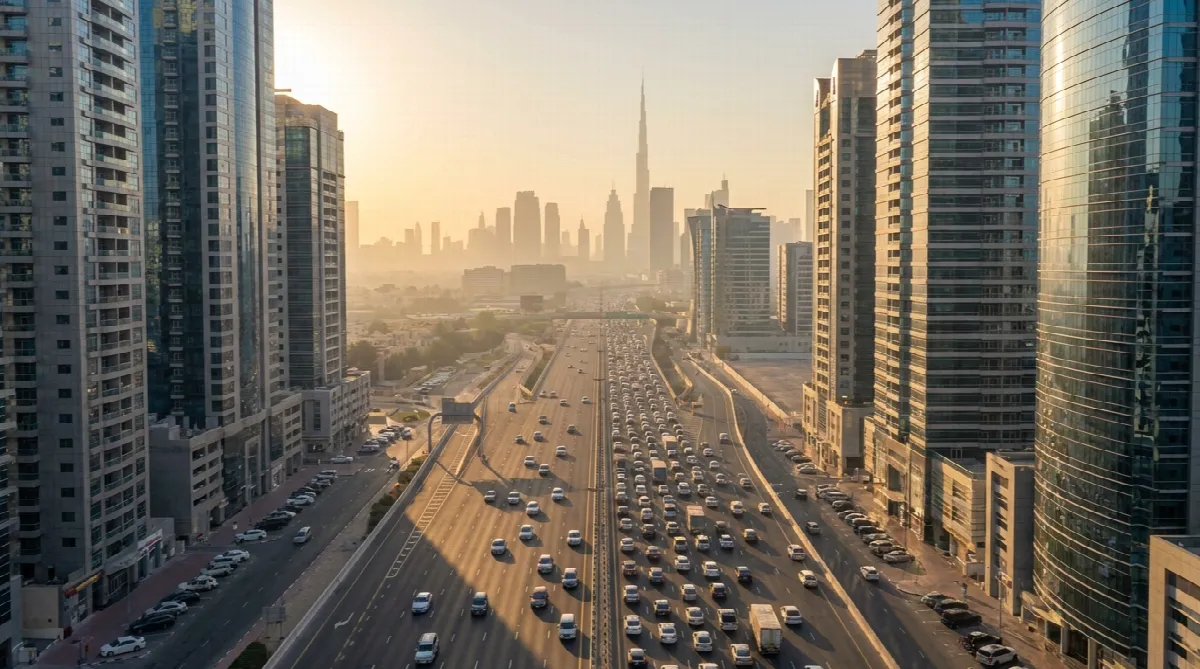
Traffic in Dubai is getting worse — and it’s changing where people choose to live.
Residents across the UAE are increasingly prioritising proximity to their offices over extra space or lower rent. With commute times rising sharply in 2025, living close to work has shifted from a lifestyle preference to a financial and productivity decision.
How Bad Has Dubai Traffic Become in 2025?
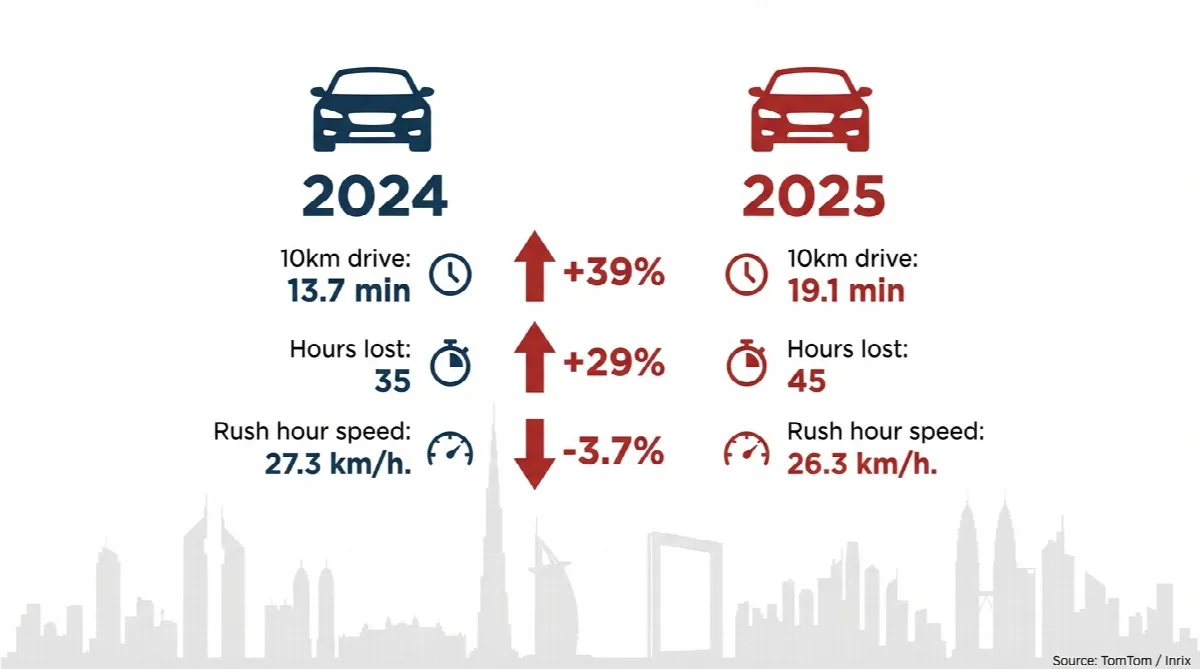
The numbers tell a clear story. According to the TomTom Traffic Index, the average travel time for a 10-kilometre drive in Dubai rose to 19.1 minutes in 2025, up from 13.7 minutes in 2024. That’s a 39% increase in just one year.
Here’s what else the data shows:
- The average distance covered in 15 minutes dropped to 7.8 kilometres, down 0.2 km from the previous year
- Rush hour speeds fell to 26.3 km/h, a full kilometre per hour slower than 2024
- Dubai motorists lost 45 hours to traffic in 2025, compared to 35 hours in 2024, according to the Inrix Global Traffic Report
For those commuting between Dubai and the Northern Emirates, the impact is far more severe. Yogesh Bulchandani, CEO of Sunrise Capital, notes that inter-emirate commuters lose approximately 460 hours annually — the equivalent of 60 working days spent sitting in traffic.
Why Proximity to Work Has Become the Top Priority
Ahmed Hashish, Head of Sales at HRE Development, says proximity to work has moved from being a convenience to a genuine priority for buyers and tenants alike.
“Time has become one of the most valuable currencies in the UAE,” Hashish explains. “Long commute times are pushing residents to reassess what quality of life really means. Many buyers today are actively seeking homes that reduce daily friction, even if that means adjusting their budget or preferred location.”
Harrison Rackham-Beadle, Sales Director of haus & haus, confirms that traffic congestion is directly influencing residential choices. For daily commuters, being close to the workplace now ranks higher than square footage or community amenities.
That said, remote and flexible working arrangements do give some tenants the freedom to choose based on lifestyle rather than commute times. It depends entirely on individual working arrangements — and those with work-from-home roles have more flexibility to prioritise space or suburban savings.
What Type of Communities Are in Highest Demand?
Hashish highlights that well-integrated, mixed-use communities are seeing the strongest demand. These are developments where residents can live, work, and access daily services within the same area.
The most attractive communities now offer schools, retail outlets, green spaces, fitness facilities, and everyday essentials within walking distance. This is particularly appealing for families and professionals looking to cut down on driving altogether.
Bulchandani adds that areas anchored by top-tier schools consistently outperform the broader market. Families are willing to pay a premium for educational proximity. With at least 100 new private schools expected by 2033 and Dubai’s 2040 Urban Master Plan promoting mixed-use developments, this trend is set to accelerate.
“Communities that are thoughtfully planned and reduce dependency on long daily commutes are outperforming purely residential projects,” Hashish adds. “The demand today is not just for square footage, but for integrated living environments that enhance wellbeing and productivity.”
Are Residents Willing to Pay More for Shorter Commutes?
Yes — and the trade-off is increasingly deliberate.
Residents are compromising on apartment size and paying higher prices to live closer to work. The logic is straightforward: time saved on commuting translates to higher productivity, better work-life balance, and reduced fuel and transportation costs.
Bulchandani puts it simply: “Time has become the ultimate luxury.”
This behavioural shift is reshaping Dubai’s rental market and pushing developers to rethink project planning. Purely residential communities without integrated amenities are losing ground to mixed-use developments that offer self-contained living.
What Solutions Are Being Developed for Traffic?
Dubai authorities are working on multiple fronts to address the congestion crisis. The Roads and Transport Plan 2030 includes suspended transit systems, the Metro Blue Line expansion, and flexible work policies aimed at reducing peak-hour traffic by up to 30%.
The RTA is also rolling out AI-powered traffic signal systems to reduce wait times at intersections by 20%. Meanwhile, Etihad Rail passenger services launching in 2026 promise to cut inter-emirate travel times significantly.
For those currently commuting between Dubai and Sharjah, public transport alternatives including bus routes at Dh12 per trip and ferry services at Dh15 offer budget-friendly options to bypass the worst congestion.
Key Takeaways
- Dubai’s average 10km drive now takes 19.1 minutes, up from 13.7 minutes in 2024
- Motorists lost 45 hours to traffic in 2025; inter-emirate commuters lost 460 hours (60 working days)
- Residents are paying more and accepting smaller homes to live closer to work
- Mixed-use communities with schools, retail, and green spaces are outperforming traditional residential projects
- Dubai’s 2040 Urban Master Plan and 100+ planned schools will further drive demand for integrated communities
Frequently Asked Questions
How much time do Dubai commuters lose to traffic in 2025?
According to the Inrix Global Traffic Report, Dubai motorists lost 45 hours to traffic in 2025, up from 35 hours in 2024. Commuters travelling between Dubai and the Northern Emirates lose approximately 460 hours annually — equivalent to 60 working days.
What is the average travel time for a 10km drive in Dubai?
As of 2025, the TomTom Traffic Index reports the average 10-kilometre drive in Dubai takes 19.1 minutes, compared to 13.7 minutes in 2024. Rush hour average speeds have also dropped to 26.3 km/h.
Are Dubai residents paying more to live closer to work?
Yes. Industry experts confirm that residents are willingly compromising on space and paying higher prices to reduce their daily commute. Proximity to the workplace has become a higher priority than square footage for many buyers and tenants.
Which Dubai communities are most in demand due to traffic?
Mixed-use communities that offer schools, retail, fitness facilities, and green spaces within walking distance are seeing the strongest demand. Developments near top-tier schools consistently outperform the broader market, with families paying a premium for educational proximity.
Will Dubai’s traffic improve in the future?
Dubai’s Roads and Transport Plan 2030 includes several initiatives: suspended transit systems, Metro Blue Line expansion, AI-powered traffic signals, and Etihad Rail passenger services launching in 2026. Flexible work policies are also expected to reduce peak-hour congestion by up to 30%.
Should I prioritise proximity to work or cheaper rent in Dubai?
It depends on your working arrangement. If you commute daily, living closer to work can save significant time, stress, and fuel costs. If you have remote or hybrid work flexibility, suburban areas offer larger spaces at lower rents — some tenants save up to Dh100,000 annually by moving to Dubai’s outer communities.
Further Reading
- Dubai-Sharjah Traffic Crisis: Commuters Lose 60 Workdays in Traffic
- Dubai Transport Plan 2030: Suspended Transit & Remote Work to Cut Traffic by 30%
- Dubai Suburbs: Save Dh100k on Rent with Remote Work Options
- Work From Home Jobs Dubai: Ultimate Guide to Remote Careers in 2025
- The Complete Cost to Live in Dubai as an Expat in 2025
The UAE week, every Monday
The week's stories on jobs, visas, money and daily life in one short email. Unsubscribe in one click.