Dubai Business District Traffic 2024: Commuters Face Growing Gridlock
Explore how increasing traffic in Dubai’s business hubs is impacting daily commutes and work-life balance for professionals in 2024.
By Vadim Kouznetsov, published
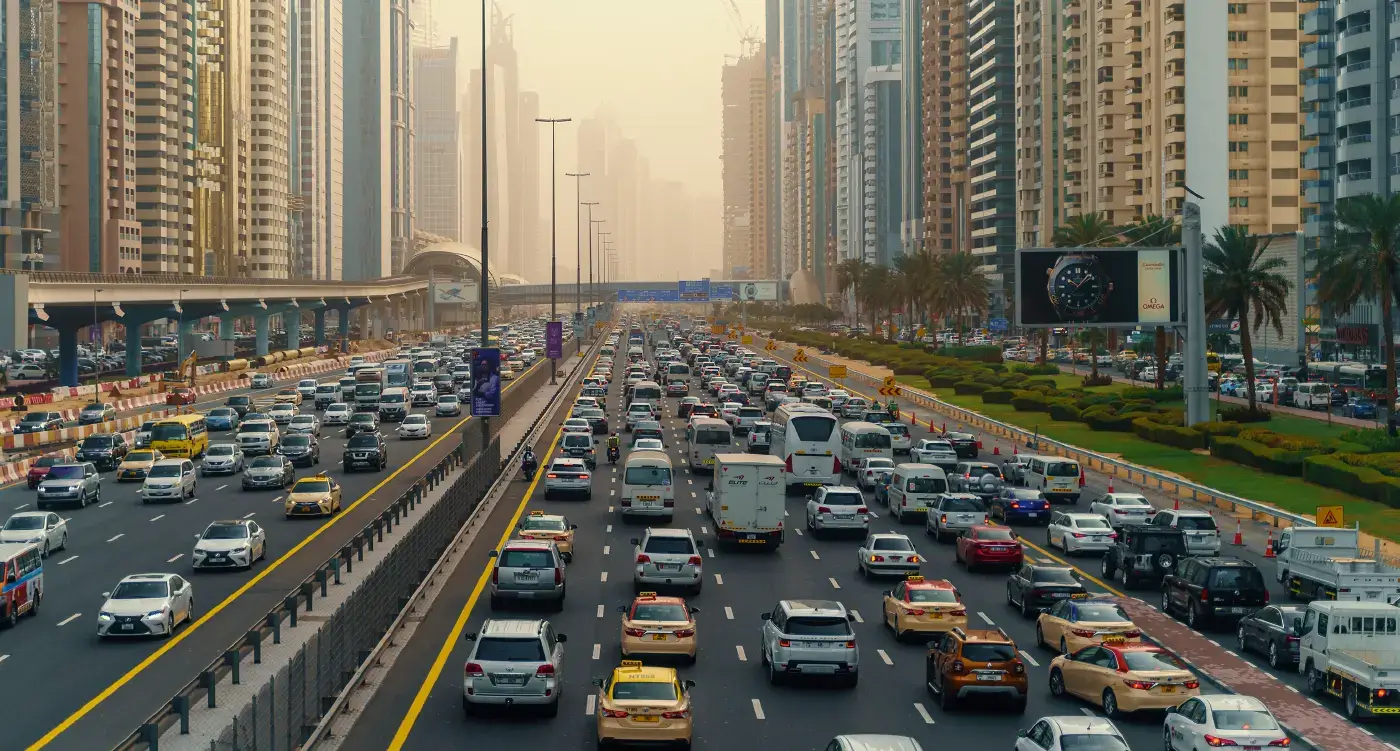
As Dubai’s economic prowess continues to soar in 2024, so does the traffic congestion in its bustling business districts. Daily commuters are grappling with extensive delays, transforming their once-smooth journeys into prolonged ordeals. This article delves into the current state of traffic in Dubai’s key commercial areas and explores how it’s impacting the lives of professionals.
The Daily Grind: Navigating Business Bay’s Gridlock
Business Bay, one of Dubai’s premier commercial hubs, has become a hotspot for traffic woes. Awais Ahmed, an engineer working at Bay Tower on Marasi Drive, paints a vivid picture of the daily struggle:
“Exiting the office car park during peak hours is a test of patience. It often takes over 30 minutes just to leave the premises,” Ahmed explains. “The roads leading to and from the car park are jam-packed with vehicles crawling forward inch by inch.”
But the ordeal doesn’t end there. Ahmed continues, “Once you finally reach Marasi Drive, any sense of relief is fleeting. It can take another 25 minutes to access major thoroughfares like Al Khail Road. From there, it’s an additional 40-minute journey to reach my home in Al Nahda.”
DIFC: From Smooth Commute to Daily Struggle
The Dubai International Financial Centre (DIFC) has not been spared from the increasing traffic pressure. Arfaz Iqbal, a media professional residing in the area, has observed a marked deterioration in traffic conditions over recent months.
“The traffic situation around DIFC has worsened dramatically,” Iqbal notes. “Rush hour now starts as early as 5:30 AM, with peak congestion between 8 AM and 10:30 AM. The evening build-up begins around 4 PM and persists until 8 PM.”
Iqbal shares a particularly frustrating experience: “On some days, I’ve spent over 90 minutes in traffic just to cover a 2-3 kilometre stretch from DIFC parking to Sheikh Zayed Road towards Abu Dhabi.”
The congestion has forced Iqbal to reconsider his transport options, often opting for the metro instead of driving. Even weekends have become challenging due to the area’s popular dining scene.
Deira’s Narrow Streets: A Different Kind of Challenge
The traffic nightmare extends beyond the newer business districts. Aaban Alizai, who works in Deira’s bustling commercial area, faces a unique set of challenges:
“The situation in Deira after 9 AM is particularly dire,” Alizai explains. “Key areas like Baniyas Street, Deira Creek, Al Ras, and Naif become virtual gridlock. It can take 30 minutes just to navigate through the market area.”
To circumvent the congestion, Alizai has resorted to creative solutions: “Sometimes I park near the Creek and walk the remaining two kilometres to my workplace. With summer waning, I’ll likely do this more often to avoid the traffic.”
The Ripple Effect: How Traffic Impacts Work-Life Balance
The increasing traffic congestion is having a significant impact on the work-life balance of Dubai’s professionals. Many are forced to leave home earlier and return later, cutting into personal and family time.
Mohammed AbuSaeed, who commutes from Sharjah to Business Bay, spends up to three hours daily battling traffic. “It’s not just about the time lost,” AbuSaeed laments. “The stress of sitting in traffic affects my productivity and overall well-being.”
Looking Ahead: Hopes for Infrastructure Improvements
While the current situation is challenging, many commuters remain optimistic about ongoing and planned infrastructure upgrades. Ahmed, the engineer from Business Bay, expresses this sentiment: “Many of us who face these congested areas daily are hopeful that the current infrastructural projects and proposed solutions will finally bring some much-needed relief to the city’s traffic issues.”
Conclusion: Adapting to Dubai’s Growing Pains
As Dubai continues its rapid growth trajectory, traffic congestion in its business districts remains a pressing challenge. While infrastructure improvements are underway, commuters are adapting by allowing more travel time, exploring alternative transport options, and in some cases, seeking flexible work arrangements.
The situation underscores the need for continued investment in Dubai’s transport infrastructure and potentially, new approaches to urban planning and traffic management. As the city evolves, so too must its solutions to keep Dubai’s workforce moving efficiently and sustainably.
The UAE week, every Monday
The week's stories on jobs, visas, money and daily life in one short email. Unsubscribe in one click.