Dubai RTA to Trial School Bus Pooling in Q1 2026 to Reduce Traffic
Dubai RTA trials school bus pooling Q1 2026. Shared buses serve multiple schools in defined zones with smart tech tracking. Affordable alternative to cars.
By Vadim Kouznetsov, published
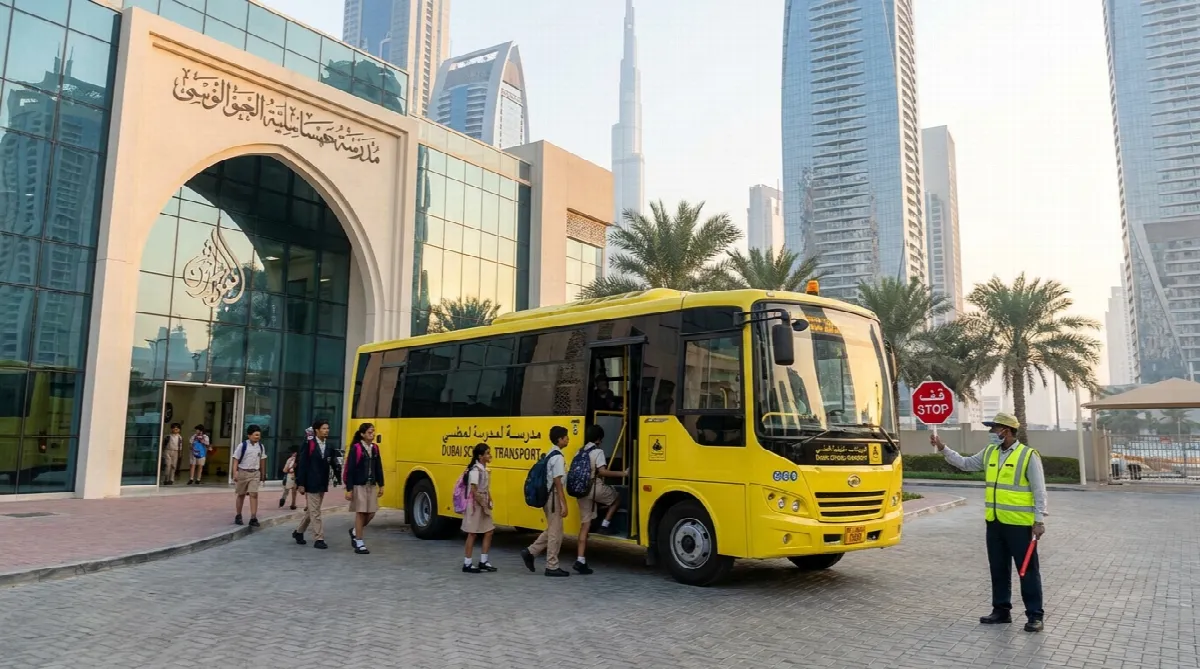
Dubai’s Roads and Transport Authority (RTA) will pilot a school transport pooling initiative in the first quarter of 2026, aiming to cut traffic congestion around school zones by offering an affordable alternative to private car drop-offs.
The pilot programme will see shared buses transport students from multiple schools within defined geographic zones, using smart technology for trip management, vehicle tracking, and operational monitoring.
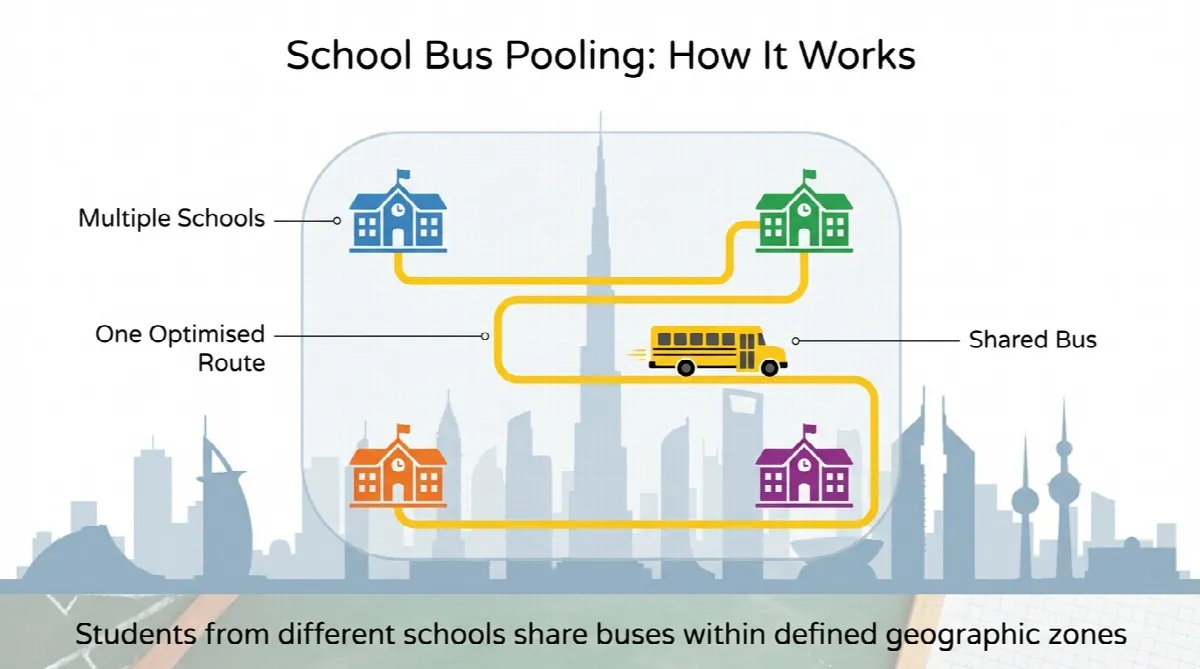
How the School Bus Pooling System Works
The initiative operates on a pooling principle: instead of each school running separate bus services, students travelling along similar routes will share buses operating on optimised schedules.
Ahmed Hashem Bahrozyan, CEO of the RTA’s Public Transport Agency, explained:
“The initiative involves the operation of shared buses serving multiple schools located within defined geographic zones. It aims to explore innovative school transport models based on the principle of pooling, supporting better vehicle utilisation, reducing traffic congestion during peak hours, and raising safety and quality standards in student transport services.”
Key features:
- Shared buses serving multiple schools in defined zones
- Data-driven route optimisation
- Smart technology for trip management
- Real-time vehicle tracking
- Full compliance with Dubai school transport regulations
Why the Initiative Is Needed
RTA has observed a significant increase in private vehicles used to transport students to and from schools, directly affecting traffic flow around school zones.
Bahrozyan stated: “Through this initiative, RTA aims to offer an alternative school transport solution at affordable rates, helping to improve traffic movement and deliver a more efficient daily mobility experience.”
The problem is substantial. Dubai’s Transport Plan 2030 specifically identified school traffic as a major congestion factor, projecting that increased school bus usage could improve traffic flow by up to 13 per cent by reducing private drop-offs during peak hours.
Partnership with Yango Group and Urban Express Transport
RTA has signed memoranda of understanding with two transport technology companies to deliver the pilot:
Yango Group brings data-driven mobility expertise. Islam Abdul Karim, Regional Head of Yango Group, explained:
“School transport remains one of the most complex daily mobility challenges for cities. Through this pilot with RTA, we are introducing a data-driven school transport pooling model that groups students travelling along similar routes into shared buses operating on optimised routes and schedules.”
Urban Express Transport provides operational capability. Dr. Mohammad Al Hashimi, Founder and CEO, said the project aims to reduce congestion, improve bus utilisation, and “enhance the daily travel experience for students.”
Building on Previous School Traffic Improvements
The pilot expands RTA’s ongoing efforts to address school zone congestion.
In 2024, Dubai approved a comprehensive traffic plan including policies to encourage greater school transport usage—a move expected to improve traffic flow around schools by 13 per cent.
RTA also completed eight school traffic improvement projects covering more than 37 schools that year, including:
- Road widening
- Improved entry and exit points
- Additional parking
- Traffic diversions
These infrastructure changes delivered a 20 per cent improvement in peak-hour traffic flow around school areas.
The bus pooling pilot represents the next phase: reducing the number of private vehicles rather than just improving how they move.
What This Means for Parents
The initiative offers parents an alternative to:
- Driving children to school themselves
- Hiring private drivers
- Paying for expensive school-specific bus services
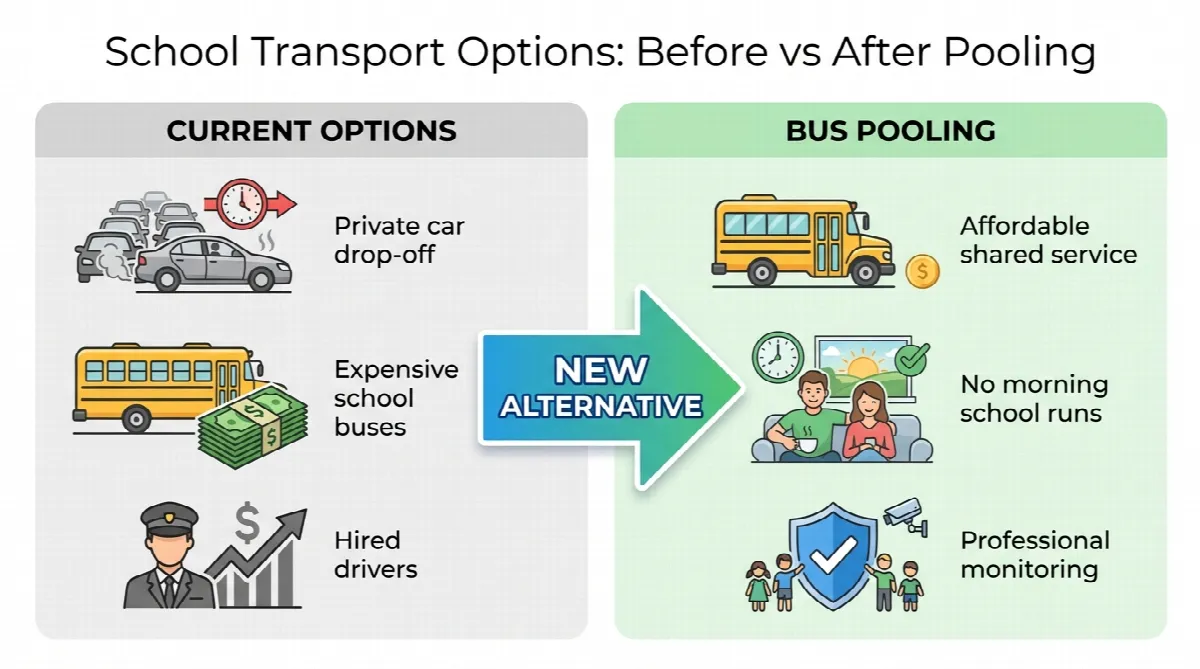
RTA specifically mentioned “affordable rates” as a key objective, suggesting the pooled service will cost less than dedicated school bus subscriptions.
Potential benefits for families:
- Lower transport costs
- Elimination of morning/afternoon school runs
- Reduced stress during peak hours
- Professional, monitored transport service
Safety and Regulatory Compliance
RTA emphasised that the pilot will comply with all approved safety, security, regulatory and legislative requirements governing school transport in Dubai.
The smart technology platform will provide:
| Feature | Safety Benefit |
|---|---|
| Real-time vehicle tracking | Parents and operators can monitor bus location |
| Trip management system | Efficient pick-up and drop-off coordination |
| Operational monitoring | Oversight of driver behaviour and route adherence |
| Regulatory compliance | All Dubai school transport rules followed |
Future Rollout Potential
Bahrozyan noted that the pilot will assess the potential for wider rollout in the future. If successful, the pooled school transport model could expand across Dubai.
This aligns with Dubai’s broader smart mobility strategy, which includes initiatives like Bus-On-Demand services and the upcoming Etihad Rail integration.
The school transport sector presents significant opportunity: with Dubai’s population exceeding 4 million and continuing to grow, demand for efficient school transport solutions will only increase.
When the Pilot Launches
The school bus pooling initiative will begin in Q1 2026, meaning parents could see the service available as early as January-March 2026.
RTA has not yet announced:
- Specific schools participating in the pilot
- Geographic zones covered
- Pricing structure
- Registration process
These details are expected to be released closer to the launch date.
Key Takeaway
Dubai’s RTA will pilot a school bus pooling initiative in Q1 2026, allowing students from multiple schools to share buses within defined geographic zones. The programme, developed in partnership with Yango Group and Urban Express Transport, uses data-driven route optimisation and smart technology for trip management and vehicle tracking. RTA aims to offer affordable rates to reduce private vehicle drop-offs, which have increased significantly and directly affect traffic flow around schools. The pilot builds on previous improvements that delivered 20 per cent better peak-hour traffic flow around 37+ schools and will assess potential for city-wide rollout.
FAQs
When does the Dubai school bus pooling pilot start?
The RTA school bus pooling initiative launches in Q1 2026 (January-March 2026). Specific start dates and participating schools will be announced closer to launch.
How does the school bus pooling system work?
Students travelling along similar routes from multiple schools share buses operating on optimised schedules within defined geographic zones. Smart technology manages trips, tracks vehicles, and monitors operations in real-time.
Will school bus pooling be cheaper than private school buses?
RTA stated the initiative aims to offer school transport at “affordable rates.” While specific pricing has not been announced, pooled services typically cost less than dedicated school bus subscriptions due to shared utilisation.
Is the school bus pooling service safe?
Yes. RTA confirmed the pilot will comply with all approved safety, security, regulatory and legislative requirements governing school transport in Dubai. The service includes real-time vehicle tracking and operational monitoring.
Which schools will participate in the pilot?
RTA has not yet announced specific schools or geographic zones for the Q1 2026 pilot. This information is expected closer to the launch date.
Further Reading
The UAE week, every Monday
The week's stories on jobs, visas, money and daily life in one short email. Unsubscribe in one click.