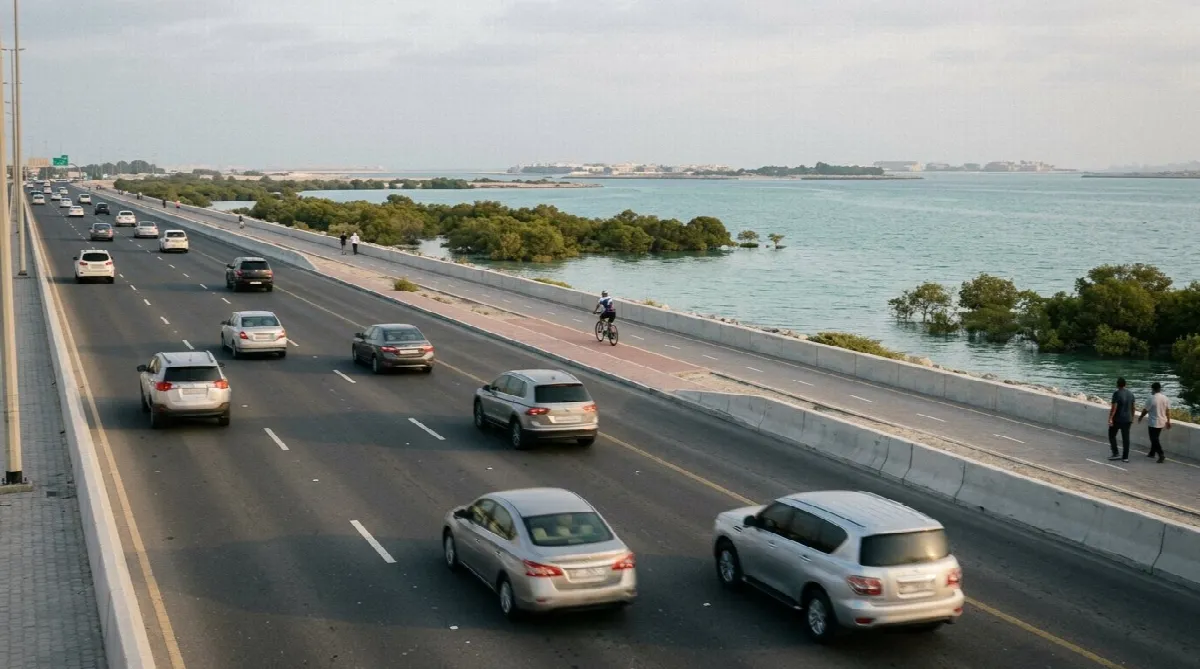
UAE Unveils AED 170bn Transport Plan: 12-Lane Etihad Road, Emirates Road Expansion by 2030
UAE announces AED 170bn transport plan by 2030: 12-lane Etihad Road, 10-lane Emirates Road expansion, and new 120km federal highway planned.
By Vadim Kouznetsov, published
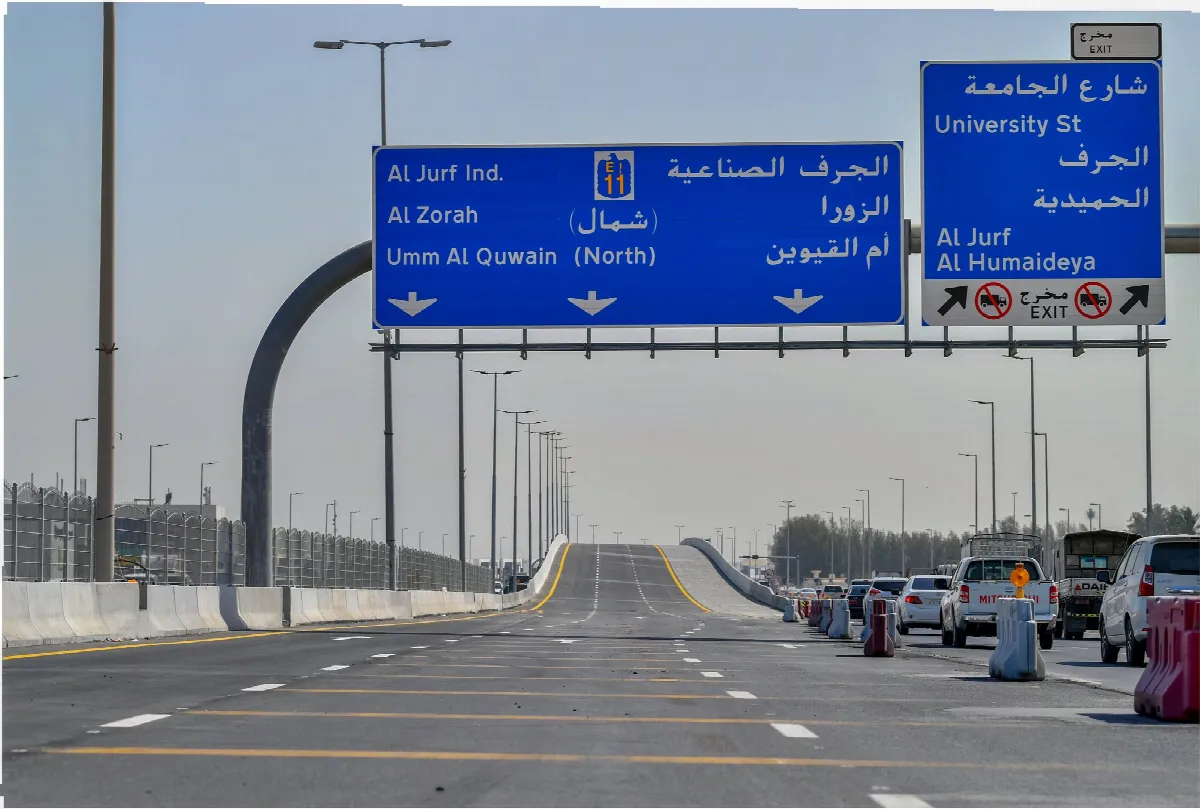
The UAE Ministry of Energy and Infrastructure has announced an ambitious AED 170 billion (US$46.3 billion) national transport programme that will transform the country’s highway network by 2030. The plan includes expanding Etihad Road to 12 lanes, upgrading Emirates Road to 10 lanes across its full length, and conducting feasibility studies for a new 120-kilometre federal highway.
What’s Included in the UAE’s Transport Plan?
The comprehensive package targets congestion relief, highway expansion, and improved mobility across all seven emirates. Minister of Energy and Infrastructure Suhail Al Mazrouei revealed the plan during his keynote at the UAE Government Annual Meetings in Abu Dhabi, stating the ministry aims to boost federal road efficiency by 73 per cent over the next five years.
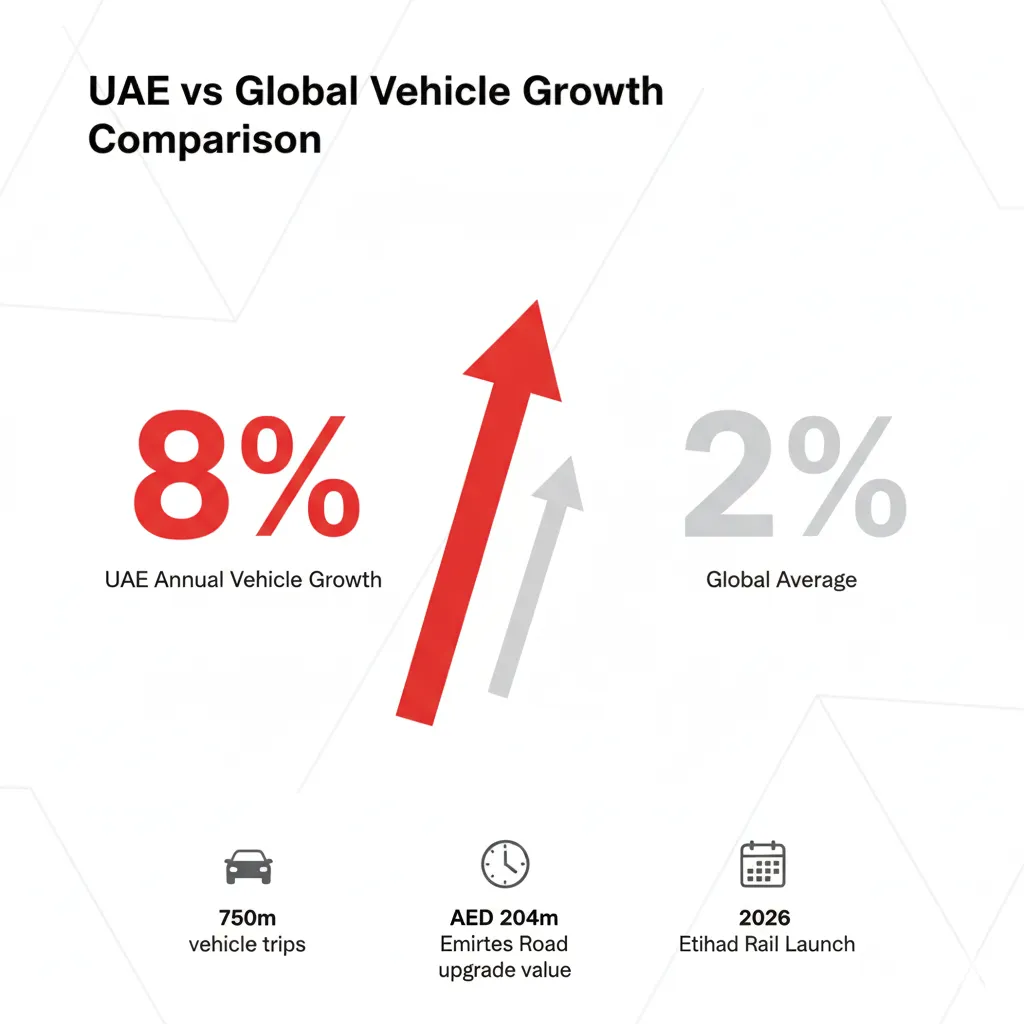
The scope is substantial: expanding lane capacity from 19 to 33 in each direction across key highways. With vehicle numbers on UAE roads increasing by more than 8 per cent annually—four times the global average of 2 per cent—these upgrades address urgent infrastructure needs driven by population growth and economic expansion.
Major Highway Expansions Announced
Etihad Road Upgrade
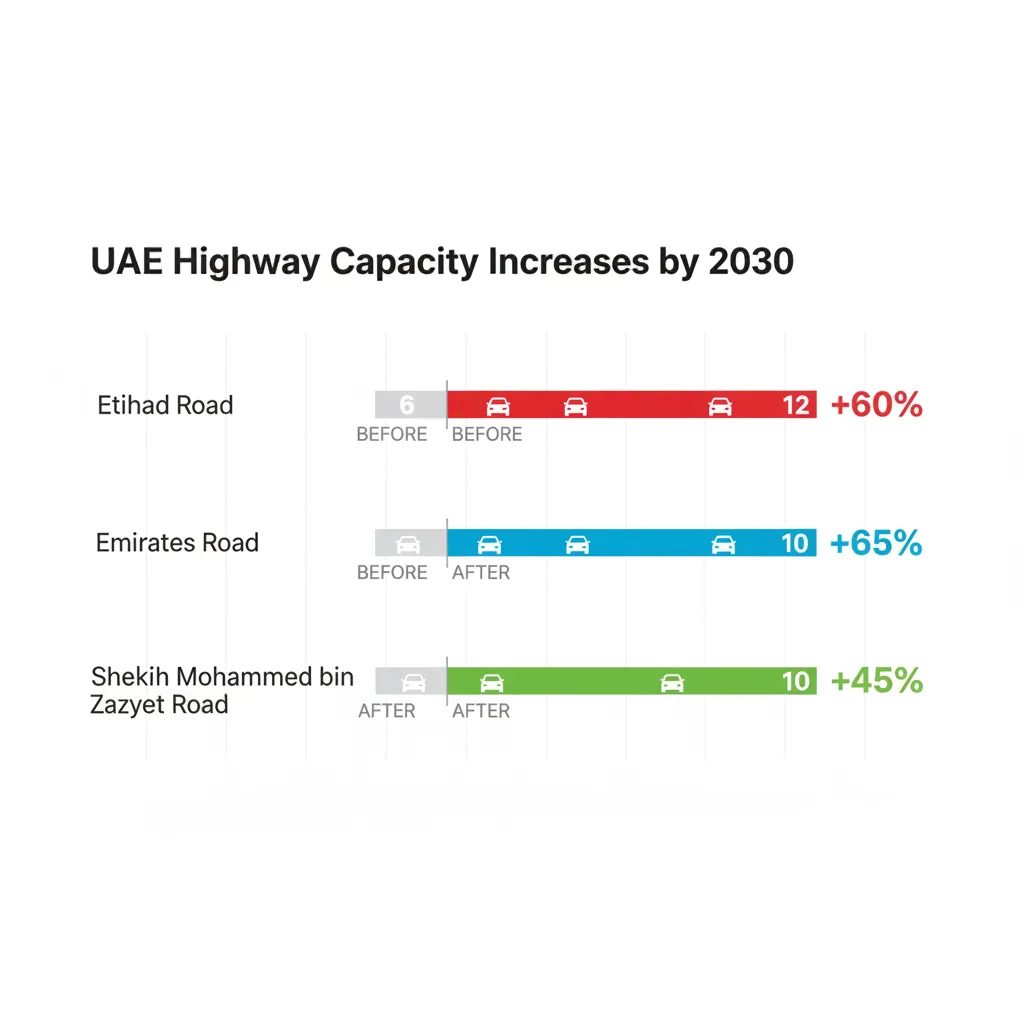
Etihad Road will receive six additional lanes—three in each direction—bringing the total to 12 lanes. This expansion delivers a 60 per cent capacity increase, directly addressing one of the country’s busiest inter-emirate routes.
Emirates Road Transformation
Emirates Road will expand to 10 lanes along its complete length, representing a 65 per cent capacity boost. The ministry projects this upgrade will reduce travel times by 45 per cent, significantly benefiting daily commuters and commercial transport. A AED 750 million (US$204 million) project is already underway, scheduled for completion within two years.
Sheikh Mohammed bin Zayed Road Enhancement
Sheikh Mohammed bin Zayed Road will widen to 10 lanes, enhancing capacity by 45 per cent. This upgrade supports the critical north-south corridor connecting Dubai with neighbouring emirates.
Potential Fourth Federal Highway
The ministry is conducting a feasibility study for a new 120-kilometre, 12-lane federal highway designed to accommodate 360,000 trips daily. This potential fourth federal route would further ease inter-emirate travel and distribute traffic more efficiently across the network.
Why the Expansion is Needed Now
Al Mazrouei highlighted that UAE vehicle growth substantially outpaces international trends. The 8 per cent annual increase creates mounting pressure on existing infrastructure, with current road capacity struggling to match demand.
Three primary factors drive the congestion:
Population growth continues to accelerate across the emirates, with Dubai’s transport initiatives working alongside federal efforts to manage increased traffic volumes.
Overlapping school and work hours concentrate traffic during peak periods, creating bottlenecks on major routes.
Heavy reliance on private vehicles persists despite public transport improvements. The UAE’s world-class road infrastructure already ranks 5th globally, yet private car usage remains the dominant transport mode.
Smart Traffic Management and Monitoring
The ministry has established a 24-hour traffic monitoring centre to analyse congestion causes and propose data-driven solutions. This technology-driven approach uses real-time data to identify bottlenecks, predict traffic patterns, and implement targeted interventions.
Al Mazrouei emphasised the ministry’s commitment to innovation and technology in reducing congestion and emissions. The monitoring centre represents a shift towards proactive traffic management rather than reactive infrastructure expansion alone.
The ministry is coordinating with local authorities to update traffic policies, improve integration between transport networks, and introduce innovative mobility options encouraging greater public transport adoption.
Integration with Etihad Rail Programme
The Etihad Rail passenger service launching in 2026 forms a central pillar of the national transport strategy. Launched in 2021 with a AED 50 billion (US$13.6 billion) investment, the UAE Railway Programme aims to connect major cities and reduce road traffic substantially.
Al Mazrouei confirmed the passenger service remains on track to begin operations by 2026, strengthening connectivity between cities and communities whilst reducing road congestion. The network will meet passenger needs according to the highest international standards, offering an alternative to private vehicle travel for inter-emirate journeys.
The railway integration demonstrates the government’s multi-modal approach to transport planning. Rather than focusing solely on road expansion, the strategy combines highway improvements with rail connectivity to provide residents with viable transport choices.
Alignment with UAE Centennial 2071 Vision
These infrastructure upgrades support the UAE Centennial 2071 plan, the government’s long-term vision for sustainable development and enhanced quality of life. Al Mazrouei described the projects as creating “a smart, flexible, and sustainable infrastructure that enhances traffic flow, supports comprehensive development, and improves quality of life.”
The programme demonstrates how federal and emirate-level initiatives work together. While the Ministry of Energy and Infrastructure handles federal highways, local authorities like Dubai’s RTA manage emirate-specific road networks, creating a coordinated national approach.
Al Mazrouei emphasised that addressing congestion and improving mobility represents a national priority, with federal and local entities collaborating to enhance roads, public transport, and logistics networks. Developing and adapting traffic policies to urban growth remains essential for efficient mobility.
Timeline and Implementation
The Emirates Road upgrade has already commenced, with the AED 750 million project expected to complete within two years. This provides a tangible near-term milestone for residents to anticipate improvements.
The broader AED 170 billion programme will unfold through 2030, with various projects progressing simultaneously across the country. The 73 per cent efficiency improvement target over five years sets an ambitious but measurable goal for evaluating success.
The feasibility study for the fourth federal highway will determine whether this additional route proceeds to construction. If approved, it would represent one of the most significant single infrastructure additions to the national road network.
Looking Ahead
The UAE’s transport transformation addresses immediate congestion challenges while building capacity for future growth. With economic expansion and population increases showing no signs of slowing, proactive infrastructure investment prevents the gridlock experienced in other rapidly developing regions.
The combination of expanded highways, smart traffic monitoring, policy reforms, and rail integration offers a comprehensive solution rather than relying on any single approach. This multi-faceted strategy positions the UAE to maintain its reputation for world-class infrastructure whilst accommodating continued growth.
For residents, these improvements promise shorter travel times, reduced congestion, and more transport options. The 45 per cent travel time reduction on Emirates Road alone will significantly impact daily commutes for thousands of people travelling between emirates.
Frequently Asked Questions
When will the Emirates Road expansion be completed?
The AED 750 million Emirates Road upgrade project is already underway and scheduled for completion within two years from the announcement.
How much is the UAE investing in transport infrastructure by 2030?
The UAE Ministry of Energy and Infrastructure has allocated AED 170 billion (US$46.3 billion) for national transport and road projects to be implemented by 2030.
Why is Etihad Road being expanded to 12 lanes?
Etihad Road is receiving six additional lanes (three in each direction) to increase capacity by 60 per cent. This addresses the 8 per cent annual growth in vehicle numbers on UAE roads, which is four times higher than the global average.
What is the new 120km federal highway?
The ministry is conducting a feasibility study for a potential fourth federal highway spanning 120 kilometres with 12 lanes, designed to handle 360,000 trips per day. This would provide an additional inter-emirate route to ease traffic on existing highways.
How will Emirates Road expansion reduce travel time?
The expansion of Emirates Road to 10 lanes across its full length will increase capacity by 65 per cent and is projected to reduce travel times by 45 per cent through improved traffic flow and reduced congestion.
When does the Etihad Rail passenger service launch?
The Etihad Rail passenger service is scheduled to begin operations in 2026, providing an alternative to road travel for inter-emirate journeys and helping reduce traffic congestion on federal highways.
What is the target efficiency improvement for UAE federal roads?
The Ministry of Energy and Infrastructure aims to enhance federal road efficiency by 73 per cent over the next five years through the combination of capacity expansions, smart traffic monitoring, and policy reforms.
How does the UAE’s vehicle growth compare to global rates?
UAE vehicle numbers are increasing by more than 8 per cent annually, significantly higher than the global average of 2 per cent. This rapid growth is driven by population expansion, economic development, and heavy reliance on private vehicles.
Further Reading
The UAE week, every Monday
The week's stories on jobs, visas, money and daily life in one short email. Unsubscribe in one click.