Fake QR Codes in Dubai: How ‘Quishing’ Scams Steal Your Data
Dubai Cyber Security Center warns about QR code phishing scams targeting parking meters and cafés. Learn how to spot fake codes and protect your data.
By Vadim Kouznetsov, published
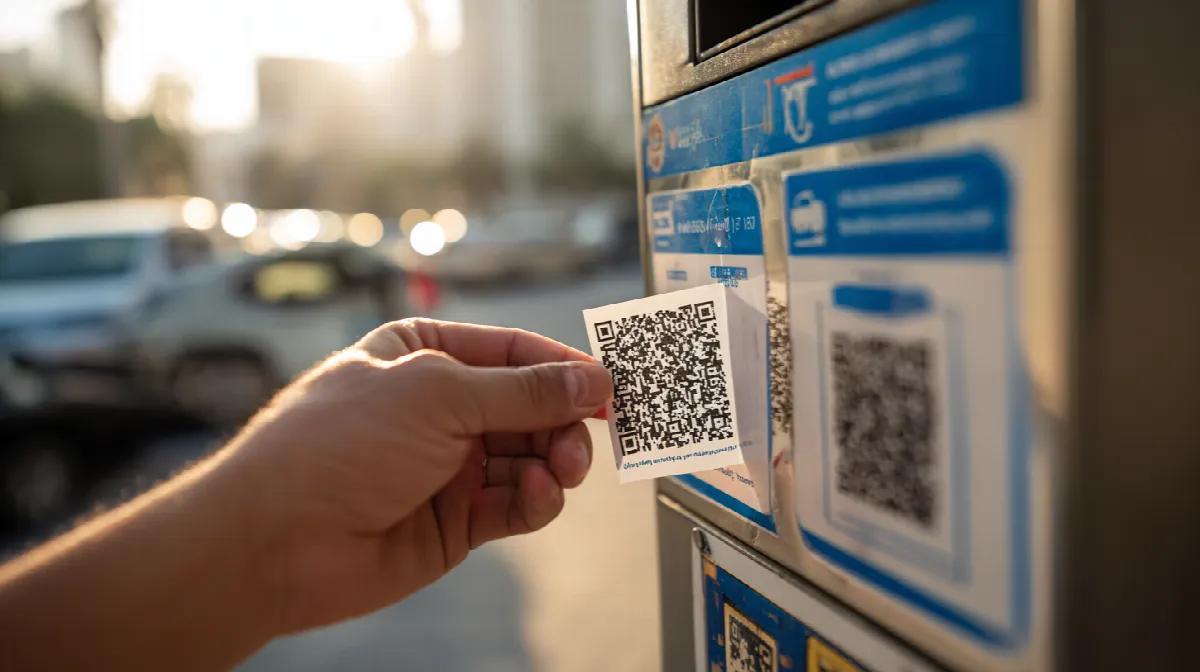
QR code phishing, known as “Quishing,” has become Dubai’s fastest-spreading cyber threat. Scammers place fake QR codes over legitimate ones in parking meters, café windows, and promotional posters across the UAE, redirecting victims to fraudulent websites that steal personal and financial information.
The Dubai Cyber Security Center issued an urgent warning on 28 October 2025 about this physical deception tactic that exploits people’s trust in everyday QR code technology.
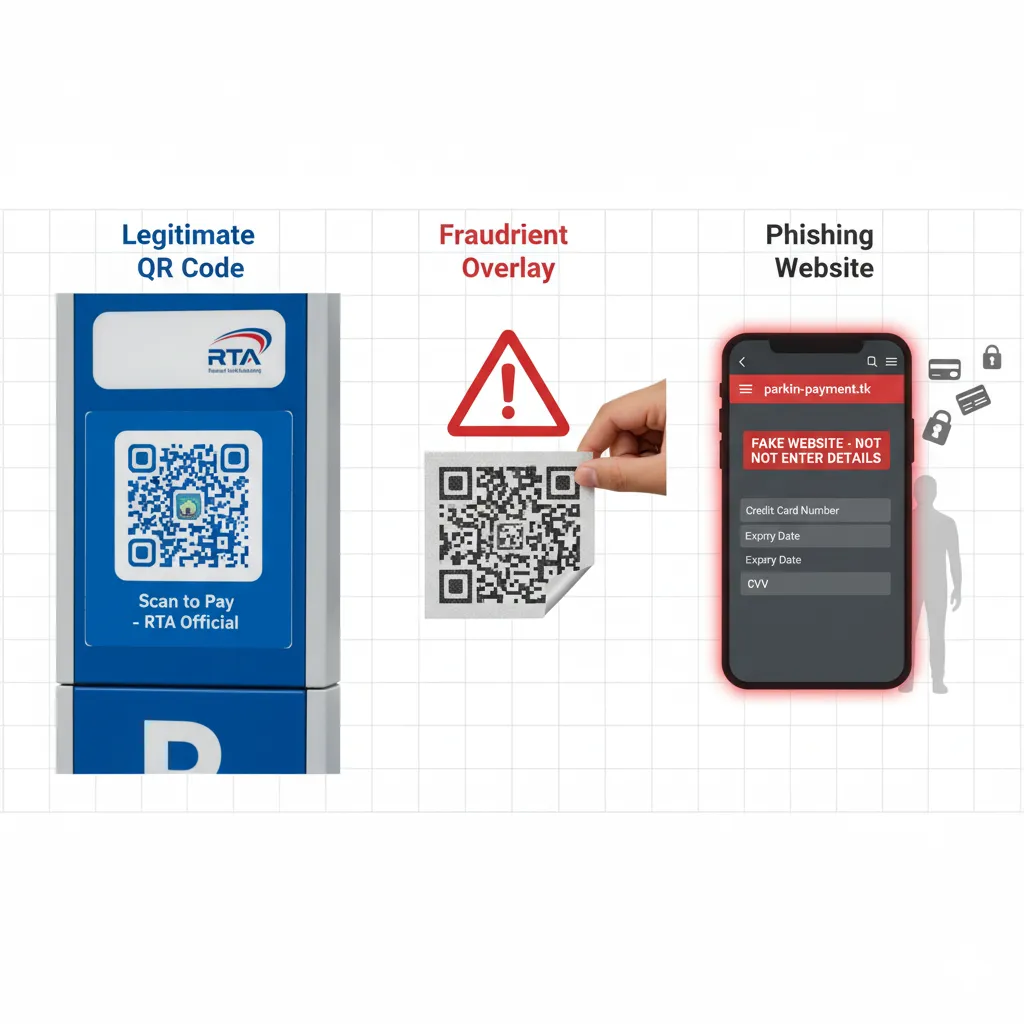
What Is Quishing and How Does It Work?
Quishing combines “QR code” and “phishing” into a sophisticated scam that bypasses traditional email security. Unlike digital phishing attempts, this threat exists in physical spaces where you shop, park, and socialise.
Cybercriminals print fraudulent QR codes on stickers and place them directly over legitimate codes. The fake codes look identical to authentic ones, making them nearly impossible to identify without careful inspection.
When you scan the malicious code, your phone redirects to a fake website designed to mimic the real service. These sites capture everything you enter: login credentials, credit card numbers, CVV codes, and personal identification details.
“It’s a clever and dangerous trick because people trust QR codes and use them every day without thinking,” the Dubai Cyber Security Center explained in its advisory.
Where Scammers Target Dubai Residents
The warning comes as Dubai parking systems increasingly rely on QR code payments, creating opportunities for criminals to exploit rushed transactions.
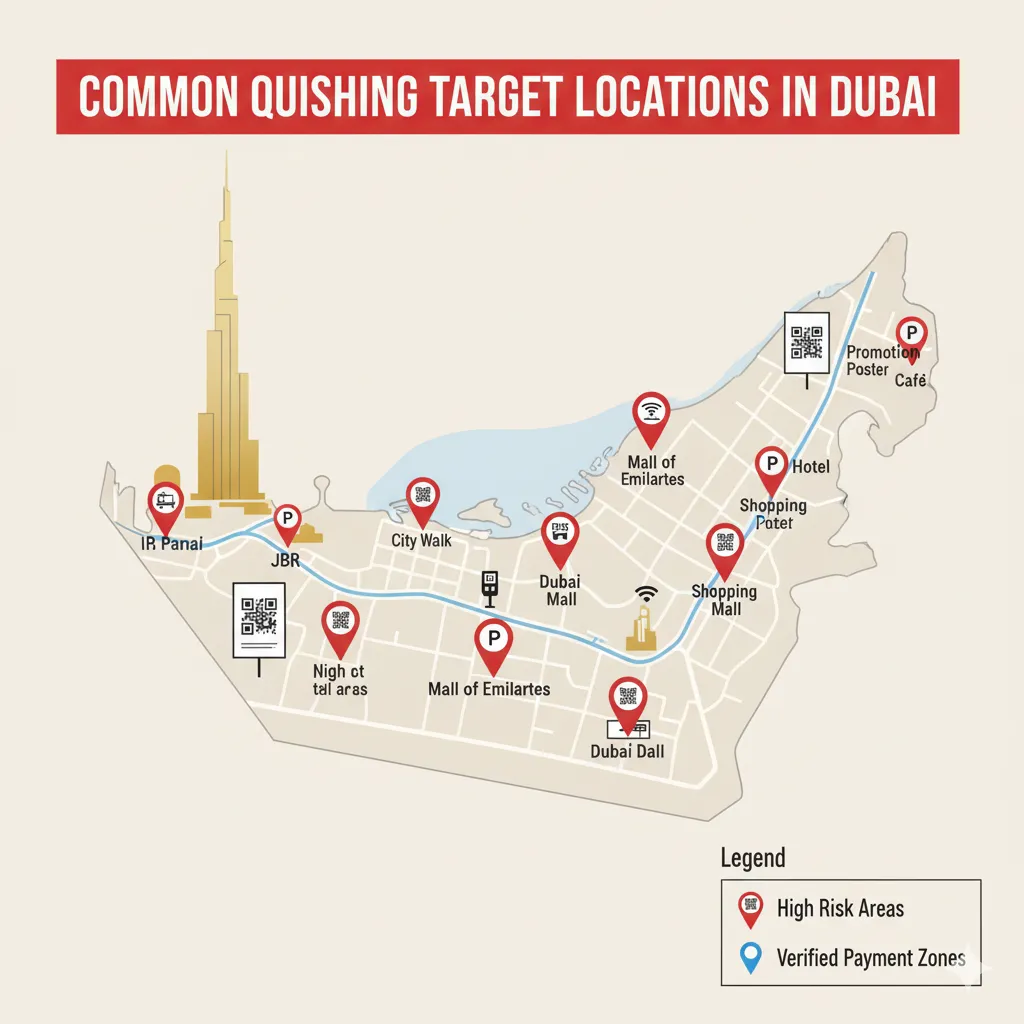
High-Risk Locations in UAE
Parking Meters and Payment Signage
Dubai’s shift to digital parking payments makes parking meters prime targets. Scammers know drivers act quickly, scanning codes without scrutiny to avoid fines or overstaying free periods.
The fake codes redirect to payment pages that steal your card details whilst appearing to process a legitimate transaction.
Free Wi-Fi Promotional Posters
Public areas like shopping malls, cafés, and hotel lobbies often display QR codes for Wi-Fi access. Fraudulent codes redirect you to fake login pages that capture your email addresses, passwords, and device information.
These credentials can then access other accounts where you’ve reused passwords.
Promotional Offers and Discounts
Restaurant windows, retail stores, and event venues frequently display QR codes for special offers. Scammers exploit this by placing fake codes that request “processing fees” or “verification deposits” to claim non-existent discounts.
How to Identify Fake QR Codes
Protection starts with recognising the warning signs before you scan.
Physical Inspection Checks
Examine the QR code carefully. Look for:
- Stickers placed over printed codes
- Edges that lift or peel away from surfaces
- Misaligned placement compared to surrounding design elements
- Different paper quality or printing style from official materials
- Damage or scratches around the code area
If anything looks tampered with, photograph the suspicious code and report it to authorities. Never scan questionable codes.
After-Scan Verification
Once you scan a QR code, pause before taking further action:
Check the web address displayed on your screen. Legitimate sites use official domains (like rta.ae for Roads and Transport Authority or parkin.ae for parking services).
Watch for spelling mistakes, extra characters, or unusual domain extensions (.tk, .ml, .ga are common in scams).
Look for HTTPS and a padlock symbol in your browser’s address bar before entering any information.
Dubai’s Most Vulnerable Payment Systems
Recent cybersecurity incidents affecting 49% of UAE consumers demonstrate how widespread digital payment fraud has become.
Smart Parking Infrastructure
The implementation of barrier-free parking at Dubai Mall and Mall of the Emirates creates new vulnerabilities. Whilst these systems use automated plate recognition, supplementary QR codes for quick payments provide openings for scammers.
Parkin and Parkonic operate most legitimate parking payment systems. Always verify you’re using official apps or payment portals rather than scanning physical codes.
Government Service Access Points
Dubai Municipality recently warned residents about fraudulent government service schemes. QR codes claiming to offer quick access to visa renewals, Emirates ID services, or traffic fine payments should trigger immediate suspicion.
Official UAE government services operate exclusively through verified apps like UAE PASS and ministry-specific platforms, never through random QR codes in public spaces.
Steps to Protect Yourself from Quishing Scams
The Dubai Cyber Security Center and police authorities recommend these practical security measures.
Before Scanning
Inspect codes for tampering signs. Check if the code appears to be a sticker or shows evidence of manipulation.
Use your smartphone camera instead of automatically opening links. Most modern phones display the destination URL before you visit the site, giving you a chance to verify legitimacy.
Ask staff members at venues to confirm official QR code locations and appearance.
During Transactions
Verify the website address matches the legitimate service provider. Compare it to the official URL listed on the company’s verified website or app.
Never enter sensitive information if the site requests unusual details or seems poorly designed.
Use official payment apps when available. The Parkin app and mParking SMS service provide secure alternatives to scanning physical codes.
After Potential Exposure
If you suspect you’ve scanned a fraudulent QR code:
- Don’t enter any information on the resulting webpage
- Close your browser immediately
- Change passwords for accounts that might be compromised
- Monitor your bank statements for unauthorised transactions
- Report the incident to Dubai Police eCrime
Contact your bank if you entered card details. They can block transactions and issue replacement cards.
Technology Solutions for QR Code Security
Keep your smartphone security updated with the latest software versions. Modern operating systems include built-in protections against malicious links.
Install reputable antivirus applications that scan QR codes before opening them. Apps like Kaspersky QR Scanner and Avira QR Scanner check destinations against known threat databases.
Enable two-factor authentication on financial accounts. Even if scammers obtain your login credentials through quishing, 2FA provides an additional security layer.
Consider using dedicated QR scanner apps rather than your phone’s default camera. Specialised apps often include security features that warn you about suspicious destinations.
What Dubai Authorities Are Doing
Following the increase in sophisticated social media scams and VPN-related fraud, Dubai Cyber Security Center has intensified public awareness campaigns.
The Roads and Transport Authority regularly audits parking meters and payment points to remove fraudulent QR codes. However, scammers replace them quickly, making ongoing vigilance necessary.
Dubai Police’s eCrime division investigates reported quishing incidents. They work with service providers to identify patterns and prevent future attacks.
Federal cybercrime laws impose strict penalties on QR code fraud, with fines up to Dh2 million and imprisonment for perpetrators under Federal Decree Law No. 34 of 2021.
Common Questions About QR Code Scams in Dubai
How can I tell if a QR code is legitimate?
Legitimate QR codes are integrated into official materials, not stuck on as afterthoughts. They appear on professionally printed surfaces with consistent quality. If you’re unsure, ask venue staff or use the official app instead of scanning.
What should I do if I’ve already entered my card details?
Contact your bank immediately to report potential fraud. Request they monitor your account for suspicious activity and consider issuing a replacement card. Change passwords for any accounts using the same credentials.
Are QR codes in Dubai parking areas safe to use?
Official parking QR codes from Parkin and Parkonic are safe when properly verified. However, criminals frequently target these locations. Use the official parking apps whenever possible instead of scanning physical codes.
Can my phone’s antivirus detect fake QR codes?
Some security applications can identify malicious links after scanning, but they’re not foolproof. Visual inspection remains your first line of defence. Combine antivirus protection with careful scrutiny of codes before scanning.
Who should I report suspicious QR codes to?
Report suspicious codes to Dubai Police through the eCrime platform or My Safe Society app. You can also alert the venue where you found the fake code so they can remove it and warn other customers.
Does this affect tourists visiting Dubai?
Yes, tourists are particularly vulnerable because they’re unfamiliar with official services and may not recognise fake websites. International visitors should use verified apps and official channels rather than scanning random QR codes.
Key Takeaway
Quishing scams exploit Dubai residents’ trust in QR code technology by placing fake codes over legitimate ones in parking areas, cafés, and public spaces. The Dubai Cyber Security Center warns that these physical phishing attacks redirect users to fraudulent websites that steal financial and personal data. Protection requires careful inspection of QR codes before scanning, verifying website addresses, using official payment apps when available, and reporting suspicious codes to authorities immediately.
Related Articles:
The UAE week, every Monday
The week's stories on jobs, visas, money and daily life in one short email. Unsubscribe in one click.