Dubai Social Media Scams 2025: Fake Government Service Discounts
Dubai experts warn against social media scams offering fake discounts on traffic fines, visa renewals and government services. Learn protection tips.
By Vadim Kouznetsov, published

Dubai cybersecurity experts are warning residents about sophisticated social media scams offering fake discounts on government services, including traffic fines, visa renewals, and Emirates ID fees. These fraudulent schemes promise savings of up to 70% but actually involve stolen credit cards and unauthorised payments that leave victims financially exposed.
The scams typically operate through WhatsApp, Instagram, and Telegram, targeting residents under financial pressure with seemingly legitimate offers from unofficial channels. Digital risk advisor Leila Mansoor describes these as “traps disguised as shortcuts,” exploiting people’s desire to save money on mandatory government fees.
How do social media government service scams operate in Dubai?
The most recent scam involves fake traffic fine discounts, where criminals use stolen credit card data to pay victims’ fines in full. Once the payment appears cleared in the system, scammers demand half the fine amount in cash, presenting this as a “discount” to unsuspecting residents.
According to cybersecurity analyst Omar Qaddour, these schemes rely heavily on social engineering tactics. Scammers create urgency, use official-looking logos, and often claim to have “contacts inside” government departments who can expedite services. This approach makes their offers appear credible to stressed residents seeking financial relief.
The fraud methodology follows a predictable pattern: initial contact through private messaging apps, presentation of official-looking documents or screenshots, pressure to pay immediately, and requests for cash payments without proper receipts. Once victims pay, the scammers typically disappear, leaving residents liable for potential payment reversals.
Which government services are being targeted by scammers?
Beyond traffic fines, experts report similar tactics being used across multiple government services:
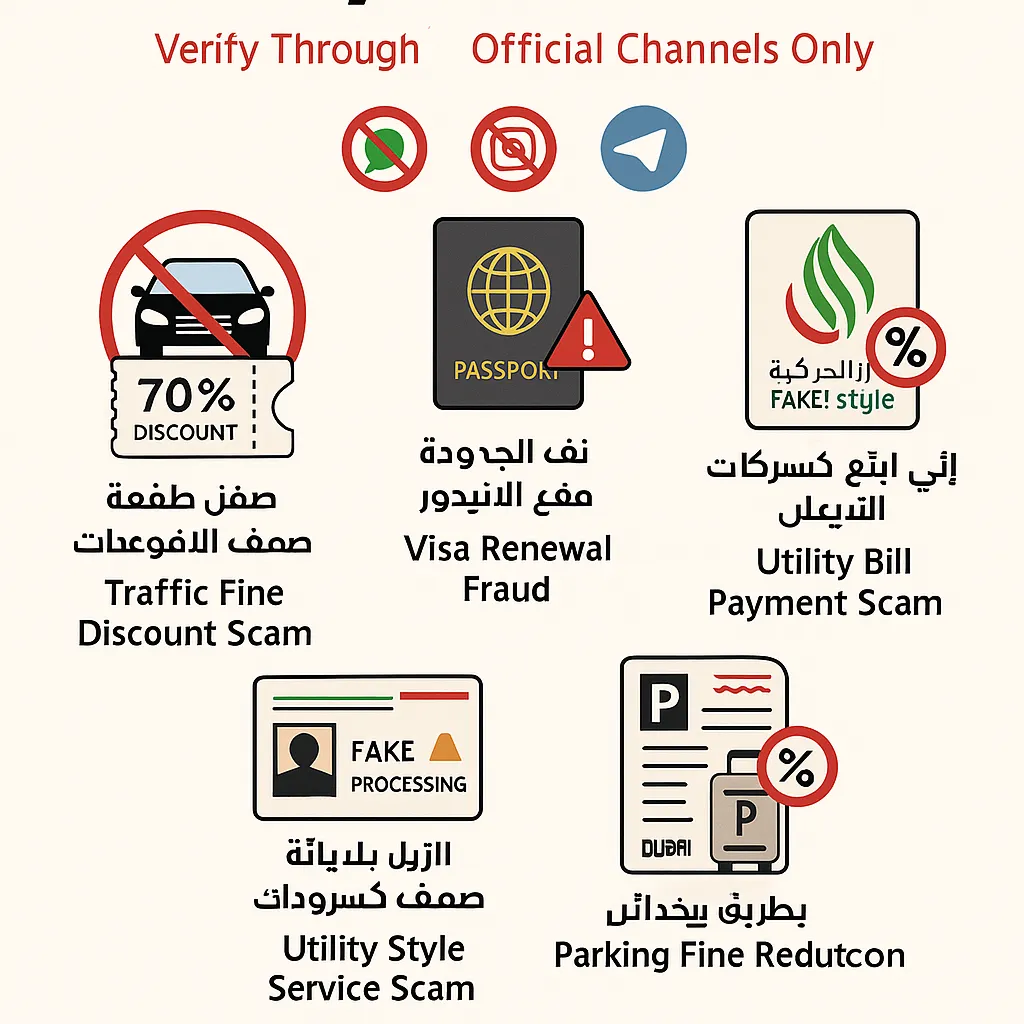
Visa renewals: Fraudsters offer to process visa applications at reduced rates through “special connections,” collecting fees upfront before vanishing.
Emirates ID services: Scammers promise faster processing times for Emirates ID renewals or applications, charging unofficial fees for non-existent expedited services.
Utility bill payments: Similar to DEWA refund scams, criminals offer to settle utility bills at discounted rates using fraudulent payment methods.
Parking fines: Municipal parking violations are targeted with promises of reduced penalties through “insider connections.”
Cybersecurity consultant Sahar Al Shamsi notes that these scams exploit residents’ unfamiliarity with official payment processes. Many people assume that as long as services get completed, the facilitating method doesn’t matter—a dangerous misconception that scammers actively exploit.
What are the warning signs of government service scams?
Recognising fraudulent offers requires understanding common red flags that distinguish legitimate services from scams:
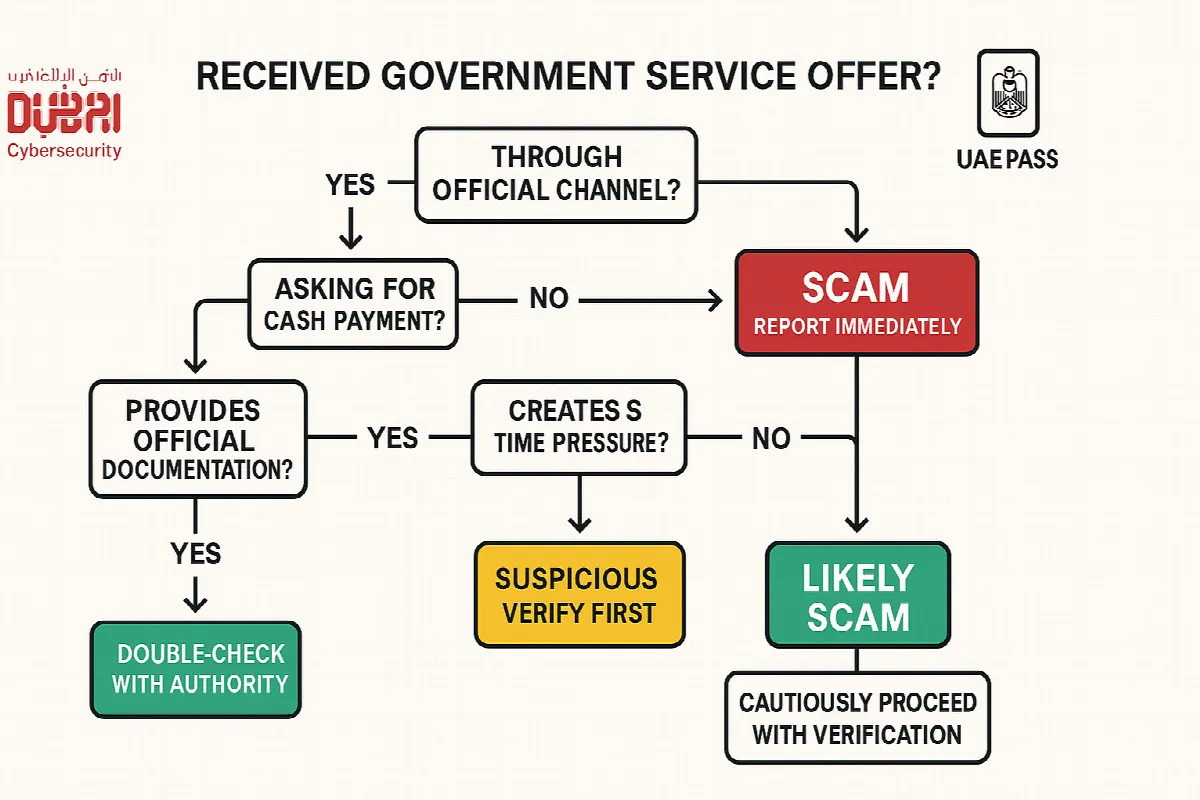
Communication channels: Government services are never offered through personal WhatsApp accounts, Telegram channels, or Instagram messages. Official transactions only occur through verified government portals like UAE PASS or ministry applications.
Payment methods: Legitimate government services require official payment channels with proper receipts. Cash payments to individuals or transfers to personal bank accounts indicate fraud.
Spelling and presentation: Poor grammar, vague company names, and unprofessional presentation often reveal fraudulent operations, though sophisticated scammers increasingly create convincing materials.
Pressure tactics: Genuine government services don’t create artificial urgency or threaten that offers will expire. Scammers use time pressure to prevent victims from researching or seeking advice.
Lack of documentation: Official services provide detailed receipts, confirmation numbers, and clear documentation. Scammers typically avoid creating paper trails that could expose their operations.
How can Dubai residents protect themselves from service scams?
Protection requires adopting systematic verification practices and understanding how legitimate government services actually operate:
Use official channels only: All government transactions should be conducted through official websites, verified mobile applications, or authorised service centres. Never trust unofficial intermediaries offering “special rates.”
Verify service providers: Before engaging with any service provider, check their credentials through official government directories. Report suspicious activities to relevant authorities immediately.
Avoid cash transactions: Legitimate government services accept payments through official channels with proper documentation. Personal cash transactions for government services are invariably fraudulent.
Research official pricing: Familiarise yourself with standard government service fees through official websites. Unusually low prices often indicate fraudulent offers designed to attract victims.
Seek second opinions: When uncertain about service offers, consult with trusted friends, family members, or official government helplines before making any payments.
Why are residents vulnerable to these sophisticated scams?
Several factors contribute to Dubai residents’ susceptibility to government service scams:
Financial pressure: Rising living costs create incentives to seek discounted government services, making discount offers particularly appealing during difficult periods.
Complex processes: Unfamiliarity with official government procedures makes unofficial “shortcuts” seem attractive, especially for busy professionals or newcomers to the UAE.
Social media trust: Many residents trust contacts made through social media platforms, assuming that personal recommendations provide legitimacy to service offers.
Language barriers: Non-native speakers may struggle to distinguish between official and unofficial communications, particularly when scammers use professional-looking materials.
The UAE’s diverse population, with many expatriates unfamiliar with local procedures, provides fertile ground for sophisticated fraud operations. Similar patterns emerge in cryptocurrency scams and other financial fraud targeting the expatriate community.
What should residents do if they encounter these scams?
If you suspect fraudulent government service offers, take immediate protective action:
Document everything: Screenshot conversations, save contact information, and record any financial transactions related to the suspected fraud.
Report immediately: Contact Dubai Police cybercrime units and relevant government departments. The UAE provides multiple reporting channels for fraud complaints.
Warn others: Share information about suspected scams with friends, family, and social networks to prevent others from falling victim to similar schemes.
Monitor accounts: Check bank statements and government service records for unauthorised transactions or changes to your official documents.
Seek legal advice: If you’ve already paid money to suspected scammers, consult with legal professionals familiar with UAE fraud laws to explore recovery options.
Key takeaway
Dubai’s social media government service scams exploit residents’ financial pressures and unfamiliarity with official processes by offering fake discounts on traffic fines, visa renewals, and other civic services. These sophisticated frauds use stolen credit cards to create the appearance of legitimate transactions whilst charging victims cash “fees” that leave them financially exposed. Protection requires using only official government channels, verifying all service providers, avoiding cash transactions, and reporting suspicious offers immediately.
Frequently Asked Questions
How can I verify if a government service discount offer is legitimate? Check official government websites and call verified helplines directly. Legitimate discounts are announced through official channels, never private social media accounts.
What should I do if I paid money to a suspected scammer? Report to Dubai Police immediately, document all communications, monitor your accounts, and consider legal consultation for potential recovery options.
Which social media platforms are scammers using for these offers? WhatsApp, Instagram, and Telegram are the primary platforms, with scammers using personal accounts to contact potential victims directly.
Can government service payments ever be made through unofficial channels? No, all legitimate government payments must be made through official portals, verified applications, or authorised service centres with proper receipts.
Why do scammers target government services specifically? Government services are mandatory expenses that residents cannot avoid, making discount offers particularly attractive during financial difficulty.
Further Reading
The UAE week, every Monday
The week's stories on jobs, visas, money and daily life in one short email. Unsubscribe in one click.