Why Roof Waterproofing Fails in the UAE: What Every Property Owner Must Know in 2026
UAE roof waterproofing often fails in 2–5 years. Find out why — and what every Dubai and Abu Dhabi property owner must check in 2026.
By Vadim Kouznetsov, published
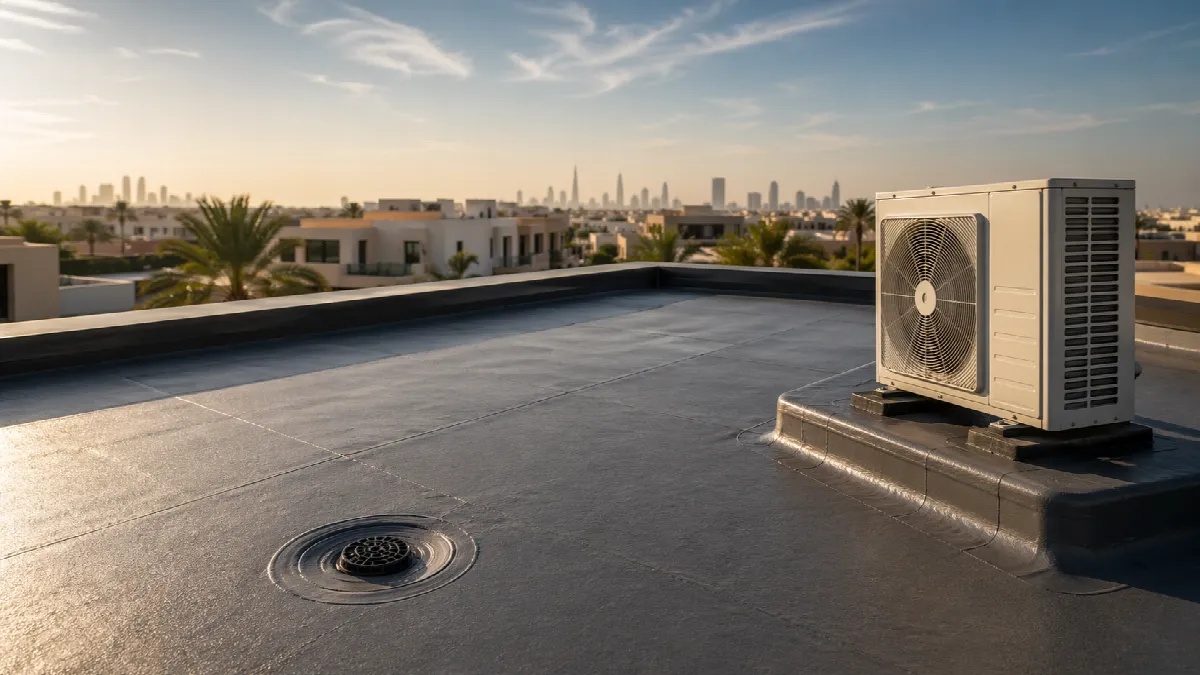
Across Dubai villas and Abu Dhabi commercial buildings, roof leaks have become one of the most frequent — and expensive — problems property owners face. Many waterproofing systems fail within just two to five years of installation, long before their expected lifespan.
The question is no longer whether a standard system will fail. It’s why so many fail so fast, and how owners can avoid repeating the same costly mistakes.
Data from over 1,500 inspections carried out by Roofsealing.ae points to a clear cause: most failures stem from materials that simply weren’t built for the UAE’s climate.
The UAE Environment Pushes Systems to the Limit
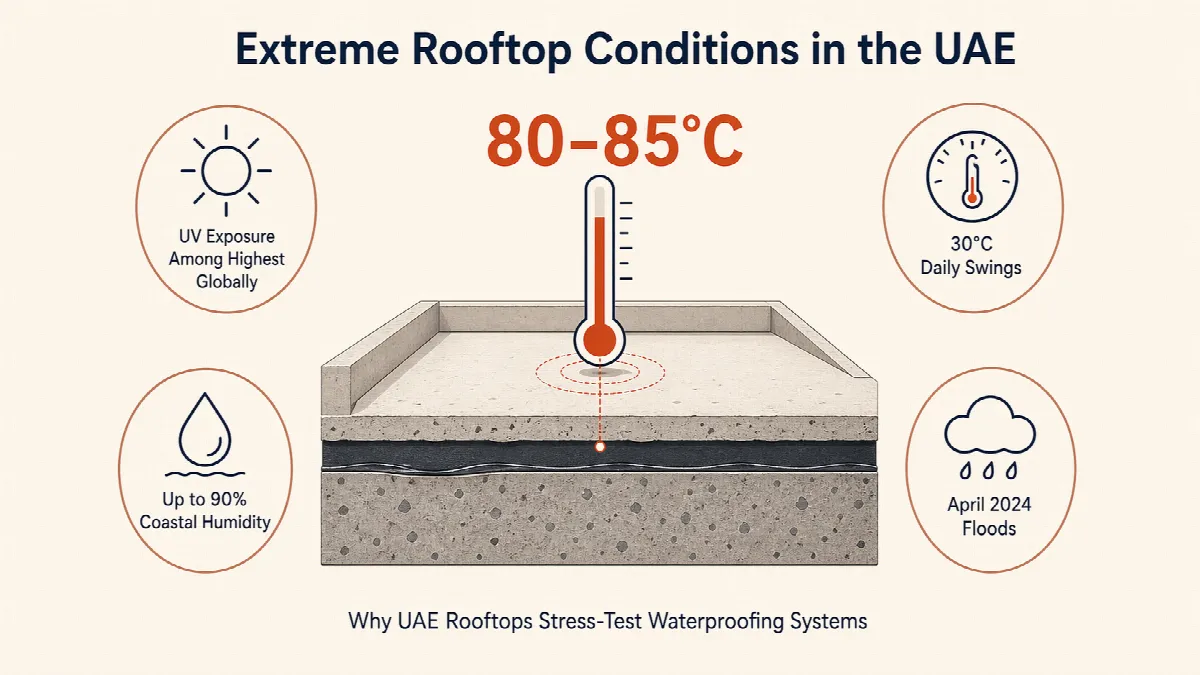
UAE rooftops face one of the harshest climates in the world.
- Peak summer surface temperatures hit 80–85°C
- Daily swings between day and night can reach 30°C
- UV exposure levels rank among the highest globally
- Coastal humidity climbs to 90%
- Heavy rainfall events — like the April 2024 floods — now add extra stress
Each factor is tough on its own. Combined, they push materials well past the performance tested in European or North American labs. For a snapshot of just how extreme the heat gets, see our guide to UAE summer temperatures and humidity.
Six Reasons Roof Waterproofing Fails in the UAE
1. UV Damage and Material Breakdown
Constant UV radiation strips membranes of their protective properties. Materials harden, lose flexibility, and start to crack — opening the path for water ingress.
Watch for: surface cracks, fading, and a chalky finish.
2. Thermal Movement and Structural Stress
Concrete expands in daytime heat and contracts at night. Rigid membranes can’t follow that movement, so cracks form at the weakest points. A reliable system should retain around 300% elongation capacity throughout its service life.
3. Water Ponding and Pressure Build-Up
Flat UAE rooftops often drain poorly. Standing water creates pressure on the membrane, forcing moisture through the smallest fissures. After Dubai’s infrastructure response to severe rainfall — outlined in our coverage of the Dh30bn Tasreef drainage project — ponding resistance has become even more critical for private buildings.
4. Weak Detailing at Critical Points
Most leaks start at drains, pipe penetrations, AC units, and joints. These areas need specialised reinforcement, yet they often receive the same basic treatment as flat surfaces.
5. Poor Adhesion to the Substrate
If a membrane isn’t fully bonded, water can travel underneath it and appear far from the actual entry point. This makes repairs slower and far more expensive.
6. Choosing Price Over Performance
Many projects pick the cheapest option up front. Those savings often turn into repair bills three times higher within the first three years.
What the Experts Say
Daniel Zacher, CEO of Roofsealing.ae, sums it up clearly:
“Waterproofing failures in the UAE are often not just due to installation issues, but because the materials used cannot withstand the harsh environment. The system needs to function as a complete system — flexible materials, strong UV protection and proper reinforcement — otherwise, failure is inevitable over time.”
What a Reliable Waterproofing System Should Include
The industry is gradually shifting to high-performance systems built for Gulf conditions. The features that matter most:
- High flexibility with long-term elongation
- Strong UV resistance
- Full adhesion to the substrate
- Reinforced detailing at drains, joints, and penetrations
- Seamless application that eliminates weak joints
Five Questions Every Property Owner Should Ask
Before approving any waterproofing work, get clear answers to these:
- Is the system specifically tested for UAE conditions?
- How does it perform for long-term flexibility after ageing?
- How are drains, joints, and vulnerable points handled?
- Is the system fully bonded, and how is adhesion verified?
- What is the total 10-year cost — not just the installation price?
The Real Cost of a Failure
A leaking roof damages far more than the surface. Water moves into insulation, ceilings, electrical systems, and structural elements. In most cases, interior repairs cost more than the original waterproofing install.
For commercial properties, leaks also bring operational disruption, tenant complaints, and revenue losses. If you’re a tenant or landlord in Dubai, our guide on who pays for rain-damaged apartment repairs explains your legal position under Law No. 26 of 2007.
Property owners can also check our Dubai property maintenance guide for a breakdown of landlord and tenant responsibilities.
Rising Standards and the Way Forward
Stricter construction standards and extreme weather — including the heavy 2024 rains — have moved waterproofing from a finishing touch to a core structural element. With 150,000 new homes expected on the UAE market by 2026 and the construction sector growing to $130 billion by 2029, getting waterproofing right at the start matters more than ever.
The message to property owners is simple: choose the right system from day one. The correct choice saves more than it costs.
Roofsealing.ae, a UAE-based waterproofing specialist with over 5,000 completed projects across residential, commercial, and infrastructure sites, provides assessment and application of advanced systems designed for Gulf climate conditions.
Key Takeaway
Most UAE roof waterproofing systems fail within 2–5 years because the materials were never built for 80°C surfaces, 30°C daily swings, and 90% humidity. Flexibility, UV resistance, strong adhesion, and proper detailing at vulnerable points are non-negotiable. Paying more for a climate-appropriate system at installation is almost always cheaper than repeated interior repairs later.
Frequently Asked Questions
How long should roof waterproofing last in the UAE? A proper Gulf-specification system should last 10–15+ years. Standard imported systems often fail in just 2–5 years.
What temperature does a UAE rooftop actually reach? Peak summer surface temperatures reach 80–85°C. Read more in our UAE summer weather guide.
Why do flat roofs fail faster than others in Dubai? Flat roofs often hold standing water. The pressure drives moisture through even tiny cracks, accelerating membrane breakdown.
Does the landlord pay for roof leak repairs in Dubai? Under Dubai’s Law No. 26 of 2007, landlords are generally responsible for major maintenance unless the rental contract states otherwise. See our full breakdown on rain-damage repairs.
Can poor waterproofing cause electrical issues during rain? Yes — water entering through damaged waterproofing can reach electrical systems. DEWA’s rain safety guide covers the precautions every household should take.
What should I do if my villa’s roof is leaking? Document the damage, notify your landlord or community management, and arrange a professional inspection. Owners in managed communities can also review our villa service charge guide to understand what’s covered.
How much does quality waterproofing cost in Dubai? Costs vary by system and roof size, but a Gulf-specification system typically costs 30–50% more up front than a standard one — and roughly three times less over a 10-year period.
What is the most important feature of a UAE waterproofing system? Long-term flexibility — the ability to retain around 300% elongation after ageing — combined with strong UV resistance and full adhesion to the substrate.
Further Reading
- Dubai’s Dh30bn Tasreef Project: 700% Drainage Boost to Prevent Flooding
- Dubai: Will Landlord Pay for Repairs of Apartment Damaged in Rain?
- DEWA Safety Guide: Protect Your Home From Rain-Related Power Issues
- UAE Summer 2025: Record-High Temperatures and Humidity Guide
- UAE Property Prices Drop 2026: 150,000 New Homes Coming
- Dubai Rental Guide: Who Pays for Property Maintenance?
- Dubai Villa Owners: How to Contest Service Charge Increases
- UAE Construction Industry: $130 Billion Growth by 2029
The UAE week, every Monday
The week's stories on jobs, visas, money and daily life in one short email. Unsubscribe in one click.