UAE Schools to Hire Admin Staff to Reduce Teacher Workload
UAE Ministry of Education plans new admin roles in schools to reduce teacher burnout. What it means for educators, job seekers, and student outcomes.
By Vadim Kouznetsov, published

The UAE Ministry of Education is creating specialised administrative and supervisory roles in schools — a direct response to growing evidence that teachers are overwhelmed by non-teaching duties.
If you’re a teacher in the UAE, this matters. If you’re considering a teaching career in the Emirates, it changes what you can expect from the job.
Here’s what’s happening, why it’s needed, and what it means for educators and job seekers.
Key Takeaway: The UAE Ministry of Education plans to introduce dedicated administrative positions in schools following a Federal National Council report highlighting excessive non-teaching burdens on educators. The move aims to reduce teacher burnout, improve educational outcomes, and create new school-based career opportunities across the UAE.
What Exactly Is Changing?
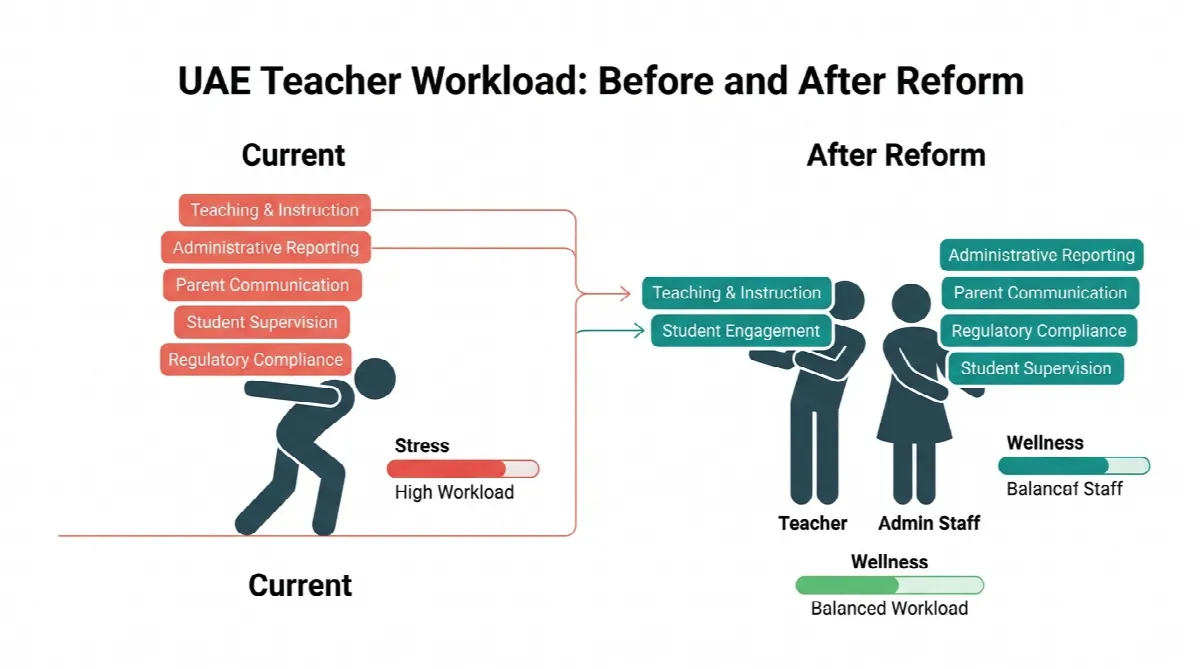
The Ministry of Education is restructuring the school system to include specialised administrative positions. These roles will handle non-teaching tasks that currently fall on educators — freeing teachers to focus on instruction, student engagement, and academic planning.
The initiative follows a parliamentary report adopted by the Federal National Council. That report found teachers are routinely expected to manage extensive administrative and supervisory responsibilities on top of their core teaching duties. The result? Stress, burnout, and declining educational quality.
This isn’t a minor adjustment. It’s a structural reform of how UAE schools operate.
Why Are UAE Teachers Under So Much Pressure?
Leigh Watson, Head of Positive Engagement at RAK Academy, summed it up clearly: “The role of the teacher has evolved significantly in recent years.”
Beyond delivering lessons, today’s UAE teachers are expected to:
- Manage administrative processes and reporting
- Contribute to wider school systems and governance
- Supervise students beyond lesson time
- Maintain ongoing communication with families
- Participate in regulatory compliance and accreditation
Each task adds value individually. But the cumulative effect has become unsustainable for many educators.
Watson stressed that this isn’t about a lack of resilience — it’s most common among the most dedicated professionals. The ones who take every responsibility seriously are the ones most at risk.
What Are the Health Consequences?
The health impact of excessive teacher workloads is well documented, and UAE education leaders are speaking openly about it.
Dr Funke Baffour-Awuah, Corporate Head of Wellbeing at GEMS Education, identified specific consequences:
Mental health effects:
- Chronic stress and anxiety
- Emotional exhaustion and cognitive overload
- Reduced professional satisfaction
- Heightened vulnerability to depression
Physical health effects:
- Chronic fatigue and sleep disruption
- Headaches and weakened immunity
- Cardiovascular strain from sustained overwork
- Reduced physical activity and social connection
Watson added that early warning signs — fatigue, diminished work-life balance — can progress into emotional strain and burnout if workload pressures remain unaddressed.
Dr Baffour-Awuah warned that regularly working beyond official hours erodes the boundary between professional and personal life, reducing opportunities for healthy routines that protect long-term wellbeing.
What New Roles Will Schools Create?
The Ministry hasn’t released a full list of specific job titles yet. But based on the stated objectives — reducing administrative and supervisory burdens — expect new positions in areas such as:
- School administration coordinators managing paperwork, reporting, and compliance
- Parent communication officers handling family liaison and correspondence
- Student welfare supervisors overseeing non-academic student support
- Regulatory compliance staff managing KHDA and ADEK accreditation requirements
- Data and assessment administrators processing academic data and reports
These roles represent new career opportunities in the UAE education sector — particularly for professionals with administrative, organisational, or student support backgrounds.
What Does This Mean for Current Teachers?
If you’re already teaching in the UAE, this reform should translate into:
- Less time on paperwork and more time on instruction
- Clearer role boundaries between teaching and administrative duties
- Better protected planning time during the school day
- Improved work-life balance as non-teaching responsibilities shift to dedicated staff
Watson noted that at RAK Academy, school leaders already review workloads continuously, streamline processes, and redistribute responsibilities throughout the year. The Ministry’s initiative aims to make this standard practice across all UAE schools.
Dr Baffour-Awuah advocated for additional support systems including counselling services, peer support, and professional supervision as part of a comprehensive wellbeing strategy.
For teachers considering their long-term career in the UAE, the Golden Visa programme for educators offers another layer of stability — recognising outstanding teaching professionals with 10-year renewable residency.
What Does This Mean for Job Seekers?
The creation of new administrative roles in UAE schools opens a fresh category of employment opportunities. These positions will suit:
- Education administrators with experience in school operations
- HR and compliance professionals familiar with regulatory frameworks
- Communications specialists experienced in stakeholder engagement
- Data analysts with education sector knowledge
- Social workers and counsellors with student welfare expertise
If you’re exploring jobs in the UAE education sector, watch for these roles as they begin appearing in school recruitment cycles. The 2025-2026 academic calendar suggests new hires would likely be recruited ahead of the next academic year.
How Does This Compare to Other Countries?
Many international school systems already separate teaching from administrative functions. In the UK, teaching assistants, office managers, and pastoral support staff handle much of what UAE teachers currently do themselves.
The UAE’s move aligns with global best practice. By investing in dedicated support staff, schools can maintain their teaching standards — which is critical as Dubai alone plans 100 new private schools by 2033 and demand for qualified educators continues to grow.
FAQ
What new roles will UAE schools create?
The Ministry of Education plans to introduce specialised administrative and supervisory positions to handle non-teaching tasks. Specific job titles haven’t been announced, but roles are expected to cover administration, compliance, parent communication, and student welfare.
Why is the UAE introducing admin roles in schools?
A Federal National Council report found that teachers are overburdened with administrative and supervisory duties beyond their core teaching responsibilities, leading to stress, burnout, and declining educational outcomes.
Will this affect teacher salaries in the UAE?
The initiative focuses on workload redistribution, not salary changes. However, reduced pressure and improved working conditions could make teaching positions in the UAE more competitive and attractive.
Which schools will be affected?
The Ministry of Education initiative applies to government schools nationally. Private schools regulated by KHDA and ADEK may adopt similar structures independently.
When will these changes take effect?
The Ministry is working on implementation plans following the Federal National Council report. Specific timelines haven’t been announced publicly.
How does teacher burnout affect students?
When teachers are stressed and exhausted, the quality of instruction declines. Cognitive fatigue reduces engagement, creativity, and the ability to provide individualised attention to students.
Are there mental health support services for UAE teachers?
Some schools, including GEMS Education institutions, offer counselling services, peer support programmes, and professional supervision. The Ministry’s reform aims to make wellbeing support more systematic across all schools.
Will these admin roles be open to expats?
Employment eligibility will depend on the specific role and school type. Government school positions may prioritise Emiratis under Emiratisation policies, while private schools typically recruit both nationals and expatriates.
How can I apply for school admin jobs in the UAE?
Watch for vacancies on school websites, MOHRE job portals, and platforms like JobXDubai. Positions are likely to appear as schools begin implementing the new structure ahead of upcoming academic years.
Does this affect Dubai private schools?
The Ministry of Education initiative targets government schools. However, private school operators like GEMS Education and RAK Academy are already implementing their own workload management strategies, and KHDA may encourage similar reforms across the private sector.
Further Reading
The UAE week, every Monday
The week's stories on jobs, visas, money and daily life in one short email. Unsubscribe in one click.