7 Ways the Middle East War Can Affect Your Fuel, Food and Monthly Bills in the UAE
Middle East conflict is pushing up fuel, food and living costs in the UAE. Here’s how it affects your household budget — stage by stage.
By Vadim Kouznetsov, published

Key Takeaway: The Middle East conflict is already pushing up fuel and transport costs for UAE households, with food, goods and services expected to follow in stages. The UAE’s diversified supply chains and strategic reserves offer a cushion — but if disruptions persist, pressure on disposable income will spread, hitting lower- and middle-income families hardest.
The Middle East conflict is no longer just a headline. Its effects are moving steadily from global markets into your monthly budget — and the first signs are already showing up at petrol stations and in delivery fees across the UAE.
The Strait of Hormuz sits at the centre of this shift. It carries a massive share of global oil and trade flows. Any slowdown there feeds directly into the prices you pay at checkout. The conflict has already disrupted flights, forced schools onto distance learning, and shaken supply chains.
Here’s how it’s likely to affect your wallet — stage by stage.
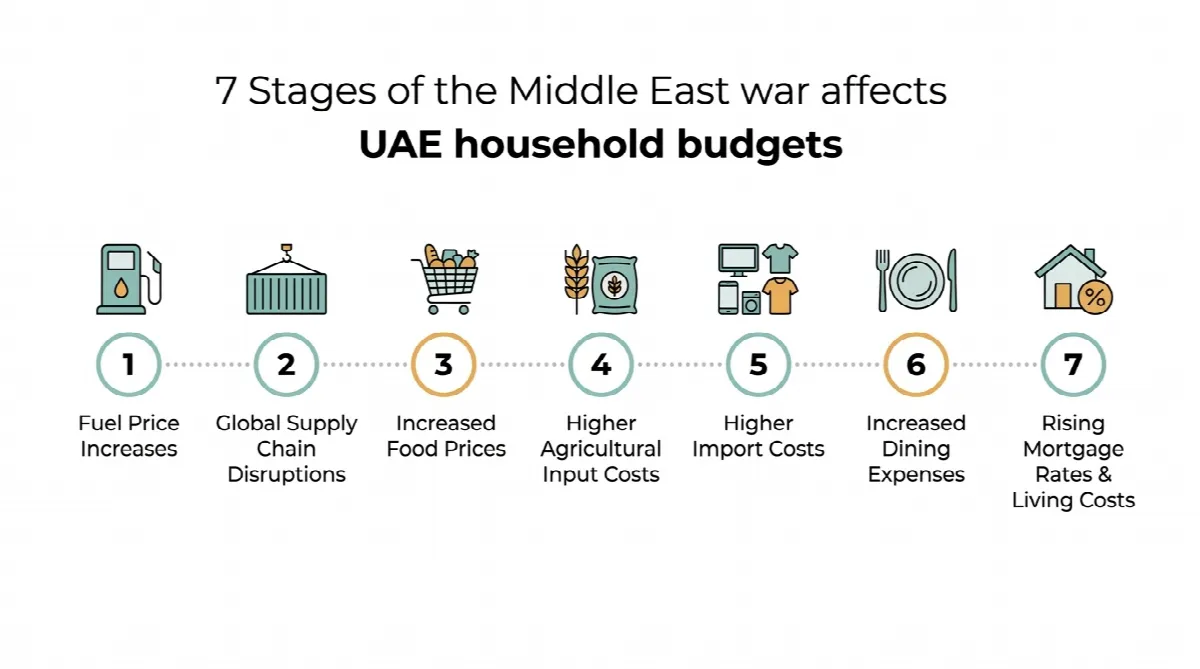
How Does the War Affect Fuel and Transport Costs First?
Global energy markets react almost immediately to disruption. Crude prices and freight rates spike before anything else.
Hamza Dweik, Head of Trading for MENA at Saxo Bank, explained that fuel, transport and delivery services are the first to absorb pressure because wholesale energy markets, freight rates and war-risk insurance premiums respond almost instantly.
Vijay Valecha, Chief Investment Officer at Century Financial, added that households tend to feel this within days to two weeks.
Higher petrol prices, ride-hailing fares and delivery charges are the earliest visible signs. If you’ve already noticed your fuel bill creeping up, this is why.
Why Are Delivery and Logistics Costs Climbing?
Shipping disruptions are squeezing capacity on key routes. Fewer vessels are willing to pass through risk zones. Insurance costs have surged sharply.
War-risk premiums and freight rates have jumped, increasing the cost of moving goods into the region. These higher logistics costs get passed through quickly — showing up in delivery fees and pricing across sectors.
However, the UAE is not starting from a weak position. Its diversified import channels, logistics infrastructure and strategic reserves act as powerful shock absorbers, according to Dweik.
When Will Grocery Prices Rise in the UAE?
Food inflation follows a slower but more sustained path. The UAE imports a large share of its food supply, making it sensitive to shipping delays and rising freight costs.
Valecha said the timing typically unfolds over weeks: freight disruptions usually take about 10–14 days to show up at ports, but the real impact on prices in stores comes later — typically 2–5 weeks for shelf prices to rise.
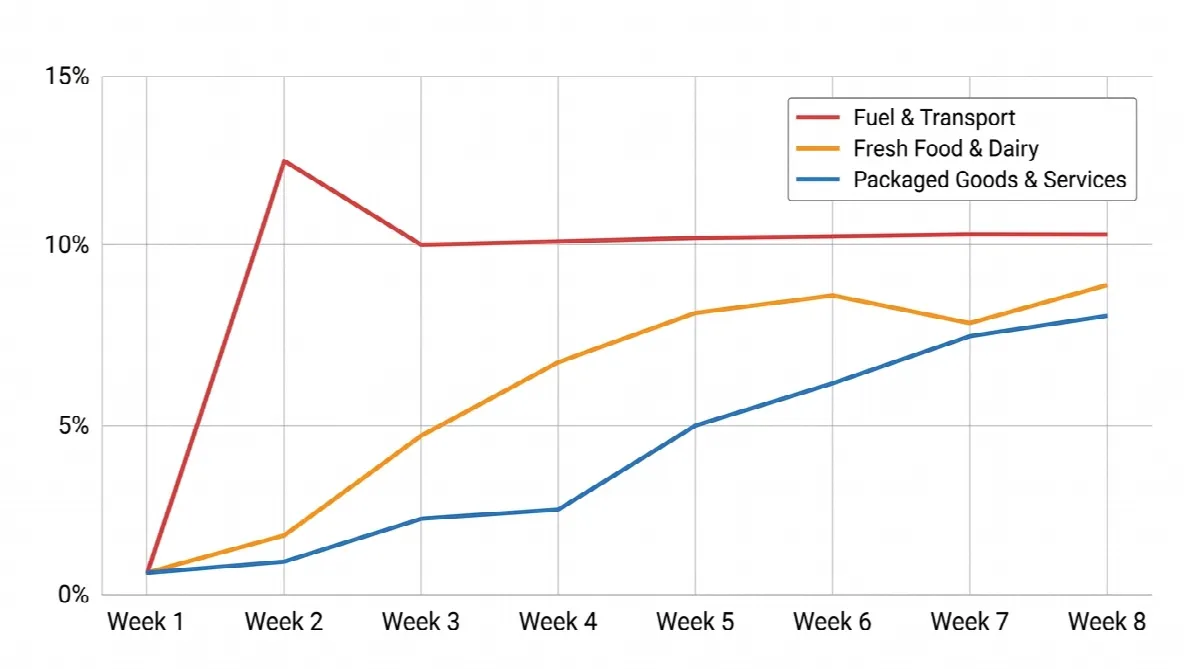
Fresh produce, dairy and air-freighted items tend to react first, followed by broader food categories.
Even with these pressures building, the UAE remains relatively insulated. Abdulla bin Touq Al Marri, Minister of Economy and Tourism, confirmed the UAE’s food security framework is built on a broad network of global trade ties that allows access to alternative food sources when supply chains face disruption.
How Do Fertiliser Costs Push Up Food Prices?
Fertiliser and petrochemical supply chains are closely tied to energy markets. Disruptions are already pushing production costs higher for farmers globally.
Rising fertiliser prices increase costs for agricultural producers worldwide — which eventually feeds into higher food prices. This effect tends to arrive later but can persist much longer than the initial fuel shock.
Will Everyday Goods Become More Expensive?
Yes. Higher shipping and insurance costs are also pushing up prices for non-food items — electronics, clothing and household goods.
Dweik explained that once transport costs rise, the effect spreads across supply chains. Imported groceries, packaged foods and even e-commerce deliveries absorb higher transportation and storage costs.
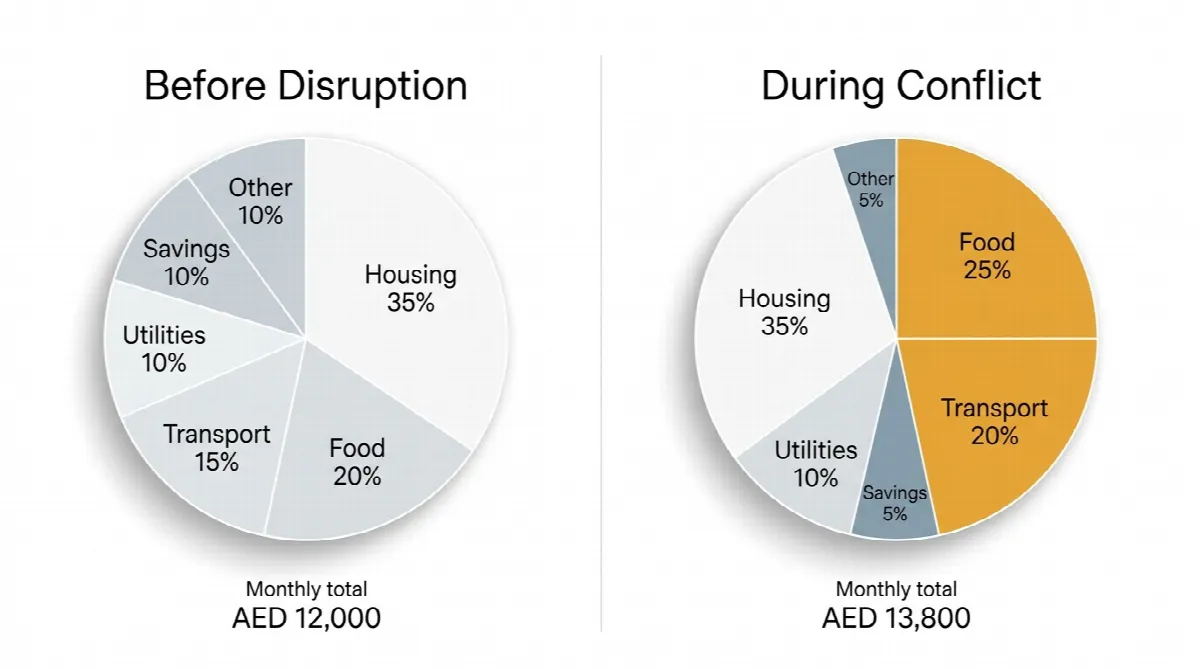
Valecha added that for an average household, the combined effect of higher fuel, food and goods costs could squeeze disposable income — with the biggest burden falling on lower- and middle-income families who spend the largest share of their earnings on essentials.
This phase takes longer to show up but tends to be more persistent as new stock arrives at higher costs.
How Will Services and Dining Out Be Affected?
Once businesses face higher input costs, those increases flow into services. Restaurants, personal care providers and other service sectors gradually adjust pricing to reflect higher operating expenses.
This stage typically lags behind goods inflation but tends to last longer — keeping overall living costs elevated even after the initial shock subsides.
Will Borrowing Costs and Household Bills Stay Higher?
The final layer comes through inflation and interest rates. Rising energy costs can keep inflation elevated, which influences monetary policy and borrowing costs.
Valecha said this could extend the pressure on households: a higher-for-longer rate environment increases the burden of mortgages and personal loans.
This phase affects monthly budgets more broadly — from loan repayments to utility bills — and tends to persist even after initial shocks ease.
What Protections Does the UAE Have?
The UAE’s diversified supply chains and strong logistics infrastructure provide an important cushion in the early stages. Strategic reserves and alternative sourcing routes can absorb short-term disruptions and prevent immediate shortages.
Still, these measures mainly delay the transmission of costs. If tensions persist and shipping flows remain constrained, the pressure is likely to spread further across household spending — tightening disposable income over time.
FAQ
How quickly will UAE residents feel the impact of the war on daily expenses?
Fuel and transport costs are the first to respond — typically within days to two weeks. Grocery prices follow with a lag of 2–5 weeks. Services and borrowing costs adjust over a longer period.
Are UAE grocery prices going to increase because of the conflict?
Yes, but with a delay. The UAE imports a large portion of its food. Shipping delays and higher freight costs will push up shelf prices, starting with fresh produce and dairy.
Which UAE households will be hit hardest by rising costs?
Lower- and middle-income families face the greatest pressure because they spend a larger share of their income on essentials like fuel, food and transport.
Is the UAE doing anything to prevent shortages?
The UAE has diversified import channels, strategic food reserves and alternative sourcing routes. The Minister of Economy confirmed the country’s food security framework allows access to alternative supply sources when disruptions occur.
Will rent and mortgage payments increase because of the war?
If energy-driven inflation persists, interest rates may stay elevated for longer. This would increase the cost of variable-rate mortgages and personal loans, adding pressure to monthly household budgets.
How does the Strait of Hormuz affect UAE prices?
The Strait of Hormuz is a critical chokepoint for global oil and trade flows. Any slowdown or disruption there directly impacts crude prices, shipping costs and — ultimately — the price you pay for fuel, food and goods.
Should UAE residents stock up on essentials?
The UAE government has confirmed strategic reserves are in place. Panic buying is not recommended. However, it is sensible to budget for gradually rising costs over the coming weeks.
How long could these price increases last?
If the conflict resolves quickly, prices could stabilise within weeks. If tensions persist, the impact could spread across household spending for months, particularly through elevated borrowing costs and persistent goods inflation.
Further Reading
- UAE Billionaire Asks Trump: Who Gave You Permission to Turn Our Region Into a War Zone?
- Emirates Expects Full Flight Network to Resume in Days as Airspace Reopens
- UAE Fuel Prices July 2025: Full Tank Costs Rise Across All Grades
- UAE Fuel Prices Rise in December 2025: Full Cost Breakdown
- The Complete Cost to Live in Dubai as an Expat in 2025
- 8 New UAE Rules Starting January 2026: What Residents Must Know
- UAE Central Bank Cuts Base Rate: Impact on Economy
The UAE week, every Monday
The week's stories on jobs, visas, money and daily life in one short email. Unsubscribe in one click.