Dubai’s New Building Law: Quality and Safety Certificates Now Mandatory for All Properties
Dubai’s new Law No. 3 of 2026 requires Quality and Safety Certificates for all buildings. Fines up to Dh2M. What owners and tenants must know.
By Vadim Kouznetsov, published , updated
Sheikh Mohammed bin Rashid Al Maktoum has issued Law No. (3) of 2026, introducing mandatory Quality and Safety Certificates for every building in Dubai — including those in free zones and the DIFC. Fines for violations range from Dh100 to Dh1,000,000, with repeat offences doubling to Dh2,000,000.
If you own, manage, rent, or invest in Dubai property, this law directly affects you. Here’s what it means in practice.
What Does Dubai’s New Building Law Cover?
Law No. (3) of 2026 applies to all buildings across Dubai — residential, commercial, and mixed-use. This includes properties in private development zones and free zones such as the Dubai International Financial Centre (DIFC), whether built before or after the law takes effect.
The law’s objectives are straightforward: maintain structural integrity, reduce accidents, protect lives and property, and preserve Dubai’s urban identity. It covers everything from structural inspections and regular maintenance to the safe operation of building systems.
Dubai Municipality has been assigned oversight responsibility, including developing a digital management system, maintaining a unified building database, conducting periodic assessments, and setting sustainability standards.
What Is the Quality and Safety Certificate?
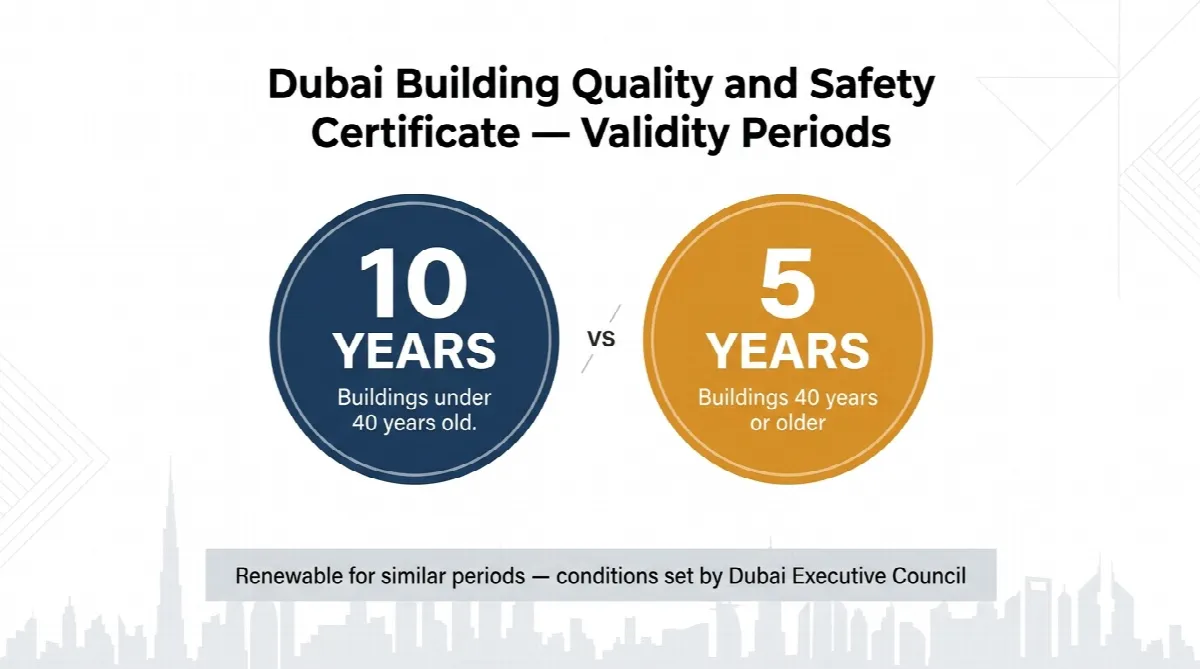
Every building in Dubai will now require a Quality and Safety Certificate. This certificate can only be issued after a licensed engineering office or firm conducts a comprehensive inspection and assessment of the building’s structural and technical condition.
The certificate validity periods are:
- 10 years — for buildings less than 40 years old (from completion date)
- 5 years — for buildings 40 years or older
Certificates are renewable for similar periods. The conditions for renewal will be determined by a decision from the Chairman of Dubai’s Executive Council.
Building owners — including unit owners under joint property ownership law — must obtain this certificate after building completion and correct any defects identified during inspections.
What Are Building Owners Required to Do?
The law places clear obligations on property owners:
- Hire a licensed engineering office to assess the building and prepare a technical report for certification
- Carry out periodic maintenance for buildings under 20 years old
- Fix any defects that threaten structural safety, lives, property, or surrounding buildings
- Allow authority inspections and enable repair works
- Continue maintenance even after obtaining the certificate
These requirements apply whether you own a villa, an apartment in a freehold development, or a commercial property. Building management companies and engineering offices also have defined responsibilities under the law.
What Are the Fines for Non-Compliance?
The penalty structure is significant:
- Fines range from Dh100 to Dh1,000,000 depending on the violation
- Repeat offences within two years face doubled fines — up to Dh2,000,000
- Authorities can suspend building permits and halt all transactions or approvals related to the building
- Lease certifications for units can be stopped until violations are corrected
- Dubai Land Department transactions can be frozen
Engineering offices and contractors remain legally responsible for fulfilling their obligations. Fines and administrative measures do not prevent additional civil or criminal proceedings.
For property investors considering Dubai, understanding these compliance requirements is now essential alongside the standard costs of buying property.
How Does This Affect Tenants in Dubai?
The law includes important tenant protections that align with existing Dubai rental legislation:
If a building is approved for demolition, the rules for vacating tenants under Law No. (26) of 2007 — Dubai’s landlord-tenant law — apply. This means landlords must follow proper eviction procedures.
Tenants who vacate have priority to return to the building after reconstruction or after maintenance and repairs are completed. They return at the same rental value agreed in their original lease, unless both parties agree to different terms.
This is a critical protection. If your building undergoes major works under this new law, your right of first refusal to return at the original rent is legally preserved.
What Happens If You Disagree With a Decision Under This Law?
The law provides a clear appeals process. Anyone subject to a decision, action, or measure under this law can submit a written appeal to the Dubai Municipality’s Director General or the relevant authority within 30 days of being notified.
A committee will resolve the appeal within 30 days, and its decision is final.
When Does the Law Take Effect?
Building owners, contractors, and engineering offices must comply within one year from the law’s effective date. The Chairman of Dubai’s Executive Council can extend this deadline if necessary.
The law will be published in the Official Gazette and takes effect 60 days after publication. Any provisions in other laws that conflict with this law are annulled.
Relevant authorities — including police — may be called upon to assist with enforcement when required.
What Does This Mean for Dubai’s Property Market?
This law signals Dubai’s continued push to strengthen its real estate framework. For property investors, it means higher building standards and better-maintained assets — which supports long-term property values.
For tenants, it provides additional assurance that the buildings they live in meet safety and quality standards, with formal inspection schedules and documented certification.
Dubai’s building star rating system already links building quality to permissible rent increases. This new law adds a structural certification layer that makes the quality assessment even more comprehensive.
The occupancy standards already in place — requiring a minimum of 5 square metres per person — will now operate alongside mandatory safety certification, creating a more integrated regulatory framework for Dubai’s property sector.
Key Takeaway
Dubai’s new Law No. (3) of 2026 makes Quality and Safety Certificates mandatory for all buildings — including those in free zones and the DIFC. Building owners must hire licensed engineers for assessments, maintain structures, and fix defects. Fines reach Dh1 million (Dh2 million for repeat offences), and non-compliant buildings face frozen transactions and suspended permits. Tenants displaced by demolition or repairs have a legal right to return at the same rent. All parties have one year to comply.
FAQ
Do all buildings in Dubai need a Quality and Safety Certificate?
Yes. The law applies to every building in Dubai, including those in private development zones and free zones such as the DIFC. It covers buildings constructed both before and after the law’s enactment.
How long is the Quality and Safety Certificate valid?
The certificate is valid for 10 years for buildings less than 40 years old, and 5 years for buildings aged 40 years or older. It can be renewed for similar periods.
What is the maximum fine for violating the building safety law?
Fines range from Dh100 to Dh1,000,000. Repeat offences within two years are subject to doubled fines, reaching up to Dh2,000,000. Additional civil and criminal liability may also apply.
Can my building’s transactions be frozen for non-compliance?
Yes. Authorities can suspend building permits, halt all government and private entity transactions — including Dubai Land Department registrations — and stop lease certifications until violations are corrected.
What happens to tenants if a building is demolished under this law?
Tenants vacated due to demolition have priority to return after the building is reconstructed or repaired. They return at the same rental value from their original lease, unless both parties agree otherwise. This aligns with existing tenant protection laws.
How long do building owners have to comply with the new law?
Building owners, contractors, and engineering offices have one year from the law’s effective date to comply. The law takes effect 60 days after publication in the Official Gazette.
Further Reading
- Freehold Property in Dubai: Complete Ownership Guide 2025
- Dubai Rental Laws: Can Landlords Increase Rent During Multi-Year Leases?
- Dubai Tenant Rights: Eviction for Maintenance and Your Legal Options
- Dubai’s New Star Rating System: How Tenants Can Save on Rent
- Dubai’s Occupancy Laws: Essential Guide for Property Owners and Tenants
- Dubai Rent Increase Law 2024: Your Rights as a Tenant
- Dubai Property Update: Sheikh Zayed Road and Al Jaddaf Switch to Freehold
The UAE week, every Monday
The week's stories on jobs, visas, money and daily life in one short email. Unsubscribe in one click.