UAE Warns Against Spreading Rumours During Crisis: Fines Up to Dh200,000
UAE warns against spreading rumours during crisis. Fines up to Dh200,000 and 2 years in prison under cybercrime law. What residents must know now.
By Vadim Kouznetsov, published

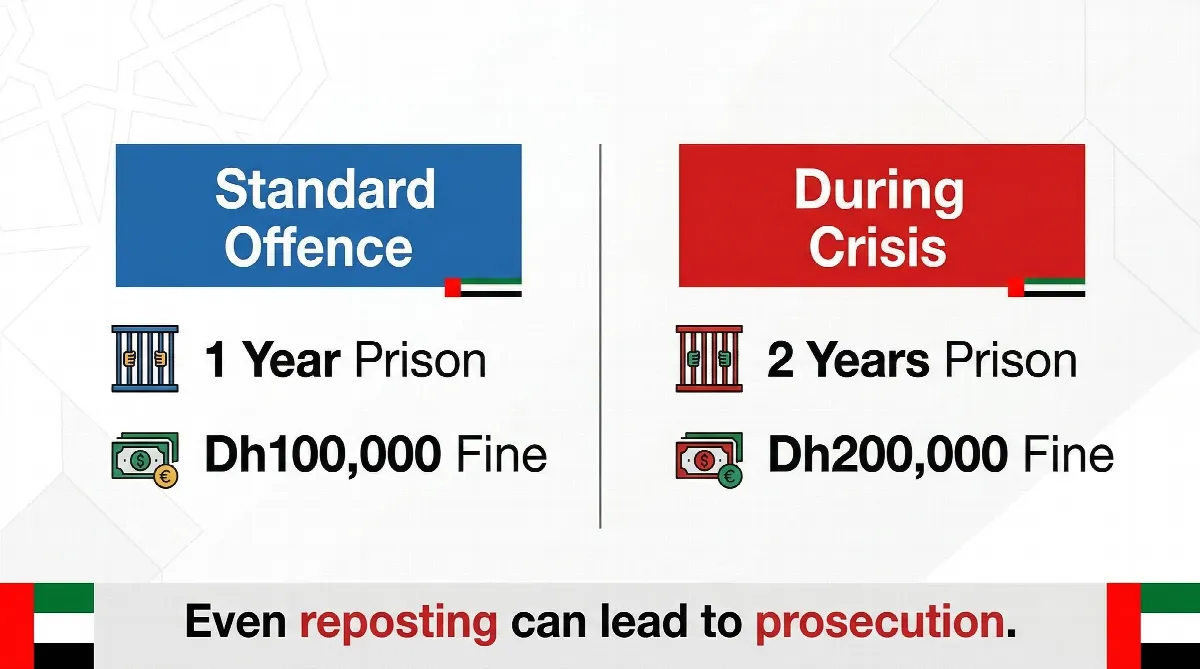
Sharing unverified news, fabricated videos, or misleading images in the UAE is a criminal offence — and penalties have increased sharply during the current crisis. Under Federal Decree Law No. 34 of 2021, fines start at Dh100,000 and can reach Dh200,000, with prison sentences of up to two years.
Here’s what every UAE resident needs to know right now.
Why Has the UAE Issued This Warning?
Following recent regional tensions involving Iranian attacks on the UAE and other Arabian Gulf states, authorities have detected a sharp rise in false news, manipulated videos, and misleading images circulating across social media.
UAE Attorney General Hamid Saif Al Shamsi has specifically warned against photographing, publishing, or sharing footage of accident sites or damages caused by falling projectiles or debris. He stated that sharing such material could provoke public panic and create a misleading perception of the situation inside the country.
Al Shamsi confirmed that state institutions responsible for public safety continue to operate with high efficiency. Daily life across the UAE carries on as normal, with security measures in place to address any developments.
What Counts as a Criminal Offence Under UAE Law?
The UAE Cybercrime and Rumours Law is clear on this. Under Article 52, the following actions are punishable:
- Publishing or republishing false news, misleading reports, or malicious rumours online
- Sharing content that contradicts officially announced information
- Circulating fabricated material created using artificial intelligence or deepfake technologies
- Photographing incident sites and posting the footage on social media
- Reposting unverified content — even if you did not create it
The Attorney General stressed that the Public Prosecution will take firm legal action against violators without leniency.
What Are the Exact Penalties for Spreading Rumours in the UAE?
The penalties depend on the impact and timing of the offence:
Standard offence:
- Minimum one year in prison
- Fine of at least Dh100,000
Aggravated offence (during crises, emergencies, or disasters):
- Minimum two years in prison
- Fine of at least Dh200,000
Aggravated penalties apply when the spread of false information incites public opinion, causes panic, harms public security, or damages the national economy. For non-citizens, penalties may also include deportation.
Several government entities have warned that even reposting unreliable content from unknown sources can expose individuals to prosecution — regardless of whether they originally created the material.
How Are Deepfakes and AI Being Used to Spread Misinformation?
Authorities have identified a significant wave of digitally manipulated content. Many of these campaigns rely on republishing old footage of accidents and fires from other countries, presenting them as recent incidents inside the UAE.
In other cases, videos created using AI and deepfake technologies are being shared to shape public opinion and serve hostile agendas. The Attorney General specifically warned against circulating fabricated content that falsely claims missile strikes or attacks on facilities inside the country.
Producing or sharing such material with the intent to mislead the public or spread panic is a criminal offence punishable by law. Legal adviser Dr. Youssef Al Sharif highlighted the growing risks posed by advanced digital manipulation tools capable of fabricating realistic images and videos or republishing old content as if it were new.
What Do Media Experts Say About Digital Rumours During Crises?
Fadila Al Muaini, Chairwoman of the UAE Journalists Association, told Gulf News that promoters of rumours exploit public anxiety and the desire for rapid information to spread inaccurate or selective narratives.
She described many of these campaigns as “information warfare” — where misleading information is used as a tool to influence public perception and undermine trust in official institutions.
“False news often travels across the internet much faster than verified facts,” she warned. “A fabricated image or video can unsettle an entire society within minutes.”
Writer and media commentator Adel Al Rashid added that the primary objective of such rumours is to spread fear, cast doubt on state institutions, and weaken the public’s sense of safety. Many of these campaigns are tied to agendas aimed at influencing public opinion within targeted countries.
How Can UAE Residents Protect Themselves From Misinformation?
Social media activist Ibrahim Al Thehli outlined several practical steps:
- Rely on official sources — Government agencies and professional media institutions have clear verification processes before publishing information
- Verify the date, context, and original source of any image or video before sharing it
- Do not assume that rapid spread of news on digital platforms means it is accurate
- Report suspicious content to authorities through official reporting channels
Saif Juma Al Dhaheri, official spokesperson for the National Emergency Crisis and Disaster Management Authority, stressed during the latest UAE government media briefing the importance of relying on verified sources and avoiding the circulation of inaccurate information.
Key Takeaway
Spreading rumours or unverified information in the UAE is a criminal offence carrying fines from Dh100,000 to Dh200,000 and prison sentences of up to two years — with harsher penalties during crises. Even reposting content you did not create can lead to prosecution. Always verify information through official UAE government channels before sharing anything on social media.
FAQ
Can I be prosecuted for reposting someone else’s content in the UAE?
Yes. Under UAE law, reposting or resharing false or misleading information carries the same legal consequences as creating it. Even a simple forward on WhatsApp, Instagram, or X can result in prosecution if the content turns out to be false or harmful to public order.
What is the maximum fine for spreading fake news during a crisis in the UAE?
During crises, emergencies, or disasters, the minimum fine increases to Dh200,000 with a minimum prison sentence of two years. Penalties can be higher depending on the impact, and non-citizens may face deportation.
Does the law apply to content shared in private WhatsApp groups?
Yes. UAE cybercrime laws cover all digital communications, including private messages and group chats. Sharing unverified content in a private group carries the same legal risk as posting it publicly.
How can I verify if news about the UAE crisis is real?
Rely on official UAE government channels, the National Emergency Crisis and Disaster Management Authority briefings, and established media outlets. Check the date and source of any image or video. Reverse image searches can help identify recycled or manipulated content.
Are deepfake videos treated differently under UAE law?
Producing or sharing AI-generated or digitally manipulated content that falsely depicts events is treated as a criminal offence. The intent to mislead or cause panic can carry enhanced penalties under the cybercrime law.
Where can I report fake news or suspicious content in the UAE?
You can report through the My Safe Society app, Dubai Police eCrime platform, Abu Dhabi Police Aman service (800-2626), or the Ministry of Interior app.
Further Reading
- UAE’s 6 Banned Online Content Types: Dh500,000 Fine and 5-Year Jail Risk
- UAE Fights Fake News: 70% More Shares Than Real News, Officials Say
- UAE Social Media Laws 2025: Comments Can Lead to Dh500k Fines
- Dubai Police Confirm: Driving Licence Rumours on Social Media Are False
- UAE Alert: Deepfake Scams Target Residents – Expert Warning
- UAE Social Media Guidelines: Legal Requirements for Digital Citizenship
- 4 Easy Ways to Report Online Scams in the UAE
The UAE week, every Monday
The week's stories on jobs, visas, money and daily life in one short email. Unsubscribe in one click.