Israel Launches Preemptive Strike on Iran: What UAE Residents Need to Know
Israel strikes Iran with preemptive attack. Iran airspace closed. How this affects UAE flights, petrol prices, and resident safety.
By Vadim Kouznetsov, published
This is a developing story. Last updated: 28 February 2026.
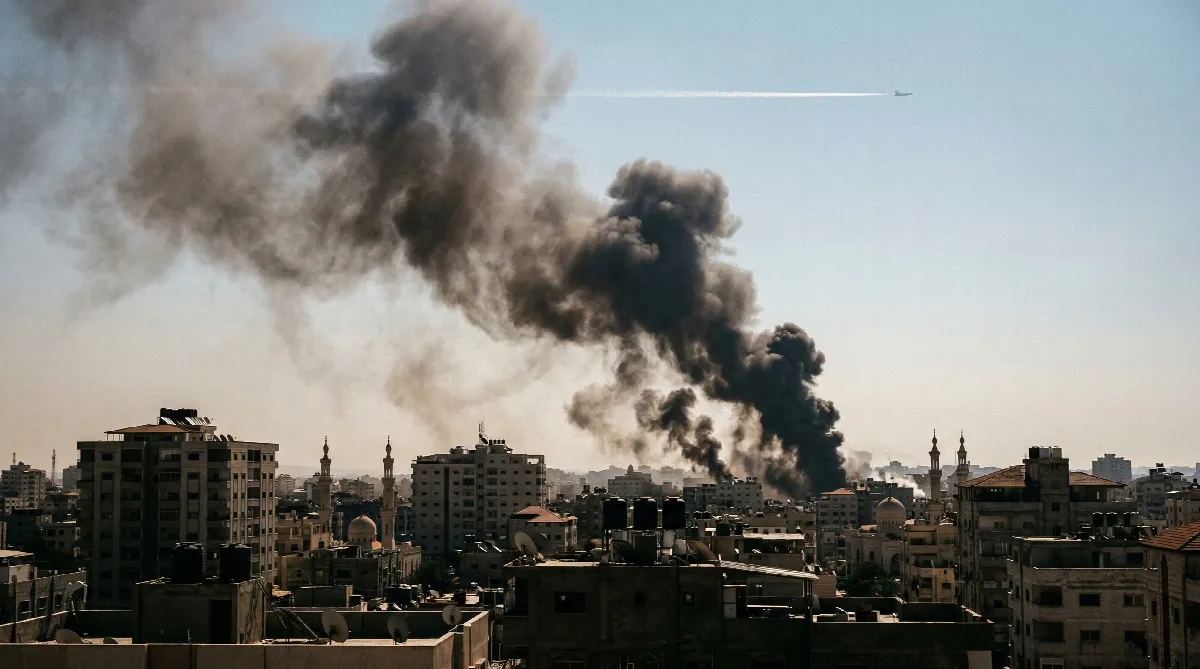
Israel has launched a preemptive military strike on Iran, with explosions reported in downtown Tehran and an apparent strike near the offices of Supreme Leader Ayatollah Ali Khamenei. Israeli Defence Minister Israel Katz confirmed the attack and declared a state of emergency across Israel, urging citizens to stay near shelters.
Iran has closed its airspace. Sirens have sounded across Israel. Iranian state television acknowledged explosions in the capital but has not provided further details.
For the millions of UAE residents watching this unfold, here’s what we know so far and how it may affect you.
What Has Happened?
At approximately 10:23 AM GST on Saturday, 28 February 2026, Israel’s Defence Minister confirmed that Israel had carried out a preemptive strike against Iran.
Key developments as reported by Gulf News and international media:
Explosions in downtown Tehran. Smoke was seen rising from the capital. Several missiles struck University Street and the Jomhouri area, according to Iran’s Fars News Agency.
Strike near Supreme Leader’s offices. An apparent strike hit an area close to the offices of Ayatollah Ali Khamenei in Tehran. Casualties and damage remain unconfirmed, per AP.
State of emergency in Israel. Defence Minister Katz declared a nationwide state of emergency. Sirens sounded across the country and mobile alerts instructed residents to stay near protected spaces.
IDF says alert is precautionary. The Israel Defence Forces stated the nationwide alert is a proactive measure to prepare the public for potential Iranian missile retaliation.
Iran has closed its airspace. A NOTAM (Notice to Air Missions) confirms Tehran FIR is closed as of 06:30 UTC on 28 February 2026.
This strike follows the collapse of five rounds of US-Iran nuclear talks that ended without a deal in Geneva on 27 February, and weeks of 15+ countries urging citizens to leave Iran amid escalating tensions.
How Does This Affect UAE Flights?
Iran’s airspace is now closed. This is the most immediate operational impact for UAE residents.
Emirates, Etihad, flydubai, and Air Arabia operate dozens of daily flights that transit near or through Iranian airspace on routes to Europe, the Americas, and parts of Asia. When Iranian airspace closes, airlines must reroute — typically via Saudi Arabia and the Red Sea — adding 2–3 hours to flight times and significant fuel costs.
During the June 2025 Israel-Iran war, airspace closures lasted over ten days and caused widespread flight cancellations across all major UAE carriers. Flights to and from Tehran were suspended entirely.
What to do right now:
- Check your airline’s website for schedule updates if you have upcoming international flights
- Do not cancel your booking before the airline does — if the airline cancels, you’re entitled to free rebooking or a full refund
- Update your contact details in your airline booking so they can reach you with changes
- Expect longer flight times on Europe and US-bound routes as aircraft reroute around closed airspace
The UAE Foreign Ministry previously confirmed it will not allow its territory or airspace to be used for attacks on Iran. Dubai and Abu Dhabi airports remain operational, but individual flight routes may be disrupted.
Oil Prices and Strait of Hormuz
Oil markets will react sharply when trading opens. Brent crude was already at $71.38 per barrel before this strike, up from $63.47 in January due to US-Iran tensions.
Strait of Hormuz — the narrow waterway between Iran and Oman carrying roughly 20% of global oil supply — is now a critical flashpoint. Iran temporarily closed the strait earlier this month, and insurance premiums for vessel transit had already risen.
If Iran retaliates by disrupting shipping through the Hormuz strait, oil prices could spike dramatically. Some analysts had already warned of $100+ per barrel if military confrontation occurred.
For UAE residents, this means:
- March 2026 petrol prices were already expected to rise 5–10 fils per litre
- A sustained military escalation could push fuel costs significantly higher
- The broader cost of living in the UAE — including transport, food, and goods — could face upward pressure from higher oil and shipping costs
Is the UAE Safe?
Yes. The UAE is not a party to this conflict. The Emirates has explicitly stated it will not allow its airspace, territory, or waters to be used for attacks on Iran.
Dubai and Abu Dhabi maintain strong security protocols and have demonstrated resilience during previous rounds of regional conflict. During the June 2025 Israel-Iran war, UAE airports remained operational and daily life continued largely unaffected.
The US travel advisory for the UAE remains at Level 2 (“exercise increased caution”) — the same tier as France and Belgium — reflecting regional concerns rather than specific local threats.
That said, the situation is fluid. Residents should:
- Stay informed through official government channels
- Register with their home country’s embassy if they haven’t already
- Avoid unnecessary travel to conflict-affected areas
- Review their travel insurance coverage for war-related exclusions
For a comprehensive safety overview, our Dubai safety guide covers the emirate’s security measures during regional tensions.
Context: How Did We Get Here?
This strike did not emerge in a vacuum. Here’s the sequence of events:
June 2025: Israel launched “Operation Rising Lion” against Iranian nuclear facilities and military sites. The US joined with strikes on three Iranian nuclear sites. Iran retaliated by targeting a US base in Qatar. A ceasefire was announced on 24 June 2025.
Late 2025: Iran began rebuilding its nuclear programme and reconstituting its ballistic missile stockpile. International inspections remained contentious.
January 2026: Protests erupted across Iran over economic collapse. The US deployed its largest Middle Eastern military presence in decades. Airlines began cancelling Tehran flights and rerouting around Iranian airspace.
February 2026: Five rounds of US-Iran nuclear talks concluded in Geneva without a deal (27 February). Over 15 countries told citizens to leave Iran. Hours later, Israel launched today’s strike.
The pattern mirrors mid-2025, when oil prices surged 14% on Middle East conflict, driving significant UAE fuel price increases in subsequent months.
What Happens Next?
The critical question is whether Iran retaliates — and how. During the June 2025 war, Iran responded to Israeli and US strikes by targeting a US base in Qatar, causing limited damage. A ceasefire followed within 11 days.
This time, the variables are different:
- Iran’s Axis of Resistance (Hezbollah, proxy groups) has been significantly weakened since 2024
- Iran’s ballistic missile stockpile has reportedly been reconstituted to pre-war levels
- The US already has substantial military assets in the region, including multiple aircraft carrier groups
- Iran’s economy is under severe strain from sanctions and currency collapse
The next hours and days will be critical. UAE residents should monitor developments closely while maintaining perspective — the Emirates has weathered previous rounds of regional conflict without significant disruption to daily life.
Key Takeaway
Israel has launched a preemptive strike on Iran, with explosions in downtown Tehran and an area near the Supreme Leader’s offices. Iran’s airspace is closed. For UAE residents, the immediate impacts are flight disruptions on routes transiting Iranian airspace, expected fuel price increases in March, and heightened Strait of Hormuz concerns. The UAE itself remains safe and is not involved in the conflict. Do not cancel airline bookings before the airline does. Stay informed, register with your embassy, and avoid travel to conflict zones.
Frequently Asked Questions
Has Israel attacked Iran today?
Yes. Israeli Defence Minister Israel Katz confirmed on 28 February 2026 that Israel has launched a preemptive military strike on Iran. Explosions have been reported in downtown Tehran, including near the offices of Supreme Leader Khamenei. Iran’s airspace is closed.
Are UAE flights affected by the Israel-Iran strike?
Yes. Iran has closed its airspace, which will force UAE carriers to reroute flights to Europe and the Americas via Saudi Arabia and the Red Sea, adding 2–3 hours to flight times. Some flights may be cancelled. Check your airline’s website directly for the latest schedule updates.
Is Dubai safe right now?
Yes. The UAE is not involved in this conflict and has stated it will not allow its airspace or territory to be used for attacks on Iran. Dubai and Abu Dhabi maintain strong security protocols. The US advisory for the UAE remains at Level 2 (“exercise increased caution”), the same level as for major European countries.
How will this affect petrol prices in the UAE?
Petrol prices were already expected to rise 5–10 fils per litre in March due to elevated oil prices. If the conflict escalates and disrupts oil supply through the Strait of Hormuz, prices could increase further. The UAE Fuel Price Committee will announce March rates by the end of February.
Should I cancel my flight if it goes through Iranian airspace?
No. Wait for the airline to act. If your airline cancels or reroutes your flight, you’re entitled to free rebooking, a full refund, or a travel voucher. If you cancel before the airline does, you may lose money on cancellation fees.
What happened in the June 2025 Israel-Iran war?
Israel launched “Operation Rising Lion” on 13 June 2025, striking nuclear facilities and military targets. The US joined by attacking three Iranian nuclear sites. Iran retaliated by targeting a US base in Qatar. A ceasefire was declared on 24 June 2025, lasting 11 days total. UAE flights were disrupted for over ten days.
Further Reading
- Iran-Israel Conflict: UAE Flight Cancellation Rights & Rebooking Guide
- US Travel Advisory UAE Level 2: Essential Safety Guide
- Is Dubai Safe to Visit Now? Travel Advisory & Safety Guide
- UAE Fuel Prices to Rise as Oil Surges on Middle East Conflict
- UAE Fuel Prices July 2025: Full Tank Costs Rise Across All Grades
- UAE Cost of Living 2025: 6 Major Price Increases Affecting Residents
The UAE week, every Monday
The week's stories on jobs, visas, money and daily life in one short email. Unsubscribe in one click.