Salik Ramadan 2026 Toll Rates: Dh6 Peak, Dh4 Off-Peak and Free Late-Night Travel
Salik announces Ramadan 2026 toll changes: Dh6 peak from 9am–5pm, Dh4 off-peak, and free travel from 2am–7am. Full rate comparison and savings tips.
By Vadim Kouznetsov, published
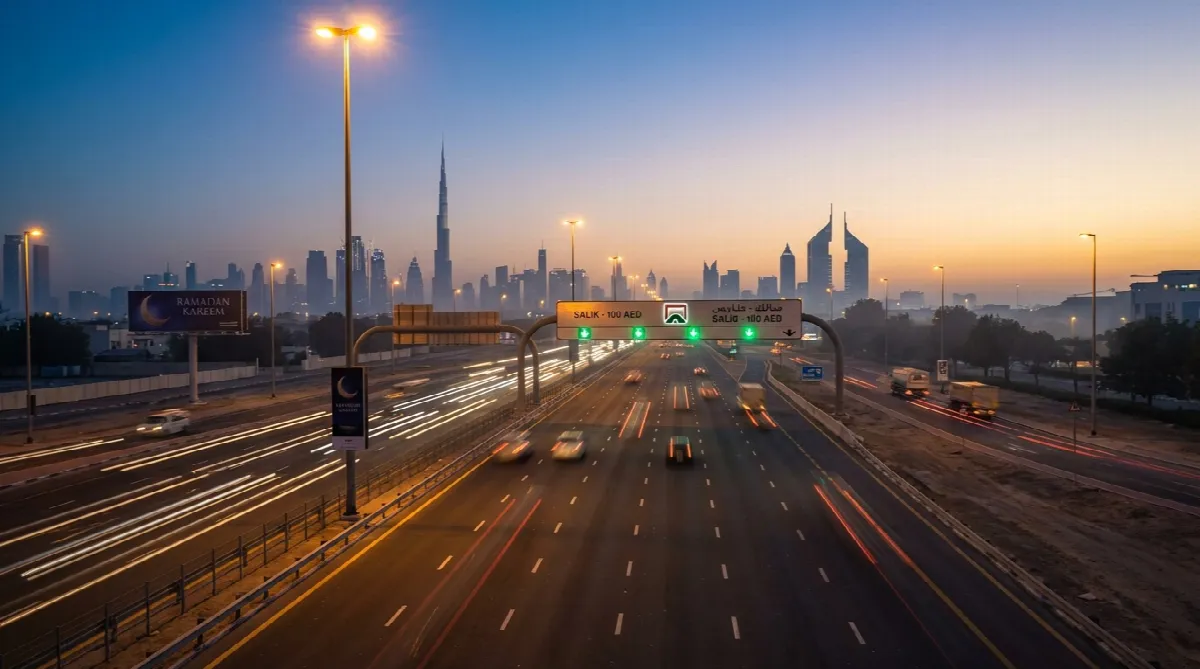
Good news for Dubai motorists heading into Ramadan. Salik has announced a revised toll pricing schedule for the holy month, shifting peak hours and introducing a free travel window between 2am and 7am.
If you’ve been paying Dh6 during the usual peak hours of 6am–10am and 4pm–8pm, the Ramadan structure brings meaningful relief — particularly for those commuting during early morning or late-evening hours.
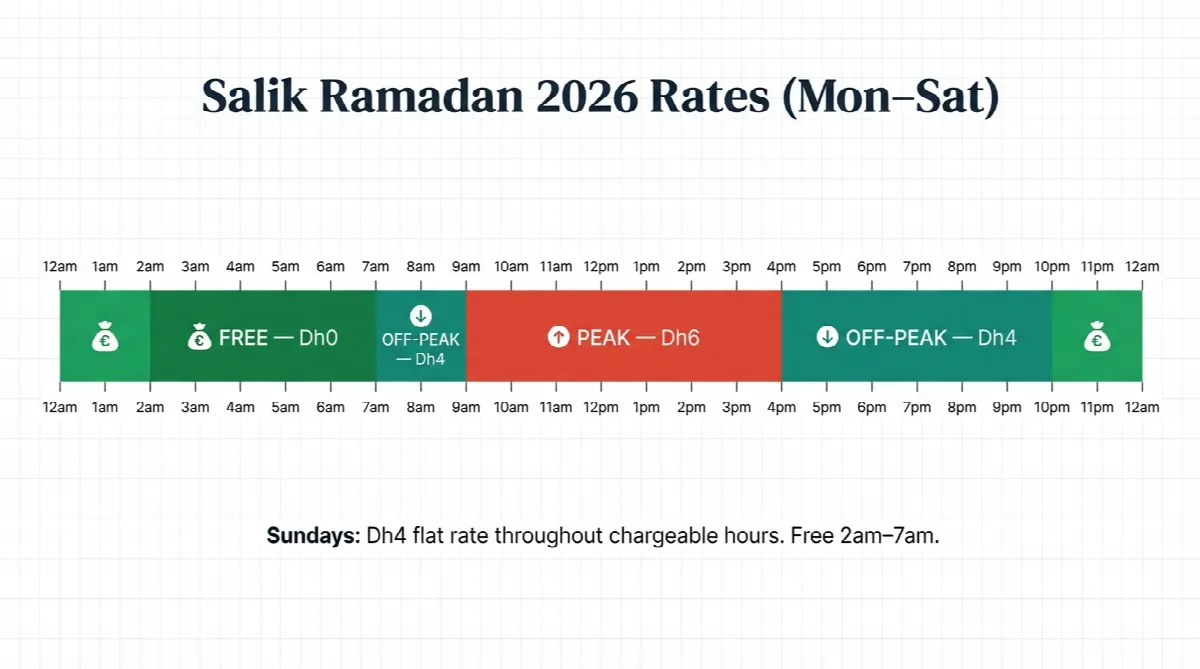
Here’s the full breakdown.
What Are the New Salik Rates During Ramadan 2026?
The revised pricing applies from Monday to Saturday:
Peak hours (9am–5pm): Dh6
Off-peak hours (7am–9am and 5pm–2am): Dh4
Free travel (2am–7am): No charge
This is a notable shift from the standard 2025 variable pricing, where peak charges applied during the early morning (6am–10am) and late afternoon (4pm–8pm) rush periods. During Ramadan, the peak window consolidates into a single 9am–5pm block, reflecting the adjusted work schedules most offices follow during fasting.
How Do Sunday Rates Change?
On Sundays — excluding public holidays and major events — the toll drops to Dh4 throughout the entire chargeable period. The same time windows apply: Dh4 during both peak (9am–5pm) and off-peak (7am–9am, 5pm–2am) hours, with free passage between 2am and 7am.
This is consistent with Salik’s existing Sunday pricing policy, which already offers reduced rates on that day.
How Does Ramadan Pricing Compare to Normal Salik Rates?
Here’s how the Ramadan schedule differs from the standard variable pricing introduced in January 2025:
Standard (Mon–Sat):
- Peak: Dh6 (6am–10am, 4pm–8pm)
- Off-peak: Dh4 (10am–4pm, 8pm–1am)
- Free: 1am–6am
Ramadan (Mon–Sat):
- Peak: Dh6 (9am–5pm)
- Off-peak: Dh4 (7am–9am, 5pm–2am)
- Free: 2am–7am
The biggest savings come during the early morning commute. Under normal pricing, passing a Salik gate at 7am costs Dh6 (peak). During Ramadan, that same trip costs nothing — it falls within the free window.
The late-night free period also extends by an hour (until 7am instead of 6am), accommodating drivers returning from Suhoor gatherings and Taraweeh prayers.
Why Did Salik Adjust Pricing for Ramadan?
Salik stated the changes were made to provide greater flexibility for drivers during Ramadan, when commuting patterns shift in line with fasting, evening gatherings, and altered working hours.
During the holy month, private sector employees across the UAE receive a two-hour reduction in daily working hours. Most offices adjust their schedules, which moves the morning rush later and evening traffic patterns into post-Iftar hours. The consolidated 9am–5pm peak window reflects this shift.
The changes also support smoother traffic management and reduced congestion during key periods — particularly the post-Iftar evening hours when malls extend their opening times and social gatherings peak.
Tips to Save on Salik Charges During Ramadan
If you want to reduce your toll costs this Ramadan, here are practical approaches:
Travel before 7am. The free window runs from 2am to 7am. If your adjusted Ramadan work schedule allows a slightly earlier start, you can avoid the toll entirely on your morning commute.
Time your evening trips after 5pm. Once the clock passes 5pm, the rate drops from Dh6 to Dh4. If you have flexibility on when you leave the office, even a short delay can save Dh2 per gate.
Use the one-hour rule. The existing Al Safa and Al Mamzar gate rules still apply — if you pass through both the North and South gates in the same direction within one hour, you’re only charged once. This remains unchanged during Ramadan.
Consider public transport. Dubai Metro and Tram services operate on adjusted Ramadan schedules that may offer more convenient alternatives for certain routes, especially during peak toll hours.
Key Takeaways
- Salik Ramadan peak hours shift to 9am–5pm (Dh6), replacing the usual 6am–10am and 4pm–8pm windows
- Off-peak rate of Dh4 applies from 7am–9am and 5pm–2am
- Free travel from 2am to 7am — one hour longer than the standard free window
- Sundays remain at Dh4 throughout, with free passage between 2am and 7am
- The Al Safa and Al Mamzar one-hour gate rules continue to apply
- Changes reflect shifted commuting patterns due to reduced Ramadan working hours
Frequently Asked Questions
What are the Salik peak hours during Ramadan 2026?
Peak hours shift to 9am–5pm from Monday to Saturday, with a charge of Dh6 per gate. This replaces the standard peak windows of 6am–10am and 4pm–8pm that apply outside Ramadan.
Is Salik free during Ramadan at night?
Yes. Salik gates are free between 2am and 7am daily during Ramadan. This is an extended free window compared to the standard 1am–6am free period, giving drivers an extra hour of toll-free travel on both ends.
How much does Salik cost during Ramadan off-peak hours?
Off-peak travel between 7am–9am and 5pm–2am costs Dh4 per gate from Monday to Saturday. On Sundays, the rate is Dh4 throughout the entire chargeable period.
Does the one-hour Salik gate rule still apply during Ramadan?
Yes. If you pass through both Al Mamzar North and South gates (or Al Safa North and South gates) in the same direction within one hour, you are charged only once. This rule remains active during Ramadan.
When do normal Salik rates resume after Ramadan?
Salik typically reverts to standard variable pricing once Ramadan ends and Eid Al Fitr concludes. Official confirmation is usually announced by Salik closer to the date. In 2026, Eid Al Fitr is expected around March 20.
Are there any Salik exemptions during Ramadan?
People of determination and their eligible family members who hold a valid Salik exemption permit continue to receive toll fee waivers during Ramadan. The exemption process and eligibility remain unchanged.
Further Reading
- Dubai’s New Salik Toll Rates 2025: Complete Peak Hours & Locations Guide
- When Are Salik Gates Free in Dubai? Updated Toll Timings for 2025
- Dubai Ramadan Transport Guide 2025: Metro, Parking & Salik Changes
- Ramadan 2026 Dubai Mall and Cinema Hours: What Times Are Changing?
- UAE Ramadan Working Hours: Employee Rights & Overtime Rules
The UAE week, every Monday
The week's stories on jobs, visas, money and daily life in one short email. Unsubscribe in one click.