GCC Salary Guide 2026: 58% Got Pay Rises But 90% of Employers Face Skills Gaps
Hays GCC Salary Guide 2026 reveals 58% got pay rises, 78% expect more in 2026. But 90% of employers face skills gaps. What it means for your career.
By Vadim Kouznetsov, published

Professionals across the Gulf are earning more than last year. But new research reveals a growing disconnect: employee expectations are rising faster than what many employers are prepared to offer.
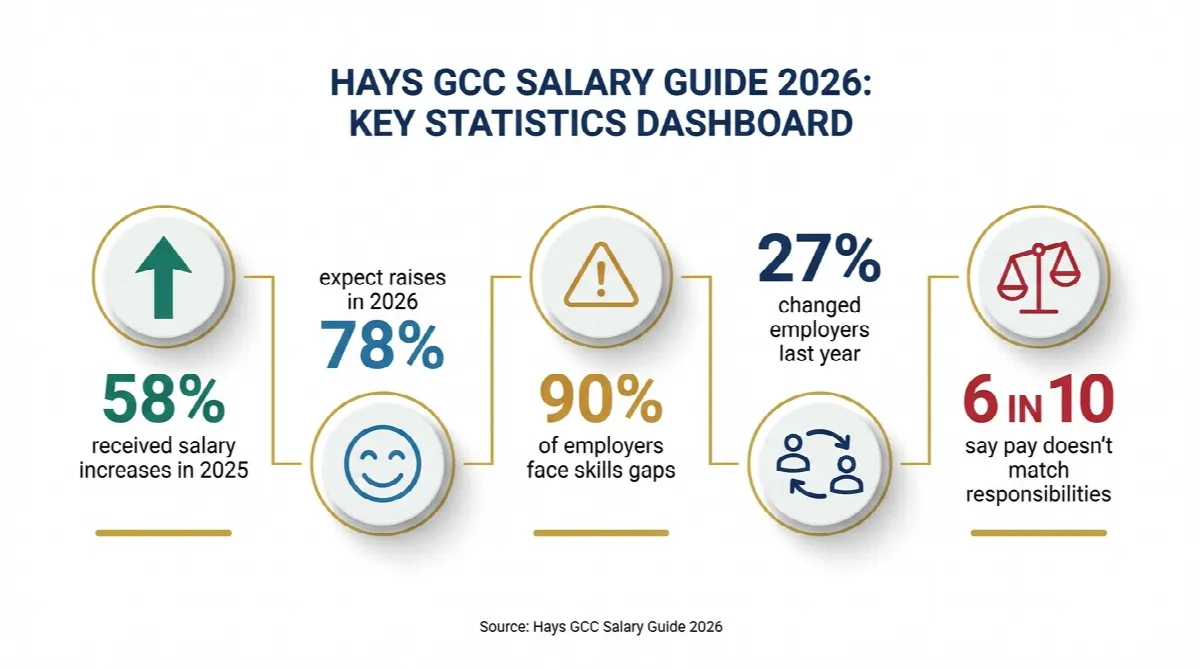
According to the Hays GCC Salary Guide 2026, 58% of professionals received a salary increase in 2025—up from 51% the previous year. The most common rise was between 2.5% and 5%, while 12% reported increases exceeding 20%.
Despite the upward trend, dissatisfaction persists. Six in ten professionals said their pay does not align with their responsibilities. For employers struggling to source skills, this mismatch creates a significant retention challenge.
What Employees Expect in 2026
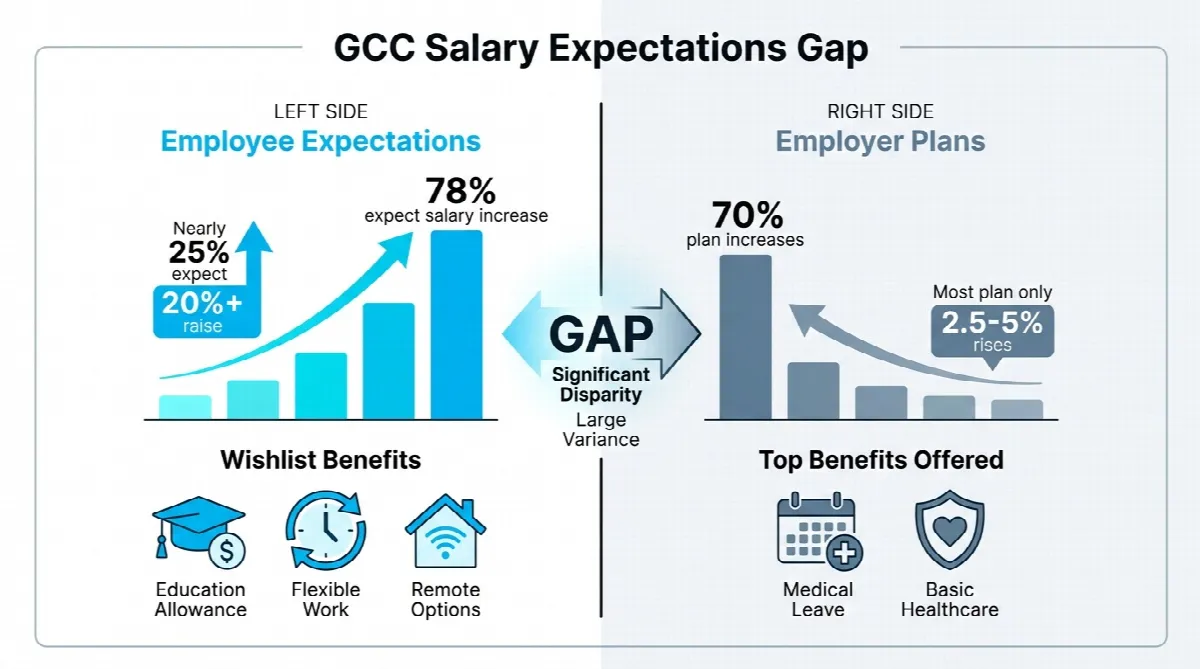
Expectations are climbing even higher. The Hays report found that 78% of professionals are optimistic about receiving a salary increase in 2026. Nearly a quarter expect rises exceeding 20%.
Employers share some of this optimism—70% anticipate salaries will increase within their organisations next year. However, most expect rises of only up to 5%.
This gap between what employees want and what employers plan to offer sits at the heart of the GCC’s current talent challenge.
Hiring Remains Strong Across the Gulf
Two-thirds of employers increased headcount in 2025. The UAE and Saudi Arabia recorded the highest recruitment activity, driven by continued investment in technology, banking, construction, property, transport, and logistics.
Only 13% of organisations reported having no major hiring plans.
For 2026, employers identified three strategic priorities:
Specialist technical and digital skills remain the top hiring focus. Demand for AI and tech talent continues surging across the region.
Leadership and management roles are expanding as companies scale operations and establish regional headquarters.
Contract and freelance professionals are increasingly sought for specific projects, peak demand periods, and flexible staffing arrangements.
The Skills Gap Problem
Here’s the challenge employers cannot ignore: 90% of organisations experienced skills gaps in 2025. These ranged from minor to extreme.
Employers cited four main causes:
- Low or uncompetitive salaries and benefits
- Intense competition for talent
- Lack of industry-relevant education or training programmes
- Limited career progression opportunities
Retaining employees remains equally difficult. Organisations struggle to match rising salary expectations in a market where specialist skills command premium compensation.
Why Benefits Matter More Than Ever
Last year, 27% of professionals changed employers. Close to four in ten are considering moving to a similar role at a new organisation in 2026.
The reason? Misalignment between benefits offered and employee expectations.
While salary remains central, benefits beyond pay now play a critical role in retention decisions. Employees ranked these benefits as most valued:
- Child education allowances
- Additional annual leave days
- Flexible working arrangements
- Remote work options
- Additional days off for wellbeing
By contrast, employers reported that the most commonly provided benefits are paid medical leave, basic private medical care, and additional leave days.
This disconnect explains why flexible work policies are becoming essential for talent retention across the Gulf.
What This Means for Job Seekers
Oliver Kowalski, Managing Director at Hays Middle East, offered context for the findings:
“Despite ongoing global economic uncertainties, the Gulf region continues to demonstrate resilience and forward momentum. Economic diversification, strategic fiscal reforms, and investment in non-oil sectors have positioned the GCC as a hub of innovation and opportunity.”
For professionals planning their 2026 career moves, the data suggests several strategies:
Know your market value. Research salary benchmarks for your specific role and experience level before negotiations.
Negotiate the full package. Benefits like education allowances, flexible working, and additional leave can significantly increase your total compensation value.
Build specialist skills. Technical and digital expertise commands premium pay in a market where 90% of employers report skills shortages.
Consider timing. With 78% of professionals expecting raises, competition for top roles will intensify throughout 2026.
Frequently Asked Questions
How much are salaries increasing in the GCC in 2026?
Most professionals can expect salary increases between 2.5% and 5% in 2026. However, 12% of employees received rises exceeding 20% in 2025, typically for high-demand specialist roles.
What percentage of GCC employers are hiring in 2026?
Two-thirds of employers increased headcount in 2025, and hiring momentum continues into 2026. Only 13% of organisations have no major hiring plans.
Which sectors are hiring most in the UAE and Saudi Arabia?
Technology, banking, construction, property, transport, and logistics recorded the highest recruitment activity in 2025. These sectors continue driving hiring demand.
Why are employees leaving their jobs in the GCC?
Misalignment between compensation expectations and what employers offer is the primary driver. Benefits gaps—particularly around education allowances, flexible working, and remote work options—also influence decisions.
What skills are most in demand in the Gulf job market?
Specialist technical and digital skills top employer priorities, followed by leadership and management capabilities. Contract and freelance professionals with specific project expertise are increasingly sought.
How can I negotiate a higher salary in the GCC?
Research market benchmarks, highlight specialist skills that address employer shortages, and negotiate beyond base salary to include benefits like education allowances, flexible working, and additional leave.
Further Reading
The UAE week, every Monday
The week's stories on jobs, visas, money and daily life in one short email. Unsubscribe in one click.