UAE Work Trends 2025: Population Growth Transforms Pay and Flexibility
How UAE’s population growth to 11.34M reshapes work trends. Discover pay-for-performance models, personalised benefits, and flexible work solutions in 2025.
By Vadim Kouznetsov, published

The United Arab Emirates is experiencing a fundamental transformation in its employment landscape as the country’s remarkable population growth reshapes how employers approach compensation, benefits, and workplace flexibility. This demographic shift, representing nearly 2 million new residents over four years, has created unprecedented opportunities for organisations to implement innovative talent management strategies.
According to Andrew El Zein, Principal and Senior Manager of Compensation Consulting at Mercer, this evolution reflects a strategic response to expanded talent availability: “This shift helps manage fixed costs while offering short- and long-term incentives to retain key and critical talent.”
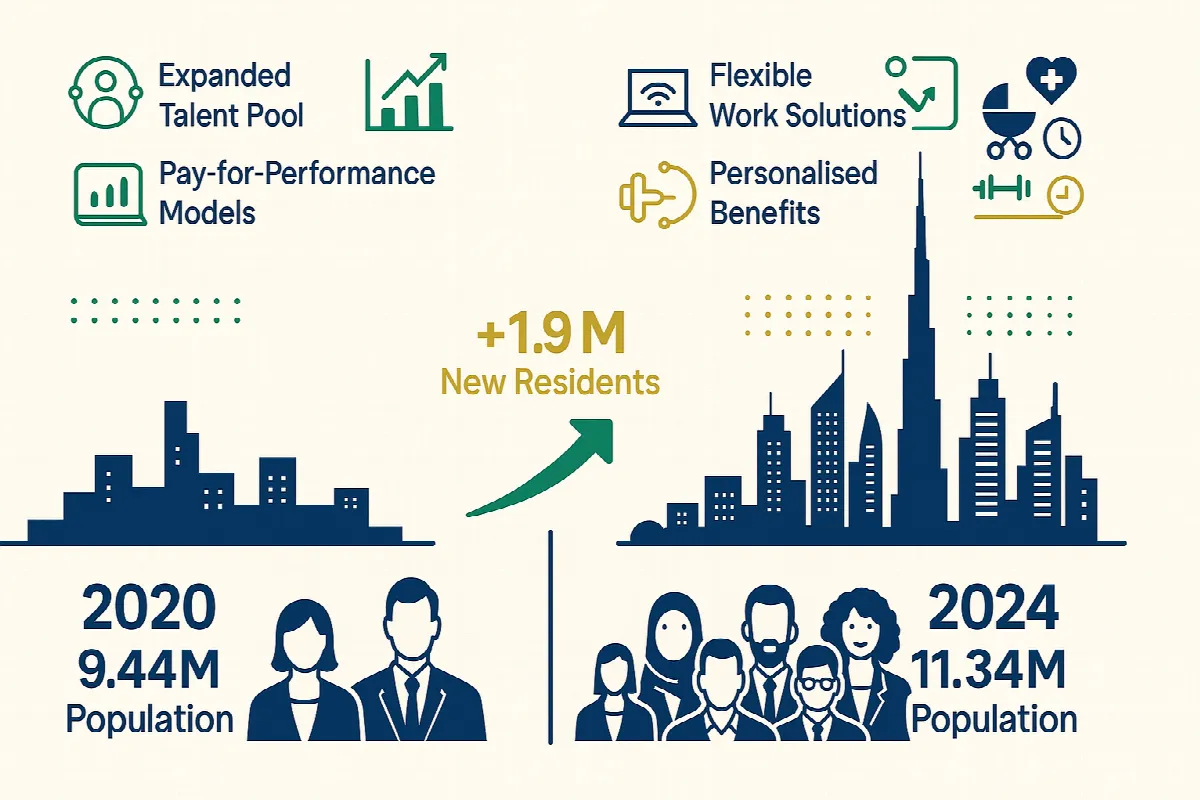
Population Growth Drives Market Transformation
The UAE’s population surge from 9.44 million at the end of 2020 to an estimated 11.34 million in 2024 represents more than just numerical growth—it signifies a fundamental restructuring of the employment ecosystem. This expansion has created what experts describe as a “talent abundance scenario,” enabling employers to be more selective whilst simultaneously demanding more innovative retention strategies for high-performing employees.
The demographic transformation aligns with broader UAE job market trends showing increased competition as more professionals relocate to the Emirates seeking career advancement and lifestyle benefits. This influx has prompted organisations to rethink traditional compensation models in favour of performance-driven approaches.
Pay-for-Performance Revolution
Strategic Shift from Fixed to Variable Compensation
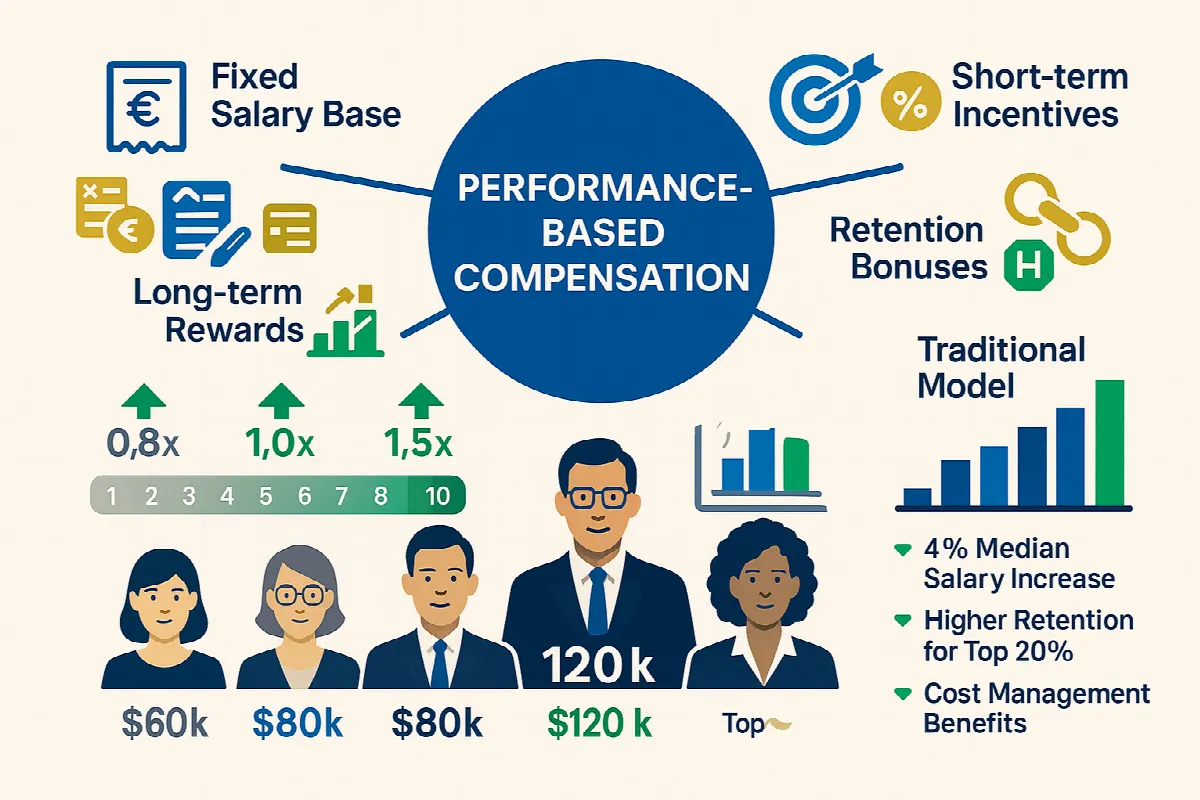
UAE employers are increasingly adopting pay-for-performance models that tie compensation directly to individual and organisational achievements. This approach offers several strategic advantages:
Cost Management: Variable compensation structures help organisations control fixed labour costs whilst maintaining competitive total compensation packages for high performers.
Talent Differentiation: Performance-based systems enable companies to reward exceptional contributors significantly above market rates whilst managing costs for average performers.
Retention Focus: Short and long-term incentive programmes create golden handcuffs for critical talent, reducing turnover amongst top performers.
Implementation Across Sectors
The pay-for-performance trend spans multiple industries, from technology and AI sectors experiencing salary surges to traditional sectors adapting compensation structures. Legal and technology sectors are particularly positioned for salary growth as organisations compete for specialised skills.
Remote Work Resurgence: Traffic-Driven Flexibility
Infrastructure Challenges Drive Policy Changes
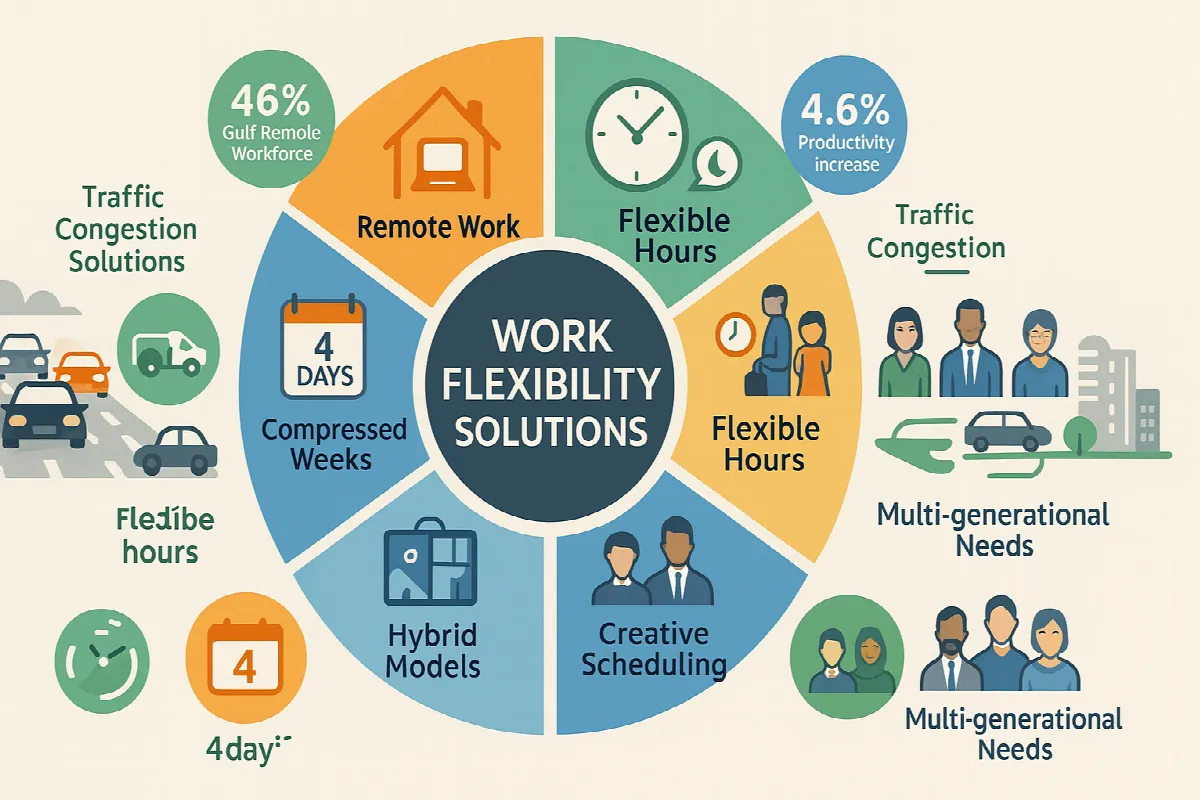
The UAE’s rapid population growth has created significant traffic congestion challenges, particularly affecting daily commutes in major emirates. This infrastructure pressure has become a catalyst for renewed employer interest in flexible work arrangements.
El Zein observes: “Employees are definitely appreciating the flexibility — both in terms of organisational culture and work-life balance.” This sentiment reflects a practical response to urban growth challenges that benefits both employers and employees.
Evolution Beyond Pandemic Policies
Unlike the global remote work shift driven by COVID-19, the UAE’s current flexibility trend stems from practical considerations around quality of life and productivity. Many organisations that initially mandated office returns are now reconsidering their positions based on:
- Commute Time Reduction: Allowing employees to avoid peak traffic hours increases productive working time
- Employee Satisfaction: Work-life balance initiatives show measurable impacts on employee wellbeing
- Talent Retention: Flexibility becomes a key differentiator in competitive talent markets
The UAE’s remote work success shows 4.6% productivity increases, supporting the business case for continued flexibility.
Personalised Benefits Revolution
Beyond One-Size-Fits-All Packages
UAE organisations are pioneering customised employee benefits that acknowledge the diverse needs of a multicultural workforce. This personalisation trend recognises that traditional benefits packages may not address the varied requirements of different employee demographics.
El Zein explains the rationale: “For example, a single employee might value a gym membership, while a parent may prefer childcare support. This flexibility is especially appealing in a multi-generational workforce where needs differ widely.”
Multi-Generational Workforce Considerations
The UAE’s diverse population spans multiple generations and cultural backgrounds, creating unique benefits preferences:
Millennials and Gen Z: Technology stipends, professional development budgets, mental health support, and flexible working arrangements
Generation X: Family support services, education allowances for children, healthcare enhancements, and retirement planning assistance
Traditional Employees: Housing allowances, transportation benefits, annual leave enhancements, and end-of-service benefit improvements
Implementation Strategies
Forward-thinking organisations are implementing benefits customisation through:
- Flexible Benefits Platforms: Technology solutions allowing employees to choose from benefit menus
- Life Stage Adaptations: Benefits that evolve with employee career progression and personal circumstances
- Cultural Sensitivity: Options that respect diverse cultural and religious requirements
Creative Work-Hour Solutions
Addressing Diverse Lifestyle Needs
UAE employers are developing innovative scheduling solutions that address specific demographic challenges whilst maintaining operational efficiency. These approaches go beyond traditional flexible hours to create targeted solutions for different employee groups.
Supporting Working Parents
El Zein cited a successful example of a UAE employer that adjusted working hours to accommodate mothers managing school schedules: “This approach resulted in a successful increase in Emirati female hires.”
This strategy addresses the UAE’s focus on supporting working mothers through practical workplace solutions. Such initiatives demonstrate how employers can support national workforce development goals whilst improving operational effectiveness.
Practical Applications
Creative scheduling solutions include:
Compressed Work Weeks: Four-day schedules allowing longer weekend periods for family time or personal pursuits
Split Shifts: Accommodating school schedules, religious obligations, or personal commitments
Core Hours Flexibility: Maintaining team collaboration whilst allowing individual schedule optimisation
Seasonal Adjustments: Adapting to cultural requirements like Ramadan working hours
Skills Mobility and Career Development
Cross-Departmental Movement Strategy
UAE organisations are embracing skills mobility as both a talent development and retention strategy. This approach recognises that employee engagement increases when individuals can explore different career paths within the same organisation.
El Zein highlighted this trend: “Many organisations are bringing employees from operations into HR. Although they may not be traditionally trained HR professionals, they have firsthand experience on the ground, which is incredibly valuable.”
Strategic Benefits
Skills mobility programmes offer multiple advantages:
Employee Engagement: Career variety prevents stagnation and maintains motivation Knowledge Transfer: Cross-departmental experience creates more versatile employees Succession Planning: Develops internal talent for leadership positions Cost Efficiency: Reduces external recruitment costs whilst leveraging existing cultural fit
Implementation Framework
Successful skills mobility requires:
- Competency Mapping: Identifying transferable skills across departments
- Training Programmes: Bridging knowledge gaps for successful transitions
- Mentorship Systems: Supporting employees during role transitions
- Performance Metrics: Measuring success of mobility initiatives
Salary Trends and Market Dynamics
Current Compensation Landscape
Mercer’s research indicates the UAE’s median salary increase was 4% in 2024, with similar projections for 2025. This moderate growth reflects the balance between talent availability and competitive pressures.
However, salary trends vary significantly by sector:
High-Growth Sectors: Technology, renewable energy, and healthcare continue experiencing above-average increases Stabilising Sectors: Finance, accounting, and human resources show more modest growth due to increased local talent availability Emerging Areas: AI and digital economy roles command premium compensation
Regional Variations
Salary dynamics differ across emirates based on local economic conditions:
Dubai: Continues leading in technology and innovation sector compensation Abu Dhabi: Government and energy sector roles maintain competitive packages Northern Emirates: Emerging as cost-effective alternatives with growing opportunities
Future Workplace Evolution
Technology Integration
The UAE’s commitment to digital transformation is reshaping workplace expectations:
- Digital Collaboration Tools: Supporting hybrid work models
- Performance Analytics: Data-driven insights for compensation decisions
- Employee Experience Platforms: Comprehensive benefits management systems
Regulatory Adaptations
UAE labour laws continue evolving to support modern work arrangements:
- Flexible work guidelines enabling various employment patterns
- Remote work regulations supporting cross-border employment
- Benefits standardisation ensuring employee protection across diverse arrangements
Cultural Considerations
The UAE’s multicultural environment requires workplace policies that respect diverse backgrounds whilst maintaining operational efficiency. This includes accommodating religious observances, cultural holidays, and varying communication styles.
Strategic Recommendations for Employers
Talent Retention Framework
Successful UAE employers are implementing comprehensive retention strategies:
- Performance-Based Differentiation: Reward top performers significantly above market rates
- Personalised Benefits: Offer choice and flexibility in compensation packages
- Career Development: Provide clear advancement paths and skills development opportunities
- Work-Life Integration: Support employee wellbeing through flexible arrangements
- Cultural Sensitivity: Respect diverse backgrounds and requirements
Implementation Best Practices
Assessment Phase: Evaluate current workforce demographics and preferences Pilot Programmes: Test new initiatives with volunteer groups before organisation-wide implementation Feedback Systems: Regular employee surveys and focus groups to refine approaches Continuous Improvement: Adapt strategies based on results and changing market conditions
Competitive Advantages
Market Positioning
Organisations implementing innovative workplace strategies gain several competitive advantages:
Talent Attraction: Differentiated employer brand attracts top candidates Employee Engagement: Higher satisfaction leads to improved productivity and retention Operational Efficiency: Flexible arrangements can reduce overhead costs and improve resource allocation Innovation Culture: Diverse, engaged teams drive creative solutions and business growth
Measuring Success
Key performance indicators for workplace transformation include:
- Employee retention rates across different demographic groups
- Performance metrics before and after policy implementations
- Employee satisfaction scores and engagement surveys
- Cost-per-hire and time-to-fill metrics
- Productivity measurements and business outcomes
Conclusion: Future-Ready Employment Strategies
The UAE’s shifting work trends represent more than tactical adjustments—they signal a fundamental evolution towards employee-centric workplace strategies that balance organisational efficiency with individual satisfaction. As the country’s population continues growing and diversifying, employers who embrace innovative compensation models, personalised benefits, and flexible work arrangements will gain sustained competitive advantages.
The transformation from traditional employment models to performance-driven, flexible approaches reflects the UAE’s broader economic diversification goals and commitment to becoming a global talent hub. Organisations that successfully navigate this evolution will not only attract and retain top talent but also position themselves for sustained growth in an increasingly competitive marketplace.
The evidence suggests that UAE’s workplace revolution is just beginning. As demographic pressures continue reshaping the employment landscape, the organisations that prioritise employee experience whilst maintaining operational excellence will emerge as industry leaders in the region’s next growth phase.
For employers, the message is clear: adaptation is not optional but essential for success in the UAE’s evolving employment ecosystem. The organisations that embrace change, invest in their people, and create truly flexible, performance-oriented workplace cultures will thrive in this dynamic environment.
Further Reading
Explore these comprehensive guides to understand UAE’s evolving employment landscape:
- UAE Job Market 2024: Salary Trends Shift as Expat Numbers Rise
- UAE Jobs: 10 Must-Have Company Benefits Beyond Salary in 2024
- Work From Home Jobs Dubai: Ultimate Guide to Remote Careers 2025
- UAE Remote Work Success: 4.6% Productivity Boost Report 2025
- UAE AI Job Market: Salaries Surge Amid High Demand for Tech Talent
- UAE Family Support: New Policies for Working Mothers in 2025
- UAE Work-Life Balance: Why Being Underworked Can Harm Your Wellbeing
The UAE week, every Monday
The week's stories on jobs, visas, money and daily life in one short email. Unsubscribe in one click.