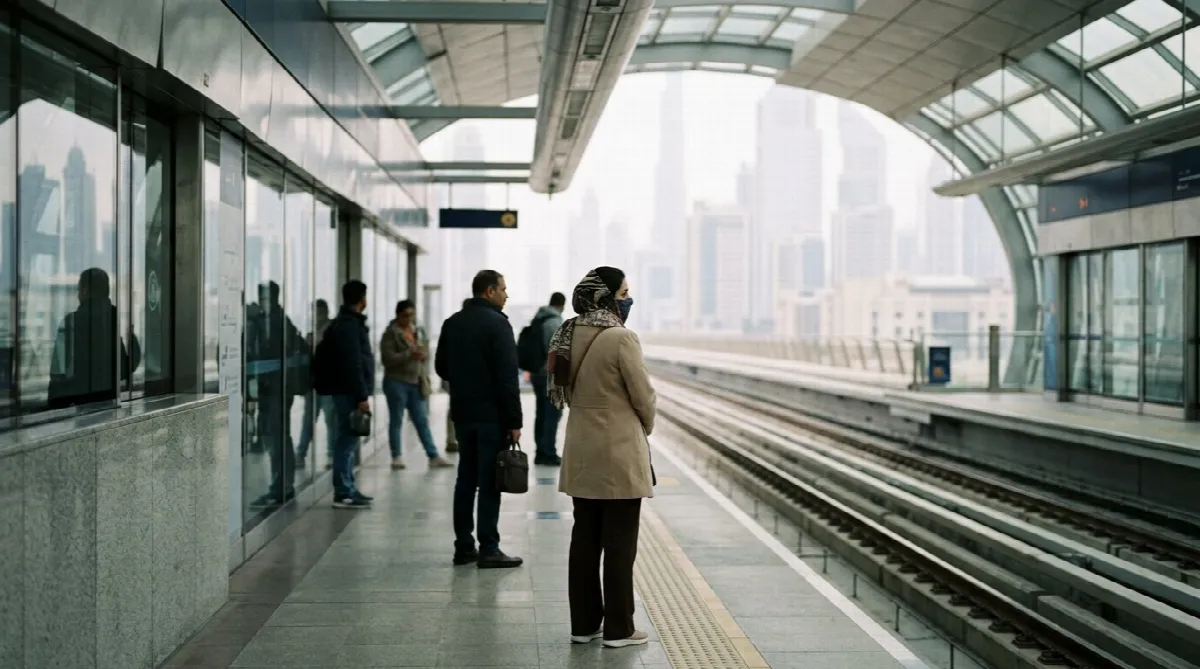
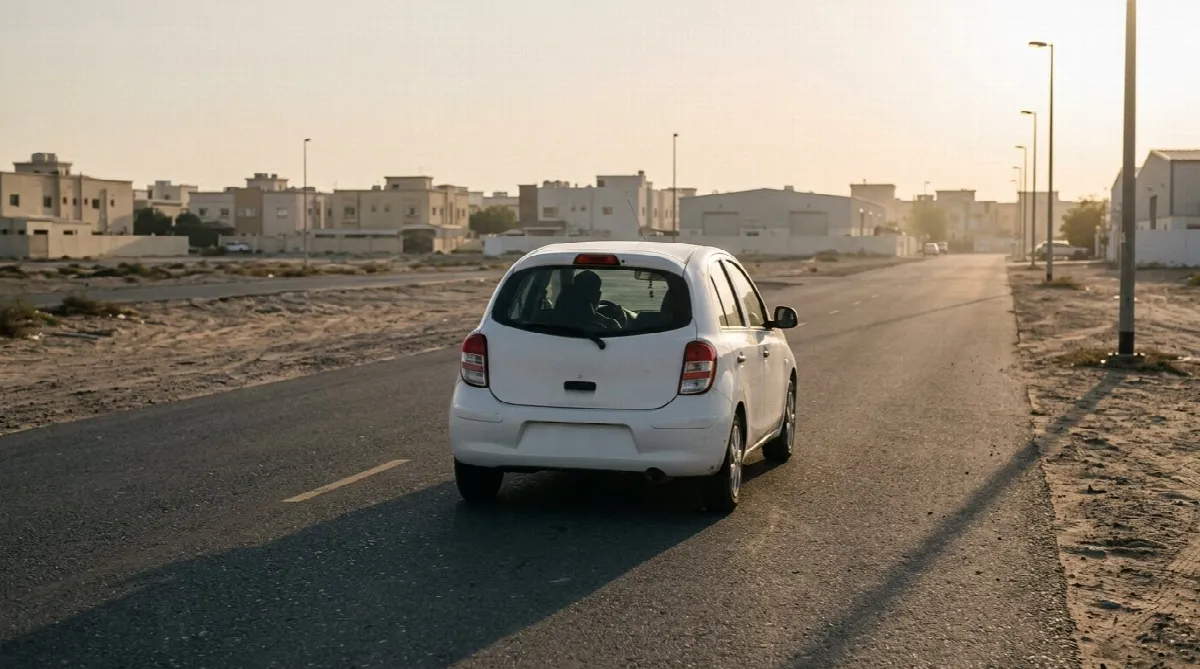
How Etihad Rail Will Change Daily Life in UAE’s Remote Communities
Etihad Rail stations in Al Sila, Madinat Zayed and Al Dhafra region will end long drives for residents. Students and workers gain access to major cities.
By Vadim Kouznetsov, published
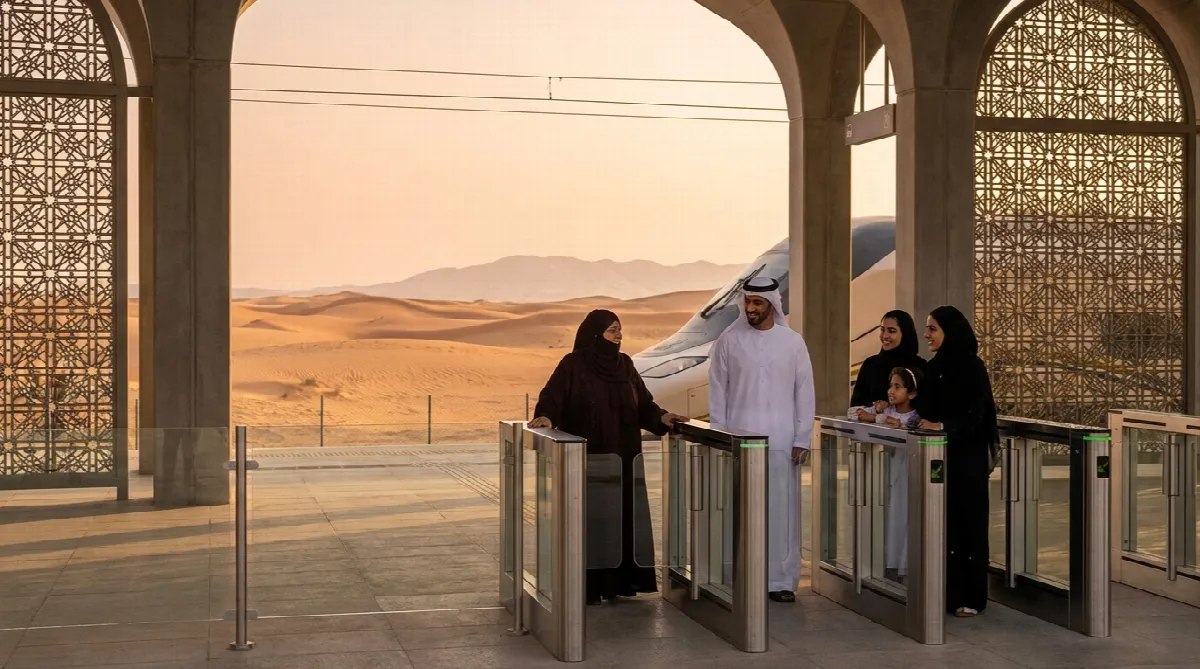
For residents in Al Sila, near the UAE–Saudi border, the announcement of Etihad Rail’s passenger stations marks the end of a long wait for better connectivity. After years of lengthy commutes and limited transport options, these remote communities will finally have direct rail access to the rest of the country.
The seven newly announced stations—Al Sila, Al Dhannah, Al Mirfa, Madinat Zayed, Mezairaa, Al Faya, and Al Dhaid—extend rail connectivity across Abu Dhabi’s Al Dhafra region and Sharjah, linking semi-urban communities with major population centres.
What Al Dhafra Residents Are Saying
“Living in Al Sila means long drives whenever we need to travel to other cities,” said Salma Almansoori, a resident of the area. “The passenger train will make travel easier, especially for families and elderly residents who prefer not to drive long distances.”
For many in the Western Region, long-distance driving has been the only option for reaching Abu Dhabi city, Dubai, or other emirates. The isolation affects everything from job opportunities to healthcare access to family visits.
The newly announced stations will connect residents to the full 11-station passenger network launching later this year.
Madinat Zayed: A Regional Hub Gets Connected
In Madinat Zayed, the administrative centre of the Al Dhafra region, residents believe the station will support daily commuting and regional growth.
“Madinat Zayed is a central point for many surrounding communities,” said Mayam Almazrouei, who lives in the area. “A passenger rail station here will connect people to Abu Dhabi and beyond, and it will be especially useful for students and employees who travel frequently.”
The station placement reflects Etihad Rail’s strategy of serving population centres while supporting regional development. According to Mohammed Alshehii, Chief Projects Officer at Etihad Rail, station areas were “carefully selected” to serve key locations across the country.
How the Network Will Transform Travel
The passenger network will take riders through the interiors of the country, offering views ranging from Abu Dhabi’s golden sand dunes to the cascading beauty of the Hajar Mountains.
A senior Etihad Rail official described it as a “lovely experience” for passengers, combining practical transport with scenic travel through landscapes that most UAE residents rarely see from ground level.
Journey time benefits for Western Region residents:
| Route | Estimated Rail Time | Current Drive Time |
|---|---|---|
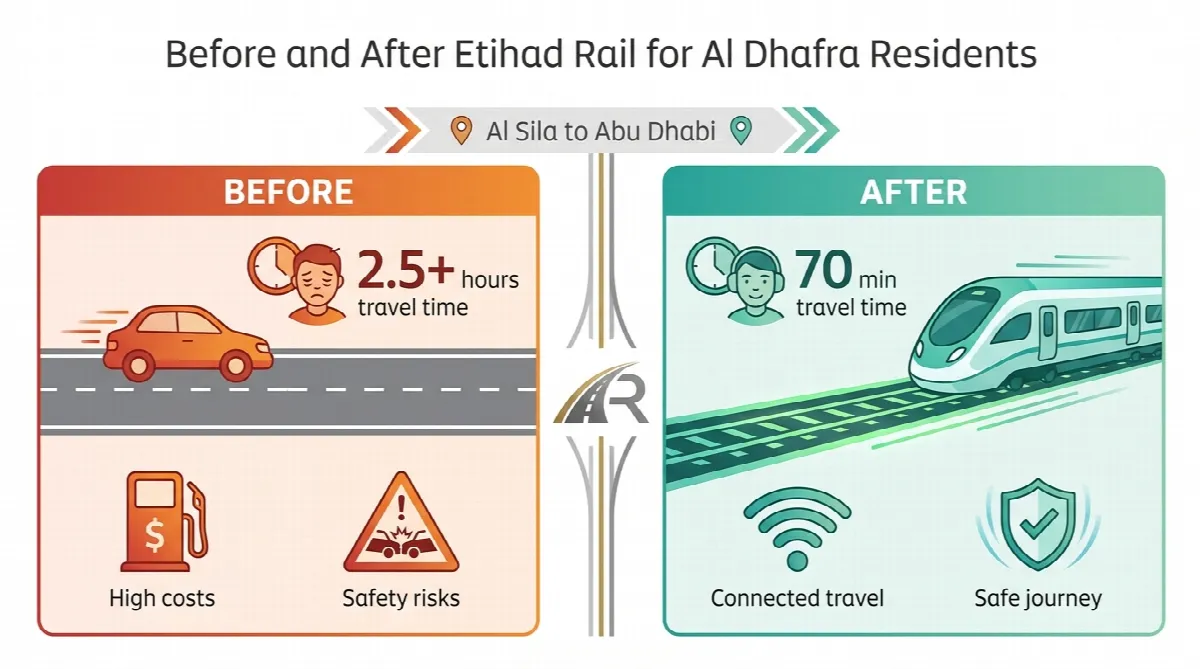
| Abu Dhabi to Al Ruwais | 70 minutes | ~2.5 hours |
| Abu Dhabi to Dubai | 57 minutes | ~2 hours |
| Abu Dhabi to Fujairah | 100 minutes | ~2.5 hours |
Benefits Beyond Time Savings
Residents highlighted wider benefits of rail travel beyond journey times:
Reduced road congestion: Fewer vehicles on highways connecting remote areas to cities.
Improved safety: Rail travel eliminates the fatigue and risks associated with long-distance driving.
Environmental impact: Etihad Rail projects a 21% reduction in CO2 emissions from land transport by 2050.
“Driving long distances every week can be exhausting,” Almansoori added. “Having a reliable train option will change how people plan their travel.”
Impact on Students and Workers
The rail network could transform opportunities for students and employees in remote areas. Currently, young people from Al Dhafra often face difficult choices between living away from family to access education or employment, or limiting their options to what’s available locally.
Rail connectivity opens possibilities for:
- Daily commuting to universities in Abu Dhabi or other emirates
- Access to employment in major cities while living in home communities
- Weekend visits between separated family members
- Healthcare appointments at specialist facilities in Abu Dhabi or Dubai
The economic impact of Etihad Rail extends beyond transport, with the project expected to create over 9,000 jobs by 2030 and contribute Dh145 billion to UAE GDP over five decades.
What’s Still Unknown
While full operational details, including fares and schedules, have yet to be announced, residents in Al Sila and Madinat Zayed say the known launch timeline has already raised expectations.
“Now that our area is included, it feels like the project is finally becoming part of everyday life,” Almazrouei said.
Stations will open in phases, with transport integration planned with local bus networks at each location to provide last-mile connectivity.
All 11 Passenger Stations
The complete network connects communities across four emirates:
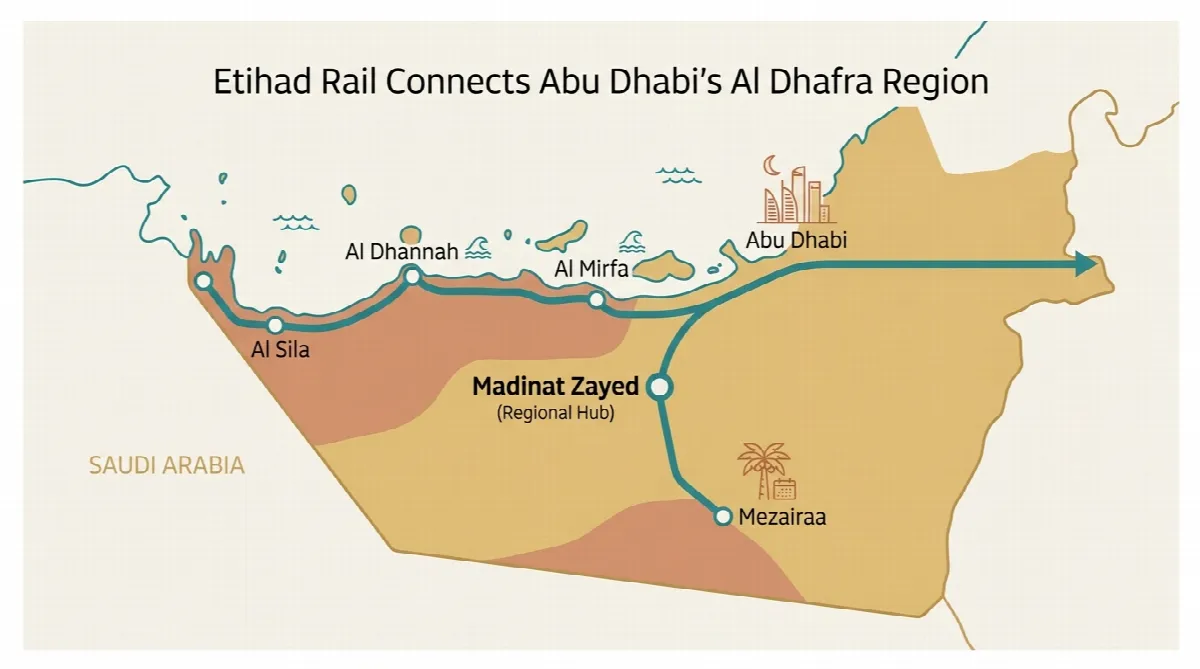
Abu Dhabi Emirate:
- Mohammed Bin Zayed City (previously announced)
- Al Sila (new)
- Al Dhannah (new)
- Al Mirfa (new)
- Madinat Zayed (new)
- Mezairaa (new)
- Al Faya (new)
Dubai Emirate:
- Jumeirah Golf Estates (previously announced)
Sharjah Emirate:
- University City (previously announced)
- Al Dhaid (new)
Fujairah Emirate:
- Al Hilal area (previously announced)
Train Features
Each train accommodates up to 400 passengers across two classes:
| Class | Capacity | Amenities |
|---|---|---|
| Business | 16 seats | Premium seating, added amenities |
| Economy | 56 seats | Comfortable standard seating |
All compartments feature contemporary design, full Wi-Fi connectivity, and power outlets at every seat.
Ten of the 13 trains have already arrived in the UAE and completed testing and certification to international safety standards.
Key Takeaway
Etihad Rail’s seven newly announced stations will transform daily life for residents in Abu Dhabi’s Al Dhafra region and Sharjah’s Al Dhaid area. Communities like Al Sila and Madinat Zayed, which have relied on long drives for decades, will gain direct rail access to Abu Dhabi, Dubai, and other emirates. The network addresses practical needs—commuting, education, healthcare access, family connections—while reducing road congestion and improving safety. Passenger services launch later this year, with fares and schedules still to be announced.
FAQs
Which communities will benefit most from Etihad Rail’s new stations?
Residents in Abu Dhabi’s Al Dhafra region will see the biggest impact, particularly in Al Sila, Al Dhannah, Al Mirfa, Madinat Zayed, and Mezairaa. These communities have relied on long drives for years and will gain direct rail access to major cities. Al Dhaid in Sharjah and Al Faya also receive new stations.
How will Etihad Rail help students in remote areas?
Students from Al Dhafra and other remote regions can potentially commute daily to universities in Abu Dhabi or other emirates rather than relocating. The rail network provides faster, safer travel that makes education access more practical while allowing students to remain with their families.
When will Etihad Rail passenger services start?
Passenger services are expected to begin later this year (2026), with stations opening in phases. Ten of 13 trains have already arrived and been certified. Full operational details including fares and schedules will be announced closer to launch.
What views will passengers see on Etihad Rail?
The network passes through diverse UAE landscapes including Abu Dhabi’s golden sand dunes and the Hajar Mountains. A senior Etihad Rail official described it as a “lovely experience” combining practical transport with scenic travel through areas rarely seen from ground level.
How will people reach Etihad Rail stations in remote areas?
Transport integration is planned at each station, with local bus networks providing last-mile connectivity. Abu Dhabi stations will connect with the emirate’s bus network, while Dubai stations integrate with Metro, buses, and taxi services through unified nol card ticketing.
Further Reading
The UAE week, every Monday
The week's stories on jobs, visas, money and daily life in one short email. Unsubscribe in one click.