Etihad Rail Creates 9,000 Jobs by 2030: UAE Railway Economic Impact
Etihad Rail to generate AED 200bn economic opportunities and 9,000 jobs by 2030. Analysis of UAE railway project’s impact on economy, employment, and growth.
By Vadim Kouznetsov, published

The UAE’s ambitious Etihad Rail project represents far more than a transportation upgrade—it’s an economic catalyst set to create over 9,000 new jobs by 2030 whilst generating AED 200 billion in economic opportunities. As the national railway prepares for its 2026 passenger service launch, the ripple effects across employment, industry, and economic diversification are already reshaping the UAE’s future.
Railway Project Generates Massive Economic Returns
The Abu Dhabi-Dubai passenger line alone is expected to contribute up to AED 145 billion to the UAE’s GDP over the coming decades, according to Emirates News Agency estimates. By 2030, the wider national rail network is projected to add AED 3.5 billion annually to the economy, delivering an impressive economic return rate of 15.5%.
Launched as part of the UAE’s “Projects of the 50” initiative with an investment of AED 50 billion, the UAE Railway Programme serves as a long-term strategy connecting all seven emirates through a comprehensive national rail network.
Employment Creation Spans Multiple Sectors
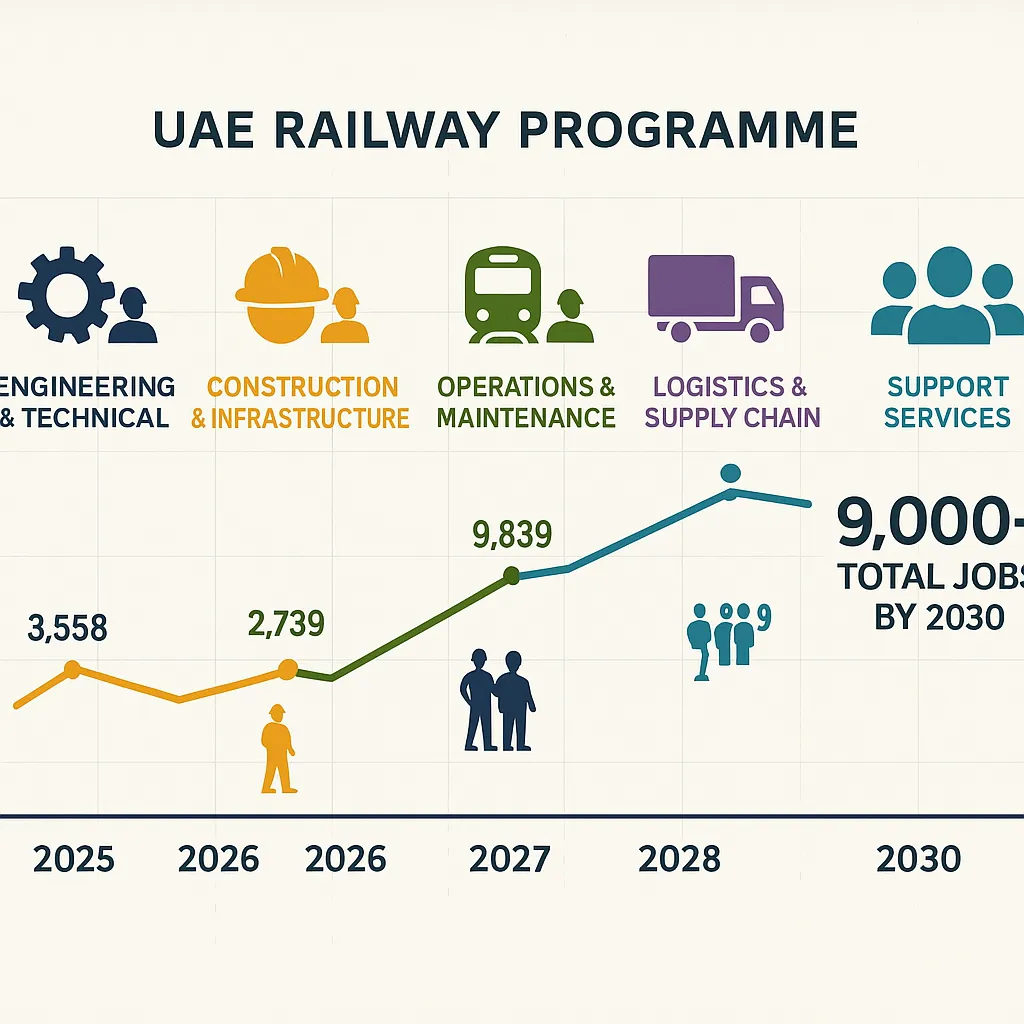
Etihad Rail is creating employment opportunities across diverse sectors, with more than 9,000 new positions expected by 2030. These roles encompass:
Engineering and Technical Roles: Railway design, systems engineering, electrical engineering, and signal technology specialists.
Construction and Infrastructure: Track laying, station construction, depot development, and civil engineering positions.
Operations and Maintenance: Train drivers, conductors, maintenance technicians, and control centre operators.
Logistics and Supply Chain: Freight coordination, warehouse management, and transportation planning roles.
Support Services: Customer service, security, administration, and facility management positions.
The project has already employed tens of thousands during its construction phase, with effects spreading across supply chains, manufacturing facilities, and service sectors throughout the UAE.
Skills Development and Training Programmes
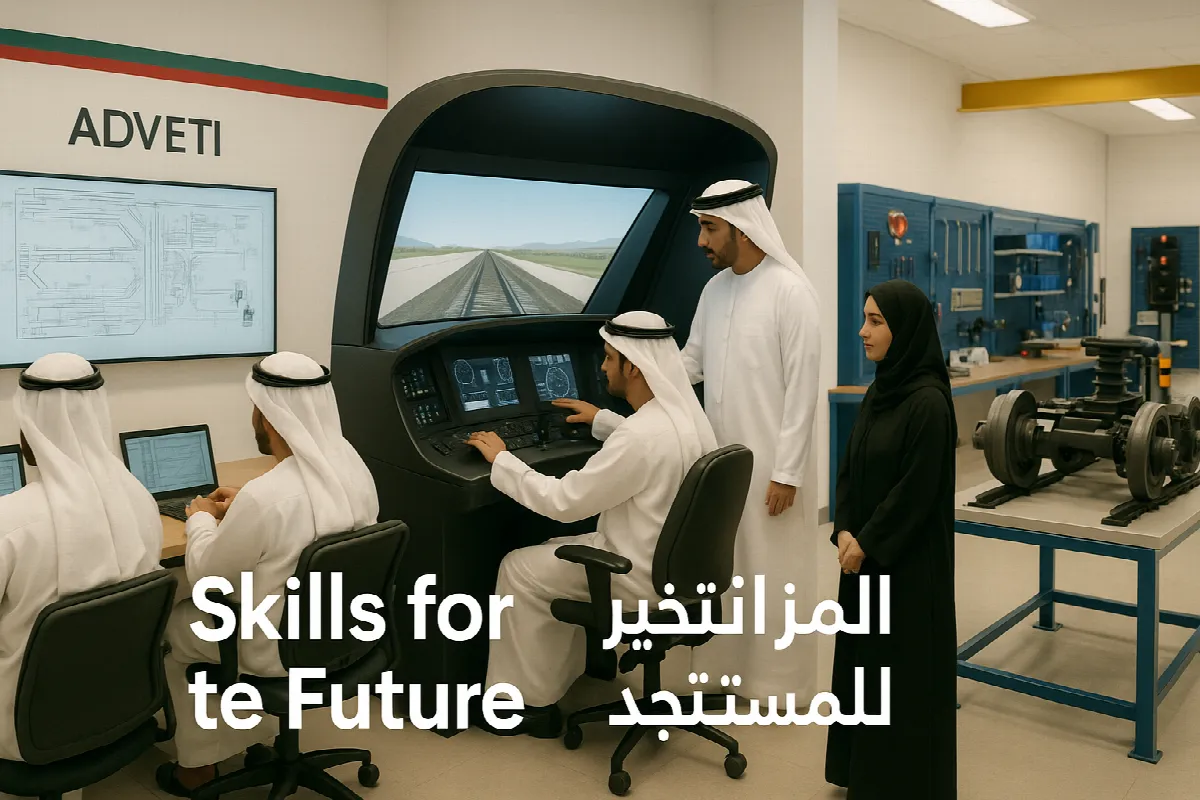
Partnerships with institutions like ADVETI (Abu Dhabi Vocational Education and Training Institute) are preparing the next generation of Emiratis for lifelong careers in transport and engineering sectors. The development of local industries, including factories manufacturing railway sleepers and related materials, has already generated hundreds of additional roles.
“It’s not just a railway—it’s a legacy project that’s building a completely new labour base for the nation,” according to an Etihad Rail spokesperson.
Economic Diversification Through Rail Infrastructure
The railway project serves as a powerful lever for economic diversification, reducing the country’s dependence on oil by creating new pathways for commerce, logistics, and sustainable infrastructure development.
Business travel efficiency improvements and reduced transportation costs for goods and people will benefit both residents and industries. The project is expected to boost tourism, reduce road congestion, and support property value growth in areas surrounding future stations.
Environmental Benefits Drive Green Economy Jobs
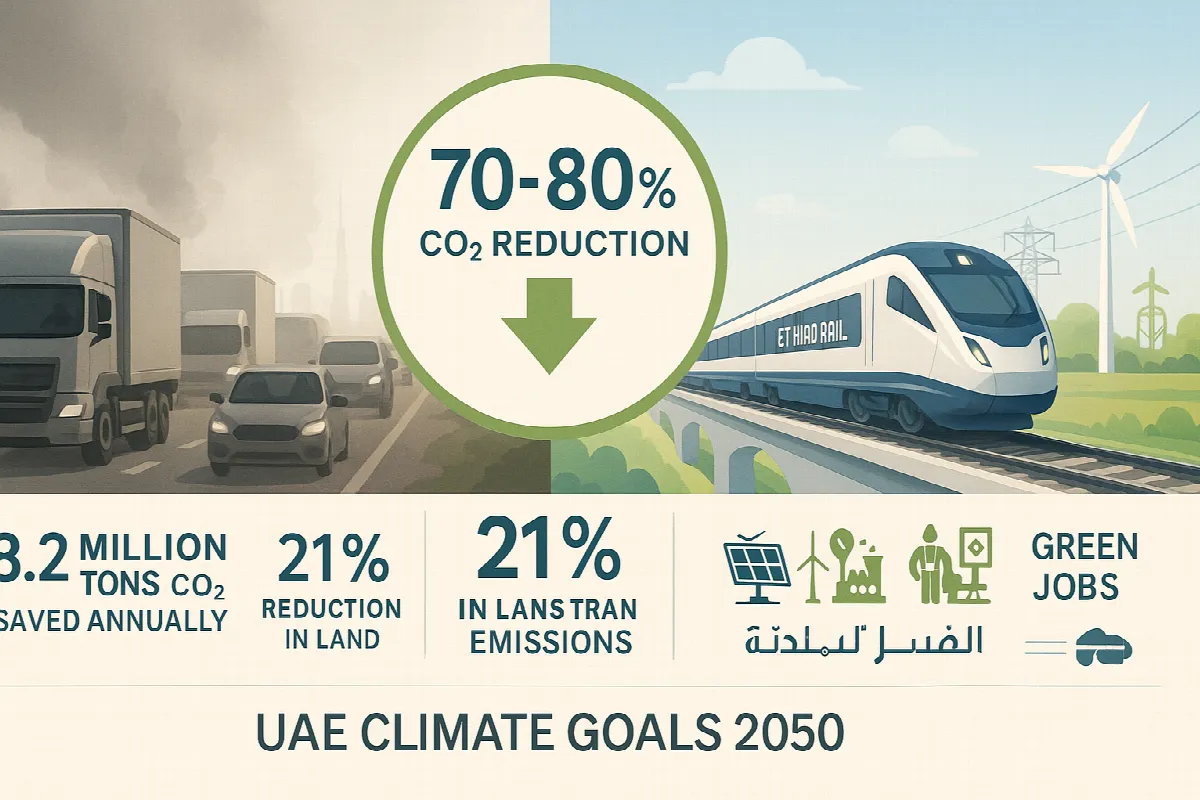
Electric-powered trains are expected to remove thousands of trucks and cars from UAE highways, reducing carbon emissions and aligning with the country’s climate goals. According to the official UAE Government portal, the UAE Railway Programme aims to reduce 70% to 80% of carbon emissions over the next 50 years.
This environmental focus creates additional employment opportunities in:
- Renewable energy systems for railway operations
- Environmental monitoring and compliance roles
- Sustainable technology development positions
- Green maintenance and operations procedures
Regional Connectivity Expands Job Market
Etihad Rail’s connection to the broader Gulf Cooperation Council railway network, including the Hafeet Rail project linking UAE with Oman’s Sohar port, creates cross-border employment opportunities and regional economic integration.
The railway network includes:
- 11 cities and regions across the UAE connected by passenger service
- Four strategic ports: Ruwais, Khalifa, Jebel Ali, and Fujairah
- 11 freight terminals supporting logistics operations
- International partnerships with companies including SNCF International, Alstom, Progress Rail, and Thales Group
Monthly Breakdown of Project Employment Growth
Construction Phase (2023-2025): Peak employment during infrastructure development, with thousands of workers engaged in track laying, station construction, and systems installation.
Pre-Launch Phase (2025-2026): Recruitment and training of operational staff, including train operators, maintenance teams, and customer service personnel.
Operational Phase (2026 onwards): Full employment complement across all railway operations, with continued growth as network expands and passenger volumes increase.
Industry Expert Insights on Employment Impact
The railway project’s employment creation extends beyond direct rail jobs. Supply chain development, tourism growth, and enhanced business connectivity create multiplier effects throughout the economy.
Companies involved in railway equipment manufacturing, maintenance services, and logistics operations are establishing UAE operations to support the project, bringing additional skilled positions and technology transfer opportunities.
Future Career Pathways in Railway Sector
For professionals considering careers in the expanding transport sector, Etihad Rail offers pathways across multiple skill levels and specialisations. Explore JobXDubai’s comprehensive work guide for the UAE and discover opportunities in Dubai’s future careers landscape.
The project aligns with broader employment trends, including the 69% surge in blue-collar jobs across the UAE, creating opportunities for both skilled technicians and engineering professionals.
Expected Passenger Service Impact
When passenger services launch in 2026, the railway will accommodate 36.5 million passengers annually, creating sustained employment in customer service, operations, and maintenance roles. The 57-minute journey time between Abu Dhabi and Dubai demonstrates the service’s transformational potential for inter-emirate commuting and business travel.
Key passenger service features supporting employment include:
- Door-to-door service integration requiring coordination staff
- Multi-class service needing specialised customer service teams
- High-speed operations demanding skilled technical operators
- Station management across 11 cities requiring local staffing
Key Takeaway
Etihad Rail represents a transformational economic project creating over 9,000 jobs by 2030 whilst generating AED 200 billion in economic opportunities. The railway project extends beyond transportation to drive employment across engineering, construction, operations, and green technology sectors, positioning the UAE as a leader in sustainable infrastructure development and regional connectivity.
Further Reading
The UAE week, every Monday
The week's stories on jobs, visas, money and daily life in one short email. Unsubscribe in one click.