Dubai Smart Rental Index: How Tenants Are Blocking Unfair Rent Increases
Dubai tenants save thousands using Smart Rental Index to challenge rent increases. Learn how to check if your landlord’s proposed hike is actually legal.
By Vadim Kouznetsov, published

When Dubai tenant Jasim Mohammed received a rent increase notification for his Al Quoz apartment, he did something that is becoming increasingly common: he checked the Dubai Land Department’s Smart Rental Index.
His rent had risen from Dh48,000 to Dh56,700 over three years. His real estate office proposed another increase to Dh63,000 for his March 2026 renewal.
The Smart Rental Index result? The building was not eligible for a rent increase. The amount was marked “not applicable.”
He replied to the real estate office with a screenshot of the index result. Their response was immediate: the rent was retained at Dh56,700.
This scenario is playing out across Dubai as tenants discover they can challenge proposed rent hikes using official, building-specific data.
What Is the Dubai Smart Rental Index?
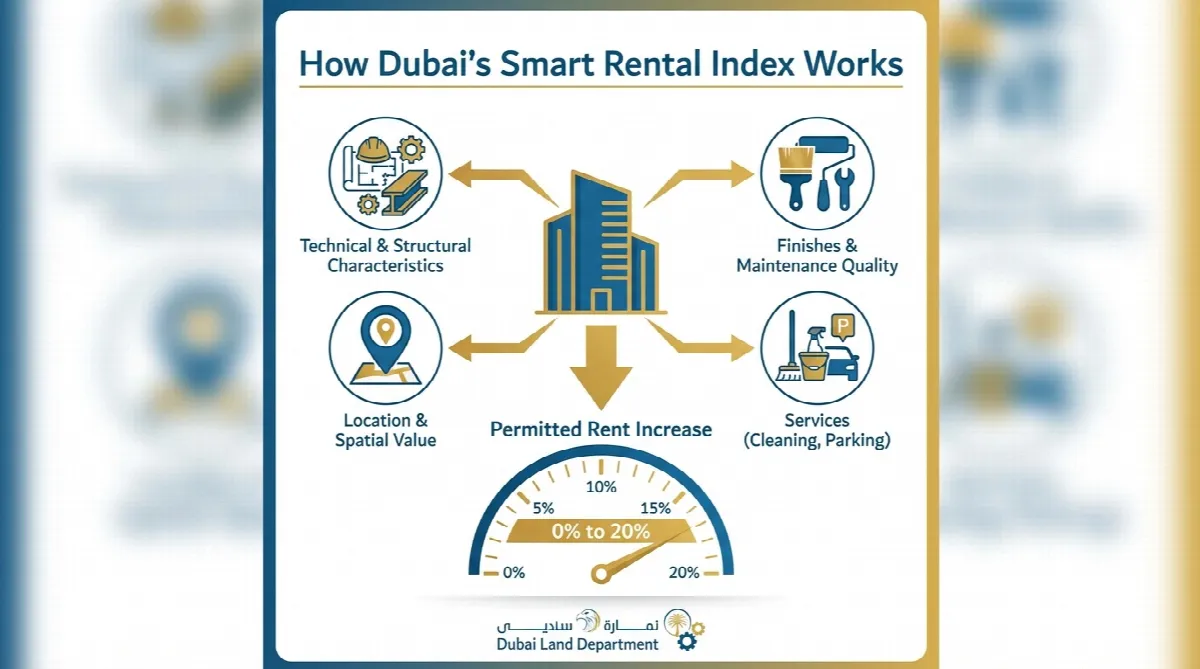
The Smart Rental Index was launched by the Dubai Land Department to bring transparency to rental negotiations. Unlike the previous system that relied on neighbourhood averages, this index evaluates individual buildings.
The classification considers:
- Technical and structural characteristics of the property
- Finishes and maintenance quality
- Location and spatial value
- Services such as cleanliness and parking management
Rent increases are determined by the gap between a tenant’s current rent and the average market rent for that specific building. Increases range from 0% (when rent is within 10% of market average) up to 20% (when rent is more than 40% below market average).
How Are Tenants Using the Index to Negotiate?
Property managers and real estate agents confirm the index has fundamentally changed renewal discussions.
Niral Jhaveri, Director of Property Management at Better Homes, told Khaleej Times: “In many leasehold buildings, there have been no significant increases, or rents have remained the same for certain unit types. The RERA calculator now allows users to select a specific building name and evaluate data for that property to determine any permissible increase.”
Shabna Ibrahim, a property manager, said: “I have been seeing a lot of tenants getting rent increase notices and replying with screenshots of current rental index and hence no actual increase.”
The shift from assumption-based pricing to data-driven negotiations benefits both parties. Karamfila Jaknouz, Head of Commercial at A1 Properties, explained: “Pricing is no longer driven by asking rents or assumptions, but by real, registered transactions, which leads to fairer negotiations.”
Real Example: Dh225,000 Dropped to Dh205,000
The impact is measurable. Jaknouz shared one example: “We’ve seen proposed renewals (for an apartment in Dubai Marina) drop from around Dh225,000 to Dh205,000 once the rental index was applied.”
That represents a Dh20,000 saving—simply because the tenant checked the official index before negotiating.
She noted landlords are responding practically: “We’ve seen landlords revise or pause increases once the index showed lower permissible adjustments, choosing stability over vacancy.”
How Does the RERA Rent Increase Calculator Work?
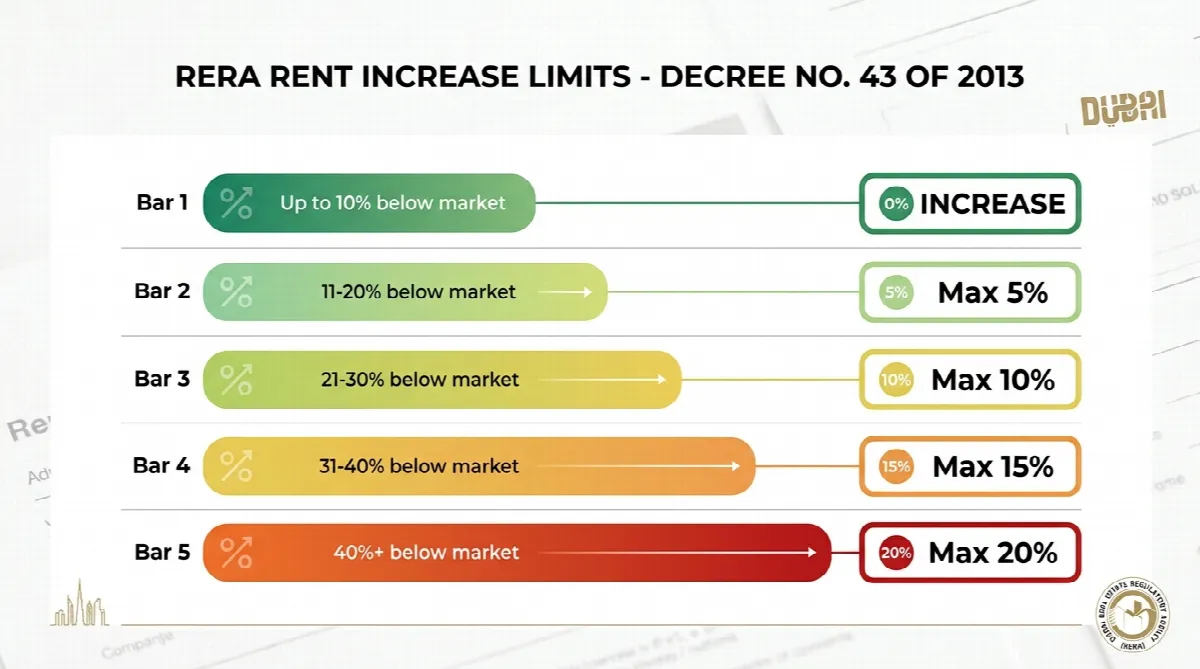
Under Dubai’s rent increase regulations, the permitted increase depends on how your current rent compares to market average:
| Current Rent vs Market Average | Maximum Permitted Increase |
|---|---|
| Up to 10% below | 0% (no increase allowed) |
| 11-20% below | 5% |
| 21-30% below | 10% |
| 31-40% below | 15% |
| More than 40% below | 20% |
The Smart Rental Index determines which category your property falls into based on actual registered transactions—not landlord assumptions or neighbour hearsay.
Step-by-Step: How to Check the Smart Rental Index
Before your next renewal negotiation, follow these steps:
1. Access the RERA Rental Index
Visit the Dubai Land Department’s rental index calculator through the Dubai REST app or DLD website.
2. Select Your Building
The system allows you to search by building name rather than just neighbourhood. This building-specific data is what makes the new index more accurate.
3. Review the Permitted Increase
The calculator will show whether any rent increase is permissible and the maximum percentage allowed.
4. Document the Result
Screenshot or save the result. This becomes your evidence for negotiation.
5. Present to Your Landlord
Share the index result with your landlord or property management office. As Jasim’s case shows, many respond immediately when presented with official data.
What If Your Landlord Refuses to Accept the Index Result?
Dubai rental laws protect tenants from increases that exceed RERA guidelines. If negotiations fail:
File with the Rental Dispute Centre: You can submit a case requesting the judge to determine fair rent based on the index.
Document everything: Keep all communication with your landlord in writing, including emails and messages about the proposed increase.
Know the notice requirements: Landlords must provide 90 days’ notice for any rent increase.
Why This Matters for Dubai’s 2026 Rental Market
Rents in Dubai are forecast to rise 4-6% in select areas during 2026 as population growth continues outpacing new supply.
However, the Smart Rental Index is changing how those increases affect existing tenants. While headline rental growth persists in high-demand communities, the use of official building-level data is moderating increases during renewals.
Jaknouz summarised the shift: “Tenants gain clarity, while landlords gain efficiency, and the market benefits from long-term stability.”
Tips for Tenants Facing Renewal in 2026
Real estate experts recommend the following approach for contract renewals:
Check the index before responding to any increase notice. The data may show your building is not eligible for an increase at all.
Review recent transactions in your building. The index reflects actual registered deals, giving you real-world negotiating leverage.
Approach negotiations with data rather than emotion. Screenshots of index results are more effective than arguments about what neighbours pay.
Consider the landlord’s perspective. Many prefer stability over vacancy. A reasonable negotiation based on official data often leads to agreement.
Know your rights under Decree No. 43 of 2013. The law caps increases at specific percentages based on market comparison.
Key Takeaway
Dubai’s Smart Rental Index has transformed how tenants negotiate rent increases. By using building-specific data from the Dubai Land Department, tenants can verify whether proposed increases are permissible—and often find they are not. In documented cases, tenants have retained existing rents or reduced proposed increases by Dh20,000 simply by presenting index results. Before accepting any rent increase for your 2026 renewal, check the Smart Rental Index first.
FAQs
How do I check if my rent increase is legal in Dubai?
Use the Dubai Land Department’s Smart Rental Index through the Dubai REST app or DLD website. Enter your building name to see whether any increase is permitted and the maximum percentage allowed based on your current rent compared to market average.
Can my landlord increase rent if the index shows no increase is allowed?
No. Under Decree No. 43 of 2013, landlords can only increase rent in accordance with the RERA rental index. If the index shows “not applicable” or 0%, your landlord cannot legally raise your rent regardless of market conditions or what neighbours pay.
What should I do if my landlord ignores the rental index result?
Document the index result and all communication with your landlord. If they proceed with an unlawful increase, file a case with the Rental Dispute Centre. The centre can determine fair rent based on official data and issue a binding ruling.
When must my landlord notify me about a rent increase?
Landlords must provide 90 days’ notice before your contract expiry date for any changes to rental terms, including increases. If notice is given later than this, you can challenge the increase on procedural grounds.
Does the Smart Rental Index apply to all properties in Dubai?
Yes. The index covers residential properties across Dubai and evaluates each building individually based on its characteristics, maintenance, location, and services. This building-specific approach replaced the previous neighbourhood-average system.
Further Reading
The UAE week, every Monday
The week's stories on jobs, visas, money and daily life in one short email. Unsubscribe in one click.