Does Your Commute Count as Working Hours in UAE? MoHRE Clarifies
MoHRE clarifies when commuting counts as working hours in UAE. Learn the 3 exceptions for weather, breakdowns, and contract terms under labour law.
By Vadim Kouznetsov, published

The Ministry of Human Resources and Emiratisation has confirmed that travel time between home and work typically falls outside working hours—with three key exceptions you should know about.
If you’ve ever wondered whether sitting in Dubai traffic or waiting for the company bus counts as part of your workday, you’re not alone. MoHRE has released clear guidance on exactly when commuting qualifies as paid working hours under UAE labour law.
The General Rule
Your daily travel between home and the office? That’s your personal time, not working hours.
This applies whether you drive yourself, take public transport, or use employer-provided transportation under normal conditions.
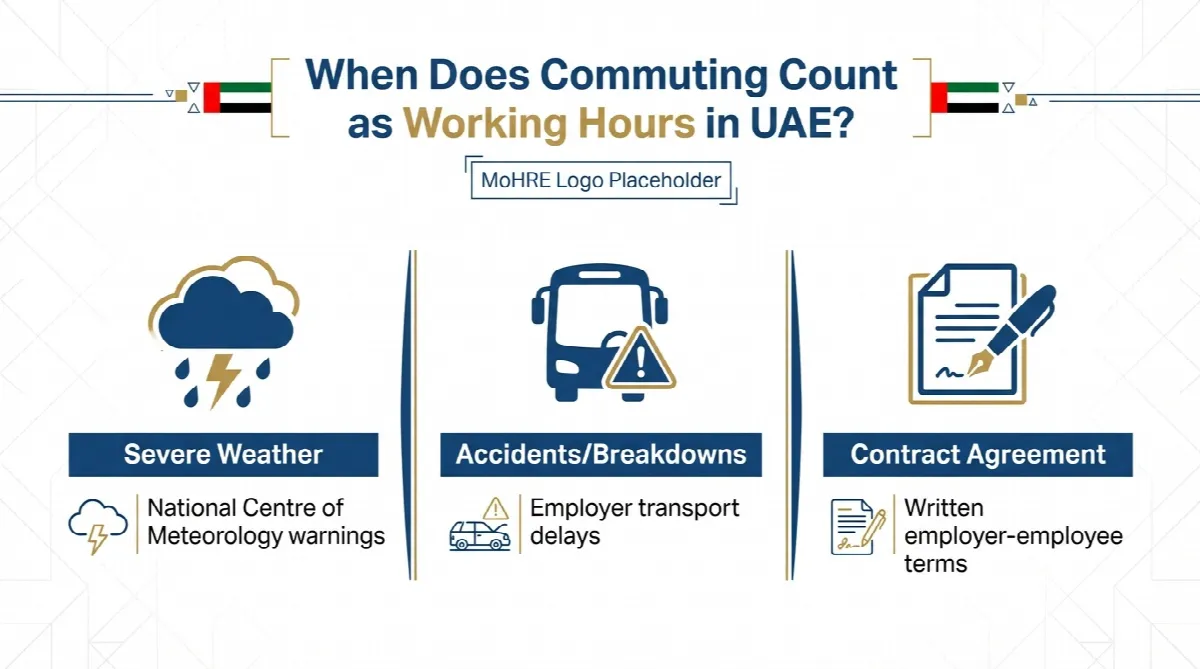
Three Exceptions That Change Everything
MoHRE has identified specific situations where commuting time does count toward your working hours.
1. Severe Weather Conditions
When the National Centre of Meteorology issues weather warnings about dangerous conditions, travel time in employer-provided transport becomes part of your working hours.
This protection activates during:
- Sandstorms and dust storms
- Heavy rainfall
- Extreme temperature warnings
- Any official weather instability alerts
Given the extreme temperatures UAE experiences, this exception carries real significance for workers.
2. Traffic Accidents or Breakdowns
If your employer-provided transport gets delayed due to:
- A traffic accident
- An emergency vehicle breakdown
The time spent waiting counts as working hours. This protects employees from losing personal time due to circumstances beyond their control.
3. Employment Contract Agreement
Here’s one many workers overlook—you can negotiate commuting time into your employment contract.
If both you and your employer explicitly agree that travel time counts as working hours, it becomes legally binding. This is worth considering when reviewing or negotiating your employment contract.
What About Overtime?
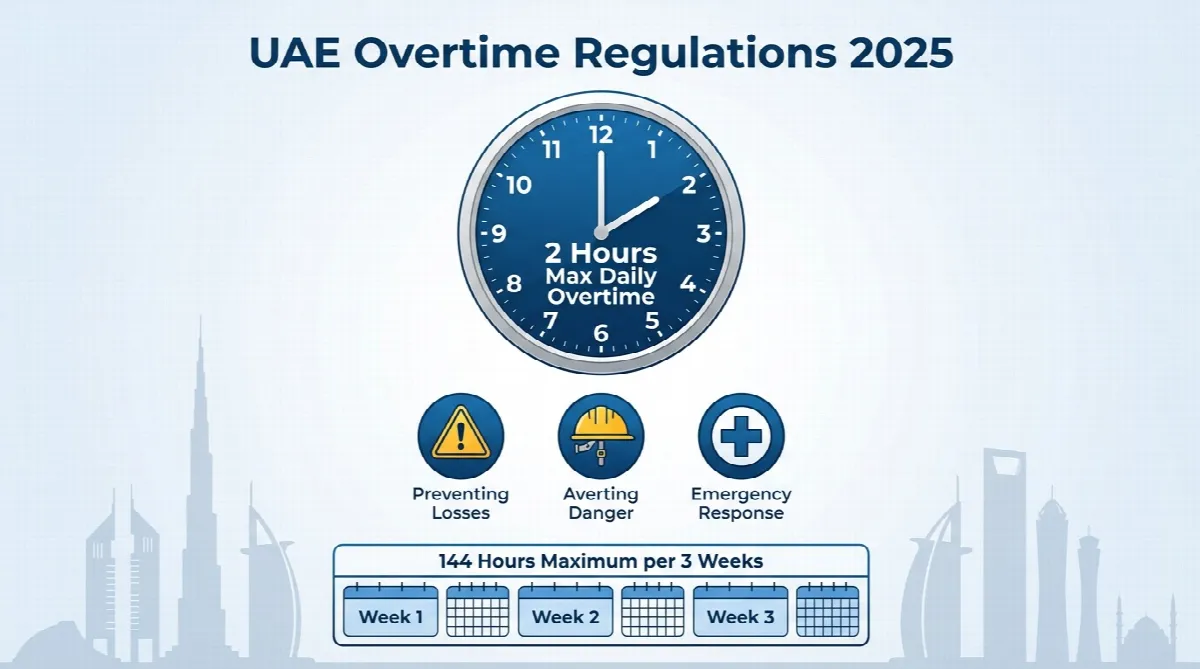
MoHRE also reminded employers about overtime regulations. Companies can require employees to work beyond standard hours, but overtime cannot exceed two additional hours daily.
Exceptions exist for:
- Preventing serious business losses
- Averting dangerous incidents
- Managing emergency situations
Even with these exceptions, total working hours must stay within 144 hours across any three-week period.
Employer Responsibilities During Bad Weather
MoHRE issued a clear directive to private sector companies: take occupational health and safety seriously during severe weather.
Employers must:
- Follow guidance from local emirate authorities
- Implement necessary safety precautions
- Adjust operations based on weather impact assessments
Understanding UAE labour laws helps you know exactly what protections you’re entitled to.
Tas’heel System for Worker Transfers
The ministry also outlined electronic procedures through the Tas’heel system for transferring workers between establishments.
The process requires:
- Online application submission
- Establishment and job offer reference numbers
- Electronic signature card selection
- Valid passport (minimum six months validity)
- Required document uploads
- Electronic payment completion
Key Takeaway
Your commute generally isn’t paid time in the UAE, but three exceptions protect you: severe weather in employer transport, accidents or breakdowns during company-provided travel, and explicit contract agreements. Know your rights and consider negotiating commute terms in your employment contract.
Frequently Asked Questions
Does commuting count as working hours in UAE?
No, time spent travelling between your home and workplace does not count as working hours under UAE labour law. MoHRE has confirmed this applies regardless of your transport method under normal conditions.
When does commuting become part of working hours in UAE?
Commuting counts as working hours in three situations: during severe weather warnings while using employer-provided transport, when employer transport is delayed by accidents or breakdowns, or when your employment contract specifically includes commuting time.
Can I negotiate for commuting time to be paid in UAE?
Yes. If both you and your employer agree to include commuting time as working hours in your employment contract, this becomes legally binding. This is an option worth exploring during contract negotiations.
What happens if my company bus breaks down in UAE?
If employer-provided transport experiences an emergency breakdown, the delay counts as working hours. The same applies if the company vehicle is involved in a traffic accident.
How many overtime hours are allowed per day in UAE?
UAE law permits employers to require up to two additional hours of overtime per day. Total working hours must not exceed 144 hours over any three-week period.
What are employers required to do during bad weather in UAE?
Private sector employers must implement occupational health and safety measures during severe weather. They must also comply with guidance issued by relevant local authorities in each emirate.
What is the Tas’heel system in UAE?
Tas’heel is MoHRE’s electronic platform that allows employers to complete various HR processes online, including requesting permission to transfer workers between establishments.
Further Reading
The UAE week, every Monday
The week's stories on jobs, visas, money and daily life in one short email. Unsubscribe in one click.