UAE VPN Downloads: 6M in 6 Months & 65.78% Adoption Rate
UAE leads global VPN adoption at 65.78% with 6M downloads in 2025 H1. Legal guidelines, penalties up to Dh2M, and population correlation.
By Vadim Kouznetsov, published
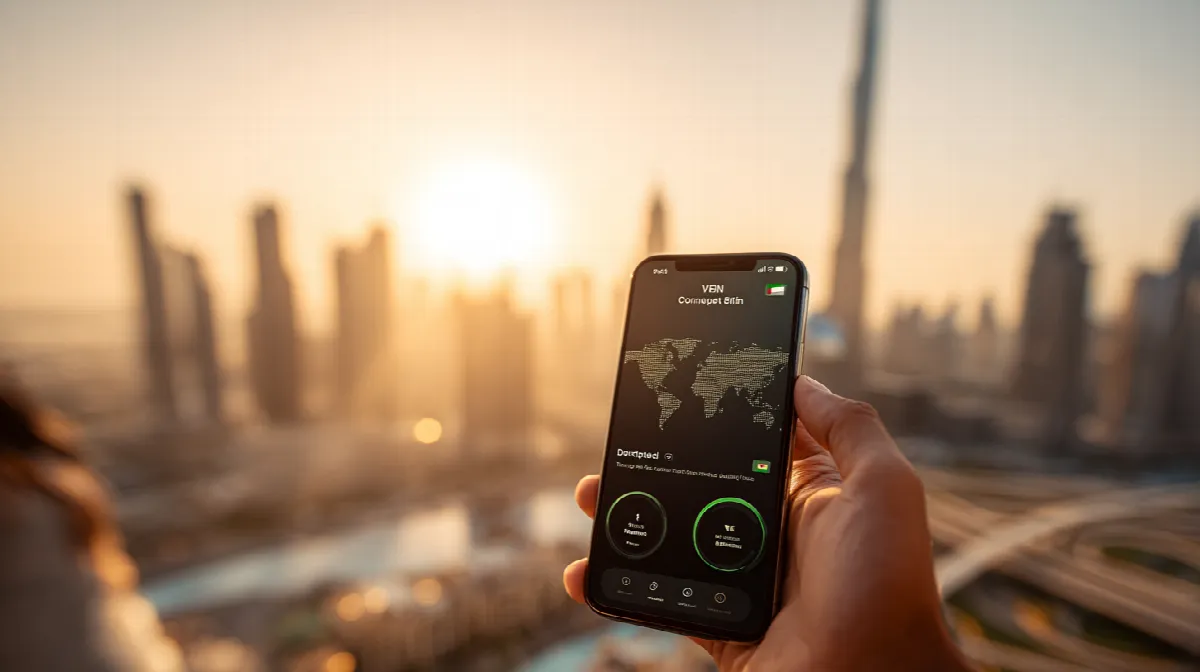
The UAE has recorded the highest VPN adoption rate globally over the past five and a half years at 65.78%. Between January and June 2025 alone, residents downloaded 6.11 million VPN applications.
According to Cybernews research, this puts the Emirates far ahead of Qatar (55.43%), Singapore (38.23%), and other nations in virtual private network usage. If current trends continue, 2025 downloads are on track to surpass last year’s 9.2 million installations.
The surge in VPN adoption coincides with the UAE’s record population growth, which reached 11.44 million according to Worldometer data. More residents mean more people seeking connectivity solutions.
Why VPN Downloads Keep Rising in the UAE
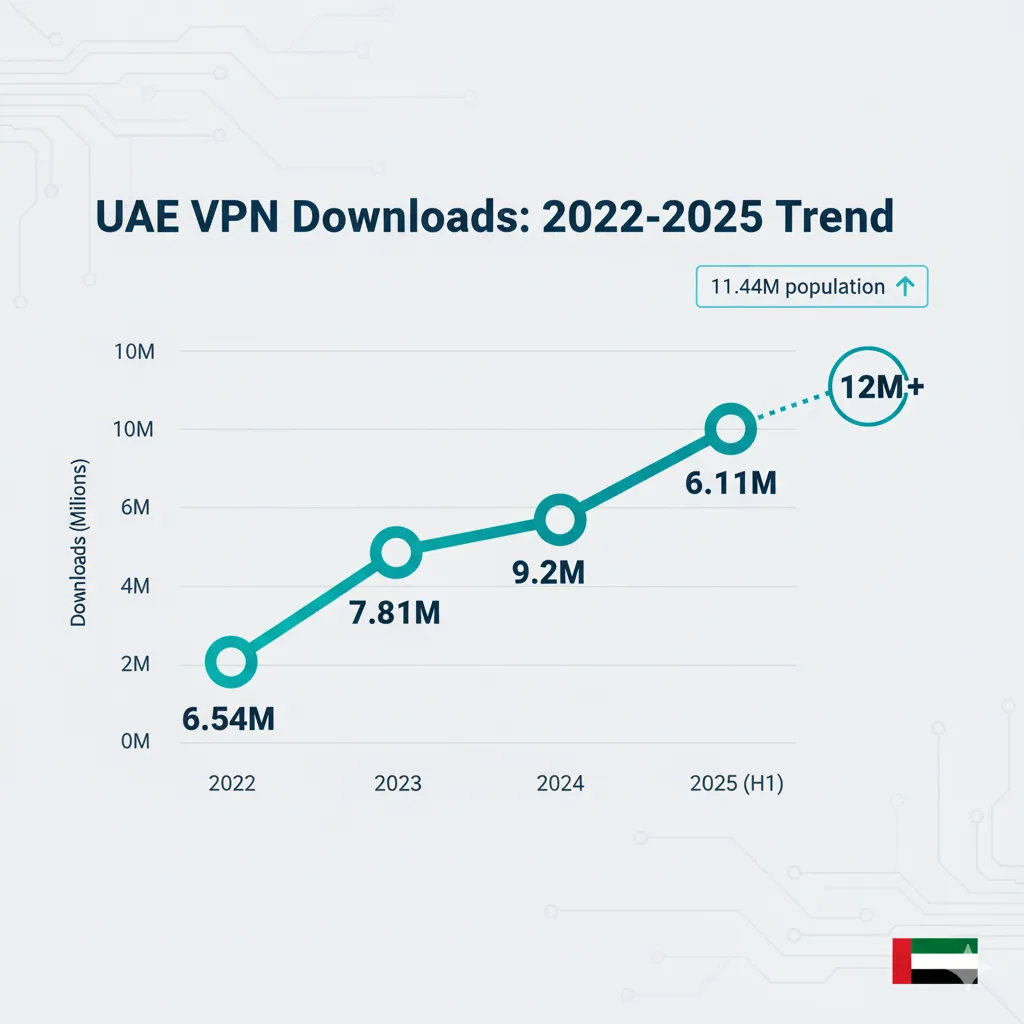
Between 2020 and the first half of 2025, VPN adoption has grown steadily across the Emirates. Download figures tell the story:
- 2025 (first six months): 6.11 million downloads
- 2024: 9.2 million downloads
- 2023: 7.81 million downloads
- 2022: 6.54 million downloads
Several factors drive this consistent growth. Voice over Internet Protocol (VoIP) service restrictions play a significant role. Platforms like WhatsApp calling, Skype, and FaceTime face limitations in the UAE, pushing residents towards VPN solutions for international communication.
The rapidly growing expatriate population, which makes up approximately 88.5% of the UAE’s residents, needs regular contact with family and friends abroad. Free calling apps often provide the most practical solution for maintaining these connections without incurring expensive international calling charges.
Privacy concerns also factor into adoption rates. Digitally connected UAE residents increasingly value secure connections when accessing banking services, shopping platforms, and work systems remotely.
The GCC Dominates Global VPN Rankings
Data compiled from Apple’s App Store and Google Play reveals that Gulf nations dominate VPN usage statistics globally. The top ten includes multiple Middle Eastern countries:
- UAE – 39.6%
- Qatar – 39.6%
- Oman – 36.7%
- Nauru – 33.2%
- Singapore – 27.5%
- Saudi Arabia – 19.7%
- Netherlands – 15.6%
- UK – 15.4%
- Maldives – 15%
- Jordan – 14.9%
Cybernews attributes the high GCC adoption rates primarily to VoIP service restrictions. When standard communication platforms face limitations, residents naturally seek alternative connectivity methods.
The research also found that VPN usage rises globally wherever internet censorship and privacy concerns exist. Regions with strong state-level internet restrictions show the highest adoption rates, particularly across the Middle East.
By contrast, Africa recorded the lowest VPN usage, with none of its 21 surveyed nations entering the top 50 rankings. Eight of the ten countries with the lowest adoption rates were African.
Legal Boundaries: When VPN Use Becomes Illegal
VPN applications themselves are not banned in the UAE. Residents can legally download and use VPN services. However, misuse carries severe consequences.
Federal Decree Law No. 34 of 2021 on combatting rumours and cybercrimes makes it a serious offence to use VPNs for illegal purposes. This includes committing crimes, concealing IP addresses to access blocked websites, or using unauthorised calling apps and gaming platforms.
UAE residents who violate VPN laws face imprisonment and fines ranging from AED 500,000 to AED 2 million. These penalties reflect how seriously authorities treat cybercrime and internet misuse.
The law distinguishes between legitimate use and misuse. Companies regularly use VPNs to access internal networks securely, and this remains perfectly legal. Problems arise when individuals use VPNs to bypass restrictions for illegal activities or access prohibited content.
Legal experts emphasise that intent matters. Using a VPN to protect your business communications or access your company’s systems falls within acceptable boundaries. Using one to conceal criminal activity or circumvent lawful restrictions does not.
How UAE Enforcement Actually Works
The Telecommunications and Digital Government Regulatory Authority (TDRA) confirmed in July 2016 that companies, institutions, and banks can use VPNs for legitimate business purposes. This clarification helps businesses operate securely without fear of prosecution.
For individual residents, the situation requires more care. Personal VPN use isn’t explicitly forbidden, but users must avoid activities that breach UAE regulations. The responsibility falls on individuals to understand what constitutes acceptable use.
Authorities focus on how VPNs are used rather than which specific services people choose. There’s no official approved list of VPN providers. This approach means users need to understand the law and act accordingly, regardless of which VPN application they download.
The broader context of UAE cybercrime laws shows consistent enforcement. From social media regulations to financial fraud protections, the Emirates maintain clear rules about digital behaviour and enforce them actively.
What This Means for UAE Professionals and Residents
The high VPN adoption rate reflects practical needs rather than illegal activity. Most UAE residents use VPNs for legitimate purposes—staying connected with family abroad, securing work communications, or protecting personal data on public networks.
Professionals working in the UAE’s tech sector often require VPN access for remote work, accessing company servers, or collaborating with international teams. This legitimate business use accounts for significant portions of VPN traffic.
The correlation between population growth and VPN downloads makes sense. Dubai’s population heading towards 4 million by 2026 means thousands of new residents arrive monthly, many bringing existing VPN subscriptions or downloading services shortly after arrival.
For expatriates settling in the UAE, understanding VPN legality matters as much as knowing visa requirements or employment law. The difference between acceptable and prohibited use can carry significant financial and legal consequences.
Privacy vs Restrictions: The Ongoing Balance
The UAE’s digital infrastructure ranks among the world’s most advanced. Investment in technology and digital transformation continues expanding, from facial recognition systems to comprehensive digital identity programmes.
This technological advancement creates interesting tensions. Residents want privacy and secure communications. Authorities want to maintain security and enforce regulations. VPN usage sits at this intersection.
The consistently high download numbers suggest residents have found this balance acceptable. Nearly 66% adoption means roughly two out of every three UAE residents use VPNs—a statistic that reflects both need and tolerance.
Global trends show VPN usage rising everywhere. Privacy concerns, remote work requirements, and desire for unrestricted communication drive adoption across regions. The UAE simply shows more pronounced adoption due to specific local factors.
FAQs About VPN Usage in the UAE
Can I legally use a VPN in the UAE? Yes, VPN use itself is legal in the UAE. The law prohibits using VPNs for illegal purposes, not the technology itself. Business use for accessing company networks is explicitly permitted by the TDRA. Personal use is acceptable provided you don’t breach regulations by accessing prohibited content or concealing criminal activity.
What exactly counts as illegal VPN use? Illegal use includes committing crimes whilst hiding your IP address, accessing websites blocked by UAE authorities, using unauthorised VoIP calling services, or facilitating any illegal activity. If you’re using a VPN to do something that would be illegal without one, it’s illegal with one too.
Why do so many UAE residents use VPNs? The primary driver is VoIP restrictions. Platforms like WhatsApp calling, Skype video calls, and FaceTime face limitations in the UAE. With nearly 90% of residents being expatriates who need regular international contact, VPNs offer practical communication solutions. Privacy concerns and remote work requirements also contribute to high adoption rates.
What are the actual penalties for VPN misuse? Under Federal Decree Law No. 34 of 2021, violators face imprisonment and fines between AED 500,000 and AED 2 million. The severity reflects how seriously UAE authorities treat cybercrime. These penalties apply when VPNs facilitate illegal activities, not for legitimate use.
How does UAE VPN adoption compare globally? The UAE leads globally with 65.78% adoption over the past five and a half years. Only Qatar comes close at 55.43%. Most countries show adoption rates below 40%, with many under 20%. The GCC region as a whole dominates global rankings due to similar VoIP restrictions and high expatriate populations.
Do employers in the UAE require staff to use VPNs? Many companies require employees to use VPNs when accessing internal systems remotely. This is entirely legal and encouraged for security purposes. Tech companies, financial institutions, and multinational corporations commonly mandate VPN use for remote workers to protect sensitive data and maintain secure connections.
Further Reading:
The UAE week, every Monday
The week's stories on jobs, visas, money and daily life in one short email. Unsubscribe in one click.