UAE Hotel Jobs 2025: 23,000+ Rooms Create Thousands of Positions
Over 23,000 new hotel rooms across UAE will generate 11,500-34,500 jobs. Dubai leads with 12,861 rooms. Discover salary ranges and opportunities.
By Vadim Kouznetsov, published

The UAE hospitality sector is experiencing unprecedented expansion. More than 23,000 new hotel rooms are currently in development across the Emirates, with Dubai accounting for over half of this growth.
This significant supply increase will generate between 11,500 and 34,500 new jobs throughout the country over the coming years, according to Knight Frank’s latest research.
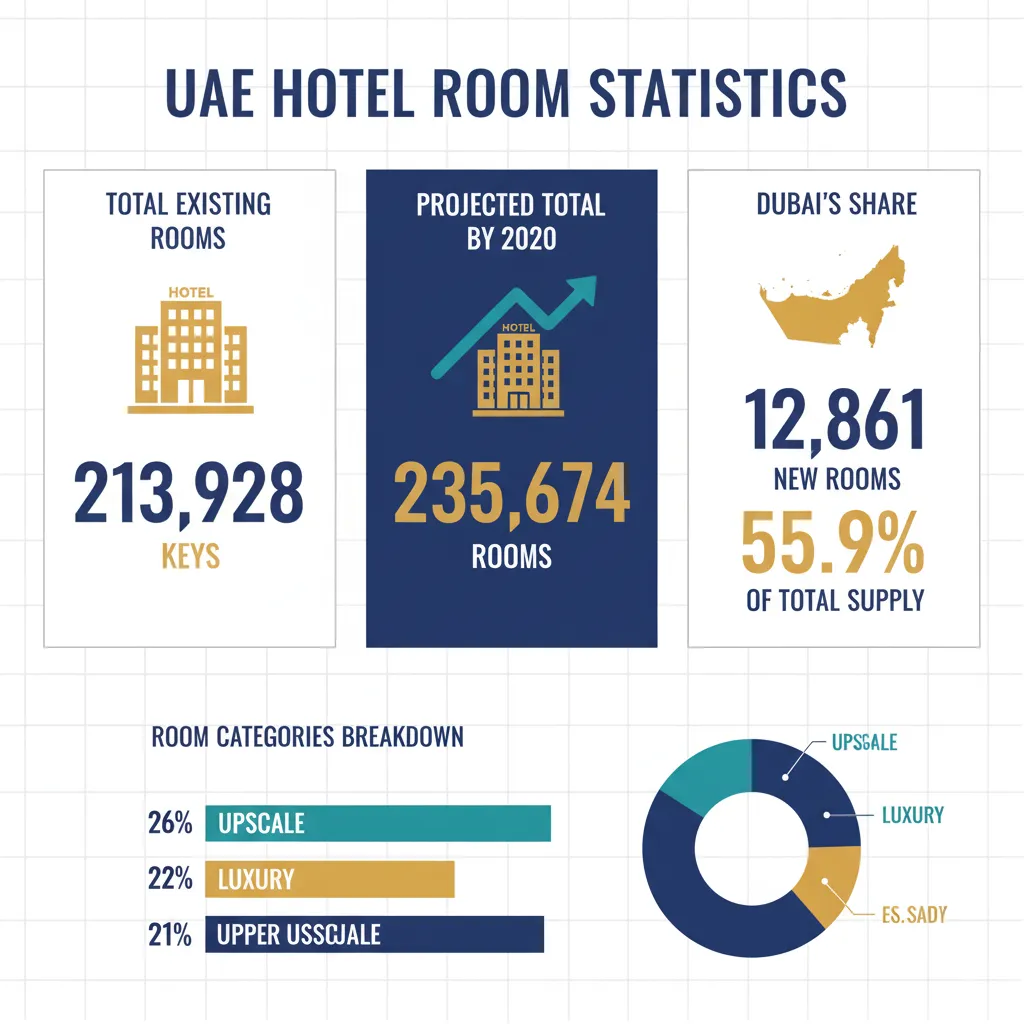
The existing hotel supply stands at 213,928 rooms. By 2030, this figure will rise to 235,674 rooms across 1,184 hotels.
How many hotel rooms is Dubai adding?
Dubai leads the expansion with 12,861 new rooms currently under development. This represents 55.9% of the UAE’s total upcoming hotel supply.
The emirate’s existing inventory of 152,478 rooms will increase to 165,339 by 2030.
As a global luxury destination, the majority of new supply falls within the high-end segment. Current UAE hotel inventory breaks down as follows:
- 26% upscale properties
- 22% luxury establishments
- 21% upper upscale hotels
By the end of 2025, total UAE hotel rooms are expected to reach 217,853—a 3% increase from 2024 levels.
What’s the hotel room distribution across other Emirates?
Abu Dhabi currently operates 37,016 hotel rooms, making it the second-largest hospitality market in the UAE.
Sharjah follows with 14,478 rooms, whilst Ras Al Khaimah offers 11,902 rooms to visitors and residents.
Each emirate contributes to the country’s tourism infrastructure, though Dubai maintains its position as the primary hospitality hub with the majority of new development concentrated there.
How many jobs will the new hotel rooms create?
Job creation varies significantly based on hotel category and service level.
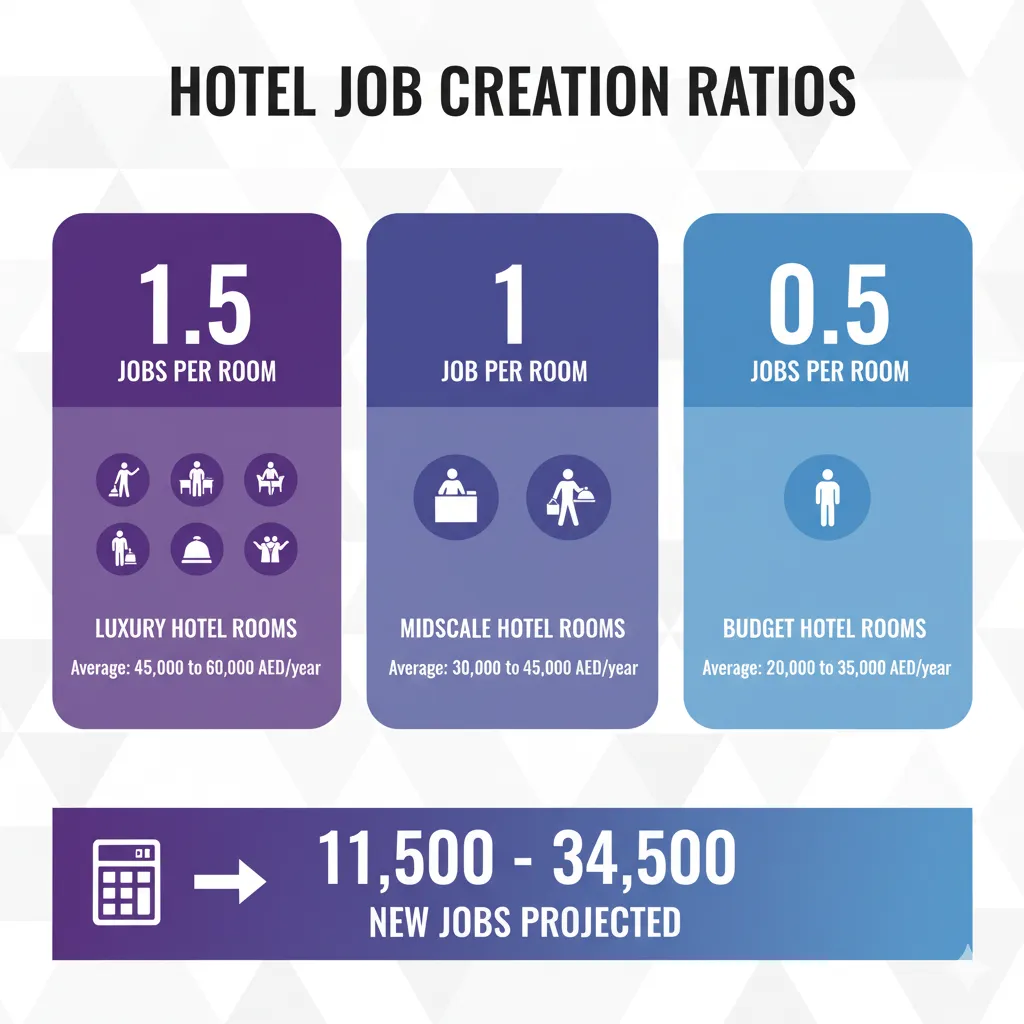
Luxury hotels generate approximately 1.5 positions per room. These roles include housekeeping staff, food and beverage personnel, concierge services, and spa professionals.
Midscale properties create 1 job per room on average. Budget hotels generate 0.5 positions per room.
Based on these ratios and the 23,000+ rooms in the pipeline, the UAE hospitality sector is projected to create between 11,500 and 34,500 new direct and indirect jobs.
Dubai’s 12,861 new rooms alone will generate thousands of positions across multiple departments and service categories.
The UAE hospitality sector continues to offer diverse career opportunities for both local and international professionals.
What types of hospitality jobs will be available?
The expansion creates opportunities across all operational areas:
Guest-facing positions include front desk staff, concierge personnel, and guest relations officers. These roles form the first point of contact for hotel visitors.
Food and beverage departments require chefs, servers, bartenders, and restaurant managers. Fine dining establishments within luxury hotels often seek specialised culinary professionals.
Housekeeping operations need room attendants, supervisors, and laundry staff. Larger hotels employ dedicated teams for each floor or wing.
Spa and wellness facilities create positions for therapists, fitness instructors, and wellness coordinators. High-end properties often feature extensive spa operations.
Back-of-house roles span maintenance, engineering, purchasing, and administrative functions. These positions support daily hotel operations.
For comprehensive guidance on working in the UAE hospitality sector, professionals should research visa requirements and qualification standards.
What’s driving this hotel expansion?
Faisal Durrani, Partner and Head of Research for MENA at Knight Frank, explains: “The hospitality sector in the UAE continues to grow strongly, with record tourist arrivals in cities like Dubai highlighting the emirate’s rise as one of the world’s most visited destinations.”
The government forecasts 22 million tourists will visit Dubai by the end of 2025.
Tourism growth drives consistent demand for accommodation across all price points. Major international events, business conferences, and leisure tourism all contribute to high occupancy rates.
The UAE’s strategic location between Europe, Asia, and Africa positions it as a natural hub for international travel.
Recent initiatives like Abu Dhabi’s tourism development and Dubai’s continued infrastructure investments support sustained growth in the hospitality sector.
How is the hotel investment landscape changing?
The UAE market is transitioning from development-heavy expansion to strategic acquisitions.
“UAE hotel transactions are entering a new phase of maturity, particularly in Dubai, where investor attention is moving from development-led expansion to strategic acquisitions and asset repositioning,” Durrani noted.
This shift reflects a more sophisticated investment landscape shaped by years of rapid growth and deeper institutional capital pools.
Investors now focus on operational enhancements, brand partnerships, and mixed-use integrations rather than purely new construction projects.
Oussama El Kadiri, Partner and Head of Hospitality, Tourism, and Leisure Advisory for MENA at Knight Frank, highlighted Abu Dhabi and Ras Al Khaimah as emerging complementary investment destinations offering leisure-driven opportunities.
The market’s maturity positions the UAE as a leading destination for hospitality capital in the region, attracting diverse investor types from regional family offices to international funds.
What salary ranges can hospitality professionals expect?
Compensation varies significantly based on position, experience, and hotel category.
Entry-level positions in budget and midscale properties typically start around AED 2,500-4,000 monthly for roles like housekeeping staff or junior F&B personnel.
Mid-level positions such as supervisors, senior receptionists, or experienced servers earn between AED 5,000-10,000 monthly.
Management roles including department heads, assistant managers, and specialised positions command AED 12,000-25,000+ monthly.
Senior management positions like general managers at luxury properties can earn AED 35,000-60,000+ monthly, often with comprehensive benefit packages.
For detailed salary information across different sectors, review the complete UAE salary guide for 2025.
What qualifications do hospitality jobs require?
Entry-level positions often require minimal formal qualifications but benefit from previous customer service experience.
Supervisory roles typically need 2-5 years of relevant experience plus demonstrated leadership capabilities.
Management positions usually require hospitality degrees or diplomas combined with 5+ years of progressive experience.
Specialised roles like executive chefs, spa directors, or revenue managers need specific certifications and extensive industry experience.
Language skills provide significant advantages. English proficiency is standard, whilst Arabic, French, Russian, or Chinese create additional opportunities.
The complete guide to working in the UAE covers visa requirements and employment regulations for foreign professionals.
How does the UAE hospitality sector compare regionally?
The UAE leads the GCC region in hospitality development and employment opportunities.
Similar expansions are occurring in Saudi Arabia, where major hotel chains are creating thousands of positions.
However, Dubai’s established infrastructure, international reputation, and tourism volume provide distinct advantages for hospitality professionals.
The emirate’s year-round operations, diverse property types, and established career progression pathways differentiate it from newer hospitality markets.
Projects like Disneyland Abu Dhabi demonstrate continued investment in tourism and entertainment infrastructure across the UAE.
What’s the career growth potential in UAE hospitality?
The sector offers clear advancement pathways from entry-level to senior management positions.
Many international hotel chains operate extensive training programmes supporting professional development. Staff can progress from front-line roles to supervisory and management positions.
The UAE’s position as a global hospitality hub provides exposure to international standards, diverse guest demographics, and luxury service protocols.
Professionals who develop expertise in the UAE market often leverage this experience for regional or international positions within major hotel groups.
The UAE job market trends for 2025 indicate continued strength in tourism and hospitality employment.
Frequently Asked Questions
Do hotel jobs in the UAE provide accommodation?
Many hospitality positions include staff accommodation, particularly at resort properties or when hiring international staff. Budget properties less commonly provide housing, whilst luxury hotels often offer shared accommodation or housing allowances. Employment contracts specify these details before signing.
Can foreigners work in UAE hotels without experience?
Yes, but opportunities concentrate in entry-level positions. Hotels regularly hire foreign nationals for housekeeping, food service, and basic guest services roles. Previous hospitality experience, even from other countries, significantly improves employment prospects. Language skills particularly help candidates secure positions.
What’s the typical work schedule for hotel staff?
Most hotel positions operate on shift systems covering 24-hour operations. Standard shifts last 8-9 hours, often including split shifts or evening/overnight work. Weekly schedules typically provide 1-2 days off, though not always consecutive. Management positions may require longer hours during peak periods.
Are hotel salaries in Dubai higher than other Emirates?
Dubai generally offers slightly higher base salaries compared to other emirates, reflecting higher living costs. However, Abu Dhabi luxury properties often match Dubai rates. Sharjah and other emirates typically pay 10-20% less but offer lower accommodation costs. Total compensation including housing and benefits matters more than base salary alone.
Do UAE hotels sponsor work visas for foreign staff?
Yes, legitimate hotel employers sponsor work visas for foreign employees. The hotel manages the visa process, including entry permits, residence visas, and labour cards. Employees should never pay visa fees themselves—reputable employers cover these costs. Processing typically takes 2-4 weeks after document submission.
What career progression exists in UAE hotel jobs?
Clear advancement pathways exist from entry-level to management. Typical progression moves from staff to senior staff, then supervisor, assistant manager, department head, and senior management. Large hotel groups offer internal transfer opportunities across properties. Professional development programmes support advancement, particularly in international chains.
Which hotel brands are hiring most actively in UAE?
Major international chains including Marriott, Hilton, IHG, Accor, and Rotana maintain active recruitment across the UAE. Local brands like Jumeirah and emerging boutique properties also hire regularly. New hotel openings generate bulk hiring several months before launch, creating concentrated opportunity periods.
How competitive is the UAE hotel job market?
Competition varies by position level and specialisation. Entry-level roles receive hundreds of applications, whilst specialised positions like spa directors or executive chefs face less competition. Experience in luxury hospitality, multiple languages, and international qualifications provide competitive advantages. Current market conditions show steady demand matching supply increases.
Further Reading
Explore these related articles for comprehensive information about UAE employment opportunities:
- Top In-Demand Hospitality Jobs in the UAE: Future Trends
- Jobs in Dubai for Foreigners: Your 2025 Guide to UAE Career Success
- Work in the United Arab Emirates: Complete Guide to Finding Jobs in 2025
- IHG’s Middle East Expansion: 6,000 New Jobs and World’s Tallest Hotel
- Complete Guide to Average Salary in Dubai: 2025 Pay Scales & Benefits
The UAE week, every Monday
The week's stories on jobs, visas, money and daily life in one short email. Unsubscribe in one click.