Emirates Power Bank Ban: 5 Critical Safety Reasons Explained
Why Emirates banned power banks: Rising incidents (3 every 2 weeks), thermal runaway risk, cheap device dangers, rapid response needs & industry trends.
By Vadim Kouznetsov, published
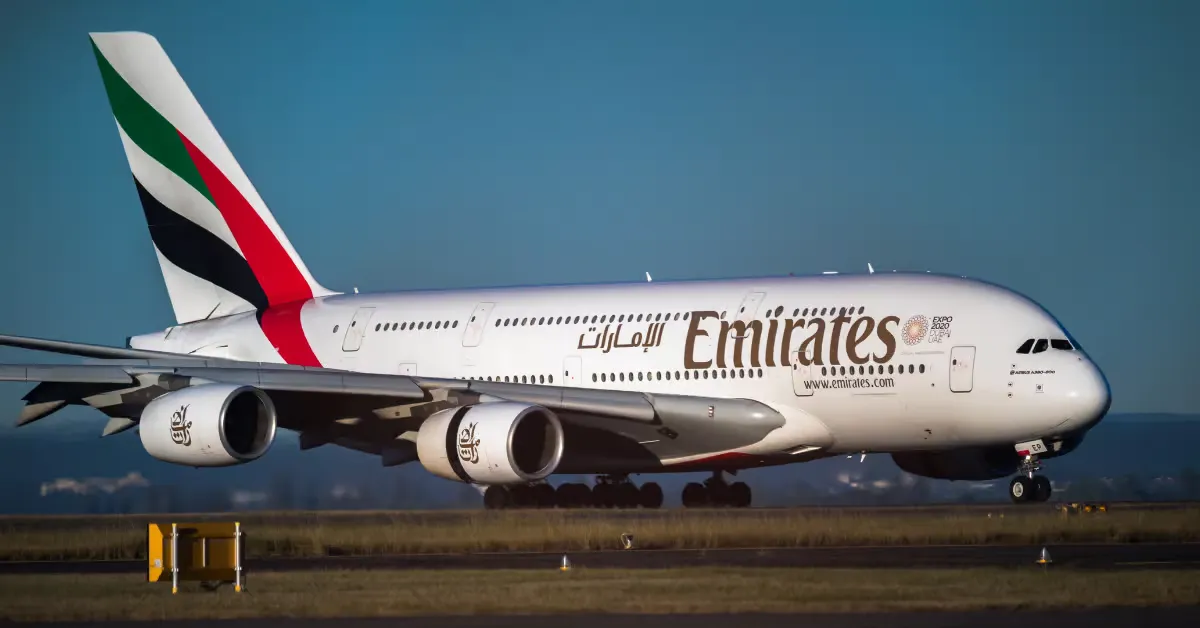
From October 1, 2025, Emirates has implemented a comprehensive ban on using power banks during flights across its entire fleet. Whilst passengers may carry one power bank under 100 watt-hours in cabin baggage, the device cannot be used or charged inflight. The policy stems from mounting safety concerns following a surge in lithium battery incidents across the aviation industry.
Understanding the Ban’s Foundation
Emirates conducted an extensive safety review before implementing this policy, examining incident data from across the global aviation sector. The findings revealed concerning trends that prompted immediate action to protect passengers and crew.
“After a comprehensive safety review, Emirates is taking a firm and proactive stance to mitigate risk when it comes to power banks onboard,” the airline stated. The decision reflects Emirates’ commitment to maintaining its reputation as one of the world’s safest and most reliable carriers.
Reason 1: Rising Number of Battery Incidents
The primary driver behind Emirates’ decision involves the alarming increase in lithium battery-related incidents worldwide. Aviation authorities and airlines have documented a significant upward trend in power bank malfunctions, overheating events, and fire incidents.
Global Incident Statistics
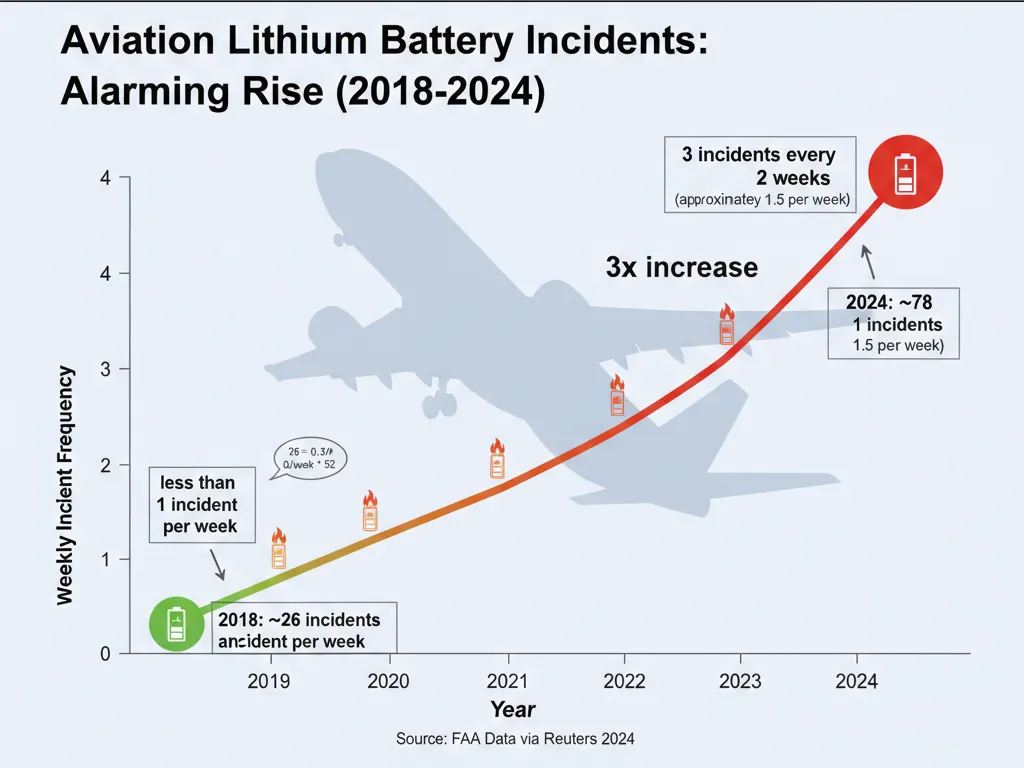
A Reuters report highlighted that in 2024, the US Federal Aviation Administration (FAA) documented an average of three incidents involving overheating lithium batteries on aircraft every two weeks worldwide. This represents a sharp increase from fewer than one incident per week in 2018—effectively tripling over six years.
The statistics demonstrate:
- 2018: Approximately 26 incidents annually
- 2024: Approximately 78 incidents annually
- Trend: Steady year-over-year increases
This dramatic rise correlates directly with increased power bank adoption among travellers. As more passengers carry portable chargers, the statistical probability of malfunction events increases proportionally.
Industry-Wide Recognition
Emirates isn’t alone in recognising these risks. Aviation safety organisations globally have identified lithium batteries as one of the fastest-growing safety concerns in commercial aviation. The International Civil Aviation Organization (ICAO) and International Air Transport Association (IATA) have progressively strengthened guidelines governing portable electronic devices.
The growing frequency of incidents affects not just Emirates’ extensive route network but airlines worldwide operating from major hubs including Dubai International Airport.
Reason 2: Risk of Thermal Runaway
Thermal runaway represents the most serious hazard associated with lithium batteries. This self-accelerating chemical reaction can transform a seemingly minor battery malfunction into a life-threatening emergency at cruising altitude.
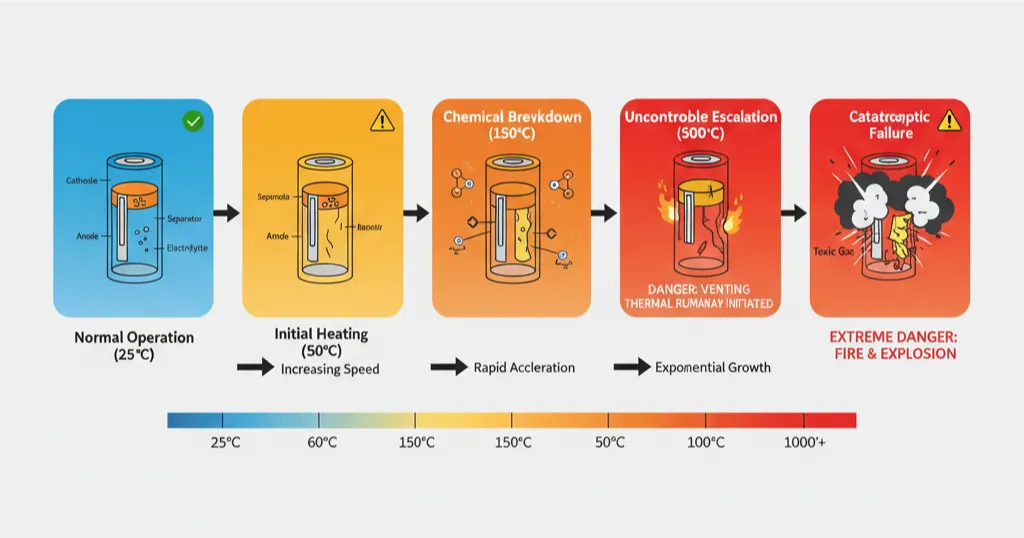
What Is Thermal Runaway?
Thermal runaway occurs when internal battery temperature increases to a point where chemical reactions within the cell generate more heat than can dissipate. This creates a dangerous feedback loop:
- Initial heating: Battery temperature rises due to overcharging, physical damage, or manufacturing defects
- Chemical breakdown: Elevated temperatures cause internal chemical reactions to accelerate
- Heat generation: These reactions produce additional heat, raising temperatures further
- Uncontrollable escalation: The process becomes self-sustaining and impossible to stop
- Catastrophic failure: Temperatures can exceed 1,000°C, causing fires, explosions, and toxic gas release
Power banks rely on lithium-ion or lithium-polymer cells, which pack significant energy into compact spaces. This high energy density—whilst beneficial for device performance—becomes dangerous when thermal runaway initiates.
Why Thermal Runaway Is Particularly Dangerous in Aircraft
The confined cabin environment amplifies thermal runaway risks:
- Limited firefighting resources: Aircraft carry restricted fire suppression equipment
- Altitude constraints: Emergency landings require time, during which fires can spread
- Enclosed space: Toxic gases from battery fires concentrate in cabins
- Multiple vulnerable passengers: Evacuation during flight proves impossible
Emirates’ review highlighted these factors, concluding that preventing thermal runaway initiation takes priority over passenger convenience.
Reason 3: Lack of Safeguards in Cheaper Devices
Unlike smartphones, tablets, and laptops from established manufacturers, many power banks—particularly budget models—lack sophisticated charging management systems. This absence of protective features significantly increases malfunction risks.
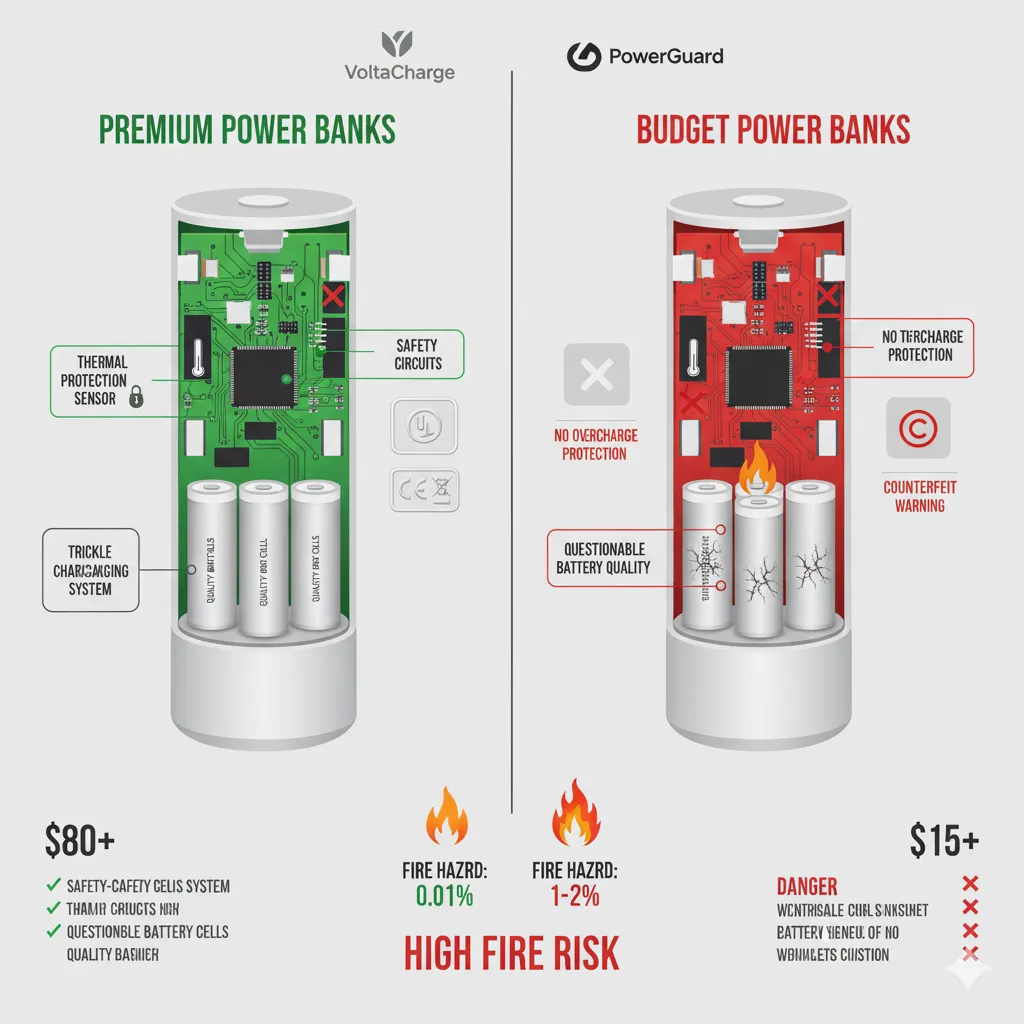
Trickle-Charging Systems
Advanced electronics incorporate trickle-charging technology that prevents overcharging. When batteries reach full capacity, these systems automatically reduce or cease charging current, maintaining battery health whilst preventing dangerous overcharge conditions.
Many power banks, especially cheaper variants, omit this critical safety feature. Passengers plugging devices into aircraft power outlets may inadvertently overcharge power banks, creating thermal runaway conditions.
Quality Control Variations
Dana Kamal, Director of International Business Development, MENA at the National Fire Protection Association (NFPA), explained to Khaleej Times: “Power banks indeed pose a significant fire hazard because they contain lithium-ion batteries, which have a high energy density. When exposed to physical or thermal stress, they can overheat, catch fire or even explode.”
Manufacturing quality varies dramatically across power bank producers:
Premium manufacturers: Implement multiple safety circuits, thermal protection, and quality testing Budget producers: May cut corners on safety features to reduce costs Counterfeit products: Often lack any meaningful safety mechanisms
Passengers cannot reliably distinguish between safe and dangerous power banks through visual inspection alone. Emirates’ blanket usage ban eliminates this uncertainty.
Physical Damage Risks
Power banks frequently experience rough handling during travel:
- Dropped in airports or during boarding
- Crushed by heavy carry-on items
- Exposed to temperature extremes in aircraft holds
- Damaged by liquid spills
Even minor physical damage can compromise internal battery cells, creating conditions for thermal runaway. The ban ensures damaged power banks cannot be used, reducing fire risk.
Reason 4: Enabling Rapid Emergency Response
Emirates’ new regulations mandate specific power bank storage locations, fundamentally improving cabin crew’s ability to respond to battery emergencies.
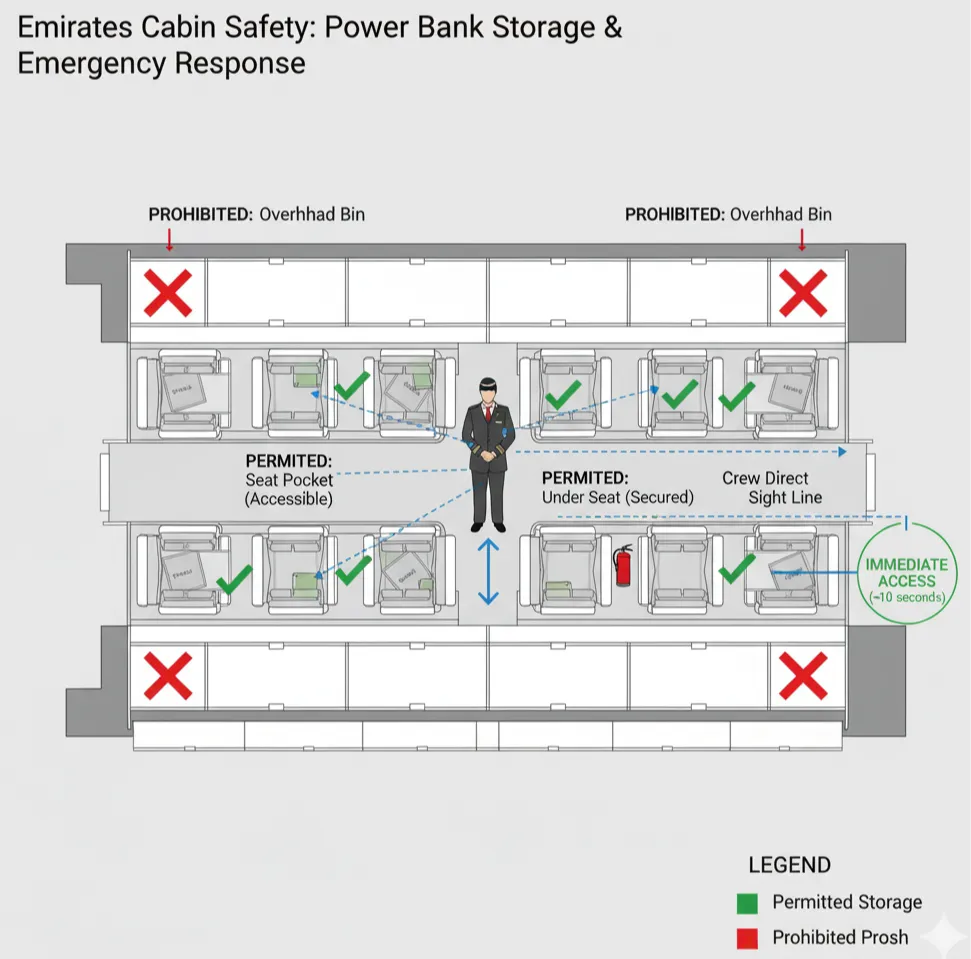
Strategic Storage Requirements
Under the policy, passengers must store power banks:
- In seat pockets: Immediately visible and accessible to crew
- Under seats: Within arm’s reach but secured during turbulence
- Never in overhead bins: Where devices become difficult to locate and access
This strategic placement contrasts with previous practices where passengers often stored power banks in overhead compartments, luggage, or jacket pockets stored above.
Emergency Response Advantages
“Emirates’ new regulations will significantly reduce risks associated with power banks by prohibiting their use while onboard the aircraft,” the airline explained. “Storing power banks in accessible locations within the cabin ensures that in the rare event of a fire, trained cabin crew can quickly respond and extinguish the fire.”
Accessible storage provides multiple benefits:
Immediate detection: Crew and nearby passengers quickly notice overheating or smoke Rapid isolation: Affected devices can be immediately contained Effective suppression: Crew can deploy fire suppression equipment without delay Prevented escalation: Quick response prevents fires from spreading to adjacent materials
The policy essentially converts power banks into monitored devices, significantly reducing incident severity through early intervention.
Crew Training Integration
Emirates invests substantially in crew training, including scenarios involving electronic device fires. The new storage requirements complement this training, ensuring crew can implement practiced emergency procedures effectively.
Reason 5: Global Industry Trend Toward Stricter Policies
Emirates’ power bank ban aligns with broader aviation industry movements toward more stringent lithium battery regulations. Airlines, manufacturers, and regulatory bodies increasingly recognise portable chargers as significant safety challenges requiring coordinated responses.
Regulatory Evolution
Aviation authorities worldwide have progressively tightened lithium battery rules:
International Civil Aviation Organization (ICAO): Strengthened technical instructions for dangerous goods carriage International Air Transport Association (IATA): Updated guidelines for lithium battery transport National regulators: Implemented country-specific restrictions and monitoring programmes
The FAA’s incident tracking demonstrates why regulations continue evolving. With battery-related incidents tripling since 2018, reactive policies cannot keep pace with emerging risks. Proactive measures—like Emirates’ usage ban—represent forward-thinking safety management.
Competitive Safety Standards
Major carriers increasingly compete on safety records alongside service quality. Emirates’ proactive stance positions the airline as an industry leader willing to prioritise passenger wellbeing over convenience.
Other airlines will likely monitor Emirates’ implementation results. Success in reducing incidents may prompt widespread adoption of similar policies across the industry, fundamentally changing how passengers travel with portable electronics.
Technology Development Pressure
The ban also signals to manufacturers that current power bank technology requires improvement. Industry-wide usage restrictions create market pressure for safer battery chemistry, better protective circuits, and more rigorous quality standards.
What This Means for Emirates Passengers
Travellers flying Emirates must adapt to the new reality, particularly on the airline’s extensive long-haul network connecting Dubai to destinations worldwide.
Practical Implications
Before flights: Fully charge all devices, as power banks cannot supplement battery life during flights During flights: Rely on Emirates’ in-seat charging infrastructure available throughout the fleet Storage compliance: Keep power banks visible in seat pockets, not hidden in bags or overhead bins Capacity awareness: Ensure carried power banks display ratings confirming they’re under 100Wh
For business travellers and digital nomads frequently working in the UAE, developing battery management strategies becomes essential for maintaining productivity during travel.
Long-Haul Considerations
Emirates operates some of aviation’s longest routes, including Dubai-Auckland (16+ hours) and Dubai-Los Angeles (16+ hours). On these ultra-long flights, the inability to use power banks requires careful planning:
- Prioritise which devices need power throughout the journey
- Download content offline to reduce battery drain
- Utilise Emirates’ award-winning entertainment system rather than personal devices
- Enable maximum power-saving modes on essential electronics
The Bigger Picture: Aviation Safety Evolution
Emirates’ power bank ban represents one element in aviation’s continuous safety evolution. As technology changes how passengers travel, airlines must adapt policies to address emerging risks whilst maintaining operational efficiency.
Balancing Safety and Service
The airline industry constantly navigates tensions between passenger convenience and safety imperatives. Emirates’ decision demonstrates that when conflicts arise, safety takes absolute priority—even when policies inconvenience passengers.
This philosophy has helped Emirates build its reputation for operational excellence whilst serving millions of passengers annually through Dubai’s world-class aviation infrastructure.
Looking Forward
As battery technology continues evolving, future solutions may render current restrictions unnecessary. Solid-state batteries, improved thermal management, and advanced safety circuits could eventually allow airlines to safely permit power bank usage again.
Until those technological advances arrive, Emirates’ evidence-based approach prioritises proven safety over speculative convenience.
Frequently Asked Questions
Why did Emirates choose October 1, 2025 as the implementation date?
The date allowed sufficient time for passenger communication and crew training following the safety review completion in September 2025.
Are there any exceptions to the power bank usage ban?
No exceptions exist. The ban applies uniformly across all cabin classes and flight durations throughout Emirates’ fleet.
What happens if someone uses a power bank despite the ban?
Cabin crew will immediately intervene, confiscate the device, and document the violation. Serious or repeated violations may result in travel bans.
Do other airlines have similar power bank restrictions?
Some carriers have implemented partial restrictions, but Emirates’ comprehensive usage ban represents one of the strictest policies globally.
Can I use my laptop or smartphone battery during flights?
Yes, internal batteries in devices like laptops, tablets, and smartphones remain unrestricted. The ban applies only to external/portable battery packs.
How do I know if my power bank exceeds 100Wh?
Check the device label for watt-hour rating. If listed in mAh, convert using: (mAh × 3.7V) ÷ 1,000 = Wh. Most consumer power banks under 27,000mAh fall within limits.
What if I forget and pack my power bank in checked luggage?
Power banks are prohibited in checked baggage regardless of capacity. Security screening will detect them, potentially delaying your baggage or requiring retrieval before flight.
Key Takeaway
Emirates banned power bank usage from October 1, 2025 due to five critical factors: rising lithium battery incidents (tripling since 2018 to 3 incidents every 2 weeks globally), thermal runaway risks that can cause fires exceeding 1,000°C, lack of safety safeguards in budget devices, need for rapid emergency response through accessible storage, and alignment with global aviation industry trends. Passengers may carry one power bank under 100Wh but cannot use or charge it onboard. The policy prioritises safety following comprehensive review of FAA incident data showing alarming increases in battery-related aviation emergencies worldwide.
Further Reading
The UAE week, every Monday
The week's stories on jobs, visas, money and daily life in one short email. Unsubscribe in one click.