100-Day Maternity Leave: UAE Companies Win Emirati Talent
UAE companies offer 100-day maternity leave, flexible work, and nurseries to attract Emirati talent. Discover how Nafis programme transforms benefits.
By Vadim Kouznetsov, published
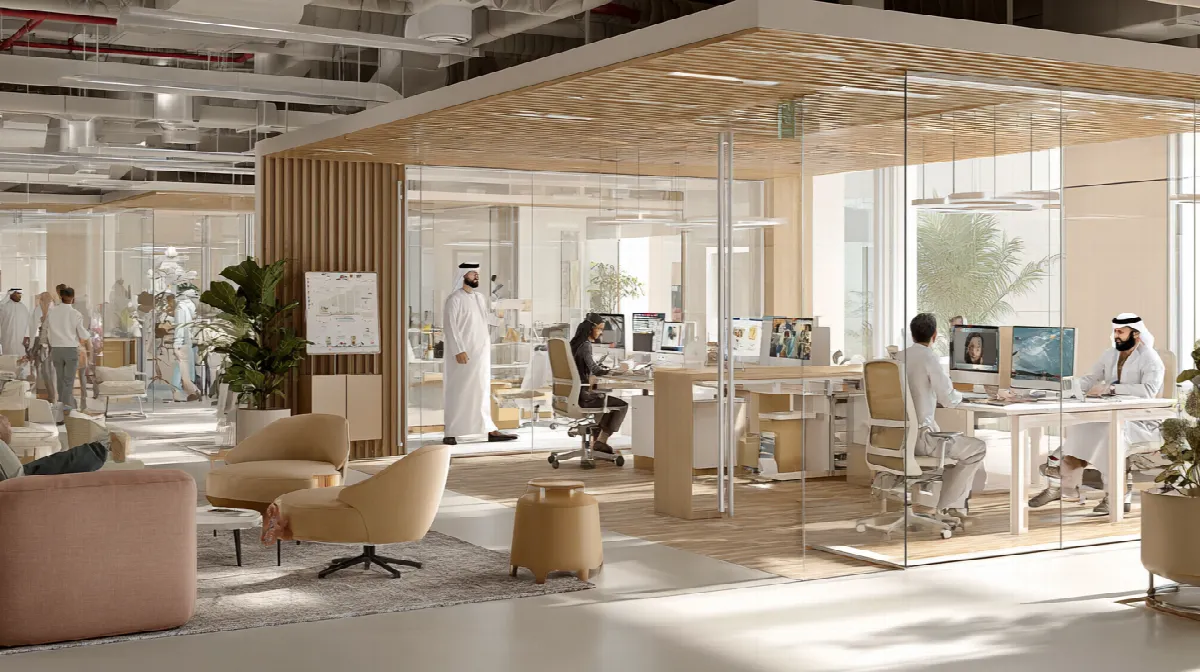
Private sector companies across the UAE are revolutionising their approach to attracting Emirati professionals, moving far beyond traditional salary packages to offer comprehensive family-friendly benefits, flexible working arrangements, and career development programmes that align with national values and aspirations.
Companies Exceed Government Requirements with Enhanced Benefits
The transformation in employee benefits reflects a strategic shift as companies compete for skilled UAE nationals under the ambitious Nafis programme, which targets 75,000 private sector jobs for Emiratis by 2026 with Dh24 billion in government support.
Leading companies are now implementing benefit packages that significantly exceed standard requirements, recognising that Emirati professionals value work-life balance, family support, and career advancement opportunities as much as competitive compensation.
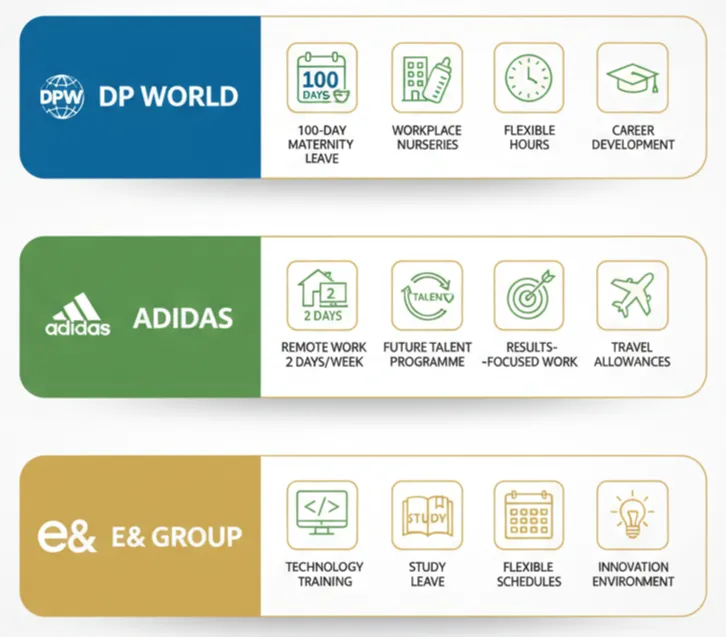
DP World Sets New Standards with 100-Day Maternity Leave
DP World, one of the UAE’s largest global corporations, has pioneered enhanced family support with industry-leading policies:
Extended Parental Leave:
- 100-day maternity leave programme
- Comprehensive paternity leave systems
- Employee-led family support groups
Workplace Innovation:
- Planned nurseries across multiple workplace locations
- Flexible working hours across all positions
- Office redesigns focused on employee wellbeing
Ahmed Al Qasim, Vice President of Talent Management at DP World GCC, emphasises the holistic approach: “The goal has always been to make employees happy and increase productivity. We have three main programmes for employee development, as recruitment does not end without employee development.”
Professional Development Drives Retention
DP World’s commitment to Emirati career advancement includes partnerships with leading technology companies. Recently, 15 Emirati graduates completed leadership programmes launched with Schneider Electric, gaining practical experience in:
- Sustainability practices and green technology
- Artificial intelligence applications
- Digital innovation strategies
- Executive leadership development
Marwan Al Jasmi, Vice President of Employee Management at DP World GCC, highlights this focus: “We are committed to developing Emirati talent through practical experience in various fields.”
Adidas Champions Flexible Working Culture
International brands are adapting their global practices to appeal to Emirati professionals’ preferences for flexible work arrangements.
Adidas Future Talent Programme:
- Year-long training rotations across departments
- Skills-based placement after programme completion
- Two days per week remote working options
- Flexible schedules for student employees
Mahdi Abdullah, Emiratisation Manager at Adidas, explains their results-focused approach: “We focus on results, not the number of hours. Citizens have flexibility in their working hours, especially students, as it is not necessary to complete a specific number of hours daily but rather throughout the week.”
Comprehensive Benefits Package:
- Travel allowances for business and personal development
- Performance-based bonuses and incentives
- Comprehensive health insurance coverage
- Regular training programmes and professional events
e& Group Integrates Technology with Career Development
The telecommunications giant has developed specialised approaches combining technology integration with professional growth opportunities for Emirati employees.
Technology-Enhanced Learning:
- Customised training courses using latest technologies
- Innovation-focused workplace environments
- Continuous learning support systems
Obeid Al-Zaabi, Vice President of Strategic Human Resources at e& Group, describes their philosophy: “By connecting them with the technologies we have, we are qualifying them to innovate in a competitive work environment that encourages continuous learning.”
Work-Life Integration:
- Remote work options across multiple roles
- Flexible scheduling accommodating personal commitments
- Study leave for employees pursuing further education
- Work-study balance support for career advancement
Nafis Programme Creates Win-Win Scenarios
The government’s Dh24 billion Nafis programme provides substantial financial incentives that complement private sector benefits:
Financial Support for Employers:
- Monthly salary supplements up to Dh7,000 per Emirati employee
- Child allowances of Dh800 per child monthly
- Pension contribution support
- Reduced administrative costs for compliance
Employee Benefits:
- Enhanced take-home pay through government supplements
- Improved job security through national priority programmes
- Access to continuous professional development
- Career advancement opportunities in growing sectors
Compliance Creates Opportunities
The mandatory Emiratisation targets are driving widespread adoption of family-friendly and flexible work policies:
Current Requirements:
- Companies with 50+ employees must increase Emirati workforce by 2% annually
- Target: 10% Emiratisation rate by 2026
- Monthly fines starting at Dh6,000 per unfilled position
- Penalties increase by Dh1,000 annually until 2026
Success Indicators:
- Over 131,000 Emiratis now employed in private sector
- Target of 75,000 by 2026 already exceeded
- 12% growth in Emirati private sector employment in just two months
Family-Centric Benefits Gain Popularity
Companies are recognising that Emirati professionals prioritise family considerations in career decisions:
Workplace Nurseries:
- On-site childcare facilities at major corporate locations
- Professional childcare services during working hours
- Reduced commute stress for working parents
Extended Leave Policies:
- Maternity leave extending beyond legal minimums
- Paternity leave enabling shared family responsibilities
- Flexible return-to-work arrangements
Family Support Systems:
- Employee resource groups focused on parenting
- Family event sponsorship and participation
- Emergency childcare support services
Career Development Becomes Competitive Advantage
Professional growth opportunities are increasingly central to Emirati talent attraction strategies:
Skills Development Programmes:
- Industry-specific training partnerships
- International exposure and experience opportunities
- Technology skills advancement courses
- Leadership development pathways
Mentorship Initiatives:
- Senior executive mentoring programmes
- Cross-departmental experience rotations
- Industry networking event participation
- Professional certification support
Flexible Work Arrangements Address Modern Needs
The shift toward flexible working reflects understanding of contemporary professional expectations:
Remote Work Options:
- Hybrid working models with home office days
- Results-focused performance measurement
- Technology support for remote productivity
- Flexible meeting scheduling across time zones
Schedule Flexibility:
- Compressed working weeks for better work-life balance
- Flexible start and finish times
- Study leave for professional development
- Cultural and religious observance accommodation
Industry-Specific Adaptations
Different sectors are developing tailored approaches to attract Emirati talent:
Technology Sector:
- Cutting-edge training in AI and digital innovation
- Startup incubation support for entrepreneurs
- International conference and training opportunities
Financial Services:
- Professional certification sponsorship
- Global exposure through international assignments
- Leadership fast-track programmes
Hospitality and Tourism:
- Cultural competency development programmes
- International hospitality training exchanges
- Career progression in growing tourism sector
Measuring Success Beyond Numbers
Companies are developing sophisticated metrics to evaluate Emiratisation success:
Employee Satisfaction Indicators:
- Regular feedback surveys and assessments
- Career progression tracking and support
- Retention rates among Emirati employees
- Internal promotion statistics
Business Impact Metrics:
- Productivity improvements with enhanced benefits
- Employee engagement scores and participation
- Innovation contributions from diverse teams
- Customer satisfaction improvements
Future Trends in Emirati Talent Attraction
The evolution of benefits and working arrangements signals broader changes in UAE employment practices:
Emerging Trends:
- Mental health and wellness programme integration
- Sustainability and corporate responsibility initiatives
- Technology-enabled learning and development
- Community engagement and volunteer opportunities
Long-term Implications:
- Higher retention rates reducing recruitment costs
- Improved company reputation and employer branding
- Enhanced productivity through employee satisfaction
- Contribution to UAE’s economic diversification goals
Key Takeaway
UAE private sector companies are transforming traditional employment packages to attract Emirati talent, offering 100-day maternity leave, flexible working arrangements, comprehensive family support, and advanced career development programmes. With over 131,000 Emiratis now employed privately—exceeding the 2026 target of 75,000—these enhanced benefits demonstrate that successful Emiratisation requires addressing work-life balance, professional growth, and family support alongside competitive compensation.
Frequently Asked Questions
Q: What are the most popular benefits companies offer to attract Emirati employees? A: Extended maternity leave (up to 100 days), flexible working hours, remote work options, comprehensive family support including workplace nurseries, and structured career development programmes with international training opportunities.
Q: How does the Nafis programme support both employees and employers? A: Nafis provides up to Dh7,000 monthly salary supplements for Emirati employees, plus Dh800 child allowances, while helping employers meet Emiratisation targets through qualified candidate access and administrative support.
Q: What happens if companies don’t meet Emiratisation targets? A: Companies face monthly fines starting at Dh6,000 per unfilled Emirati position, with penalties increasing by Dh1,000 annually until reaching the 10% target by 2026.
Q: Are flexible work arrangements available to all employees or just Emiratis? A: Most companies implementing these changes apply flexible work policies company-wide, though some specific benefits like extended leave or training programmes may be targeted at supporting Emiratisation goals.
Q: How successful has the private sector Emiratisation been? A: Highly successful—over 131,000 Emiratis now work in the private sector, already exceeding the original 2026 target of 75,000, with 12% growth achieved in just two months during 2025.
Further Reading:
The UAE week, every Monday
The week's stories on jobs, visas, money and daily life in one short email. Unsubscribe in one click.