UAE to Verify Emiratisation Targets from July 1: 7% Quota Required by June 30
UAE private companies with 50+ employees must reach 7% Emiratisation by June 30, 2025, or face Dh108,000 annual fines per unfilled position.
By Vadim Kouznetsov, published
Companies with 50+ Employees Must Meet First-Half 2025 Targets by June 30
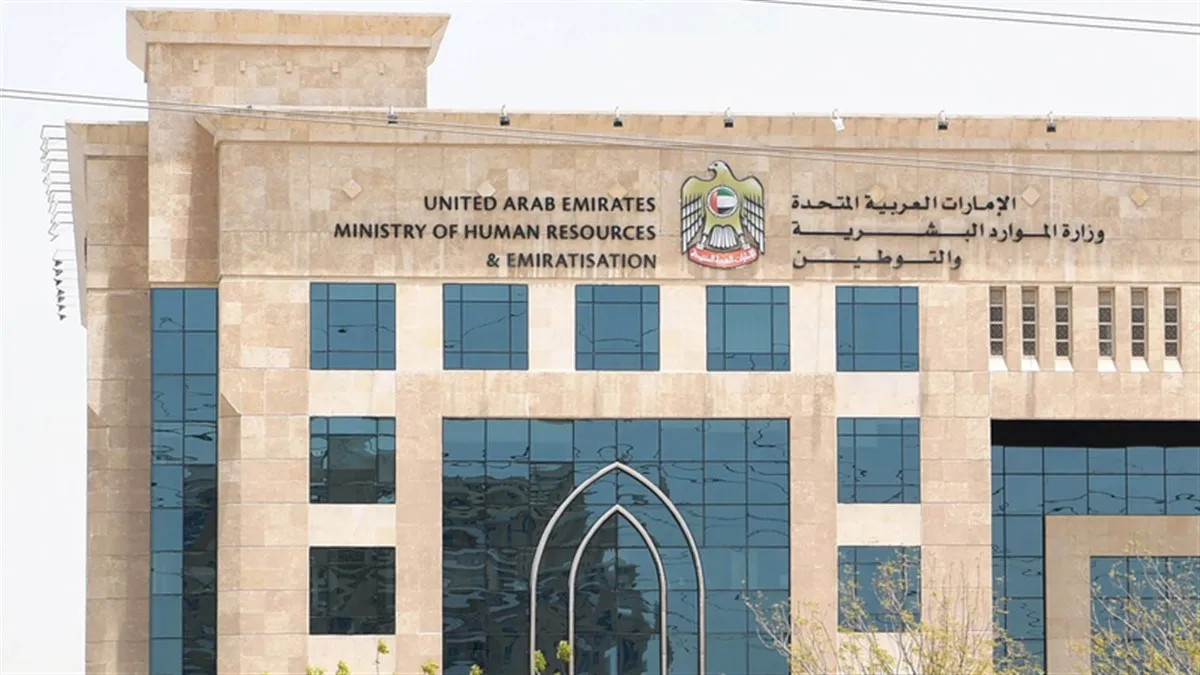
UAE authorities are set to begin verifying private sector companies’ compliance with Emiratisation targets starting July 1, 2025. The Ministry of Human Resources and Emiratisation (MoHRE) will not only check whether companies have achieved their required hiring quotas but will also verify other critical compliance factors, including proper registration of Emirati employees with social security funds and consistent payment of required contributions.
The announcement comes as the deadline approaches for private sector companies with 50 or more employees to meet their Emiratisation targets for the first half of 2025 by June 30. These companies are required to achieve at least a 1 per cent increase in the number of UAE nationals employed in skilled roles during this period.
Understanding the Emiratisation Targets and Timeline
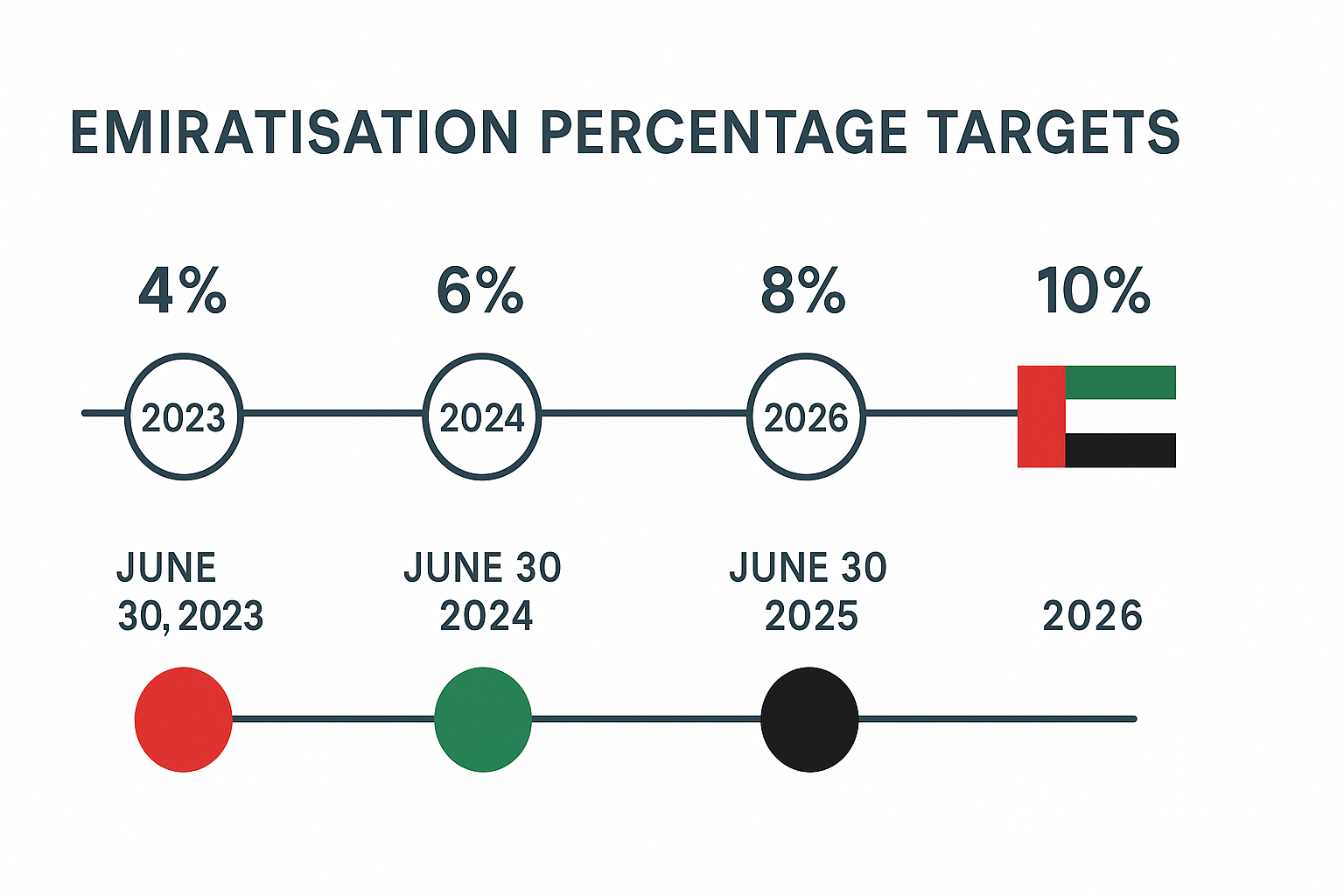
The UAE’s Emiratisation policy requires private sector companies to increase their Emirati workforce by 2 per cent annually, split into two semi-annual targets of 1 per cent each. According to this progressive schedule, companies must reach a 7 per cent Emiratisation rate in skilled roles by June 30, 2025, and 8 per cent by December 31, 2025.
The national mandate aims for private sector companies to achieve a 10 per cent Emiratisation rate in skilled roles by the end of 2026, highlighting the UAE government’s commitment to integrating citizens into the private workforce.
Key Deadlines for 2025-2026:
- June 30, 2025: 7% Emiratisation target (first half of 2025)
- December 31, 2025: 8% Emiratisation target (second half of 2025)
- June 30, 2026: 9% Emiratisation target (first half of 2026)
- December 31, 2026: 10% Emiratisation target (final goal)
Penalties for Non-Compliance
Companies failing to meet the established Emiratisation targets face significant financial penalties. Non-compliant firms will be subject to monthly fines amounting to thousands of dirhams for each Emirati not employed according to the quota.
For 2025, the monthly fine has increased to Dh9,000 per unfilled position, totaling Dh108,000 annually per missing Emirati employee. This represents a Dh1,000 increase from the 2024 rate of Dh8,000 per month, reflecting the government’s escalating approach to enforcement.
The impact of these penalties can be substantial for businesses that fail to meet their targets, especially for those with multiple unfilled positions. Companies should also be aware that these financial contributions are collected through MoHRE’s digital systems, with the penalty amount increasing by Dh1,000 annually until 2026.
Tackling Fraudulent Practices
The ministry employs a sophisticated digital field inspection system to detect fraudulent practices, such as ‘fake Emiratisation’ or attempts to circumvent the targets. Between mid-2022 and April 2025, this system successfully identified approximately 2,200 establishments found to be in violation of Emiratisation policies and decisions, resulting in legal actions against these companies.
Fake Emiratisation practices typically include:
- Hiring Emiratis in phantom jobs with no actual responsibilities
- Registering UAE nationals without having them report to work
- Employing Emiratis on paper while continuing to receive government support benefits
The ministry has emphasized its zero-tolerance approach to such fraudulent activities, with penalties ranging from Dh20,000 to Dh100,000 for each violation involving deceptive employment of Emiratis. Additional consequences can include downgrading to a lower category in MoHRE’s classification system, affecting the business’s operations and access to government services.
Companies engaging in such practices also risk facing:
- Recovery of all amounts paid during support periods
- Potential legal action and prosecution
- Damage to reputation and business relationships
Progress and Achievements
Despite the challenges, the Emiratisation drive has shown remarkable progress. According to MoHRE, the number of Emiratis working in the private sector has reached an unprecedented milestone of over 136,000 employed across 28,000 companies as of the end of April 2025.
Farida Al Ali, MoHRE’s Assistant Undersecretary of National Talents, highlighted the impressive performance of the labour market, noting that the UAE’s rapid economic growth has enhanced private sector companies’ ability to meet their Emiratisation targets.
Incentives for Compliant Companies
The ministry continues to offer incentives and benefits to companies that achieve exceptional Emiratisation results. These include:
- Financial Discounts: Up to 80 percent reduction on MoHRE service fees
- Priority Access: Preferential treatment in the government procurement system
- Enhanced Reputation: Recognition as a socially responsible employer
- Operational Advantages: Streamlined processes for various business operations
Companies can also benefit from the Nafis program, which provides access to qualified Emirati job seekers across various specializations and offers support in recruiting UAE nationals with the required competencies.
How Companies Can Prepare for Verification
As the July 1 verification date approaches, private sector companies should take proactive steps to ensure compliance:
1. Audit Current Emiratisation Status
Companies should conduct a thorough internal audit to determine their current Emiratisation percentage and identify any gaps that need to be addressed before the June 30 deadline.
2. Ensure Proper Registration
All Emirati employees must be properly registered with the relevant social security fund, and companies must verify that required contributions are being paid consistently and accurately.
3. Document Compliance Efforts
Maintain comprehensive documentation of all recruitment efforts, job postings, and interviews conducted to fill positions with qualified Emiratis, as these records may be requested during verification.
4. Utilize Nafis Platform
Engage with the Nafis platform to connect with qualified Emirati candidates and explore available support programs and incentives.
5. Implement Retention Strategies
Develop comprehensive strategies to retain Emirati employees, including career development plans, competitive compensation packages, and a supportive work environment.

Expanded Scope of Emiratisation
While the current focus is on companies with 50 or more employees, it’s worth noting that the Emiratisation drive has expanded its scope in recent years to include smaller establishments as well.
Since 2024, companies with 20 to 49 employees in 14 key economic sectors have been required to hire at least one UAE citizen, with this requirement expanding to two Emirati employees by 2025. Non-compliance with these requirements results in penalties of Dh96,000 for failing to hire one Emirati in 2024, increasing to Dh108,000 for not employing two Emiratis by 2025.
The Future of Emiratisation
The UAE’s Emiratisation strategy represents a cornerstone of the nation’s economic vision, aiming to create a more balanced and sustainable workforce while providing valuable career opportunities for UAE nationals in the private sector.
As the verification process intensifies and compliance monitoring becomes more sophisticated, companies are encouraged to view Emiratisation not merely as a regulatory requirement but as a strategic opportunity to enhance their workforce diversity, tap into local talent, and contribute to the UAE’s broader economic objectives.
The ministry’s dual approach of stringent enforcement and attractive incentives demonstrates a balanced strategy designed to achieve meaningful progress while supporting the business community through the transition.
Key Takeaway
UAE authorities will verify private companies’ Emiratisation compliance starting July 1, 2025, with firms employing 50+ workers required to reach a 7% Emirati workforce in skilled roles by June 30. Companies failing to meet targets face monthly fines of Dh9,000 per unfilled position, while those achieving exceptional results can receive up to 80% discounts on ministry service fees and preferential treatment in government procurement.
FAQs About Emiratisation Verification
What companies are subject to the July 1, 2025 verification process?
All private sector companies with 50 or more employees will be subject to verification of their Emiratisation targets and compliance with related requirements starting July 1, 2025.
What is the current Emiratisation target percentage for June 30, 2025?
Companies with 50 or more employees must achieve a 7% Emiratisation rate in skilled roles by June 30, 2025.
How much are the fines for non-compliance in 2025?
Non-compliant companies face a monthly fine of Dh9,000 for each Emirati not employed according to the quota, amounting to Dh108,000 annually per unfilled position.
What constitutes ‘fake Emiratisation’?
Fake Emiratisation includes practices such as hiring Emiratis for nominal positions with no actual work responsibilities, registering UAE nationals on paper without having them report to work, or any deceptive arrangement designed to circumvent genuine employment of Emiratis.
Can companies appeal Emiratisation fines?
Yes, companies can appeal fines through the MoHRE portal by providing evidence of their compliance efforts or documentation of challenges faced in meeting targets despite genuine attempts.
How does MoHRE verify Emiratisation compliance?
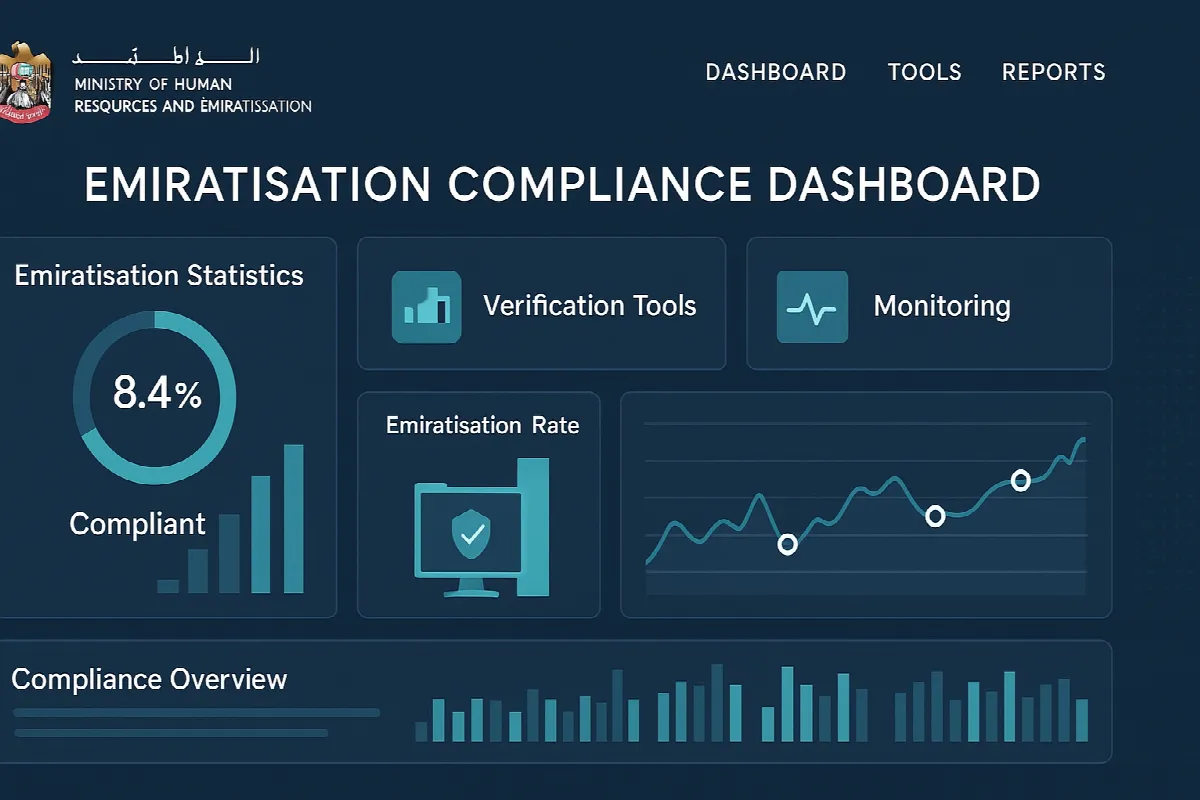
MoHRE uses a digital field inspection system that monitors various factors, including proper registration of Emirati employees with social security funds, consistent payment of required contributions, and actual work engagement of Emirati employees.
Are there any exemptions to the Emiratisation requirements?
Currently, free zone companies, including those in ADGM and DIFC, are generally not obligated to follow Emiratisation requirements, although they may choose to participate voluntarily.
What happens if a company is found to be engaging in fraudulent Emiratisation practices?
Companies engaging in fraudulent practices face penalties ranging from Dh20,000 to Dh100,000 per violation, potential legal action, recovery of any support funds received, and downgrading in MoHRE’s classification system, affecting their ability to conduct business operations.
The UAE week, every Monday
The week's stories on jobs, visas, money and daily life in one short email. Unsubscribe in one click.