UAE AI Cloud Seeding: Complete Guide to Environmental Innovation 2025
Discover how UAE uses AI for cloud seeding, environmental monitoring, and climate action. Learn about smart agriculture, weather forecasting innovations.
By Vadim Kouznetsov, published
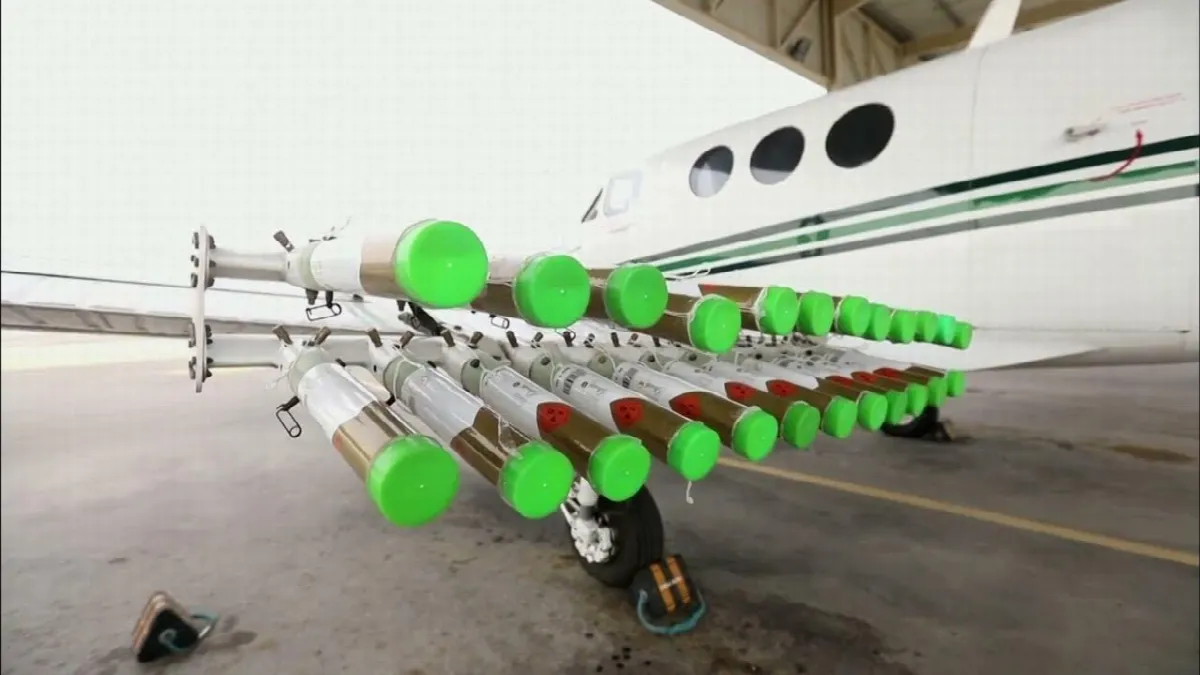
The United Arab Emirates has emerged as a global pioneer in using artificial intelligence for environmental protection and climate action. Since launching the UAE National Strategy for Artificial Intelligence in October 2017, the nation has deployed cutting-edge AI solutions for cloud seeding, environmental monitoring, and sustainable resource management.

UAE’s AI-Powered Environmental Strategy
The UAE’s approach combines government-led initiatives with advanced technology to create comprehensive solutions for climate challenges. This integrated digital ecosystem delivers timely, high-quality responses to environmental concerns affecting the region.
The Ministry of Climate Change and Environment leads several groundbreaking AI initiatives that strengthen sustainability across multiple sectors, from agriculture to marine conservation.
AI Lab: Partnership for Innovation
A collaborative effort between the Ministry of Climate Change and Environment, Khalifa University of Science and Technology, and the International Renewable Energy Agency (IRENA) has created an advanced AI Lab focused on environmental applications.
This facility uses artificial intelligence to:
- Map solar energy hotspots across the UAE
- Monitor and analyse air pollutants in real-time
- Assess water quality parameters continuously
- Implement solar energy mapping and simulation
- Operate environmental monitoring systems with predictive capabilities
- Observe marine ecosystem changes
Smart Cloud Seeding Technology

Cloud seeding represents one of the UAE’s most innovative applications of AI in environmental management. The technology enhances precipitation patterns through intelligent weather modification techniques.
AI algorithms analyse atmospheric conditions to determine optimal timing and locations for cloud seeding operations. This precision approach increases rainfall efficiency while reducing resource waste.
The National Centre of Meteorology operates sophisticated cloud seeding programmes that combine traditional methods with AI-driven optimisation.
Abu Dhabi Environment Agency’s AI Integration
The Abu Dhabi Environment Agency (EAD) has made artificial intelligence central to its environmental protection strategy. Dr. Shaikha Salem Al Dhaheri, EAD Secretary-General, reports that three AI-based programmes have won sustainability innovation awards:
Award-Winning Programmes:
- Coastal and Environmental Rehabilitation: AI-driven coastal restoration projects
- Green Institutions Network: Smart environmental management systems
- Abu Dhabi Mangroves Initiative: Intelligent mangrove conservation efforts
Pioneering Drone Technology
EAD became the first organisation worldwide to plant mangroves at scale using drone technology, demonstrating remarkable efficiency in environmental restoration.
Comprehensive AI Monitoring Network
The agency operates an extensive AI-powered monitoring infrastructure:
- 20 air quality monitoring stations
- 10 marine monitoring buoys
- Over 100 groundwater wells with smart sensors
- Seven wildlife tracking programmes using satellite and GSM technology
Digital State of Environment Report
EAD launched the world’s first completely AI-powered State of the Environment Report, utilising over 700 environmental indicators. This groundbreaking system provides:
Predictive Capabilities:
- Six key air quality parameters forecasted five years ahead
- Three marine water quality indicators with future projections
- Soil pollutant identification through drone imagery analysis
- Automated fish species classification at fishing ports
Global-First Monitoring System
The organisation is developing an unprecedented soil monitoring system combining AI, satellite imaging, and drone technology to map contamination patterns throughout Abu Dhabi.
Carbon Footprint Reduction Through AI
Multiple initiatives leverage artificial intelligence to combat climate change:
AIOS by MBZUAI
Mohamed bin Zayed University of Artificial Intelligence developed AIOS (AI Operating System) to reduce the carbon footprint of AI computing by:
- Lowering energy consumption requirements
- Reducing processing time
- Minimising hardware dependencies
- Maintaining performance efficiency standards
G42 and NVIDIA Partnership
AI and cloud-computing giant G42 partnered with NVIDIA to utilise the NVIDIA Earth-2 platform for ultra-precise climate and weather forecasting. A new operations centre and climate-tech laboratory in Abu Dhabi strengthens the UAE’s position in global sustainability innovation.
ClimateGPT Platform
ADQ and Swiss firm EQTY Lab launched ClimateGPT, the world’s first open-source, multilingual AI platform addressing climate change impacts. Key features include:
- Hosting at Al Dhafra Solar PV plant with renewable power
- Over 300 billion climate-related data points
- Evidence-based decision-making support
- Multilingual accessibility for global use
Smart Agriculture and Food Security
Artificial intelligence transforms UAE agricultural practices and food security initiatives:
Smart Irrigation Systems
The Ministry of Climate Change and Environment promotes AI-powered smart irrigation for year-round farming capabilities. The UAE Development Bank allocated AED 100 million to finance food security projects.
Enhanced Farm Productivity
The Abu Dhabi Agriculture and Food Safety Authority deployed AI irrigation systems across 24,000 productive farms, achieving:
- Significant crop yield increases
- Minimal water consumption
- Solutions for global water scarcity challenges
- Sustainable farming practices
AI for Weather Forecasting and Disaster Preparedness
Advanced AI applications revolutionise climate data analysis and forecasting capabilities:
Flood Prediction Technology
Google’s research team developed a global hydrological model predicting floods up to seven days in advance. The system integrates with:
- Flood Hub platform for early warnings
- Google Search and Maps SOS alerts
- Government response systems for faster disaster mitigation
Proactive Monitoring Systems
National and local entities use AI to track changes in soil, water, and air quality while developing innovative resource preservation solutions.
Environmental Applications and Future Challenges
AI deployment spans multiple environmental domains:
Current Applications:
- Climate change mitigation through predictive modelling
- Sustainable agriculture optimisation
- Ocean health and water resource management
- Accurate weather forecasting systems
- Disaster response and resilience planning
- Energy efficiency in building management
- Smart waste management and recycling
- Air quality and biodiversity monitoring
- Electronic waste hazard detection
Ongoing Challenges:
Despite remarkable progress, challenges remain including high energy demands of AI systems and ethical concerns about data privacy and algorithmic bias.
UAE’s Global Leadership Position
The UAE positions itself as a global leader in AI-driven climate action and environmental sustainability. By deploying artificial intelligence across energy, agriculture, biodiversity, and disaster management sectors, the nation addresses climate challenges while shaping a more sustainable future.
Key Takeaway
The UAE’s comprehensive AI strategy for environmental protection demonstrates how advanced technology can address climate challenges effectively. From smart cloud seeding to predictive environmental monitoring, the nation’s innovative approach combines government leadership with cutting-edge technology to create sustainable solutions that benefit both local communities and global environmental goals.
Frequently Asked Questions
Q: How does AI improve cloud seeding effectiveness? A: AI analyses atmospheric conditions to determine optimal timing and locations for cloud seeding operations, increasing rainfall efficiency while reducing resource waste.
Q: What environmental parameters can AI predict in the UAE? A: The system predicts six air quality parameters and three marine water quality indicators for up to five years in advance.
Q: How many farms use AI irrigation in Abu Dhabi? A: The Abu Dhabi Agriculture and Food Safety Authority has deployed AI irrigation systems across 24,000 productive farms.
Q: What makes the UAE’s State of Environment Report unique? A: It’s the world’s first completely AI-powered environmental report using over 700 indicators to provide comprehensive environmental data.
Q: How does AI help with disaster preparedness? A: AI systems can predict floods up to seven days in advance and integrate with emergency response platforms for faster disaster mitigation.
Further Reading:
The UAE week, every Monday
The week's stories on jobs, visas, money and daily life in one short email. Unsubscribe in one click.