Why Do UAE Residents Spend Dh550 Monthly on Parking & Sell Cars?
UAE families pay Dh550+ monthly parking fees, forcing many to sell second cars. Discover rising costs, subscription alternatives & money-saving tips for 2025.
By Vadim Kouznetsov, published

UAE families are paying up to Dh550 monthly just for parking two vehicles, with many choosing to sell their second cars instead of managing escalating costs. The combination of limited building parking spaces and expanding paid parking zones across cities is forcing residents to make difficult financial decisions about their transportation needs.
Rising parking expenses have become a significant burden for UAE households. With only one parking slot provided per apartment in most residential buildings – often requiring additional fees – families owning multiple vehicles face mounting monthly expenses that can exceed their petrol and maintenance costs combined.
How Much Are Families Really Paying for Parking in the UAE?
The current parking situation in the UAE creates substantial financial pressure for multi-car households. Residential buildings typically provide just one parking space per unit, leaving additional vehicles without designated spots.
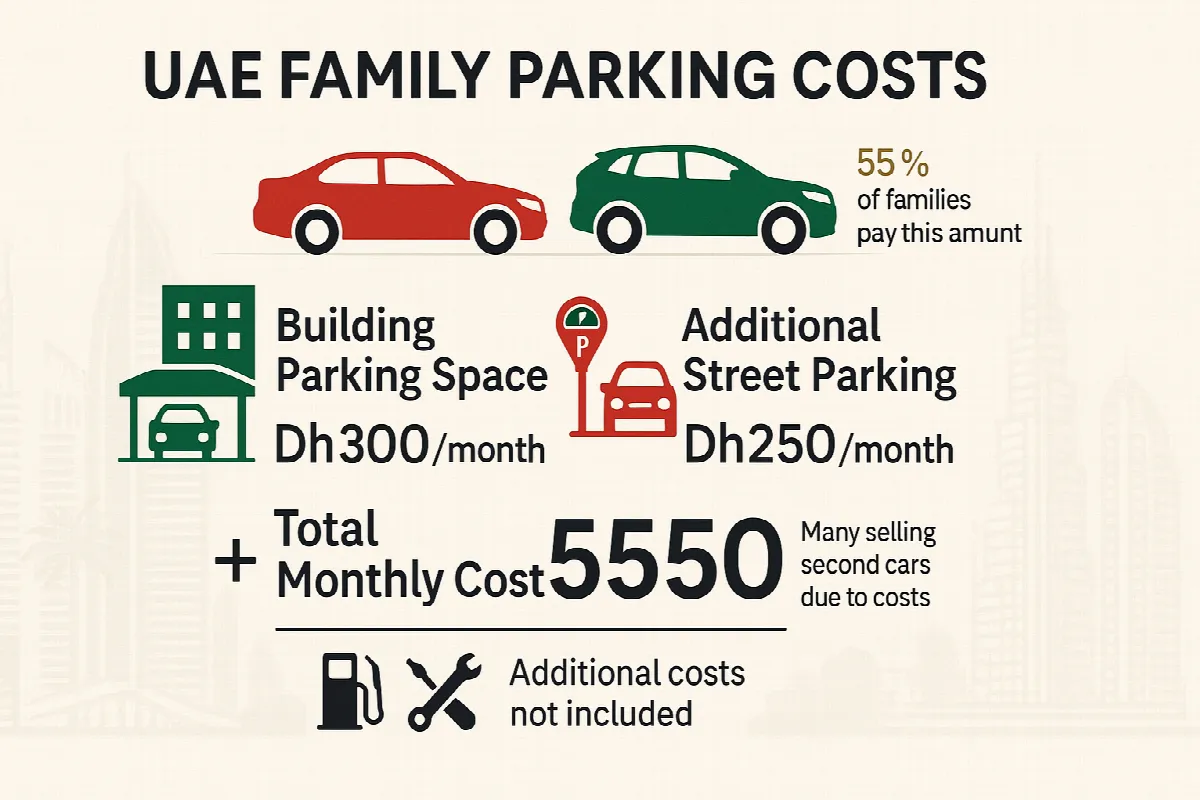
Mohammed Abu Hamdan, who lives in Al Nahda, Sharjah, exemplifies this challenge. His family pays Dh300 monthly for one parking space inside their building, plus another Dh250 for a second vehicle in a nearby open parking lot – totalling Dh550 per month. This expense covers only parking, excluding fuel, maintenance, or insurance costs.
The family owns a third vehicle for their university-going son but cannot afford three parking slots. They manage through public transport and carpooling arrangements, highlighting how parking costs influence family transportation decisions.
What Changes Led to Higher Parking Expenses Across UAE Cities?
Dubai introduced variable public parking fees in April 2025, significantly impacting daily commuters and residents. During peak hours (8am to 10am and 4pm to 8pm), premium parking costs Dh6 per hour, whilst standard parking charges Dh4. These rates apply Monday through Saturday, with off-peak rates remaining unchanged.
Previous parking systems had fixed pricing throughout the day. The new variable system affects approximately 64,400 parking spaces across Dubai, representing 35% of the city’s 184,000 public parking spaces.
Premium parking zones include high-demand areas within 500 metres of Metro stations, major commercial districts, and key thoroughfares like Sheikh Zayed Road, Al Wasl Road, and Jumeirah Beach Road.
Which Areas Have the Most Expensive Parking Rates?
Premium parking zones command the highest fees during peak hours:
Zone A Areas:
- Business Bay
- DIFC (Dubai International Financial Centre)
- Downtown Dubai
- Dubai Marina
Zone B Areas:
- Al Barsha
- Jumeirah
- Deira City Centre vicinity
Zone C Areas:
- Al Karama
- Satwa
- Al Mankhool
Zone D Areas:
- Al Qusais
- Al Twar
- Al Mizhar
Standard parking zones apply to less congested residential areas, carrying the lower peak-hour rate of Dh4 per hour.
How Are Residents Adapting to Higher Parking Costs?
Many families have adopted cost-cutting strategies to manage parking expenses. Imran Patel, a manager in Al Barsha, sold his family’s second car to avoid the parking struggle. Living in Deira with only one building parking space, they were paying Dh400 monthly for their second vehicle whilst risking parking fines.
The family’s decision proved beneficial as both their home and workplace sit close to Metro stations. His wife now uses the Metro for work commutes, saving on parking fees, fuel, and maintenance costs. The change eliminated daily parking stress whilst reducing overall transportation expenses.
For families not near Metro lines, keeping multiple cars remains necessary despite the costs. Some opt for monthly parking subscriptions offered by parking authorities.
What Parking Subscription Options Help Families Save Money?
Abdul Hadi, an Iranian trader in Mirdiff, subscribed to the Zone A parking permit for his second vehicle. The Dh500 monthly subscription covers Zones A, B, C, and D throughout Dubai, providing significant relief from hourly charges.
“Subscribing to zone A, we can park near our home in zones C or D, which is available at any hour,” he explains. “Wherever we go, whether it’s for work, shopping, or visiting someone, we don’t have to worry about hourly parking charges or topping up.”
Monthly subscription benefits include:
- No hourly rate concerns during peak times
- Access to multiple parking zones
- Reduced daily parking stress
- Potential savings for frequent city travellers
How Do Peak Hour Parking Rates Compare Across Different Zones?
The variable pricing system creates distinct cost differences throughout Dubai:
Peak Hours (8am-10am, 4pm-8pm):
- Premium zones: Dh6 per hour
- Standard zones: Dh4 per hour
Off-Peak Hours:
- All zones: Previous rates maintained
- Free parking: Sundays and public holidays
Special Event Pricing:
- Dubai World Trade Centre events: Dh25 per hour
- Applied to 200 surrounding spaces during events
- Operating hours: 8am to 10pm on event days only
Multi-storey car parks offer extended parking with a maximum daily charge of Dh40 for stays exceeding eight hours within a 24-hour period.
Which Transportation Alternatives Help Avoid Parking Costs?
Dubai’s public transportation infrastructure provides viable alternatives to driving, particularly for families reconsidering their multi-car ownership.
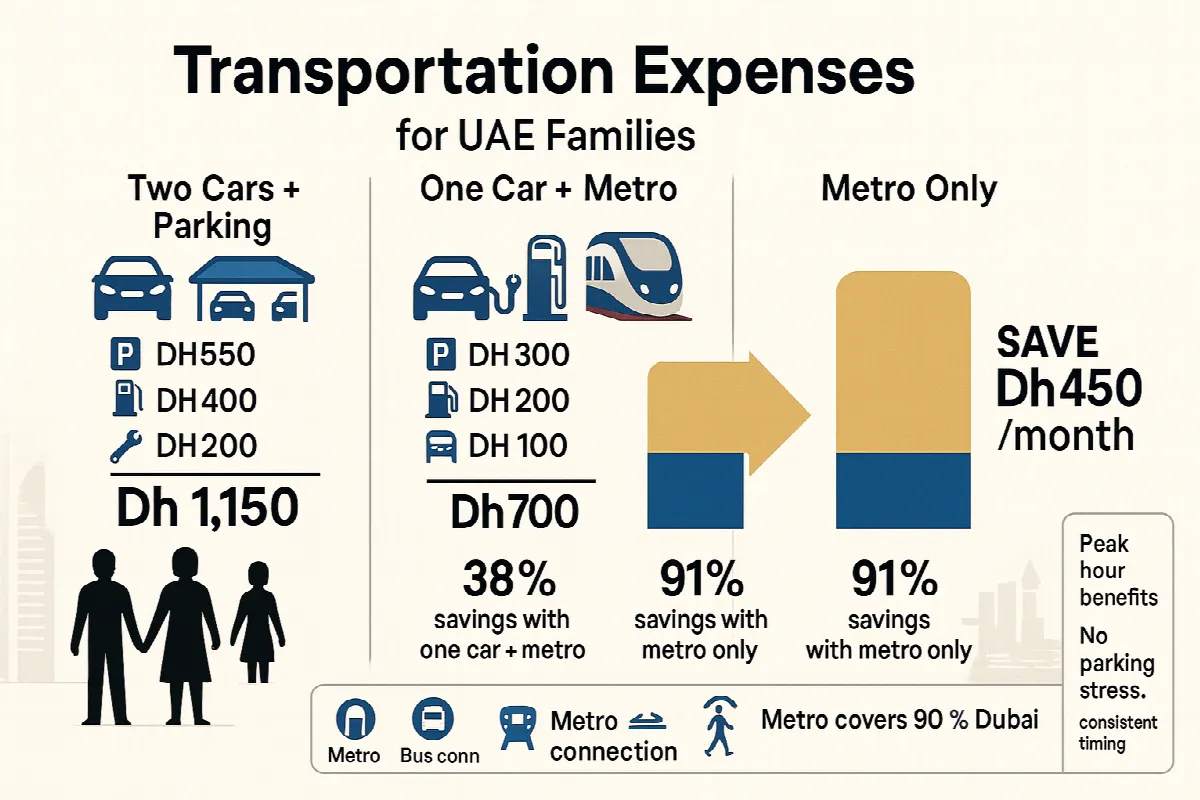
Metro System Benefits:
- Direct connections to major employment centres
- Reduced fuel and parking expenses
- Consistent travel times during peak hours
- Integration with bus networks for comprehensive coverage
Bus Network Advantages:
- Extensive route coverage throughout emirates
- Affordable daily and monthly passes available
- Air-conditioned comfort during summer months
- Regular service intervals during business hours
Families living within walking distance of Metro stations find public transport particularly cost-effective during Dubai Shopping Festival and other high-traffic periods when parking demand peaks.
What Long-Term Changes Are Planned for UAE Parking Systems?
Dubai’s parking authority has outlined a phased approach to modernising the city’s parking infrastructure:
Phase 1 (Completed April 2025): Variable pricing in premium zones Phase 2 (Q3 2025): Smart parking sensors in high-demand areas Phase 3 (2026): Dynamic pricing based on real-time occupancy
These changes mirror broader UAE transportation developments happening across the emirates, including digital payment systems and smart city initiatives.
The parking authority continues expanding mobile app functionality with real-time tariff displays, occupancy indicators, and PayLater features providing 48-hour payment grace periods.
Frequently Asked Questions About UAE Parking Costs
How much do UAE residents typically pay for building parking?
Most residential buildings charge Dh200-400 monthly per parking space, with premium locations commanding higher fees. Buildings typically provide only one designated spot per apartment.
Can families avoid parking fees by using public transport?
Yes, families living near Metro stations can significantly reduce transportation costs. Monthly Metro passes cost considerably less than parking fees for multiple vehicles.
What happens if I can’t pay parking fees immediately?
Dubai’s Parkin app offers a PayLater feature providing 48 hours to complete payment without penalty. After three days, a Dh150 fine applies under UAE parking regulations.
Which parking zones offer the best value for money?
Zone D areas like Al Qusais and Al Mizhar typically offer standard rates rather than premium pricing, making them more economical for regular parking needs.
Do parking subscriptions work for occasional city visits?
Monthly subscriptions suit frequent city travellers but may not provide value for occasional visits. Calculate your typical monthly parking hours against subscription costs before purchasing.
Key Takeaway
UAE parking costs are pushing families to reconsider their transportation needs, with some spending over Dh550 monthly just to park multiple vehicles. While subscription services and public transport offer alternatives, the fundamental issue remains the limited parking infrastructure relative to growing vehicle ownership. Families must weigh parking expenses against convenience, often choosing to reduce their number of vehicles rather than absorb these mounting costs.
Further Reading
The UAE week, every Monday
The week's stories on jobs, visas, money and daily life in one short email. Unsubscribe in one click.