Paid Debt But Case Still Open? UAE Legal Rights & Solutions 2025
Settled your debt but legal case remains active? Learn UAE court procedures, digital evidence rules, and steps to close cases properly.
By Vadim Kouznetsov, published

Imagine settling a rental dispute completely, only to discover over a year later that the case remains active and blocking your car registration. This frustrating scenario recently affected a UAE resident who paid their landlord in full but never received proper case closure.
If you’ve paid a debt but the legal case stays open, you’re not alone. This comprehensive guide explains your rights, next steps, and how to resolve this complex legal situation in the UAE.
The Problem: When Payment Doesn’t Close Cases
A UAE resident recently faced this exact situation when attempting to register a new vehicle. Despite having bank statements and WhatsApp messages confirming payment of a rental dispute in March 2023, the case remained active in the system, creating legal complications and potential financial penalties.
The warning signs:
- Unable to complete government transactions (car registration, visa renewals)
- Discovery of active legal cases during routine checks
- Potential accumulation of interest and court fees
- Risk of travel restrictions
What Happens When Debt Is Paid But Cases Stay Open?
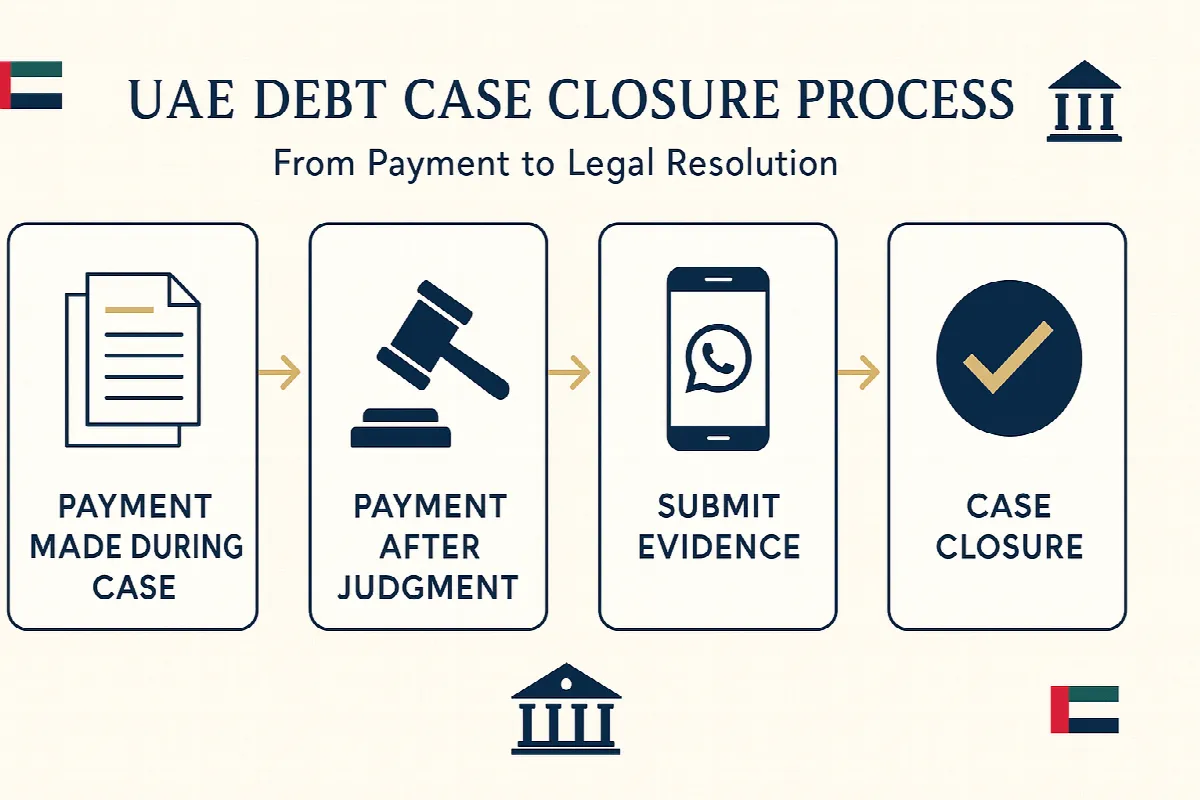
According to Dr Hassan Elhais, legal consultant at Awatif Shoqi Advocates & Legal Consultancy, the consequences depend on when you made the payment and the case status.
If Payment Was Made During Ongoing Case
When you settle debt while the case is still proceeding:
Your options:
- Submit payment proof to the court or appointed expert
- Court will issue judgment confirming liability is settled
- You may still be responsible for court fees and expert fees under UAE Civil Procedures Law
Required documentation:
- Bank transfer statements
- WhatsApp messages from creditor acknowledging payment
- Any receipts or acknowledgments received
If Payment Was Made After Court Judgment
When you pay after the court has already issued a judgment:
The process:
- Submit payment proof to the execution file
- Request cancellation of all execution procedures
- Ask for permanent closure of the execution file
- Court may refer to accounting department for verification
Can Interest and Penalties Still Accumulate?
Yes, legal interest may continue accruing until formal case closure.
Key points about ongoing charges:
- Legal interest is calculated from judgment date until final payment
- Interest rates are determined by court judgment
- You remain responsible for legal interest until the case is formally closed
- Payment proof can help calculate any remaining interest owed
Is WhatsApp Evidence Enough to Prove Payment?
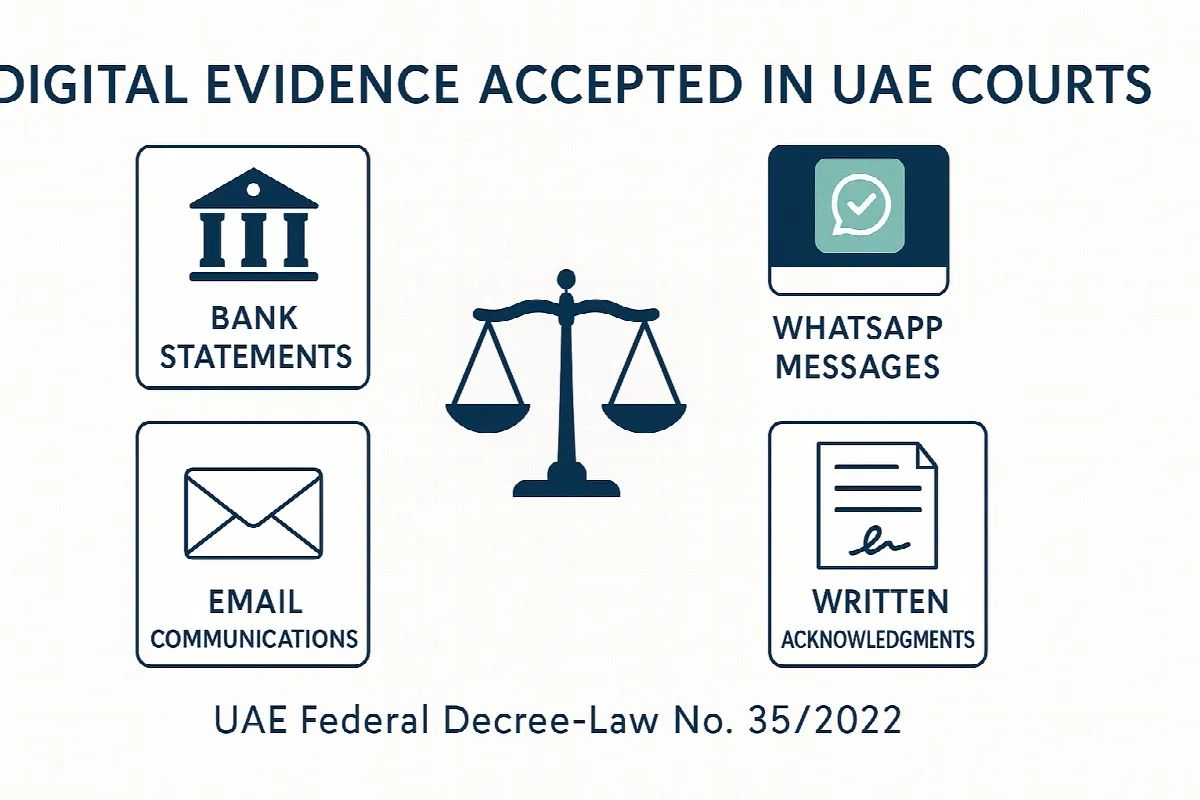
WhatsApp messages and bank transfers are accepted as valid evidence in UAE courts.
According to legal experts, acceptable proof includes:
- Electronic evidence: WhatsApp messages, email communications
- Financial records: Bank statements showing transfers
- Written acknowledgments: Receipts or confirmation messages
- Digital communications: Screenshots of payment confirmations
Trial courts have discretion to examine and decide on the genuineness and admissibility of such evidence. The UAE’s digital evidence laws increasingly recognise electronic communications as valid proof.
What You Should Do If Your Case Remains Open
For Ongoing Cases
Immediate actions:
- Attend the hearing with all payment documentation
- Submit a defence memorandum including proof of payment
- Provide comprehensive evidence (bank statements, WhatsApp messages, receipts)
- Consider appeal options if initial court doesn’t accept evidence
For Cases With Existing Judgments
Required steps:
- Submit payment proof to the execution court
- Request case closure based on full payment
- Provide accounting verification if requested by court
- Follow up regularly on case status
Will You Still Pay Legal Fees to Close the Case?
Possibly, but it depends on your specific situation.
Financial obligations may include:
- Court fees: Processing costs for case closure
- Expert fees: If technical experts were appointed
- Legal interest: Calculated from judgment to payment date
- Administrative costs: Various procedural expenses
Once all amounts are paid and no outstanding balance remains, you can request formal case closure.
Preventing Future Issues: Best Practices
Documentation standards:
- Always request official receipts for debt payments
- Keep detailed records of all communications
- Screenshot WhatsApp confirmations immediately
- Maintain bank statement copies showing transfers
Follow-up procedures:
- Verify case closure within 30 days of payment
- Check court systems for active cases regularly
- Monitor your legal status before major transactions
Professional assistance:
- Consider legal consultation for significant amounts
- Use free legal aid services if needed
- Seek mediation through appropriate channels
Key Takeaway
Paying your debt doesn’t automatically close legal cases in the UAE. You must actively submit proof of payment to the court and follow proper procedures to achieve formal case closure. WhatsApp messages and bank transfers are valid evidence, but you may still be responsible for court fees and legal interest until the case is officially resolved.
Take action immediately if you discover an open case after payment. The longer you wait, the more complex and expensive resolution becomes.
Facing similar legal challenges? Understanding UAE debt and payment laws is crucial for residents. Learn more about UAE banking regulations and your rights as a debtor to protect yourself from similar situations.
Further Reading
The UAE week, every Monday
The week's stories on jobs, visas, money and daily life in one short email. Unsubscribe in one click.