WhatsApp Divorce UAE Law 2025: Digital Evidence in Family Courts
UAE courts recognise WhatsApp divorce communications. Learn legal requirements, documentation process, and expatriate worker protections under 2025 law.
By Vadim Kouznetsov, published

Digital communication is transforming family law in the UAE, as courts increasingly recognise WhatsApp messages, voice notes, and other electronic evidence in divorce proceedings. Recent legal developments demonstrate how messaging platforms are reshaping traditional marriage dissolution processes across the Emirates.
UAE Law Recognises Digital Divorce Communication
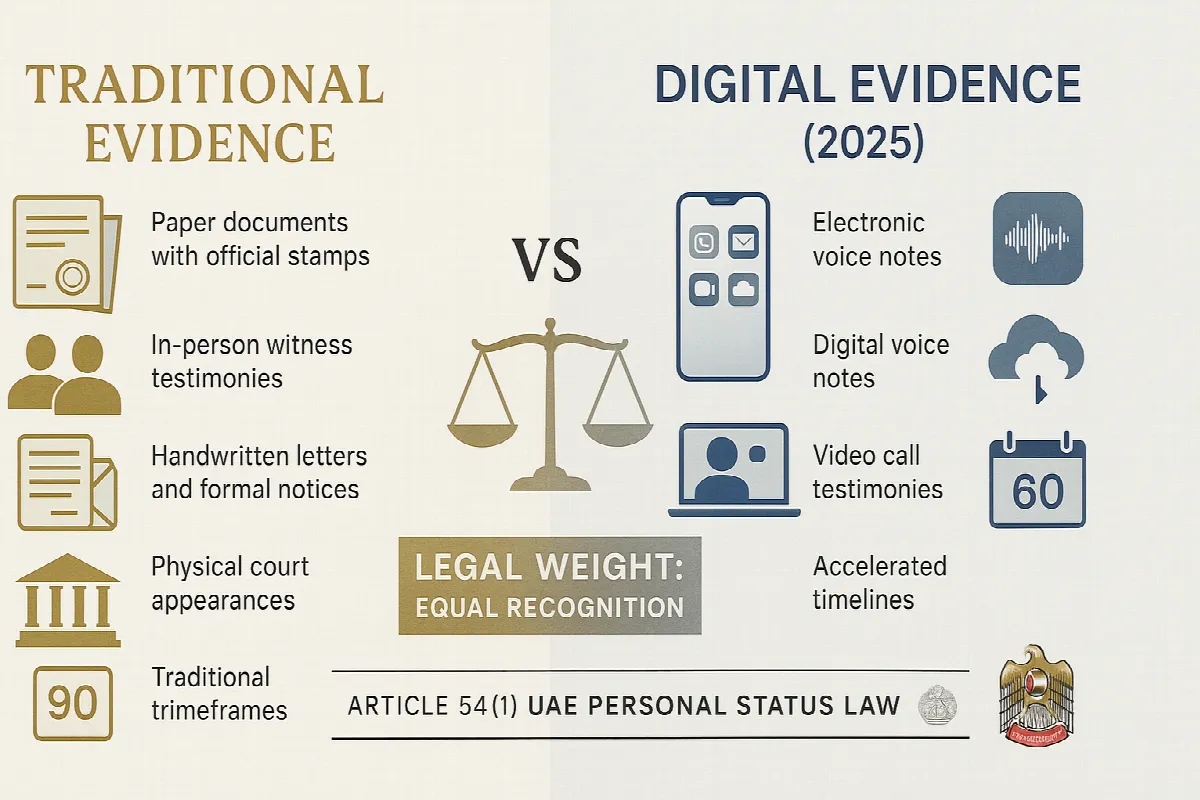
Under Article 54(1) of the UAE Personal Status Law, divorce can be pronounced “by speech or writing by any means.” This broad definition encompasses modern digital communication methods, including WhatsApp voice notes and text messages. The law states that “divorce is pronounced by the husband by speech or writing by any means, and if he is unable to do either, then by a comprehensible signal.”
This legal framework acknowledges the reality of modern communication, where couples increasingly use digital platforms for important conversations. However, specific legal requirements must be met for such communications to hold validity in UAE courts.
Voice Note Divorce: Legal Requirements and Validity
A divorce pronounced via voice notes over WhatsApp outside the UAE may be valid if it fulfils the tests laid down in the provisions of UAE law, according to recent legal guidance. The key legal criteria include:
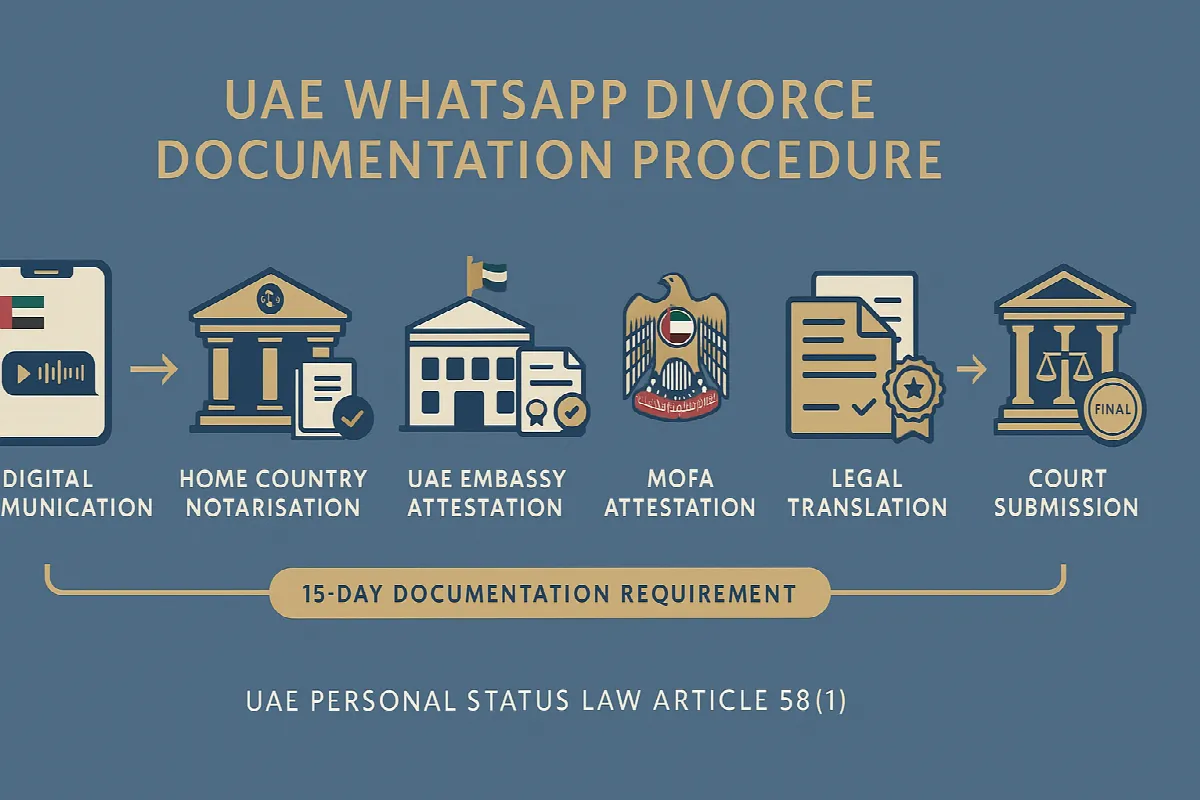
Clear Intent: The communication must clearly indicate the husband’s intention to divorce Comprehensible Content: Voice notes must be understandable and unambiguous Legal Documentation: Husbands must document the divorce in competent courts within 15 days Proper Attestation: Foreign divorces require notarisation and embassy attestation
Article 58(1) of the UAE Personal Status Law requires that “the husband shall document the divorce before the competent court within a maximum period of (15) fifteen days from the date of its occurrence.”
Cross-Border Divorce Jurisdiction in UAE
The UAE legal system provides comprehensive coverage for cross-border divorce cases, particularly relevant for expatriate workers. An individual may file a civil or personal case against his or her spouse, even though the spouse does not have residency in the UAE, offering protection for residents whose spouses have left the country.
Article 4(2) of the UAE Personal Status Law grants courts jurisdiction in cases where:
- The wife has domicile or residence in the UAE
- The husband previously had domicile, residence, or work in the UAE
- The husband has abandoned his wife and relocated abroad
This framework particularly benefits working professionals who may find themselves legally separated from spouses who have returned to home countries.
Electronic Evidence in UAE Family Courts
UAE courts increasingly accept digital evidence in family law proceedings. The Family Court in Dubai considers, and in most instances accepts, all written correspondence between the parties as evidence, including emails, text messages, and WhatsApp communications.
However, strict procedural requirements apply:
- Messages must be printed and professionally translated
- Legal translators must certify translations before court submission
- Evidence must be presented in original form when possible
- Parties cannot refuse to provide electronic evidence without reasonable grounds
The UAE Evidence Law (Federal Decree-Law No. 35/2022) strengthens digital evidence admissibility, stating that electronic evidence carries the same weight as written documentation in court procedures.
New 2025 Personal Status Law Changes
The updated UAE Personal Status Law, effective April 2025, introduces significant reforms affecting digital divorce proceedings:
Reduced Arbitration Period: Divorce arbitration time decreased from 90 to 60 days Enhanced Documentation Requirements: Mandatory registration within 15 days with compensation provisions Tatleeq Introduction: Either spouse can petition for court-ordered divorce under specific circumstances Modernised Procedures: Streamlined processes acknowledging digital communication realities
These changes reflect the UAE’s commitment to modernising family law whilst maintaining cultural values and legal protections.
Impact on Expatriate Workers
For the UAE’s diverse expatriate workforce, these legal developments create important implications:
Enhanced Legal Protection: Clear frameworks for cross-border divorce cases Digital Evidence Recognition: WhatsApp and email communications gain legal standing Faster Resolution: Reduced arbitration periods accelerate case completion Choice of Law: Non-Muslims can apply home country laws or UAE legislation
These provisions particularly benefit professionals working in the UAE whose spouses remain in home countries, offering legal clarity and protection in complex international situations.
Documentation Process for Foreign Divorces
WhatsApp-based divorces initiated outside the UAE require specific documentation procedures:
- Notarisation: Obtain notarised documents confirming voice note contents in the husband’s home country
- Embassy Attestation: UAE embassy in the home country must attest documents
- MOFA Attestation: Ministry of Foreign Affairs in the UAE must validate documentation
- Legal Translation: Professional translation and Ministry of Justice attestation required
- Court Submission: Final documentation submitted to Personal Status Court
This comprehensive process protects both parties’ rights whilst ensuring legal validity across jurisdictions.
Professional Legal Guidance Recommendations
Given the complexity of digital divorce proceedings, legal experts recommend professional consultation. The intersection of international law, digital evidence, and UAE family legislation requires specialised expertise to navigate successfully.
Key considerations include:
- Jurisdiction selection for optimal legal outcomes
- Evidence preservation and presentation requirements
- Timeline compliance for documentation procedures
- Choice of applicable law for non-Muslim expatriates
Career and Employment Implications
For professionals working in the UAE, understanding digital divorce law has practical career implications. Clear legal frameworks provide security for expatriate workers, enabling informed decisions about:
- Long-term UAE residence planning
- Family reunification processes
- Legal protection in international marriages
- Career development without legal uncertainty
This legal clarity supports the UAE’s position as a premier destination for international talent, offering comprehensive protection for diverse family structures.
Future of Digital Family Law
The UAE’s progressive approach to digital evidence in family law positions the Emirates as a regional leader in legal modernisation. As digital communication becomes increasingly prevalent, these frameworks provide templates for other jurisdictions addressing similar challenges.
The integration of traditional Islamic family law principles with modern digital realities demonstrates the UAE’s commitment to maintaining cultural authenticity whilst embracing technological advancement.
Key Takeaway: The UAE’s recognition of WhatsApp and digital communications in divorce proceedings reflects a modern, practical approach to family law that acknowledges how couples actually communicate today. While the law provides pathways for digital divorce recognition, proper legal documentation and professional guidance remain essential for protecting both parties’ rights. For expatriate workers in the UAE, these legal frameworks offer important protections and clarity in cross-border family situations.
Further Reading:
The UAE week, every Monday
The week's stories on jobs, visas, money and daily life in one short email. Unsubscribe in one click.