Dubai Metro Etiquette: Simple Hacks for Better Commuting 2025
Transform your Dubai Metro journey with simple etiquette hacks. Learn from commuters’ experiences and discover courtesy tips for better daily travel.
By Vadim Kouznetsov, published

Dubai Metro stands as a world-class transportation system serving millions of commuters daily, but simple courtesy improvements could enhance the journey for everyone. From letting passengers exit before boarding to maintaining quiet spaces, small acts of consideration can transform your daily commute into a more pleasant experience.
Commuters consistently praise the Dubai Metro’s efficiency and reliability, yet common etiquette oversights during rush hours can make journeys less comfortable. Understanding and implementing basic courtesies creates a better environment for all passengers sharing this vital transport network.
Key Takeaway: Dubai Metro commuters report that simple etiquette improvements like clearing doors, reducing noise levels, and offering priority seats could significantly enhance the daily journey experience for millions of users across the network.
Let Passengers Exit Before Boarding: The Golden Rule
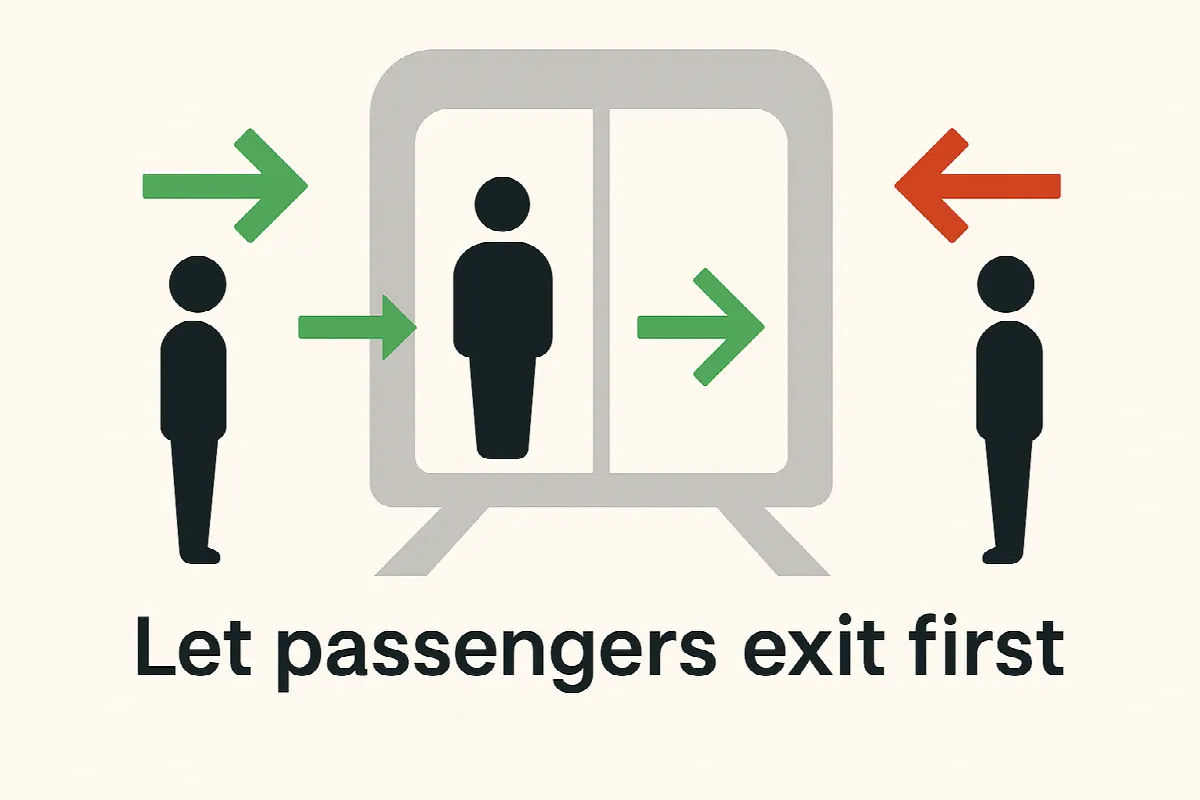
Nisrin Arsiwala, a PR consultant in Dubai, identifies the most crucial improvement needed: “One of the most important is standing clear of the doors and letting passengers get off before others try to board. It’s a small gesture, but it makes the whole process smoother and quicker.”
This fundamental principle of public transport etiquette reduces platform congestion whilst speeding up boarding times for everyone. When passengers block doors or push inward whilst others attempt to exit, the entire process slows down, particularly during peak hours.
The Dubai Metro continues growing in popularity, with 133 million passengers using the Red and Green lines in the first half of 2024 alone. Implementing this simple courtesy could improve flow efficiency across the entire network.
Solving the Awkward Seat-Hovering Problem
Dubai-based PR professional Zainab A Jimoh identifies a common challenge: the uncomfortable dynamics surrounding seat availability. “There’s this sort of silent ‘seat tension’ – people awkwardly hovering, trying to guess who’s about to get off, but not wanting to be rude.”
The physical toll of standing during long commutes, especially when crossing multiple zones, adds significant strain to daily travel. This challenge becomes particularly acute during peak hours when finding available seating proves difficult.
Innovation: The “Out Soon” App Solution
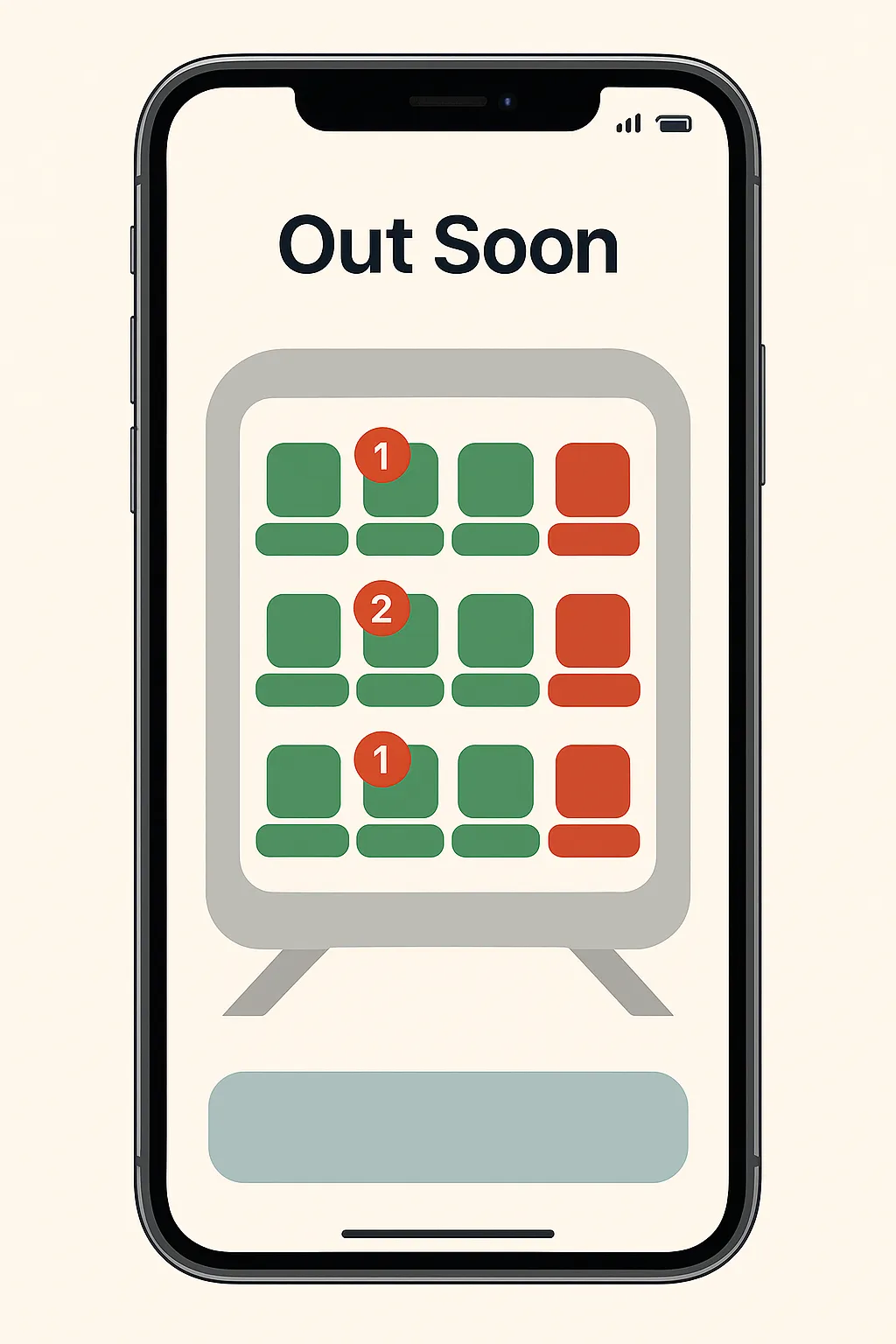
Jimoh has developed an innovative solution currently in development. The “Out Soon” mobile app allows commuters to voluntarily log their drop-off station, providing other passengers in the same cabin advance notice when seats might become available.
“The idea is to reduce the crowding and hovering. No awkward guesswork, just a small tech solution to make everyone’s commute that little bit easier,” she explained.
This approach addresses the seat availability challenge whilst maintaining passenger privacy and reducing uncomfortable situations around seating.
Learning from International Metro Etiquette
Arnab Ghosh, who has travelled on trains in Osaka, Kyiv, and Almaty, brings valuable international perspective to Dubai Metro etiquette. His observations of Japanese train culture offer particular insights.
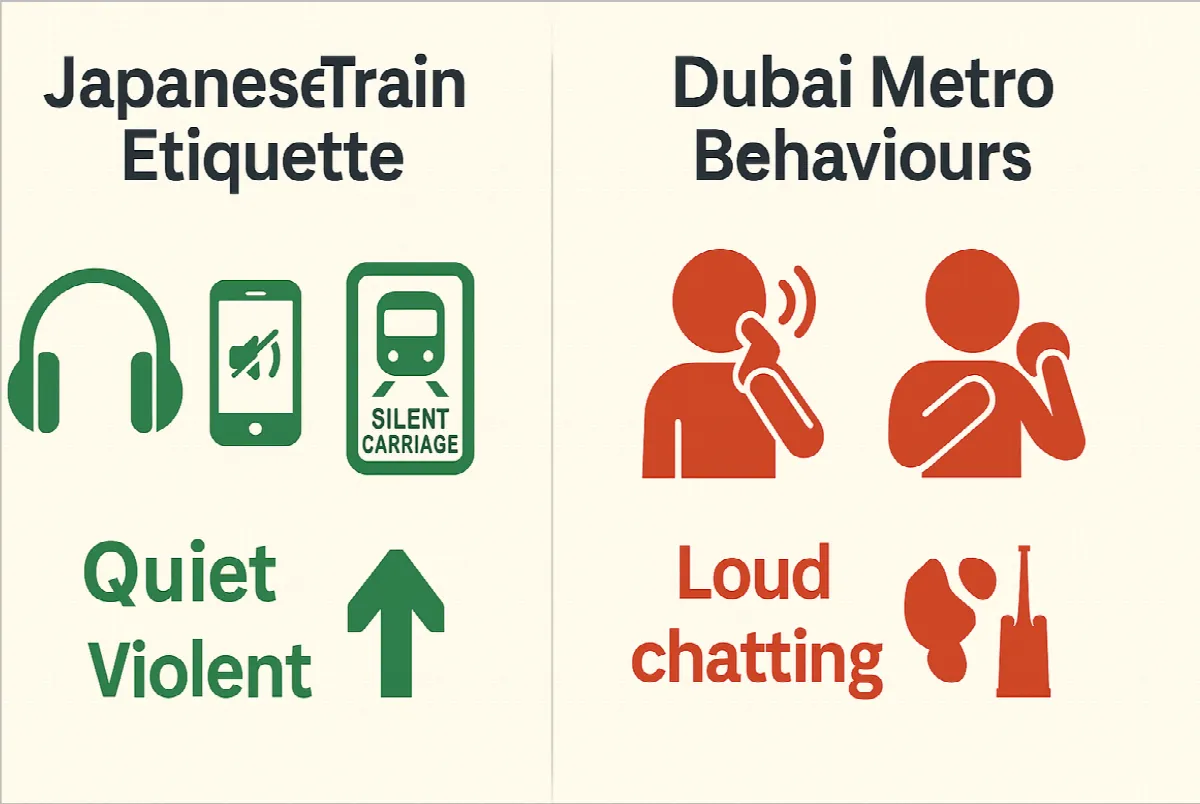
“In Japan, even when people are on the phone, they speak so softly you’d barely notice. They’re genuinely mindful of not disturbing others,” Ghosh noted.
The Quiet Train Concept
Japanese metros demonstrate how maintaining low noise levels creates more pleasant journeys for all passengers. This approach contrasts with common Dubai Metro experiences where loud videos, music, and conversations frequently disrupt the peaceful environment.
Despite clear signage and regular announcements reminding passengers to keep volumes low, compliance remains inconsistent across the network.
Address Loud Audio: No Headphones, No Sound
Anna Ivanova-Galitsina highlights a persistent issue affecting passenger comfort: “There’s always someone playing voice notes or videos on speaker, so loudly that you can’t focus or relax. I would really like to see a simple rule, no headphones, no voice messages.”
The proliferation of voice messages and videos played through phone speakers creates significant disturbance for nearby passengers. This behaviour particularly impacts commuters trying to read, work, or simply enjoy quiet time during their journey.
Clear enforcement of existing noise policies could dramatically improve the Metro environment for all users. The RTA already displays notices about keeping phone volumes low throughout the system.
Prevent Overcrowding in Already Full Carriages
Sameeta Rajpal, a Dubai-based account manager, describes a common frustration: “Sometimes people push their way in even when there’s clearly no space left. It becomes hard to even breathe.”
This behaviour creates uncomfortable conditions for existing passengers whilst potentially creating safety concerns in emergency situations.
Innovative Capacity Solutions
Rajpal suggests implementing systems preventing doors from opening when carriages reach maximum capacity. This automated approach could reduce overcrowding without requiring constant staff intervention.
Fellow commuter Sukanya Kazmi proposes a visual solution: “Why not use colour-coded zones on the platform, green for space available, yellow for almost full, and red for full? It taps into basic colour psychology.”
Such systems could guide passenger behaviour naturally whilst reducing the need for constant announcements and staff intervention.
Priority Seating: A Matter of Basic Courtesy
Despite clearly marked priority seats for elderly passengers, pregnant women, and People of Determination, compliance remains inconsistent. Rajpal observes: “I’ve seen young, able-bodied people sitting in seats meant for the elderly, while older passengers are left standing.”
Ghosh recalls positive examples from his travels: “I saw lots of young people instantly offer their seat to older passengers, especially women or those carrying heavy bags. That kind of instinctive courtesy is something I’d love to see more of here.”
This basic courtesy becomes particularly important during rush hours when seating becomes scarce and standing becomes challenging for vulnerable passengers.
Social Media Feedback Highlights Common Issues
Gulf News polling of Instagram followers revealed additional frequently mentioned concerns:
- Bulky items: Users report passengers carrying oversized bags and equipment despite RTA guidelines against such items
- Door blocking: Passengers positioning themselves in doorways, preventing smooth entry and exit
- Platform behaviour: Inconsiderate positioning during busy periods
These observations align with official RTA guidance and existing regulations, suggesting better awareness and enforcement could address many common complaints.
Dubai Metro’s Growing Success Story
The focus on etiquette improvements comes during a period of remarkable growth for Dubai’s public transport system. Recent statistics show impressive ridership increases:
- 361.2 million public transport users in the first half of 2024
- 6% increase compared to 2023
- Daily average ridership of 1.98 million passengers
- Metro accounting for 37% of all public transport usage
This growth trajectory will continue with the upcoming Dubai Metro Blue Line, adding 30 kilometres and 14 stations to the network by 2029.
Practical Implementation Strategies
Implementing better Metro etiquette requires both individual commitment and systemic support:
Individual Actions
- Pre-boarding preparation: Position yourself correctly on platforms
- Audio consideration: Use headphones for all media consumption
- Space awareness: Avoid blocking doors and pathways
- Priority respect: Offer seats to those who need them most
- Exit courtesy: Allow passengers to disembark before boarding
System-Level Improvements
- Enhanced visual guidance systems for capacity management
- Improved enforcement of existing noise regulations
- Better platform organisation during peak hours
- Technology solutions for seat availability communication
The Broader Context: Dubai’s Transport Evolution
Metro etiquette improvements support Dubai’s broader transport strategy. The comprehensive Roads and Transport Plan 2030 aims to reduce traffic congestion by 30% through various initiatives including:
- Expanded public transport networks
- Flexible working arrangements encouraging off-peak travel
- Intelligent traffic systems
- Sustainable transport promotion
Better Metro etiquette directly supports these goals by making public transport more attractive to potential users currently relying on private vehicles.
Alternative Transport Options
For commuters seeking variety in their daily journeys, Dubai offers multiple transport alternatives that complement the Metro system:
- Intercity connectivity: Ferry services and bus routes connecting Dubai and Sharjah
- Cycling infrastructure: Expanding network of dedicated bike lanes
- Enhanced bus services: Regular route improvements and new connections
- Future innovations: Air taxi services planned for 2025
These alternatives provide flexibility whilst reducing pressure on the Metro system during peak periods.
Looking Forward: Technology and Courtesy Combined
The future of Dubai Metro etiquette lies in combining technological solutions with traditional courtesy. Apps like “Out Soon” demonstrate how innovation can address specific etiquette challenges whilst maintaining the human element of considerate behaviour.
As the network expands with new lines and increased capacity, establishing strong etiquette norms now will benefit millions of future passengers. The Blue Line’s 2029 opening will nearly double the system’s reach, making current etiquette improvements even more valuable.
Creating Positive Change Through Individual Action
Every Metro user can contribute to improving the daily commute experience. Small considerations—letting people exit first, keeping noise levels low, offering seats when appropriate—create cumulative improvements benefiting everyone.
The Dubai Metro’s world-class infrastructure deserves equally world-class passenger behaviour. By implementing these simple etiquette improvements, commuters can transform their daily journeys whilst supporting Dubai’s vision of efficient, sustainable urban mobility.
As ridership continues growing and new lines come online, establishing positive etiquette patterns now will create lasting benefits for the millions of passengers who depend on this vital transport network.
The goal isn’t just efficient transport—it’s creating a pleasant, respectful environment where everyone can enjoy their journey through this remarkable city.
Further Reading
Related Articles:
The UAE week, every Monday
The week's stories on jobs, visas, money and daily life in one short email. Unsubscribe in one click.