UAE Airlines Cancel Flights: Middle East Tensions Disrupt Travel
Emirates, Etihad, flydubai and Air Arabia cancel flights to Iran, Iraq, Jordan, Lebanon due to regional tensions. Check status and rebooking options now.
By Vadim Kouznetsov, published

Major UAE carriers including Emirates, Etihad Airways, flydubai, Air Arabia, and Wizz Air Abu Dhabi have suspended numerous routes following escalating regional conflicts and airspace restrictions across the Middle East.
The widespread disruptions affect passengers travelling through Dubai, Abu Dhabi, and Sharjah to destinations including Iraq, Iran, Jordan, and Lebanon, highlighting the aviation industry’s vulnerability to geopolitical tensions.
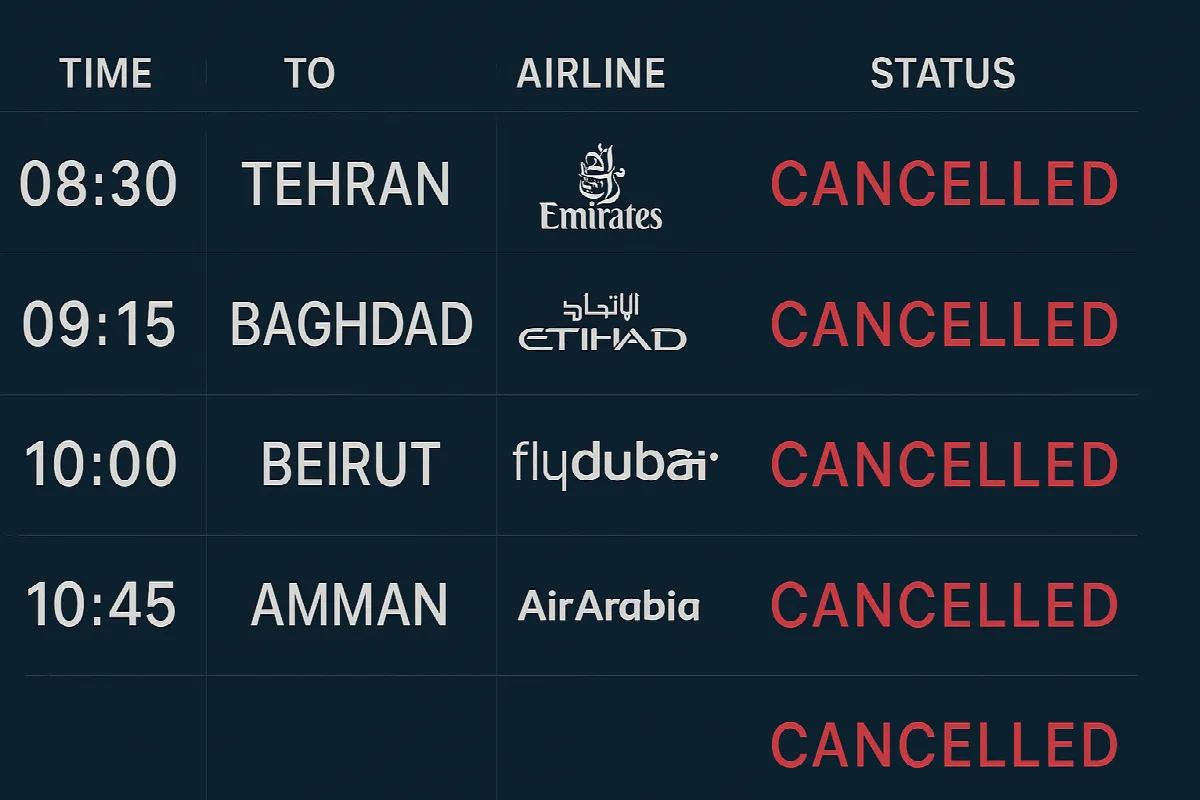
Emirates Suspends Key Middle East Routes
Emirates has completely halted passenger acceptance for travel between Dubai and several critical destinations until further notice. The airline cancelled specific flights on 15-16 June:
- Dubai–Tehran: EK977/978, EK979/980
- Dubai–Basra: EK945/946
- Dubai–Baghdad: EK941/942
- Dubai–Beirut: EK957/958, EK953/954
- Dubai–Amman: EK903/904, EK905
- Amman–Dubai: EK906 (16 June)
Passengers can contact travel agents or Emirates offices directly for rebooking assistance. Flight status updates are available on emirates.com through the Manage Your Booking portal.
For those working in aviation or seeking Emirates careers, these operational challenges demonstrate the complex nature of airline management during regional instability.
Etihad Airways Faces Abu Dhabi Disruptions
Etihad Airways continues experiencing significant disruptions with all Abu Dhabi–Tel Aviv flights cancelled through 16 June. Services to Amman and Beirut resumed on 15 June but operate on revised schedules for existing bookings only.
Multiple flights are being rerouted due to restricted Middle East airspace. Passengers connecting through Abu Dhabi to cancelled destinations will not be accepted at origin points. Status updates are available on etihad.com or via +971 600 555 666.
The airline’s ambitious expansion plans to hire 12,000 employees by 2030 continue despite current operational challenges.
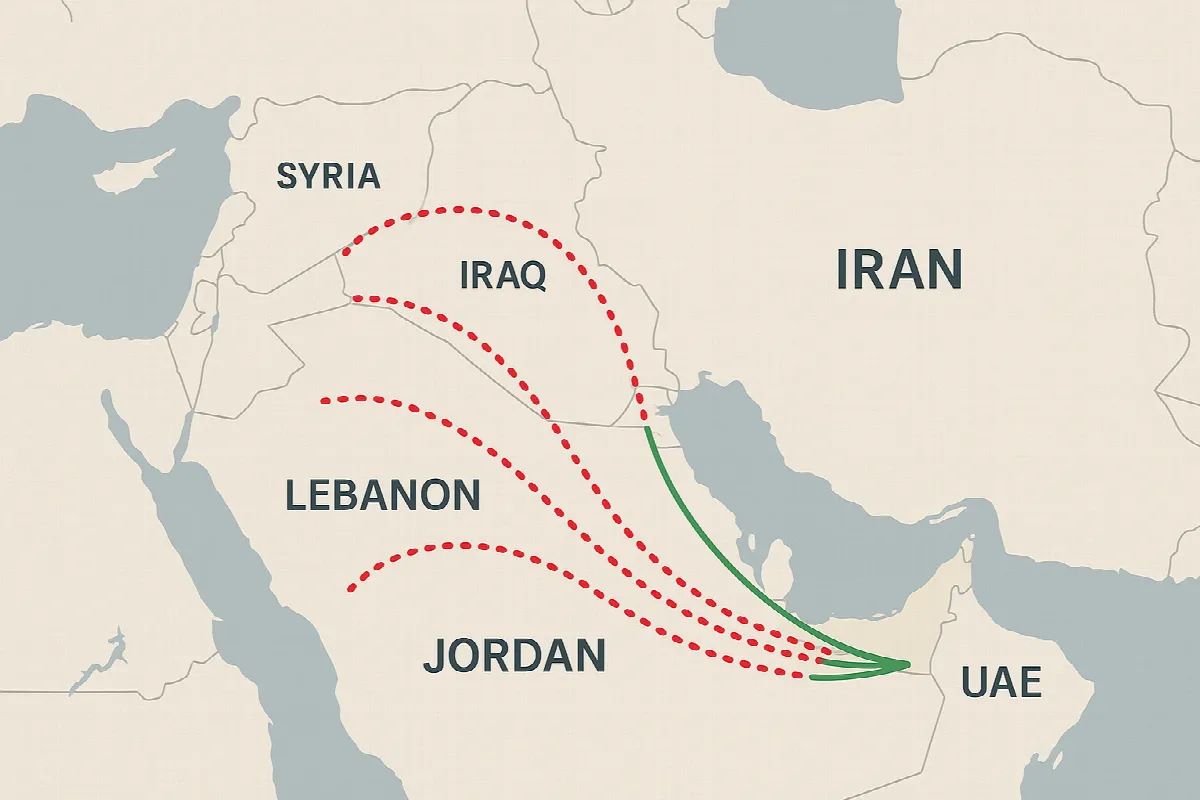
flydubai Maintains Limited Operations
Flydubai confirmed ongoing cancellations on 15-16 June for flights to Iran, Iraq, Israel, Jordan, Lebanon, and Syria. However, some previously suspended flights have resumed with alternative routing to avoid restricted airspace.
The airline actively monitors conditions and assists affected passengers directly. Despite current disruptions, flydubai recently achieved record revenue of £3.5 billion in 2024, demonstrating the carrier’s operational resilience.
Air Arabia Suspends Multiple International Routes
Sharjah-based Air Arabia temporarily cancelled flights to and from ten nations:
- Iran, Iraq, Jordan
- Russia, Armenia, Uzbekistan
- Azerbaijan, Georgia, Kyrgyzstan
- Kazakhstan
Additional delays and reroutes may occur as regional conditions evolve. The low-cost carrier’s strong market position in the UAE’s rapidly growing budget travel sector provides financial stability during these disruptions.
Wizz Air Abu Dhabi Adjusts Operations
Wizz Air Abu Dhabi cancelled several flights on 14 June due to airspace closures. Passengers received email and text notifications with options for free rebooking or full refunds via credit or original payment methods.
UAE Government Issues Travel Advisory
The UAE Ministry of Foreign Affairs issued an urgent travel advisory on Saturday, urging Emirati nationals, residents, and visitors to stay updated by contacting airlines directly amid widespread Middle East air travel disruptions.
The advisory specifically addresses UAE nationals in Jordan, Iraq, Lebanon, Syria, Iran, and Israel, encouraging them to remain vigilant and register with the ‘Twajudi’ consular service for emergency support.
Impact on UAE Aviation Employment
These disruptions occur as the UAE aviation sector experiences unprecedented growth, with Dubai International Airport handling 60.2 million passengers in 2024. The current situation highlights the industry’s resilience whilst creating temporary challenges for aviation professionals.
Aviation workers and job seekers in the sector should monitor developments through JobXDubai’s aviation career resources for updated opportunities as operations normalise.
What Should Passengers Do Now?
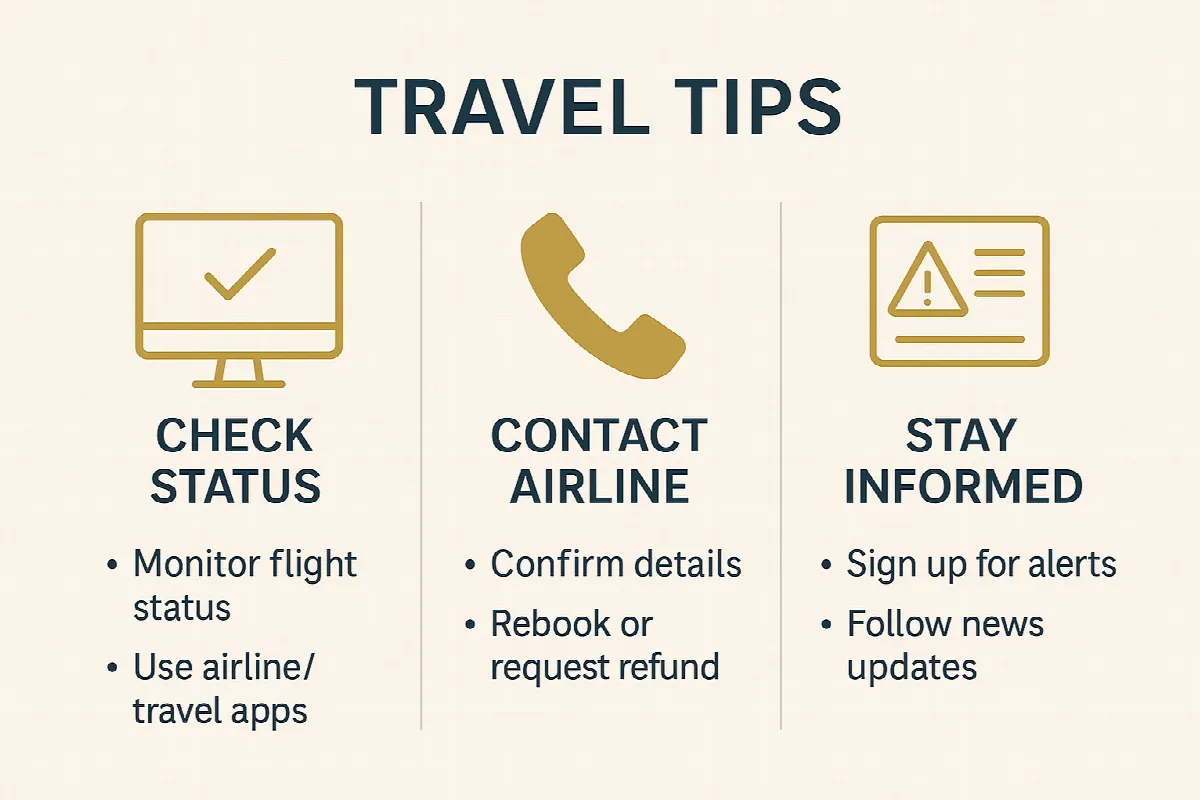
Airlines stress passenger and crew safety as their highest priority. Travellers should immediately:
Check Flight Status Regularly
- Visit airline websites for real-time updates
- Monitor official communication channels
- Confirm booking details and contact information
Contact Your Airline or Agent
- Reach out to travel agents or airline offices
- Explore rebooking options without delay
- Inquire about refund policies where applicable
Stay Informed About Regional Developments
- Follow official government travel advisories
- Register with consular services if travelling to affected regions
- Maintain flexible travel plans during this period
Background: Regional Airspace Restrictions
These widespread cancellations follow significant airstrikes and escalating tensions causing airspace closures across multiple Middle Eastern countries. Regional aviation authorities have implemented safety measures affecting commercial flight operations throughout the area.
Airlines continue monitoring the situation closely, with many implementing alternative routing where possible to maintain some level of service whilst prioritising passenger safety.
The UAE’s position as a global aviation hub remains strong, with long-term infrastructure projects like Dubai South continuing to advance despite short-term disruptions.
Further Reading
Related Articles:
- Emirates Careers 2025: Complete Application Guide
- Etihad Airways Hiring 12,000 Jobs: Massive Recruitment Drive
- UAE Budget Travel Surge: Low-Cost Airlines Capture 29% Market Share
- Dubai Airport Leads Global Air Travel: 60.2M Passengers in 2024
- flydubai Posts Record £3.5bn Revenue in 2024
For the latest updates on UAE flight cancellations and regional travel advisories, bookmark this page and check airline websites regularly. Job seekers planning travel for interviews or work assignments should allow extra time and maintain flexible arrangements during this period.
The UAE week, every Monday
The week's stories on jobs, visas, money and daily life in one short email. Unsubscribe in one click.