Dubai Government Hospitals: Complete Guide to Free Treatment Options (2026)
Who gets free or subsidised care at Dubai's government hospitals in 2026? Emergency rules, Saada and Enaya, the new national scheme for Emiratis, and what expats pay.
By Vadim Kouznetsov, published , updated
Updated 3 October 2026: Dubai Health now runs the hospitals, Enaya has a new administrator, and a national insurance scheme for Emiratis is coming.
Dubai's government hospitals are run by Dubai Health, the public healthcare provider, while the Dubai Health Authority (DHA) regulates the sector and the emirate's mandatory health insurance. Treatment is not automatically free for most residents. Whether you pay depends on who you are, how you are insured, and whether it is an emergency.
Who gets free or subsidised treatment in Dubai?
Emergencies: you will be treated first
A hospital in the UAE cannot turn away a patient whose life is at risk. Federal medical liability law requires doctors to give emergency treatment on the spot, and Dubai's health insurance law requires providers to treat emergencies even when the insurer cannot be reached.
What that does not mean is that emergency care is always free. If you are insured, your policy pays under its terms. If you are not, you can be billed after you have been stabilised.
UAE nationals: Saada and Enaya
- Saada covers Dubai citizens who do not benefit from any other government health programme. Members can use Dubai Health facilities and private providers in the network.
- Enaya covers employees of Dubai government departments and their families, plus Dubai citizens who are not on Saada. Since 1 March 2026, Enaya has been administered by Almadallah Healthcare Management. Cover includes outpatient, inpatient, emergency, maternity and pharmacy benefits, subject to policy limits and co-payments.
Thiqa is Abu Dhabi, not Dubai
Thiqa is the Abu Dhabi government's programme for UAE nationals in that emirate. It is not a Dubai scheme, although Thiqa members can get treatment outside Abu Dhabi under its own rules.
A national scheme for all Emiratis
In May 2026, President Sheikh Mohamed bin Zayed directed the adoption of a unified national health insurance system covering Emirati citizens in all seven emirates, according to Gulf News. It is meant to bring Thiqa, Saada and Enaya-style cover under one framework. No start date or details of how current Dubai programmes change had been published at the time of writing.
Children's vaccinations
Routine childhood vaccinations under the national schedule are offered through government health centres. Bring your child's vaccination record and Emirates ID, and check with your nearest Dubai Health centre for current charges.
Expat residents: insurance is mandatory
Health insurance is compulsory for everyone living in Dubai under Dubai Law No. 11 of 2013:
- Employers must insure their employees. Staff earning AED 4,000 a month or less must get at least the DHA Essential Benefits Plan (EBP).
- Visa sponsors are responsible for dependants. If you sponsor your spouse or children, you must insure them unless your employer does.
- Government hospitals accept many insurance plans. Show your Emirates ID at registration so the hospital can check your cover.
Without insurance, you pay the hospital's published rates out of pocket. Ask for an estimate before any planned treatment. Worried about rising premiums? Read our fact check on the 2026 health insurance rumours.
Dubai Health's government hospitals
All Dubai Health hospitals share one number: 800 60.
- Rashid Hospital, Umm Hurair: opened in 1973, the emirate's main trauma and emergency centre, open 24/7.
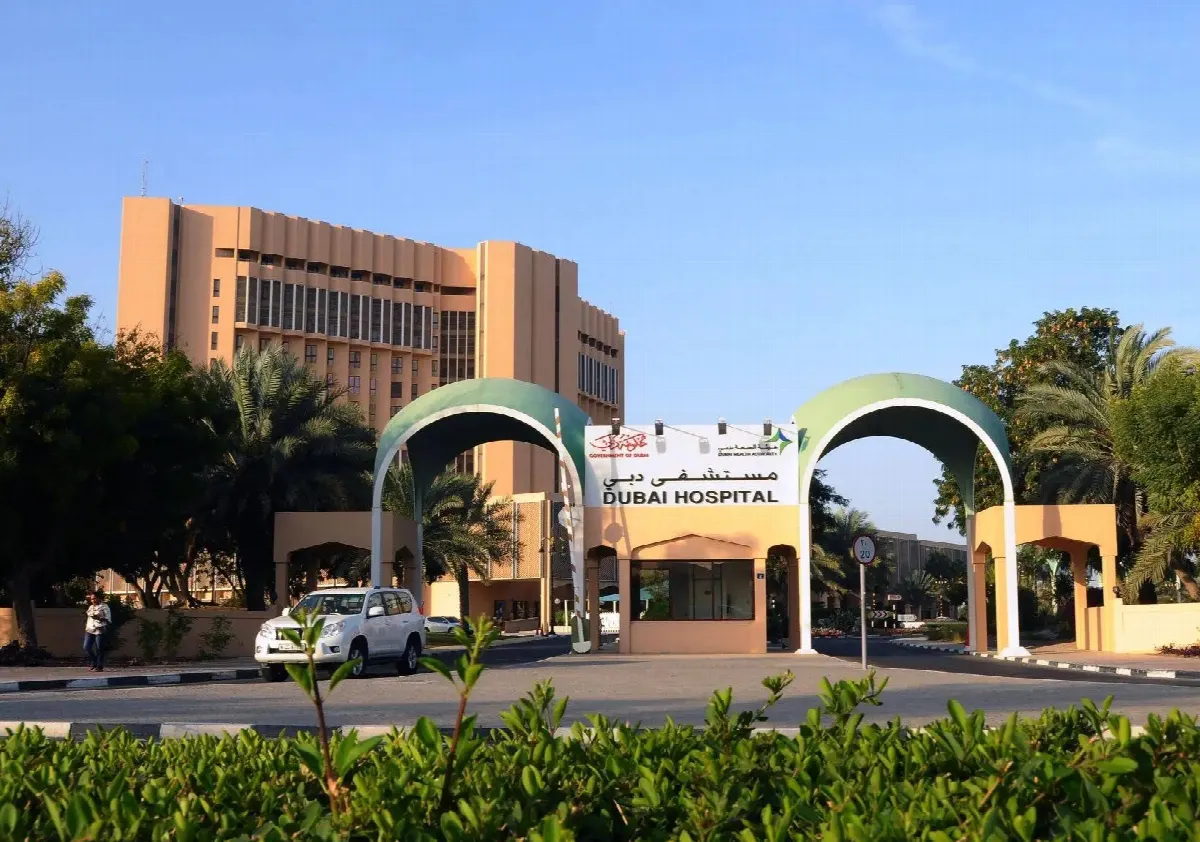
- Dubai Hospital, Al Khaleej Street, Deira: tertiary hospital with specialist centres.
- Latifa Hospital, Al Jaddaf: women's and children's hospital, maternity, gynaecology and neonatal care.
- Al Jalila Children's Hospital, Al Jaddaf: Dubai's first public hospital dedicated to children.
- Hatta Hospital, Hatta: family medicine, paediatrics, obstetrics and other services for the Hatta area.
- Jebel Ali Hospital, Dubai Industrial City: Dubai Health's hospital in the south of the emirate.
- Hamdan Bin Rashid Cancer Hospital, Al Jaddaf: listed by Dubai Health as opening soon.
Clinic hours vary by department, so check dubaihealth.ae or call 800 60 before you go. In an emergency, call 998 for an ambulance.
What to bring to a government hospital
- Your Emirates ID (it links to your insurance)
- Your insurance card or Saada/Enaya details
- Previous reports and a list of your medicines
- Your child's vaccination record for paediatric visits
Starting a new job? Dubai's medical exam rules for work and residency changed in 2025; see our guide to the Dubai health law medical exam rules.
Key takeaway
Dubai's government hospitals are free mainly for UAE nationals covered by Saada or Enaya. Everyone gets emergency treatment first, but uninsured patients can be billed afterwards, and expats must hold health insurance by law.
FAQ
Is treatment free in Dubai government hospitals for expats?
Not usually. Expats must have health insurance, which pays according to the policy. Uninsured patients pay the hospital's rates.
Will a Dubai hospital treat me in an emergency without insurance?
Yes. UAE law requires emergency treatment for patients whose life is at risk. You may receive a bill once you are stable.
What is the difference between Saada, Enaya and Thiqa?
Saada covers Dubai citizens without other government cover. Enaya covers Dubai government employees and their families. Thiqa is Abu Dhabi's programme for UAE nationals in that emirate.
Who pays for my family's health insurance in Dubai?
The visa sponsor. If your employer does not cover your dependants, you must buy insurance for the spouse and children you sponsor.
What number do I call for Dubai Health hospitals?
Call 800 60 for all Dubai Health hospitals. For a medical emergency, call 998.
Further reading
The UAE week, every Monday
The week's stories on jobs, visas, money and daily life in one short email. Unsubscribe in one click.