WhatsApp Panic vs Reality: Will UAE Health Insurance Really Jump 25% in 2026?
WhatsApp warns of 25% UAE health insurance hikes in 2026. Experts say no blanket increase planned. Medical inflation runs 4-8%. Who will actually pay more?
By Vadim Kouznetsov, published

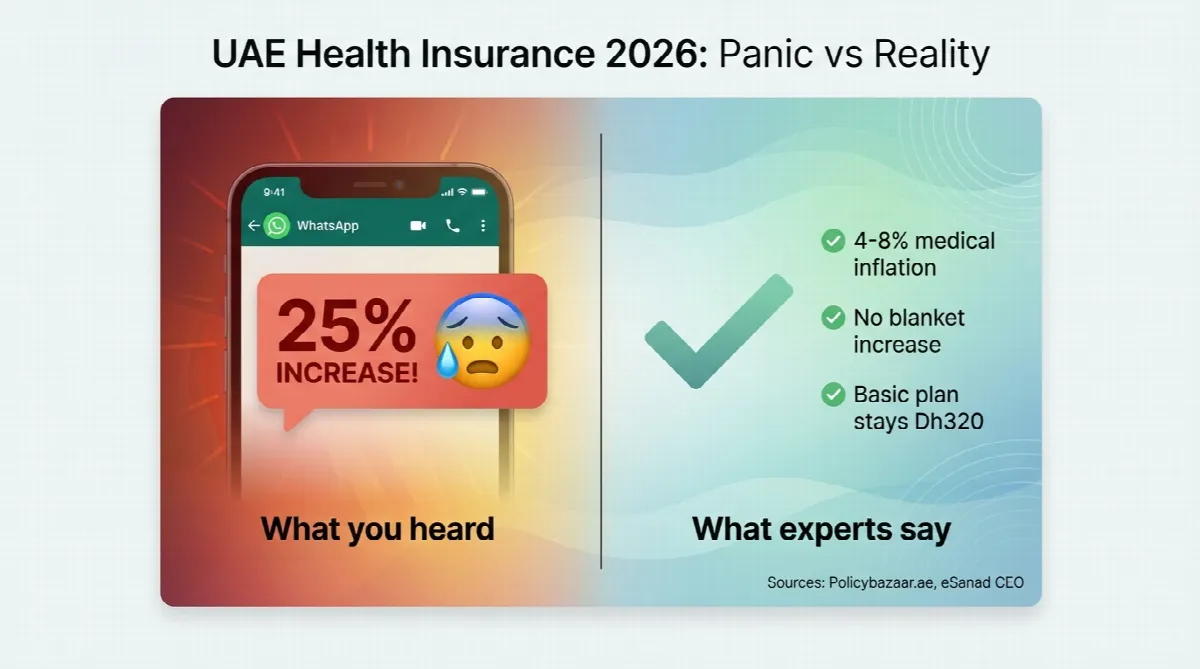
UAE residents have been receiving WhatsApp messages and emails warning of 18 to 25 per cent health insurance premium increases from January 2026. The messages have triggered anxiety among families, particularly those with children or elderly dependents.
But is the panic justified? Industry experts say no. Here’s what’s actually happening with health insurance costs in 2026, who will be affected, and how to avoid costly mistakes.
Is There a 25% Health Insurance Increase Coming?
The short answer: No blanket increase is planned.
“There is no blanket 18–25 per cent health insurance price hike planned for January 2026,” said Toshita Chauhan, chief business officer for general insurance at Policybazaar.ae. “Health insurance pricing in the UAE is individualised and depends on factors such as age, claims history, benefits chosen, renewal timing, and more. It is not linked to a calendar-year hike.”
For most residents, premiums are expected to remain stable. The viral messages circulating on WhatsApp appear to be overstating actual market conditions.
What’s Actually Driving Health Insurance Costs?
Medical inflation is real, but the numbers are far lower than the WhatsApp warnings suggest.
“Healthcare cost inflation is currently estimated at around four to eight per cent,” said Anas Mistareehi, CEO of eSanad. “Many insurers are adjusting prices based on these realities, rather than applying double-digit hikes.”
Competition among insurers is helping keep prices in check. Some companies are even offering better terms to retain existing customers rather than risk losing them to competitors.
Factors that determine your individual premium:
- Age
- Emirate of residence
- Type of plan (basic, enhanced, comprehensive)
- Hospital network
- Claims history
- Individual vs employer-sponsored policy
Basic Health Insurance Stays at Dh320
Residents eligible for the UAE’s basic health insurance scheme will see no increase at all.
“The basic plan remains priced at Dh320 per year, as confirmed by authorities,” said Mistareehi.
This is significant for workers in the Northern Emirates where mandatory health insurance took effect from January 2025. The regulated basic plan provides a price ceiling that protects lower-income residents.
Who Will Actually See Higher Premiums?
While many residents may see little or no change, two groups are more likely to face increases: families and senior citizens. Both tend to use healthcare services more frequently, which insurers factor into pricing.
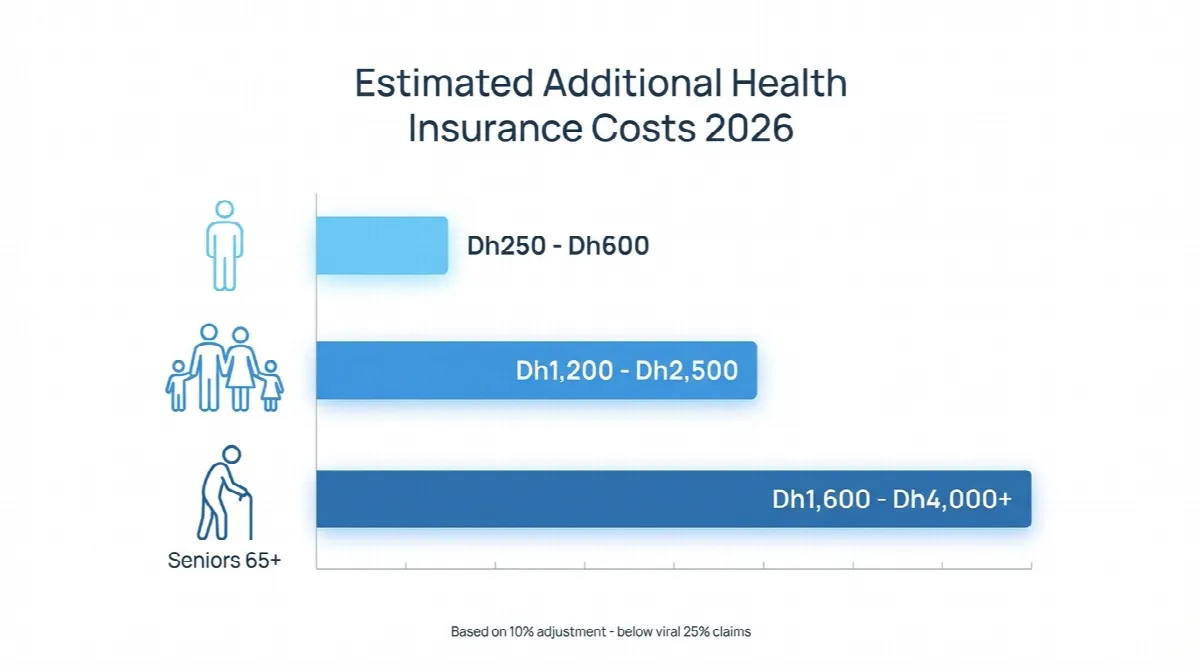
Estimated annual increases for 2026:
| Category | Potential Additional Cost |
|---|---|
| Single adult | Dh250 – Dh600 |
| Family of four | Dh1,200 – Dh2,500 |
| Seniors (65+) | Dh1,600 – Dh4,000+ |
“Pricing reflects how often healthcare is used and the level of benefits, not just inflation,” said Mistareehi. “That’s why families and older residents usually feel the impact more.”
These figures assume moderate adjustments in the 10 per cent range—well below the 25 per cent figure circulating on WhatsApp.
The Real Danger: Panic-Driven Decisions
Industry experts warn that the viral messages could cause more financial harm than the premium increases themselves.
“The real risk is not a sudden universal increase,” said Chauhan. “The danger is residents downgrading coverage or delaying renewals out of fear. That can lead to losing access to hospitals, emergency coverage or chronic care, which becomes very expensive when you actually need treatment.”
Downgrading from comprehensive to basic coverage might save Dh2,000 annually on premiums. But a single hospital admission without adequate coverage could cost Dh20,000 or more out of pocket.
Hidden Costs to Watch For
Even when headline premiums stay stable, residents often feel the impact through changes buried in policy details:
- Higher co-payments – The percentage you pay per visit may increase
- Lower outpatient limits – Annual caps on clinic visits, tests, and consultations
- Pharmacy caps – Maximum amounts covered for medications
- Network changes – Hospitals or clinics removed from your plan
“During doctor visits, tests and pharmacy purchases are the outpatient services where people notice changes immediately,” said Mistareehi.
These adjustments can add hundreds or thousands of dirhams in out-of-pocket healthcare costs even when your premium appears unchanged.
The Biggest Mistake Residents Make
Insurers agreed that the most common and expensive mistake is choosing a health plan based only on price.
“Cheap plans often come with limited hospital networks, high co-payments and low outpatient limits. That can quickly lead to thousands of dirhams in out-of-pocket expenses,” said Mistareehi.
A plan that costs Dh3,000 annually with 20 per cent co-payments and a Dh5,000 outpatient limit may end up costing far more than a Dh5,000 plan with 0 per cent co-payments and a Dh15,000 outpatient limit—especially if you have children who visit doctors frequently.
Skipping Care Creates Bigger Problems
Higher costs are leading some residents to delay non-urgent medical appointments. This behaviour typically backfires.
“Skipping follow-ups or preventive checks often turns small issues into serious and costly health problems,” said Mistareehi. “Ironically, this behaviour increases overall healthcare costs and pushes premiums higher in the future.”
A routine blood test that catches early diabetes costs a fraction of treating advanced complications years later. Preventive care is one of the most cost-effective ways to manage long-term healthcare expenses in the UAE.
What to Do If Your Policy Renews in Early 2026
Residents whose policies expire in January or February 2026 may see revised pricing if insurers adjust plans for the new year. While there’s no guaranteed way to lock in current rates, planning ahead helps.
Steps to take now:
- Start early – Begin the renewal process before year-end
- Get multiple quotes – Request pricing from at least three insurers
- Compare benefits, not just price – Look at co-payments, limits, and network hospitals
- Review your claims history – High claims in 2025 may affect your 2026 pricing
- Avoid last-minute renewals – Rushing reduces your options and negotiating power
“Avoid last-minute renewals, which reduce choices and increase the risk of unexpected costs,” said Mistareehi.
2025 vs 2026: What Changed?
In January 2025, Dubai introduced significant changes to health insurance including premium increases of 10-20 per cent alongside new mandatory benefits such as dental care, psychiatric services, organ transplant coverage, and dialysis support.
The 2026 situation is different. There’s no regulatory mandate requiring new benefits that would justify across-the-board increases. Instead, any changes will be driven by:
- Normal medical inflation (4-8 per cent)
- Individual claims experience
- Competitive positioning among insurers
This explains why experts are dismissing the WhatsApp warnings as exaggerated.
Key Takeaway
The viral WhatsApp messages warning of 18-25 per cent health insurance increases in 2026 are misleading. There is no blanket increase planned. Medical inflation is running at 4-8 per cent, and the basic health insurance plan remains fixed at Dh320 annually. Families and seniors may see moderate increases of 10 per cent based on healthcare usage, potentially adding Dh1,200-4,000 per year. The greater financial risk comes from panic-driven decisions—downgrading coverage or choosing plans based solely on price. Start your renewal process early, compare benefits carefully, and avoid last-minute decisions that limit your options.
FAQs
Is there really a 25% health insurance increase in the UAE for 2026?
No. Industry experts confirm there is no blanket 18-25 per cent health insurance price hike planned for January 2026. Health insurance pricing in the UAE is individualised based on age, claims history, benefits chosen, and renewal timing. Medical inflation is currently estimated at 4-8 per cent, not the double-digit figures suggested in viral WhatsApp messages.
Will the basic health insurance plan increase in 2026?
No. The basic health insurance plan remains priced at Dh320 per year, as confirmed by UAE authorities. Residents eligible for this scheme, including workers in the Northern Emirates under mandatory coverage requirements, will not see any increase.
How much more might families pay for health insurance in 2026?
Families may see moderate increases based on healthcare usage patterns. Industry estimates suggest a family of four could pay Dh1,200 to Dh2,500 more annually, assuming a 10 per cent adjustment. Single adults might pay Dh250-600 more, while seniors could face Dh1,600-4,000+ depending on health needs and coverage level.
What’s the biggest mistake people make when choosing health insurance?
Insurers say the most common and expensive mistake is choosing a health plan based only on price. Cheap plans often come with limited hospital networks, high co-payments, and low outpatient limits, which can quickly lead to thousands of dirhams in out-of-pocket expenses when you actually need care.
How can I avoid paying more for health insurance in 2026?
Start your renewal process before year-end, request quotes from multiple insurers, and compare benefits rather than just premiums. Review co-payments, outpatient limits, pharmacy caps, and hospital networks carefully. Avoid last-minute renewals, which reduce your options and negotiating power. Don’t downgrade coverage out of fear—losing access to hospitals or emergency care can cost far more than modest premium increases.
Further Reading
The UAE week, every Monday
The week's stories on jobs, visas, money and daily life in one short email. Unsubscribe in one click.