Rain Damage in Dubai: Is the Landlord or Tenant Responsible for Repairs?
Heavy rain damaged your rented home in the UAE? Your landlord must pay for structural repairs. Here’s what the law says and what to do next.
By Vadim Kouznetsov, published
Key Takeaway: Under UAE law, your landlord is responsible for repairing structural damage caused by heavy rain — including roof leaks, wall cracks and electrical faults. You cannot be forced to pay for repairs unless your tenancy contract specifically assigns maintenance to you. If your landlord refuses to act, you can apply to the Rental Dispute Centre for a court order — and claim reimbursement for any emergency repairs you paid for yourself.
Heavy rain, thunderstorms and strong winds have hit parts of the UAE, leaving some homes with water damage, electrical faults and damaged windows. If you’re renting, one question matters more than anything else right now: who pays to fix it?
The short answer is your landlord — in most cases.
Who Is Legally Responsible for Repairs After Rain Damage?
In Dubai, Abu Dhabi and Sharjah, the law places the primary responsibility for maintaining a leased property on the landlord. The landlord is legally required to keep the property fit for use and must carry out all necessary repairs during the tenancy period — unless your tenancy contract explicitly states otherwise.
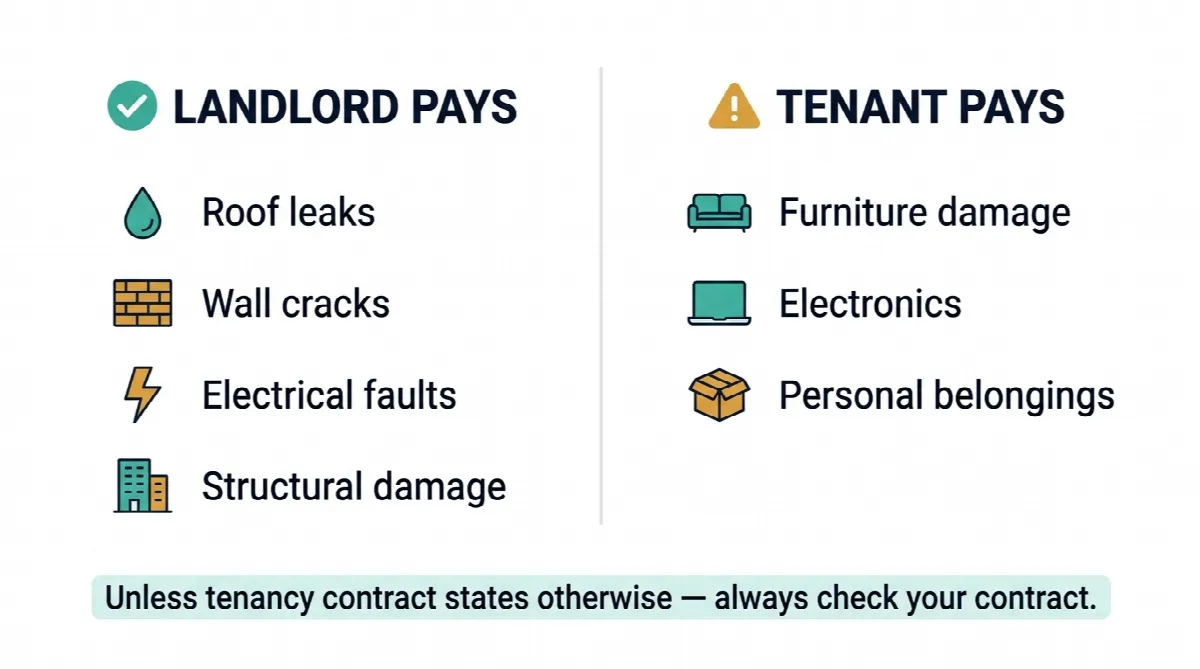
If your roof leaks, your walls crack, or structural damage occurs from the storm, your landlord is expected to fix it and cover the cost — not you.
What Does UAE Law Say About Landlord Repair Obligations?
The key legal protection for tenants is Article 767(1) of Federal Law No. 5 of 1985 (the UAE Civil Code). It states that the landlord is obligated to repair any defect that affects the tenant’s use and enjoyment of the leased property.
If the landlord fails to act, you have two options under this article:
You can cancel the lease, or you can apply for a court order permitting you to carry out the repair yourself and recover the reasonable cost from the landlord.
This is particularly relevant where damage is significant enough to deprive you of normal use of your home — exactly what a severe storm can cause.
Can You Claim Reimbursement for Emergency Repairs?
Yes. If you were forced to spend your own money on urgent repairs that were legally the landlord’s responsibility, you are entitled to seek reimbursement under Article 767(1).
If your landlord refuses to reimburse you or refuses to make repairs, you can escalate the matter to the Rental Dispute Centre (RDC) in Dubai. Equivalent bodies exist in Abu Dhabi and Sharjah.
This step matters: courts have ruled that tenants who fail to engage with the appropriate body may lose their right to claim compensation.
Should You Check Your Tenancy Contract First?
Absolutely. In Dubai specifically, if your tenancy contract contains terms that assign maintenance responsibilities differently, those contractual terms take precedence under Article 16 of Law No. 26 of 2007.
Some contracts include clauses that shift certain maintenance obligations to the tenant. Review your contract carefully before assuming the landlord will cover everything. If the wording is unclear, seek legal advice.
This is also worth bearing in mind if you’re reviewing your security deposit obligations — damage caused by storms (beyond the tenant’s control) should not be deducted from your deposit under Article 21 of the Dubai Rent Law.
What Steps Should You Take Right Now?
Document everything. Photograph and video all damage immediately. Capture timestamps and include surrounding context to show the full extent.
Notify your landlord in writing. Send a formal notice — email or registered letter — describing the damage and requesting repairs. Keep copies of all correspondence. This is critical if the matter later goes to the Rental Dispute Centre.
Review your tenancy contract. Check for clauses relating to maintenance, repairs or force majeure events. These affect your entitlements.
Keep all receipts. If you must carry out emergency repairs yourself, retain every invoice and receipt. You will need these to claim reimbursement.
File a case if needed. If your landlord is unresponsive, file a maintenance case at the RDC in Dubai or the relevant authority in your emirate.
Does Insurance Cover Your Personal Belongings?
No — not automatically. While the law protects the structure of the property, your personal belongings are your responsibility. Furniture, appliances, clothing and electronics are not covered by your landlord’s repair obligations.
If you don’t currently have content insurance, this storm season is a strong reminder to consider it. Policies are widely available in the UAE and generally affordable relative to the cost of replacing damaged belongings. For car owners, the UAE also introduced specialised flood insurance after the April 2024 floods.
A standard tenant or content insurance policy typically covers damage to personal property and, in many cases, temporary alternative accommodation if your home becomes uninhabitable.
Can the Landlord Claim Force Majeure?
Potentially, yes. In cases of extreme, unforeseeable natural events, landlords may argue they are relieved of their obligations under the legal doctrine of force majeure — circumstances beyond a party’s reasonable control.
If a court accepts this argument, it could reduce or eliminate a landlord’s liability for storm-related damage.
However, this does not mean you have no recourse. Force majeure is more likely to succeed for damage caused directly by the storm, not for damage resulting from pre-existing faults or negligence by the landlord — such as a known roof leak that was never repaired.
FAQ
Is the landlord or tenant responsible for rain damage in Dubai?
The landlord is responsible for structural repairs — including roof leaks, wall cracks and electrical faults caused by storms. This applies unless your tenancy contract explicitly assigns maintenance to you.
What law protects tenants from paying for storm damage?
Article 767(1) of Federal Law No. 5 of 1985 (the UAE Civil Code) obliges the landlord to repair any defect affecting the tenant’s use and enjoyment of the property. If the landlord fails to act, the tenant can seek a court order or cancel the lease.
Can I fix the damage myself and bill the landlord?
Yes, but follow the correct procedure. Notify your landlord in writing first. If they refuse or delay, apply to the Rental Dispute Centre for an order permitting you to carry out the repair and recover costs.
Does my tenancy contract override the law?
In Dubai, contractual terms about maintenance take precedence under Article 16 of Law No. 26 of 2007. Always review your contract before assuming default legal protections apply.
Are my personal belongings covered?
No. Furniture, electronics and clothing are your responsibility. Consider taking out content insurance if you haven’t already — it typically covers personal property damage and temporary accommodation.
Can my landlord deduct storm damage from my security deposit?
No. Under Article 21 of the Dubai Rent Law, tenants must return the property in the condition they received it — except for ordinary wear and tear or damage caused by circumstances beyond their control. Storm damage falls into this category.
What if my landlord claims force majeure?
Force majeure may reduce liability for damage directly caused by extreme weather. However, it does not apply to damage caused by pre-existing defects or landlord negligence. Each case is assessed individually.
Where do I file a complaint about unresponsive landlords?
File a maintenance case at the Rental Dispute Centre (RDC) in Dubai. In Abu Dhabi and Sharjah, equivalent tenancy dispute bodies handle these matters.
Further Reading
- Dubai: When a Landlord Ignores Urgent Demands — What Options Does the Tenant Have?
- Dubai Security Deposit Rules: When Landlords Must Issue Full Refunds
- Dubai Landlord Eviction Rights: Legal Grounds & RDC Procedures 2025
- Tenant Rights in Dubai: Can Landlords Force Fewer Cheques or Raise Your Rent?
- Dubai Rent Increase Law 2024: Your Rights as a Tenant
- UAE’s First Flood Insurance for Cars: Protecting Third-Party Policyholders
The UAE week, every Monday
The week's stories on jobs, visas, money and daily life in one short email. Unsubscribe in one click.